The Ming Dynasty: China's Golden Age

Loading story...
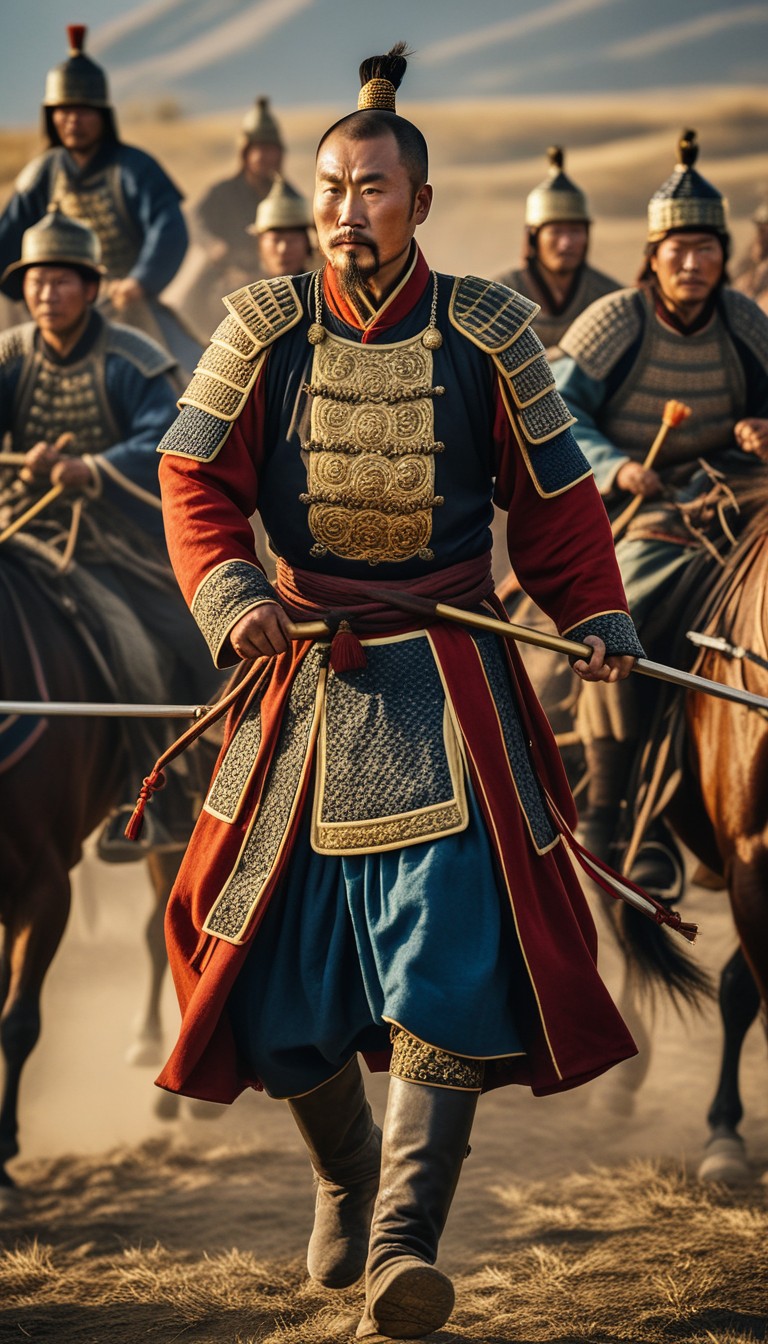
A peasant rebel commander leading troops against Mongol Yuan forces
1328–1368 Anhui Province, China

The Peasant Who Would Be Emperor

Zhu Yuanzhang was born in 1328 into desperate poverty in Anhui province, orphaned young by famine and plague, and forced to beg as a wandering Buddhist monk to survive. In 1352, he joined a rebel militia fighting against the crumbling Mongol Yuan dynasty, whose corrupt rule had driven millions of Chinese to starvation and revolt. His brilliance as a military commander and his fierce personal charisma allowed him to rise swiftly through the rebel ranks. Within sixteen years, the former beggar monk had outmaneuvered every rival warlord in China and stood on the verge of founding a new dynasty.
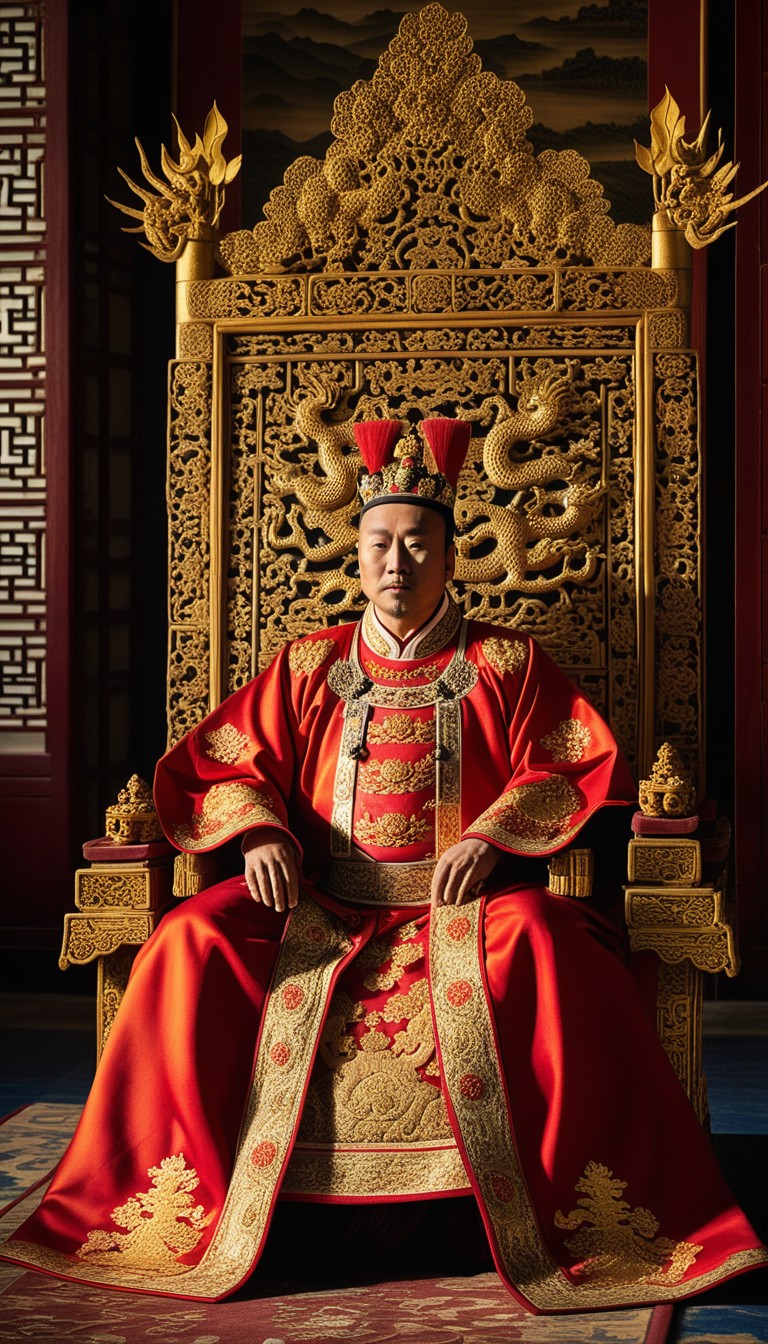
The Hongwu Emperor seated on a imperial throne in Nanjing
1368 Nanjing, China

The Hongwu Emperor Rises

In 1368, Zhu Yuanzhang drove the last Yuan emperor out of Beijing and proclaimed the founding of the Ming — meaning "brilliant" — dynasty, taking the reign title Hongwu, or "Vastly Martial." He established his capital at Nanjing, constructing grand palaces and city walls that still rank among the largest ever built. As emperor, the former peasant ruled with iron discipline, executing tens of thousands of officials he suspected of corruption and personally reviewing hundreds of memorials a day. His land reforms redistributed farmland to the poor, revived agriculture, and began the long restoration of a China shattered by decades of war.
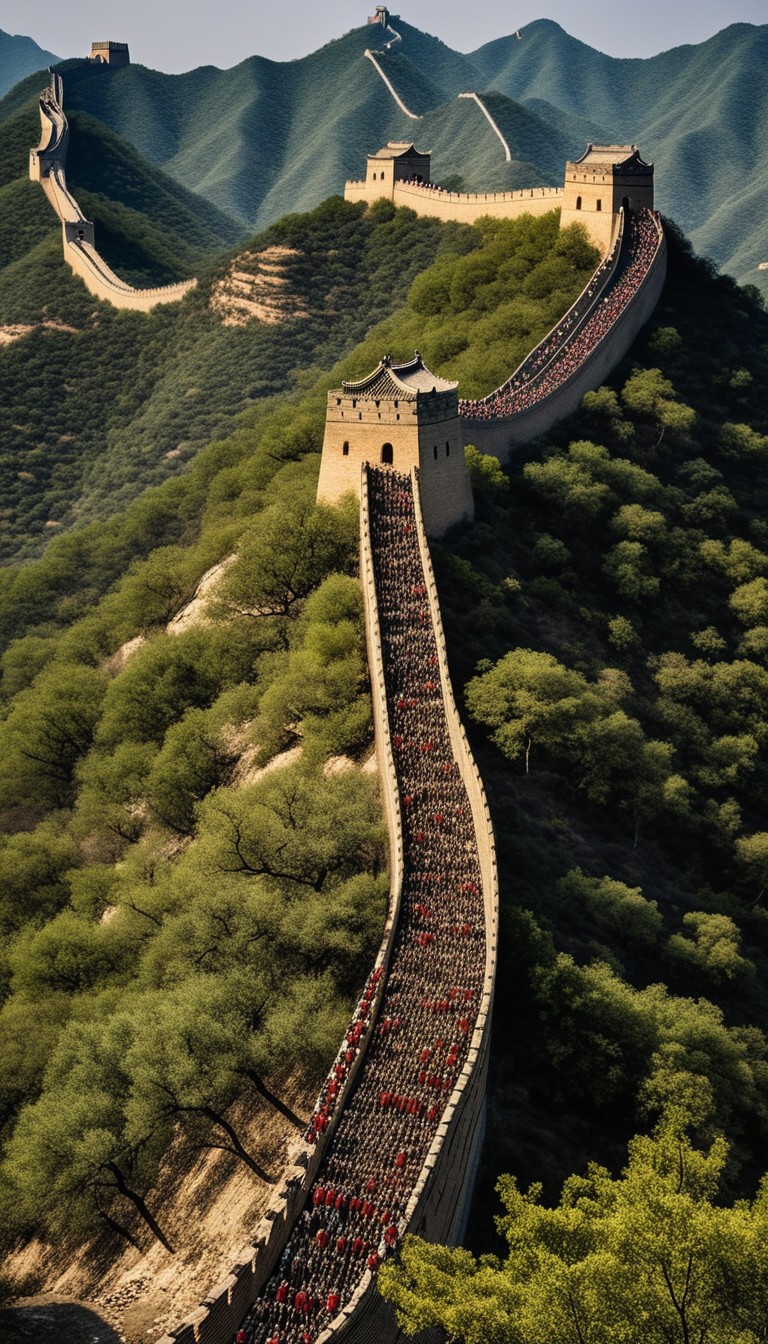
Thousands of laborers constructing the Great Wall across mountain ridges
1368–1644 Northern China

The Great Wall Reborn

The Ming dynasty undertook the most ambitious construction project in human history — the systematic rebuilding and vast extension of the Great Wall of China. Earlier walls had been earthen and crumbling; the Ming engineers rebuilt them in stone and fired brick, adding watchtowers, beacon towers, and garrison stations across thousands of miles of northern frontier. The work consumed enormous resources over nearly three centuries, employing hundreds of thousands of soldiers, conscripted laborers, and craftsmen. The wall we recognize today — stretching from the Bohai Sea in the east to the Gobi Desert in the west — is almost entirely a Ming creation, a monument to both imperial ambition and the enduring fear of nomadic invasion.
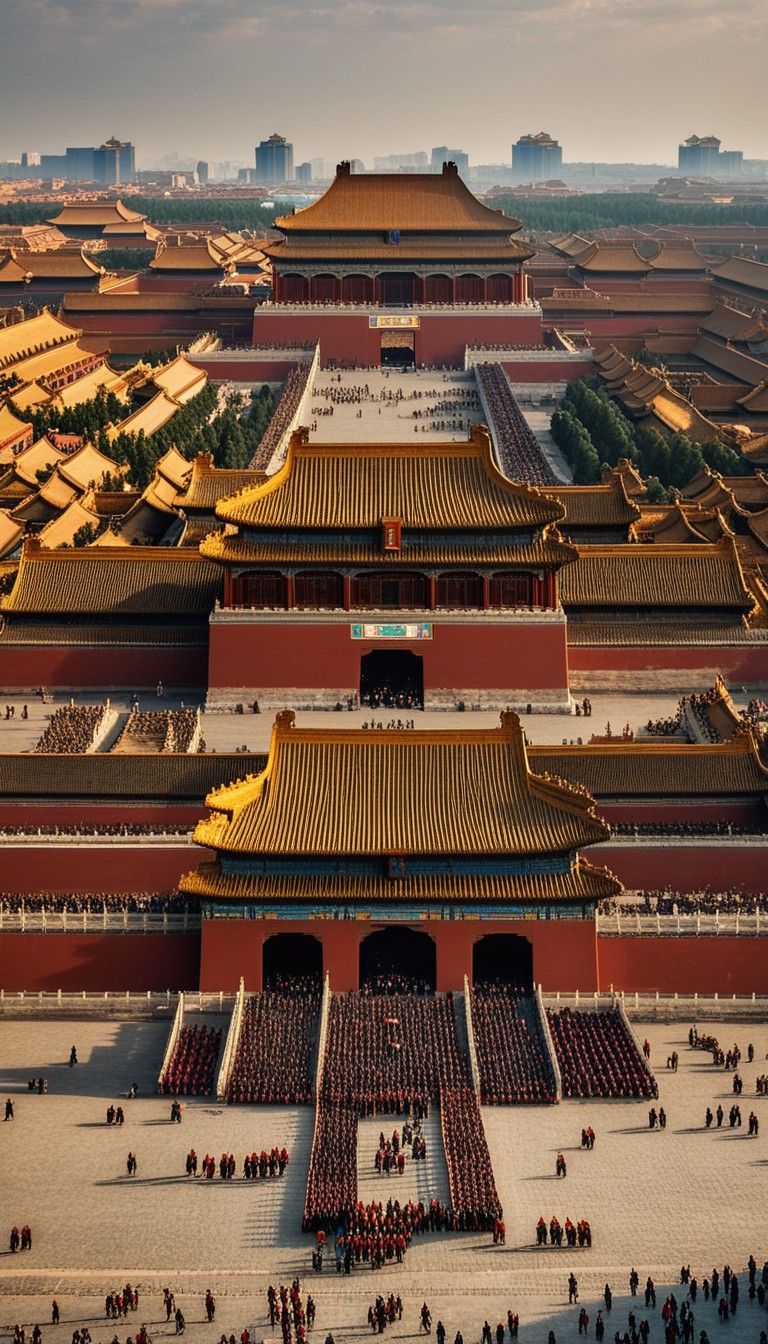
The Forbidden City rising in Beijing surrounded by laborers and imperial guards
1406–1420 Beijing, China

The Forbidden City

The Yongle Emperor, who seized the throne from his nephew in 1402 and moved the capital north to Beijing, ordered the construction of one of the greatest architectural achievements in history. Between 1406 and 1420, over a million workers and 100,000 craftsmen labored to build the Imperial Palace, known as the Forbidden City — a vast complex of 980 buildings and nearly 9,000 rooms enclosed within a moat and massive walls. The design reflected the Chinese cosmological order, with the emperor positioned at the literal center of the universe. For nearly five centuries, this sublime complex served as the home of China's emperors and the beating heart of Chinese civilization.
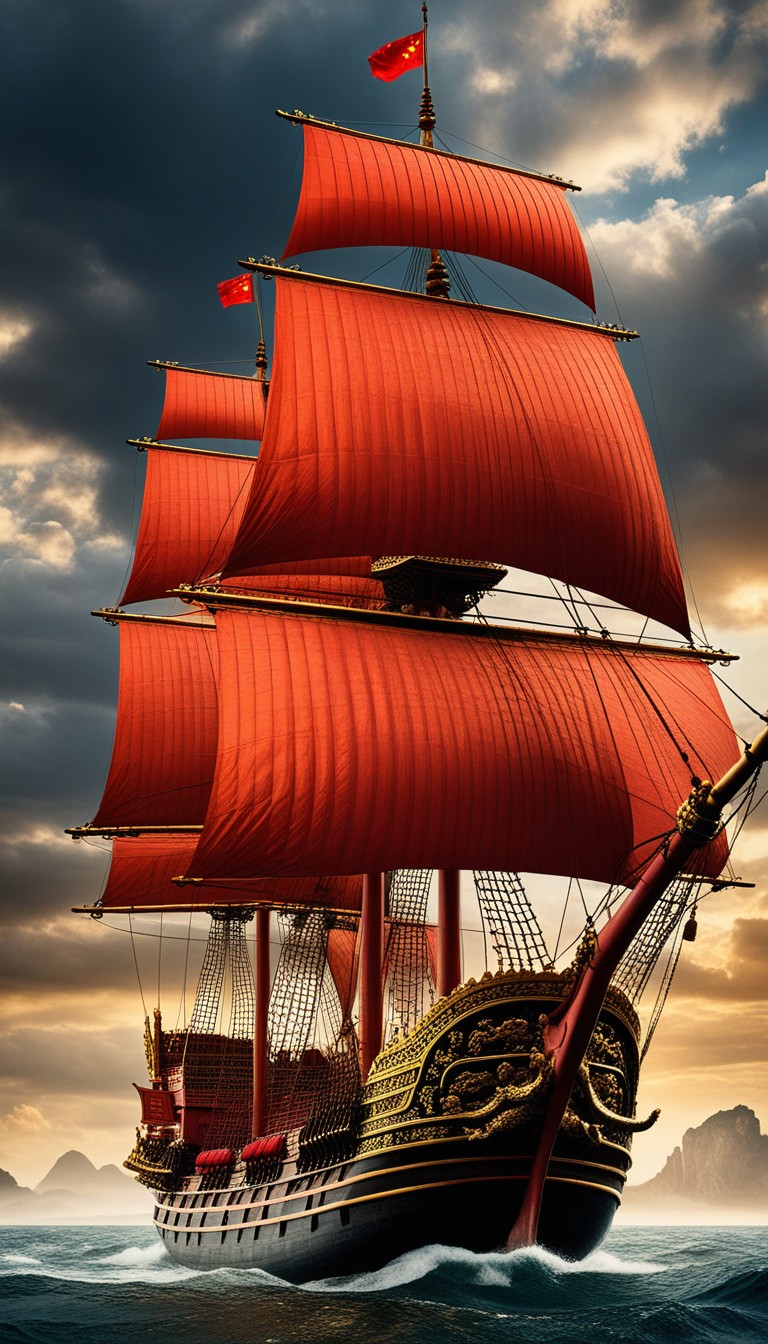
Zheng He's massive treasure fleet sailing across the Indian Ocean
1405–1433 Indian Ocean

Zheng He and the Treasure Fleet

Between 1405 and 1433, the Muslim eunuch admiral Zheng He led seven extraordinary voyages across Southeast Asia, India, Arabia, and the east coast of Africa, commanding fleets of hundreds of ships — including the massive "treasure ships" that dwarfed any vessel in Europe at the time. These expeditions were the most ambitious maritime ventures the world had ever seen, projecting Chinese power and prestige across the entire known maritime world. Foreign rulers sent tribute, exotic animals — including giraffes presented as mythical qilins — and ambassadors back to the Ming court. Zheng He's voyages demonstrated that China, had it chosen, could have dominated global trade and exploration, yet they were ultimately abandoned after his death as court factions turned against the enormous expense.
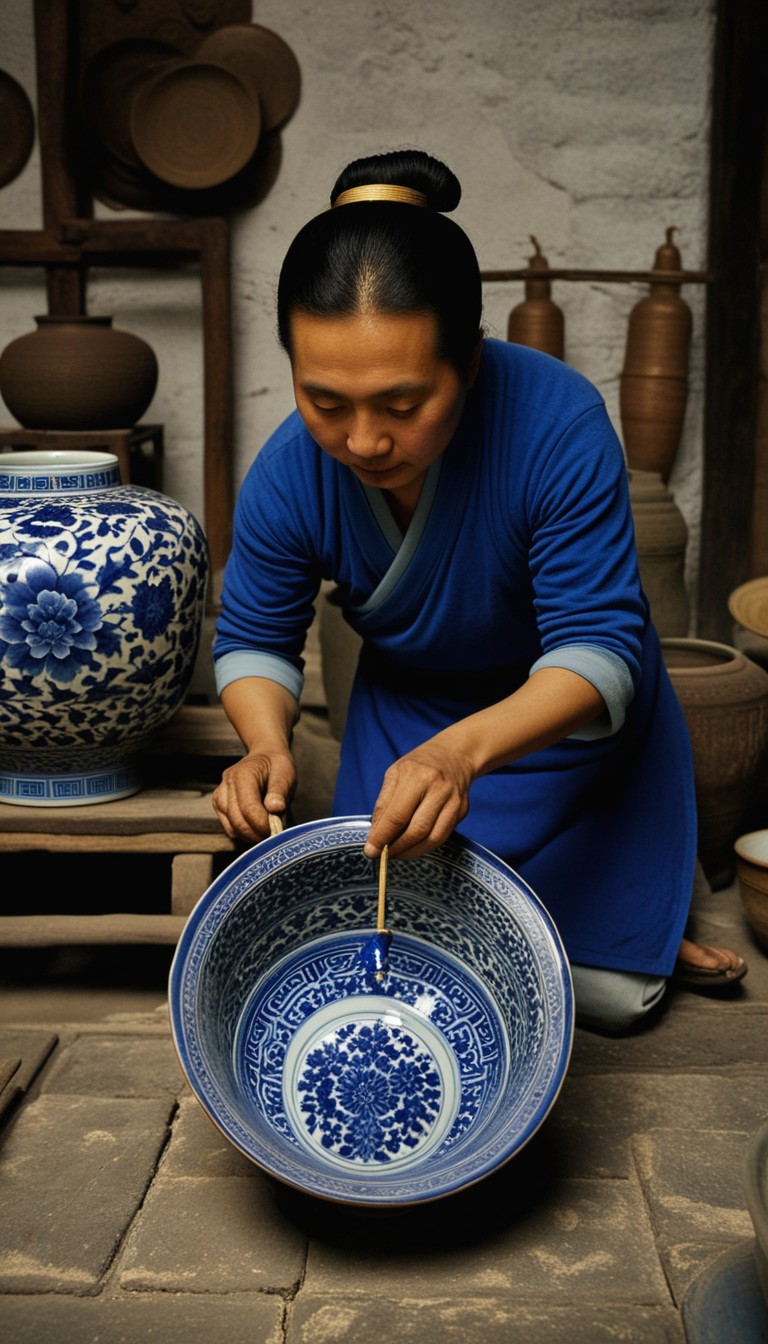
Artisans painting intricate blue-and-white porcelain in an imperial kiln
c. 1400–1600 Jingdezhen and throughout China

The Golden Age of Art and Porcelain

The Ming period produced some of the most celebrated artistic achievements in Chinese history, above all the famous blue-and-white porcelain that became the most sought-after luxury good in the world. The imperial kilns at Jingdezhen fired pieces of breathtaking refinement — delicate vases, bowls, and dishes decorated with cobalt-blue designs under a translucent white glaze — that found their way to the palaces of Europe, the Middle East, and Southeast Asia. The era also saw extraordinary achievements in painting, lacquerware, silk weaving, and woodblock printing, as a prosperous merchant class and educated gentry patronized the arts on a vast scale. Ming furniture, with its clean lines and rich hardwoods, remains a defining influence on furniture design to this day.
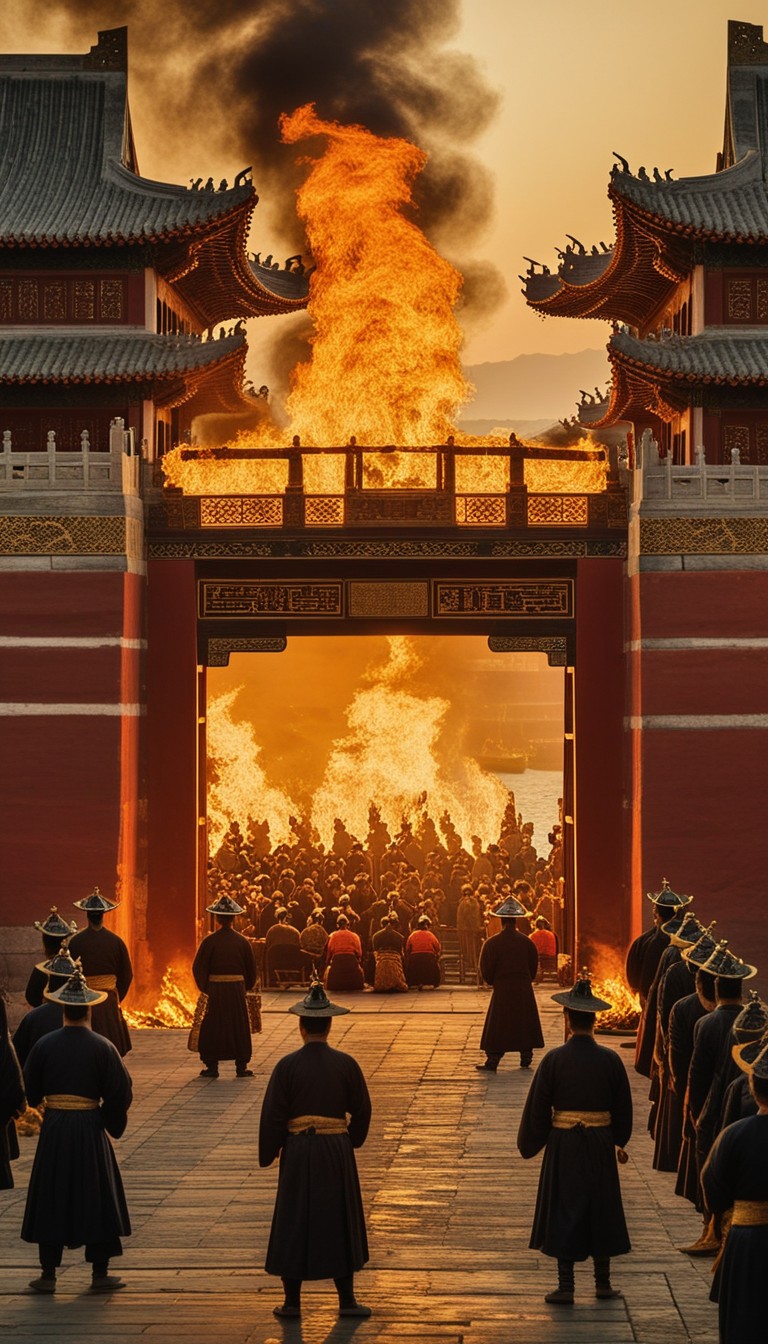
Imperial officials burning trade documents and sealed harbor gates
c. 1500s China

The Sea Ban — Haijin

Despite the glories of Zheng He's voyages, the Ming court ultimately turned its back on the sea. The Haijin — the maritime prohibition — was periodically enforced throughout the dynasty, banning private Chinese citizens from trading overseas and ordering the destruction of oceangoing vessels. Confucian scholars argued that maritime commerce bred instability and that agriculture, not trade, was the proper foundation of a stable empire. The policy was never uniformly enforced and was partly lifted in 1567, but its legacy was profound: it ceded the emerging global maritime trade networks to European powers just as Portugal, Spain, and the Netherlands were sailing outward. Where China had once led the world across the oceans, it now watched from behind closed harbors.
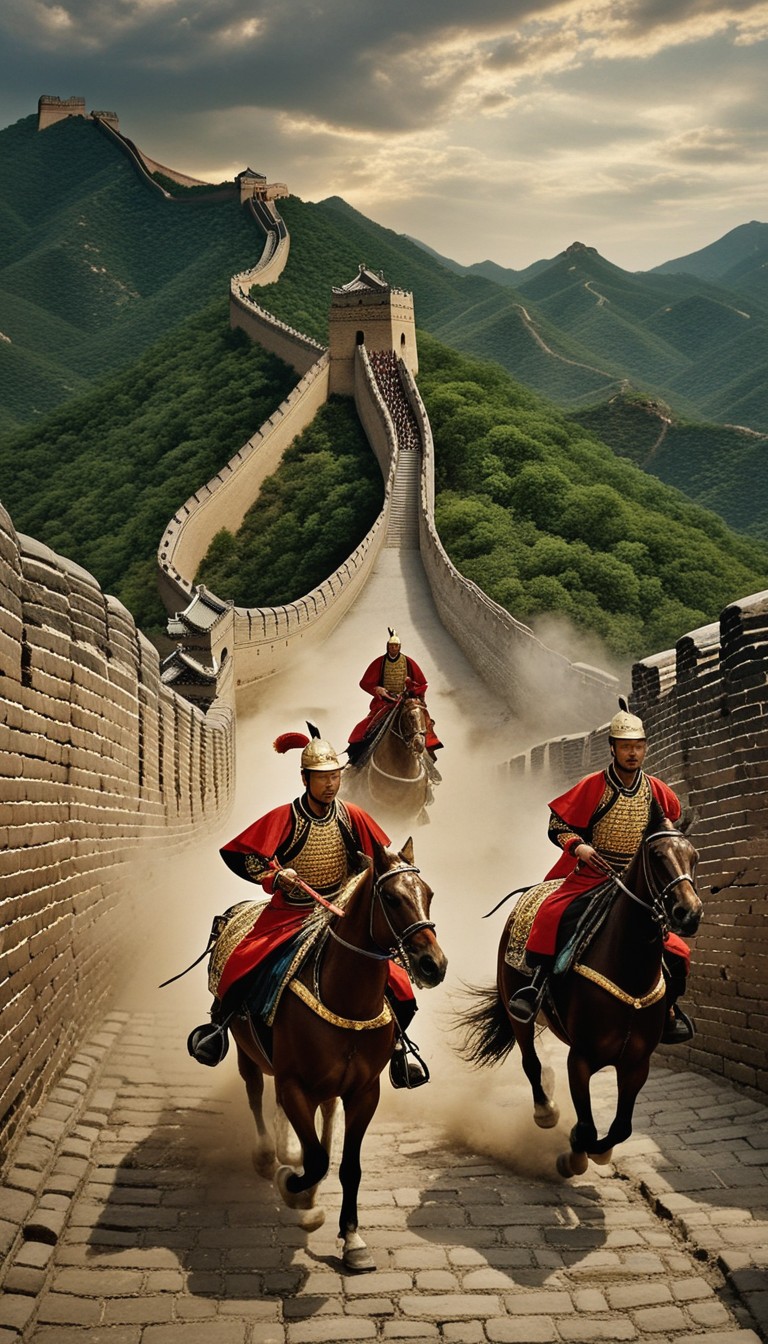
Manchu Qing cavalry breaching the Great Wall at a mountain pass
1644 Beijing, China

The Fall to the Qing

By the early seventeenth century, the Ming dynasty was collapsing from within — drained by ruinous wars against the Japanese invasions of Korea, devastated by famine, peasant rebellions, and a volcanic winter that wrecked harvests across the empire. In 1644, the rebel leader Li Zicheng captured Beijing, and the last Ming emperor, the Chongzhen Emperor, hanged himself on a hill behind the Forbidden City rather than surrender. A Chinese general desperate to defeat Li Zicheng made the fateful decision to open the gates of the Great Wall to the Manchu Qing army, who swept in, crushed the rebels, and claimed the throne for themselves. The Qing would rule China for another 268 years.
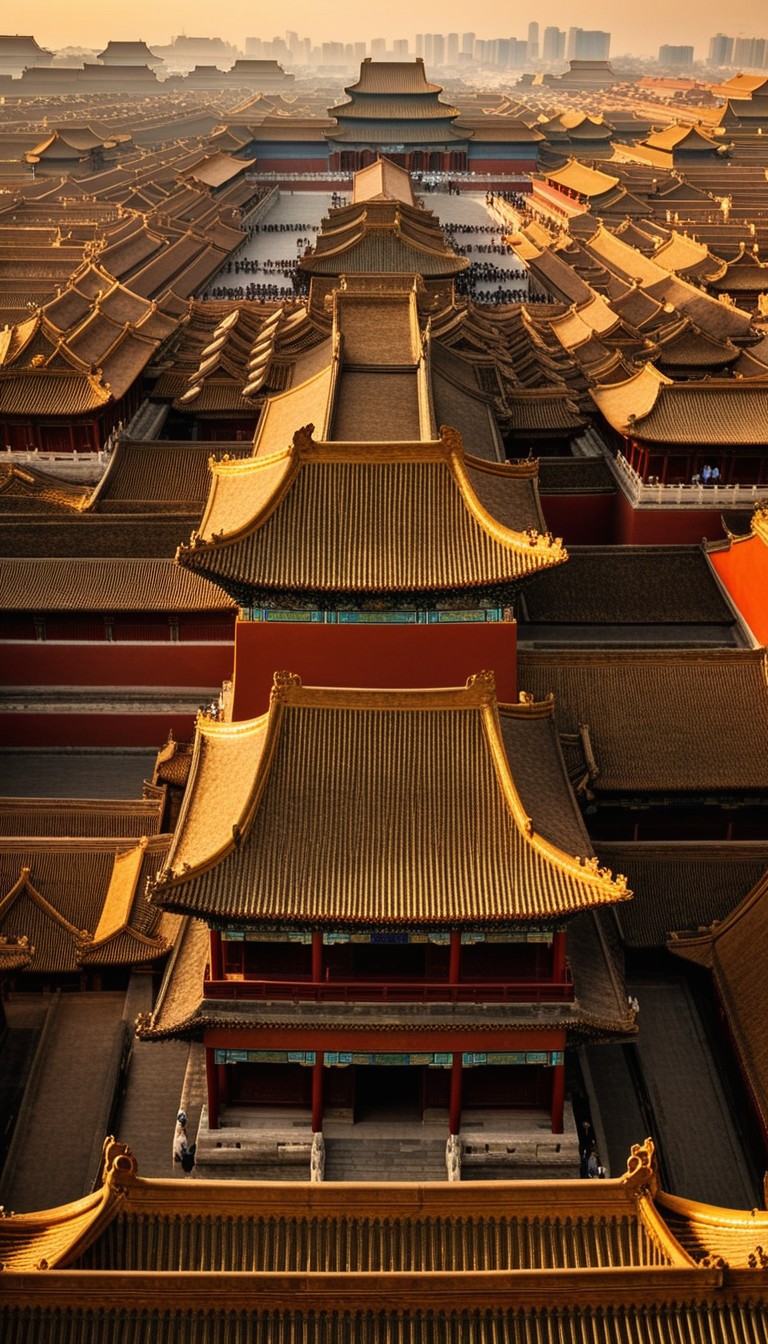
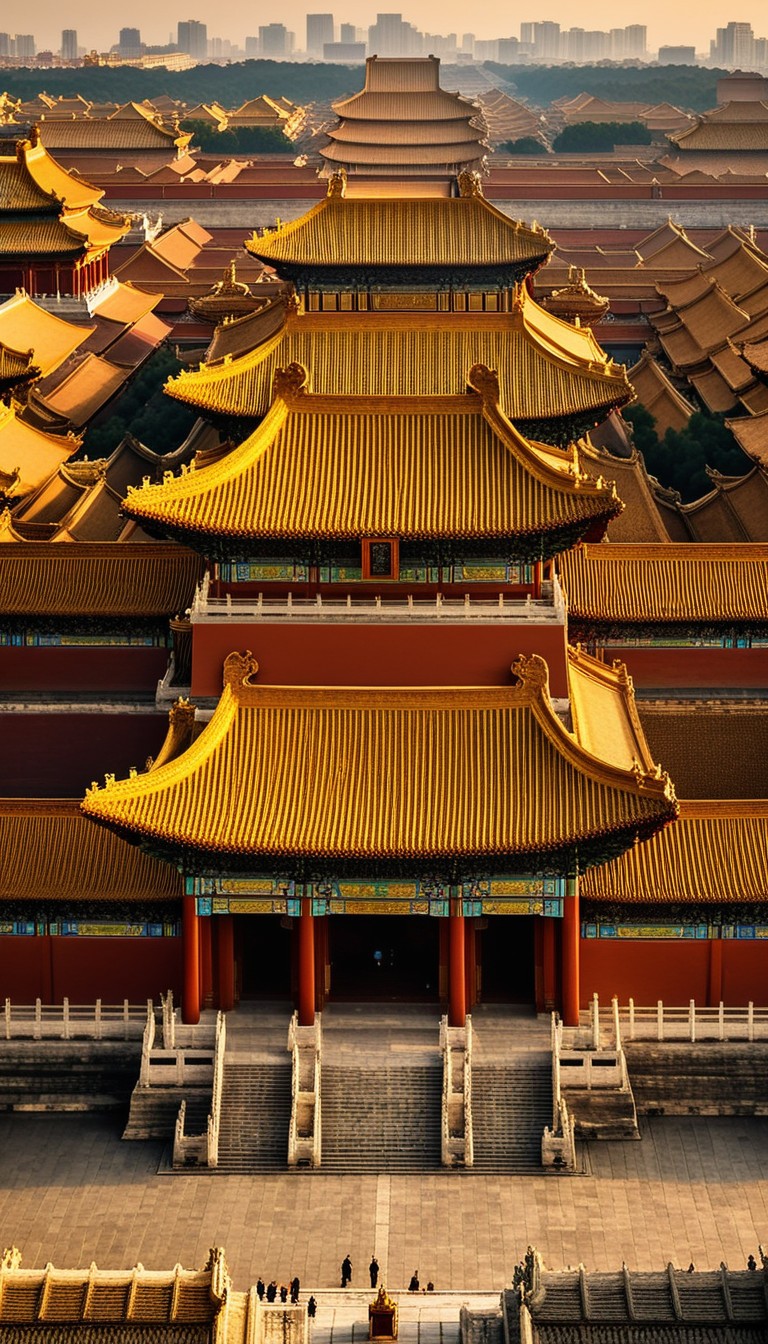
The Forbidden City at golden sunset, its rooftops gleaming across Beijing

A Dynasty That Shaped the World

The Ming dynasty left a legacy so vast and enduring that it still shapes China — and the world — today. The Forbidden City stands as one of humanity's greatest architectural achievements. The Great Wall, in its final and most magnificent form, is a Ming creation. Blue-and-white porcelain remains synonymous with Chinese craft. And the very idea of what China is — its borders, its culture, its self-image as the Middle Kingdom — was forged in the Ming era. Though the dynasty fell, its spirit proved indestructible: the Ming legacy lived on in the arts, in the landscape, and in the enduring pride of a civilization that, for nearly three centuries, stood without equal on Earth.

Recommended Reading

As an Amazon Associate, we earn from qualifying purchases.
Swipe to navigate