The Persian Empire: Kings of Kings

Loading story...
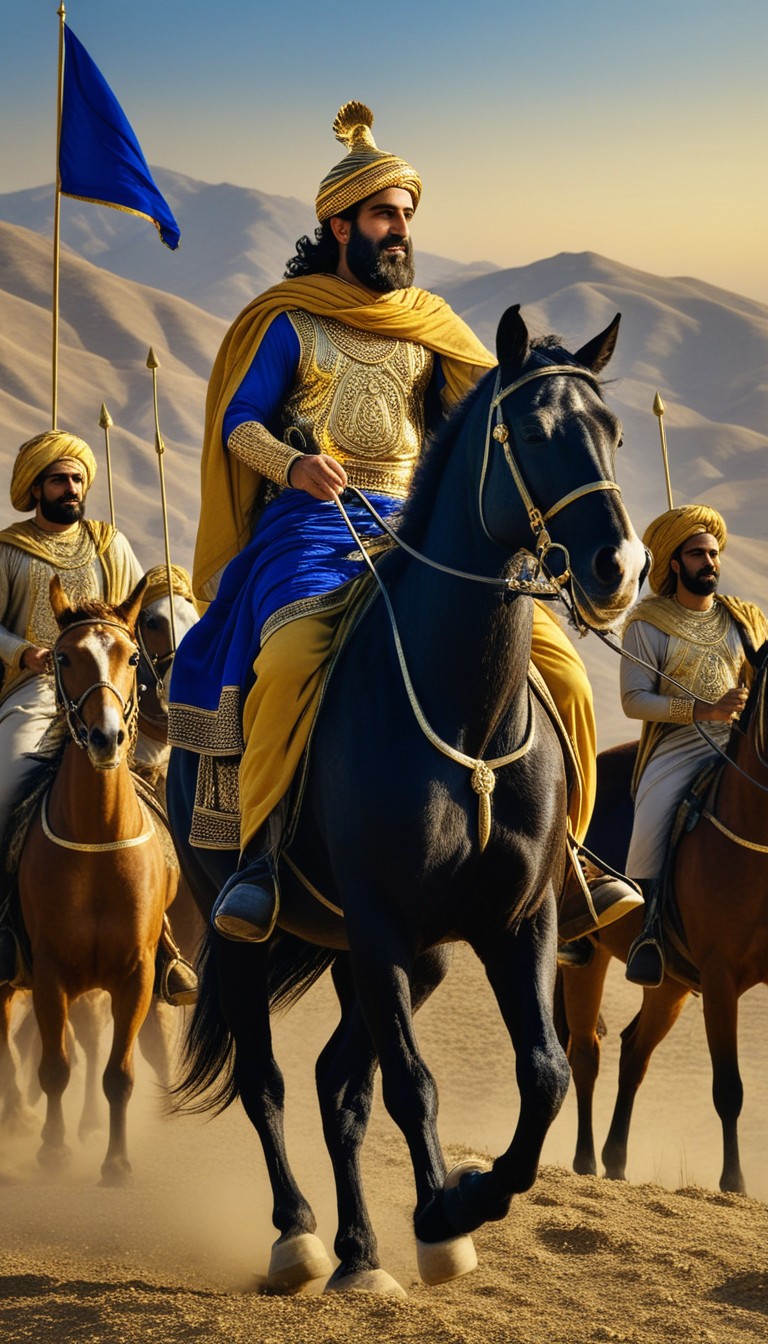
Cyrus the Great on horseback uniting Persian and Median warriors under a single banner
550 BC Persia (modern Iran)

Cyrus Unites the World

In 550 BC, a young Persian king named Cyrus II overthrew the Median king Astyages and united the Medes and Persians into a single, formidable power. Rather than crushing his defeated enemies, Cyrus absorbed them—adopting Median customs, titles, and court practices to forge loyalty instead of resentment. Within a generation, this confederation had swallowed Lydia in the west and Bactria in the east, creating an empire that stretched across the known world. Cyrus governed not with fear alone, but with a radical idea: that conquered peoples could keep their gods, their languages, and their ways of life.
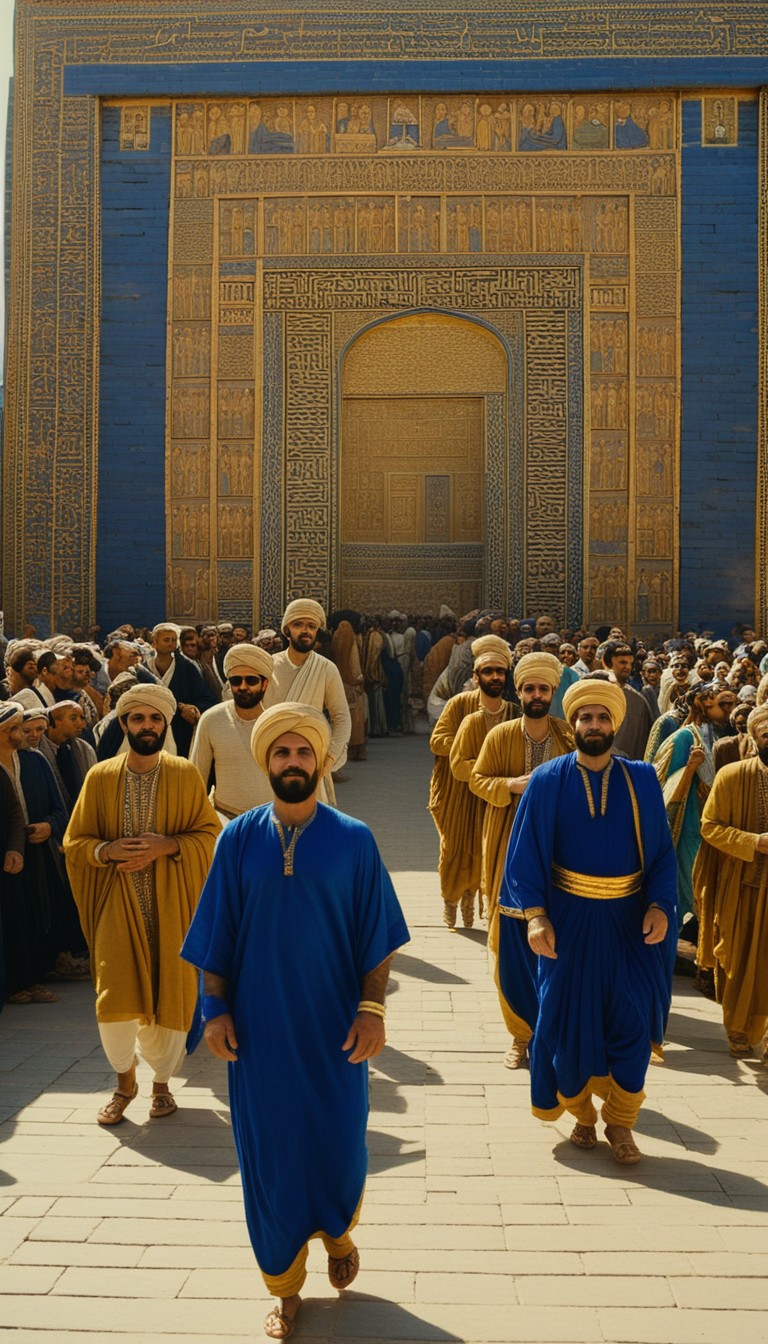
Cyrus the Great entering Babylon while crowds of people celebrate in the streets
539 BC Babylon (modern Iraq)

The Liberation of Babylon

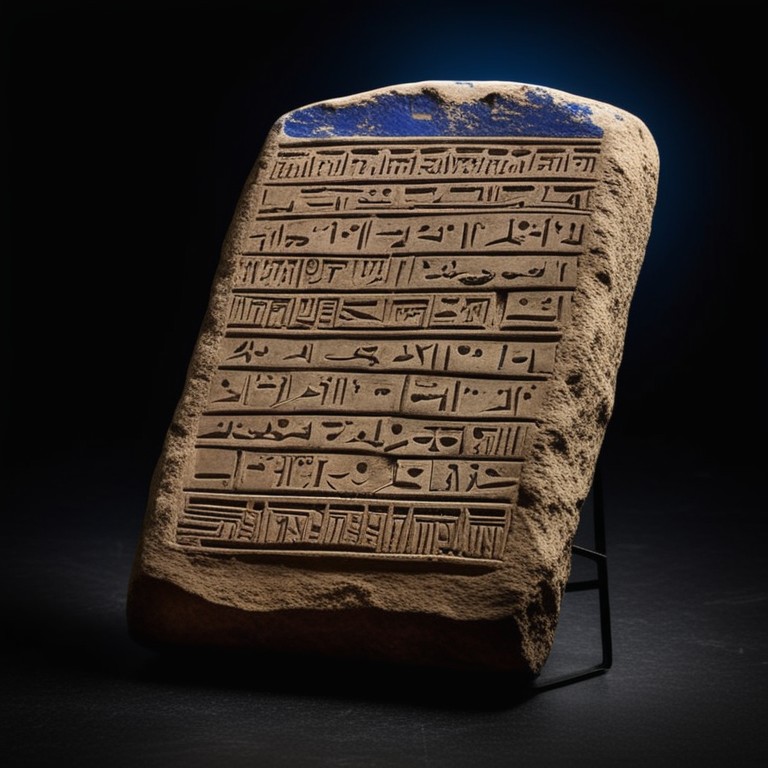
In 539 BC, Cyrus marched his armies into the ancient city of Babylon—not as a destroyer, but as a liberator. The Babylonian king Nabonidus had alienated his own priests, and the city opened its gates with little resistance. Cyrus immediately issued a declaration—recorded on the famous Cyrus Cylinder—proclaiming freedom of religion and the right of all displaced peoples to return to their homelands. Among those freed were tens of thousands of Jewish exiles, who had been captive in Babylon for decades. To the Jewish people, Cyrus was so revered that the Hebrew Bible names him the only non-Jewish individual granted the title of "Messiah."
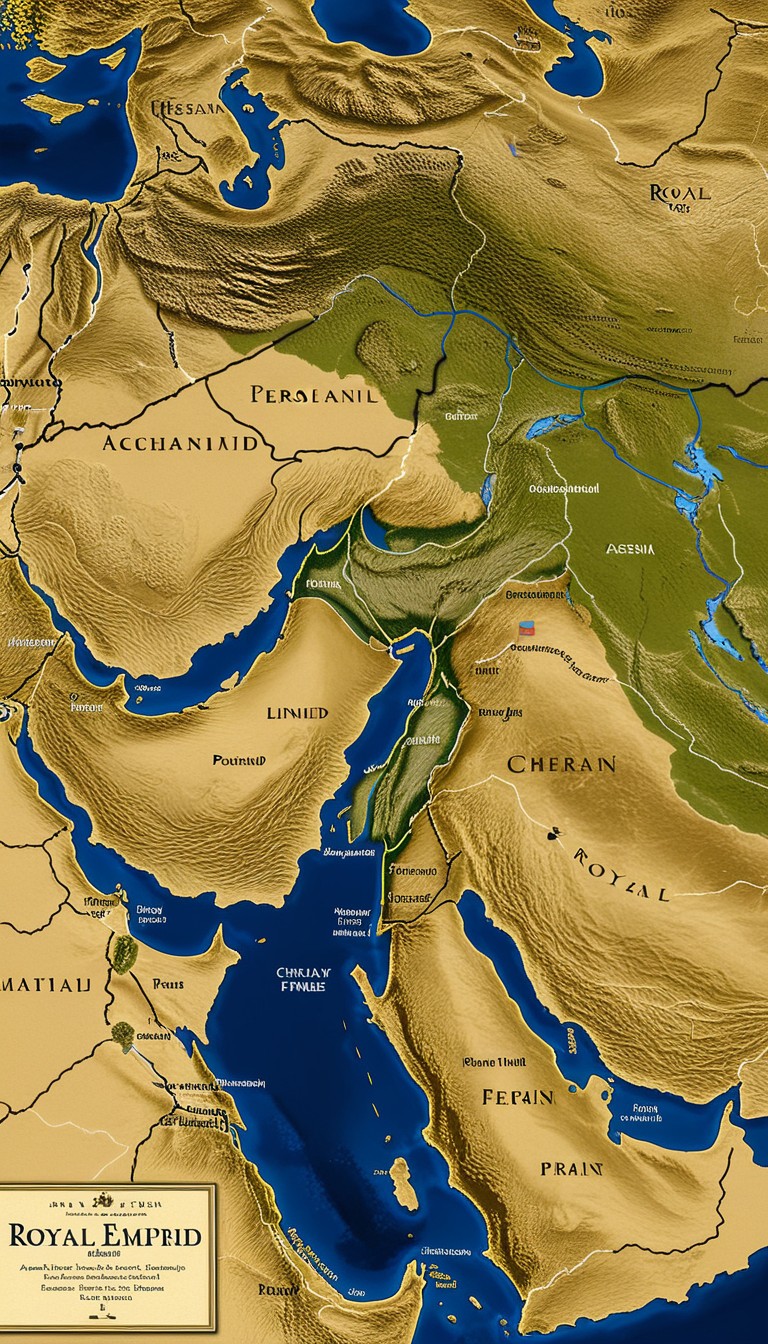
A map showing the Royal Road stretching across the Persian Empire, with satraps receiving orders from a central court
522 BC Persian Empire

Darius Builds the Machine

When Darius I seized the throne in 522 BC after a period of civil war, he inherited an empire that was vast but fragile. His solution was to engineer the ancient world's most sophisticated bureaucracy. He divided the empire into twenty provinces called satrapies, each governed by a satrap who answered directly to the king, and he sent royal inspectors—the "Eyes of the King"—to ensure loyalty. He standardized weights, measures, and coinage across the empire, enabling trade on a scale never before seen. Most impressively, he commissioned the Royal Road: a 2,700-kilometer highway stretching from Susa to Sardis, with relay stations allowing royal messengers to cover the entire distance in just seven days.
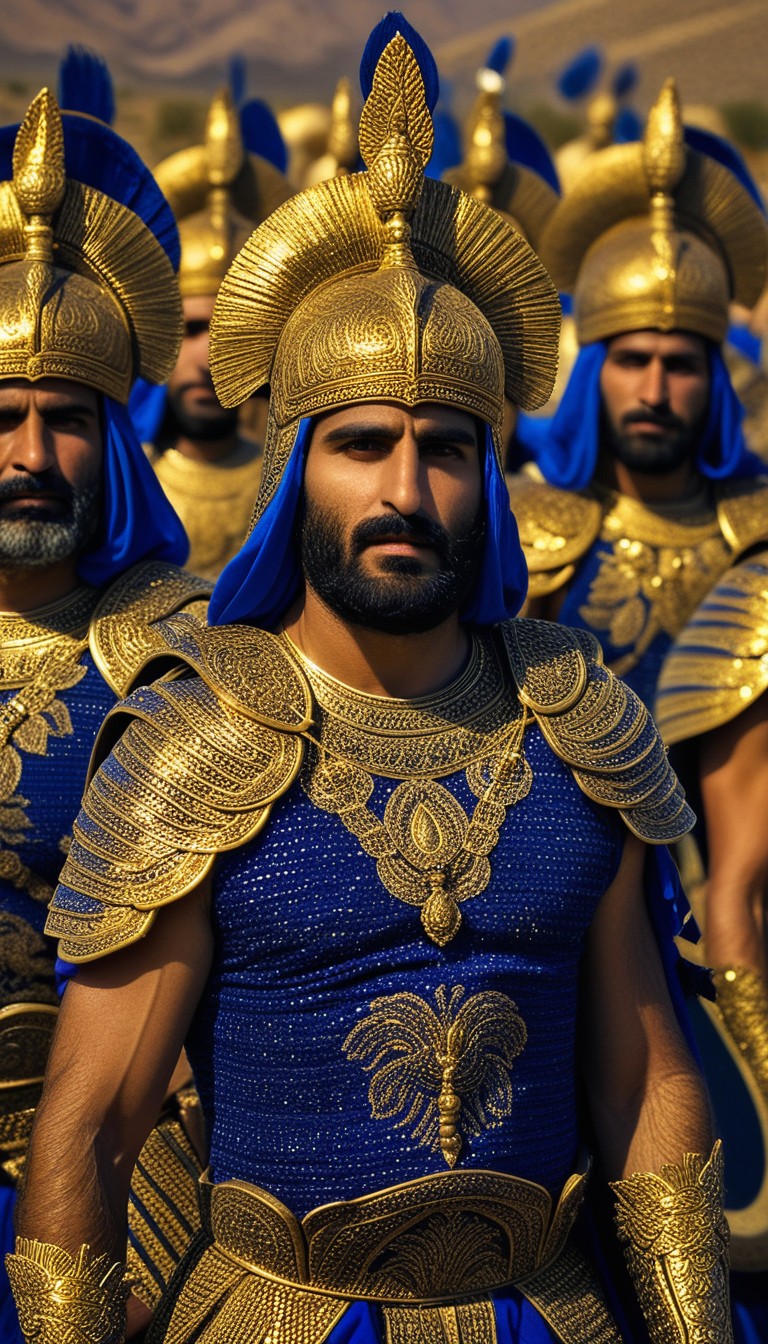
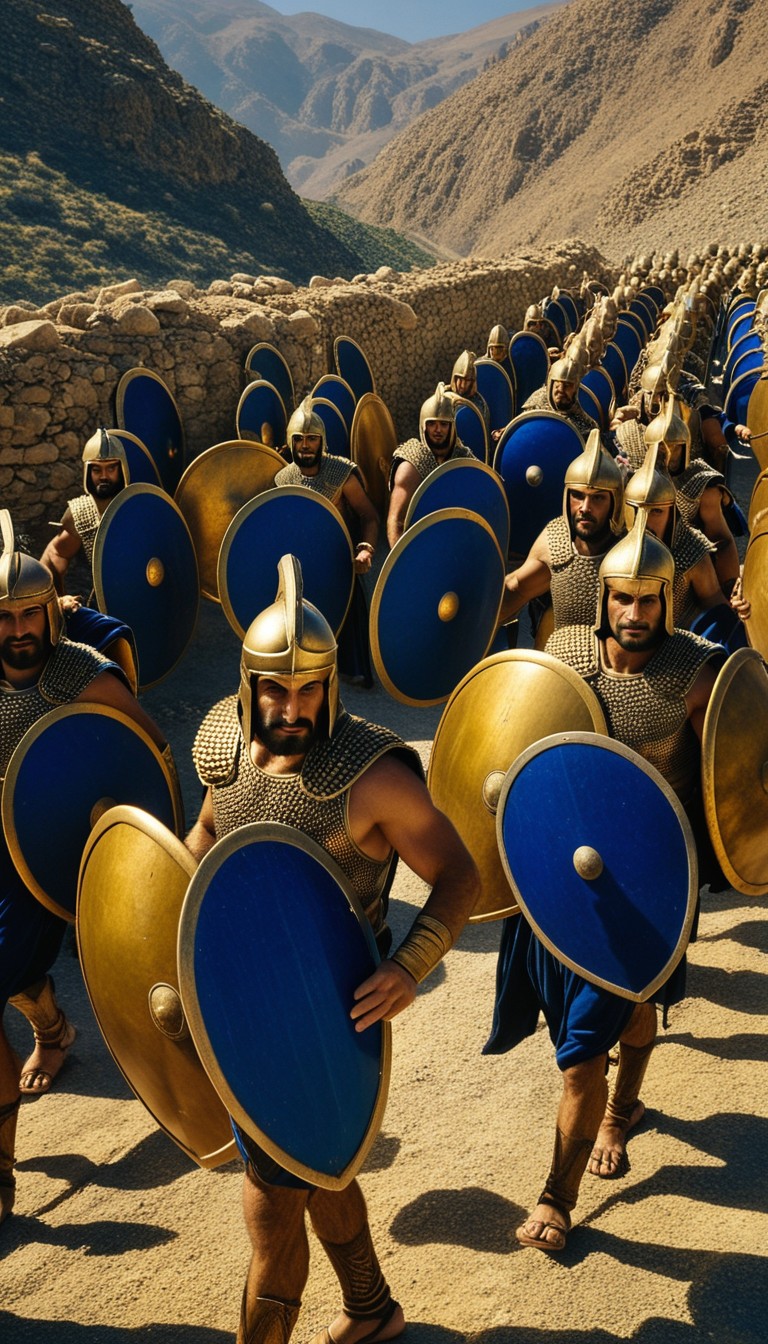
A formation of Persian Immortal warriors in elaborate armor, their spears held at the ready
c. 500 BC Persian Empire

The Ten Thousand Immortals

At the heart of every Persian king's military power stood the Immortals—an elite corps of exactly ten thousand warriors whose number never changed. When an Immortal fell in battle or died of illness, a replacement stepped forward immediately, maintaining the unit's strength as if by magic; it was this eerie constancy that gave them their legendary name. They were drawn from the Persian and Median nobility, equipped with the finest weapons, and they served as both the king's personal bodyguard and the shock troops of the imperial army. Dressed in elaborate robes over their armor and carrying spears tipped with golden pomegranates, the Immortals were as much a statement of imperial power as they were a fighting force.
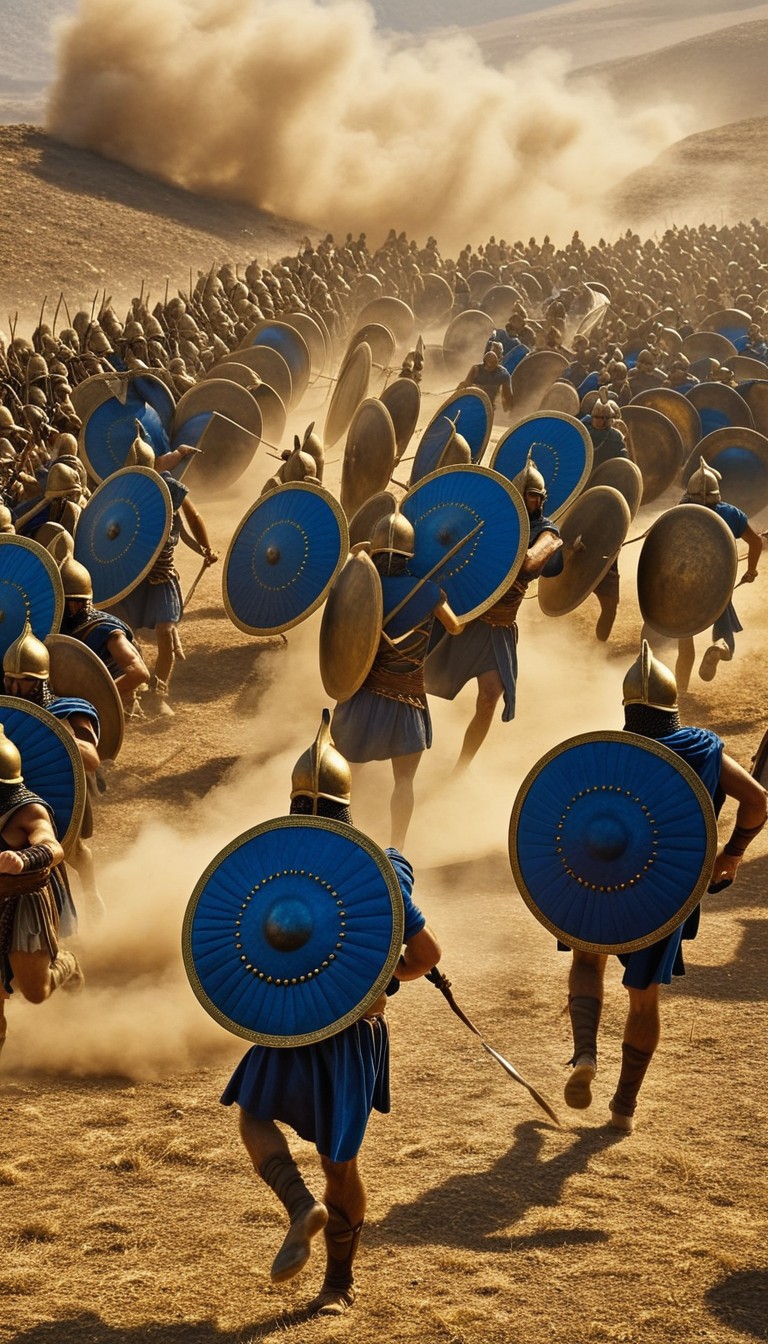
Greek hoplites clashing with Persian infantry on the plains of Marathon
490 BC Marathon, Greece

The Shock at Marathon

In 490 BC, Darius I sent a massive Persian force across the Aegean to punish Athens for supporting a Greek revolt in his empire. The two armies met on the plain of Marathon, where the Persians expected a quick victory over the outnumbered Greeks. Instead, the Athenian general Miltiades sent his hoplites charging at a dead run—an unheard-of tactic—slamming into the Persian lines with devastating force and routing their flanks before the superior Persian center could exploit its advantage. The Persians fled to their ships, leaving over six thousand dead on the field to Athens's fewer than two hundred. The runner Pheidippides legendarily raced the twenty-six miles to Athens to deliver the news before collapsing dead—a story that gave the world the marathon race.
Spartan warriors holding a narrow mountain pass against the vast Persian army of Xerxes
480 BC Thermopylae, Greece

Thermopylae: The Pass of Fire

Determined to avenge Marathon and conquer all of Greece, Darius's son Xerxes assembled the largest invasion force the ancient world had ever seen—ancient sources speak of millions, though modern historians estimate closer to 200,000 soldiers. In 480 BC, this colossal army was stopped cold at the narrow coastal pass of Thermopylae by a Greek coalition led by 300 Spartan warriors under King Leonidas. For three days, the Spartans and their allies held the pass, cutting down wave after wave of Persian soldiers in one of history's most celebrated last stands. A local traitor ultimately showed the Persians a mountain path that allowed them to encircle the Greeks; rather than retreat, Leonidas dismissed his allies and the 300 Spartans died to the last man, buying Greece the time it needed to regroup.
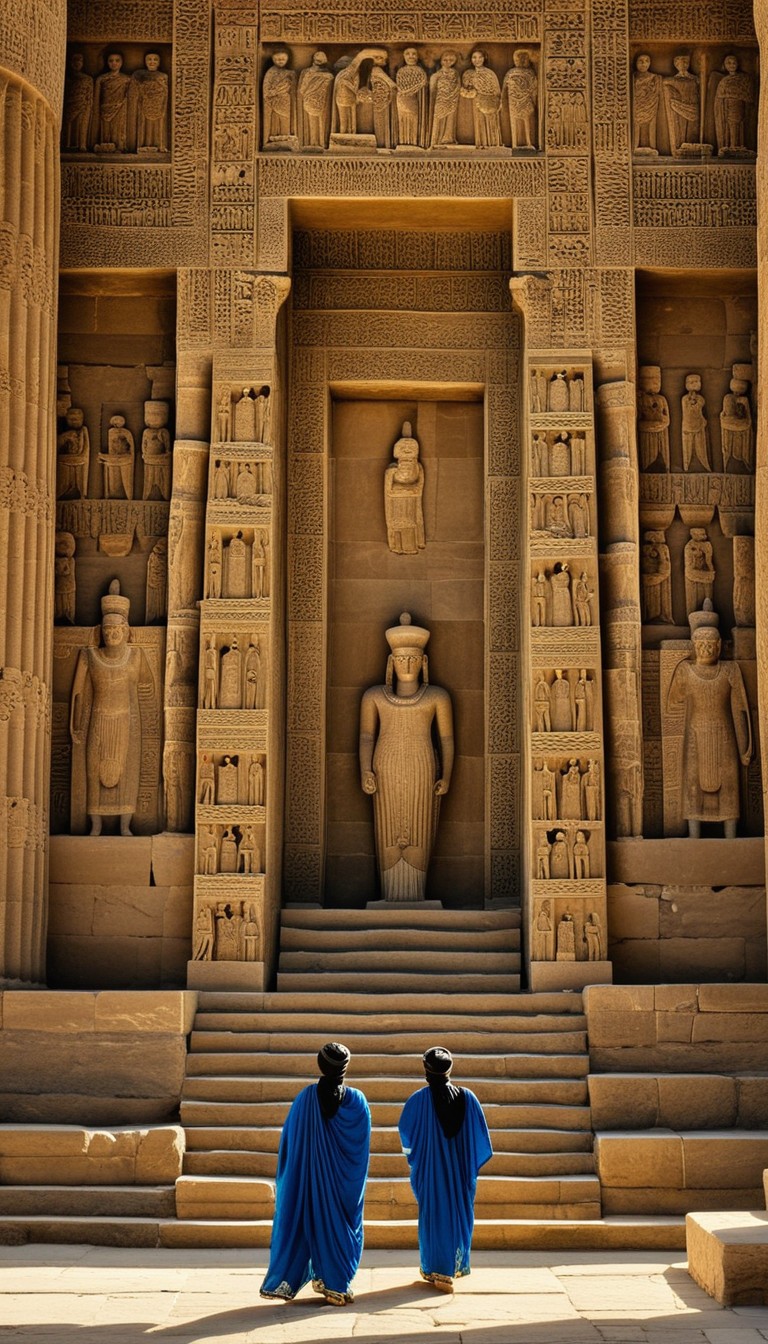
The grand ceremonial staircase of Persepolis adorned with carved tribute-bearers from across the empire
c. 515 BC Persepolis (modern Iran)

Persepolis: The City of Thrones

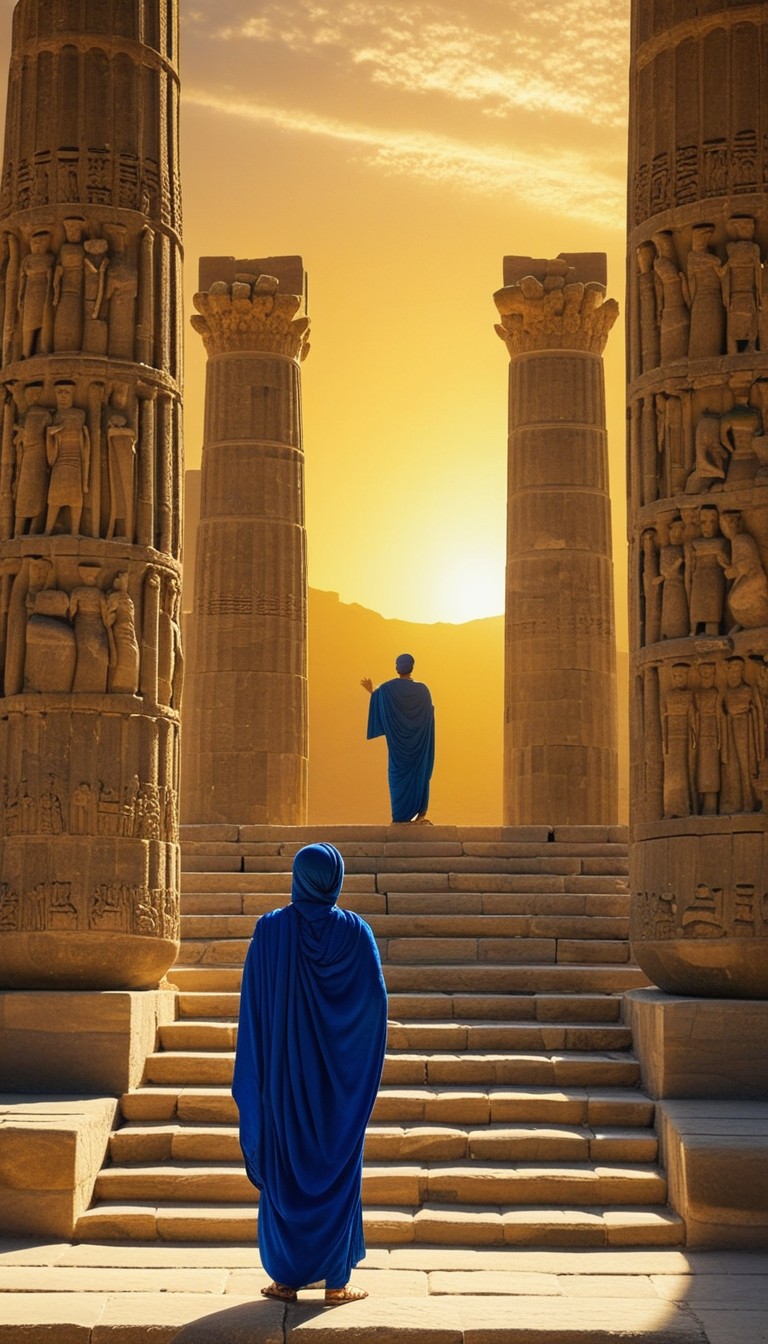
No monument better captured the glory of the Persian Empire than Persepolis, the ceremonial capital that Darius began building around 515 BC and that Xerxes later expanded. Constructed on a massive stone terrace in the Zagros Mountains, it was not a city in the ordinary sense—it was a stage for power, visited once a year at Nowruz (the Persian New Year) when delegations from every corner of the empire brought tribute to the King of Kings. Its famous Apadana hall could hold ten thousand guests, and its staircases were carved with rows of tribute-bearers from twenty-three nations, each depicted in their own national dress—a deliberate statement of the empire's breathtaking diversity. When Alexander the Great burned Persepolis to the ground in 330 BC, it is said he regretted it the next morning.
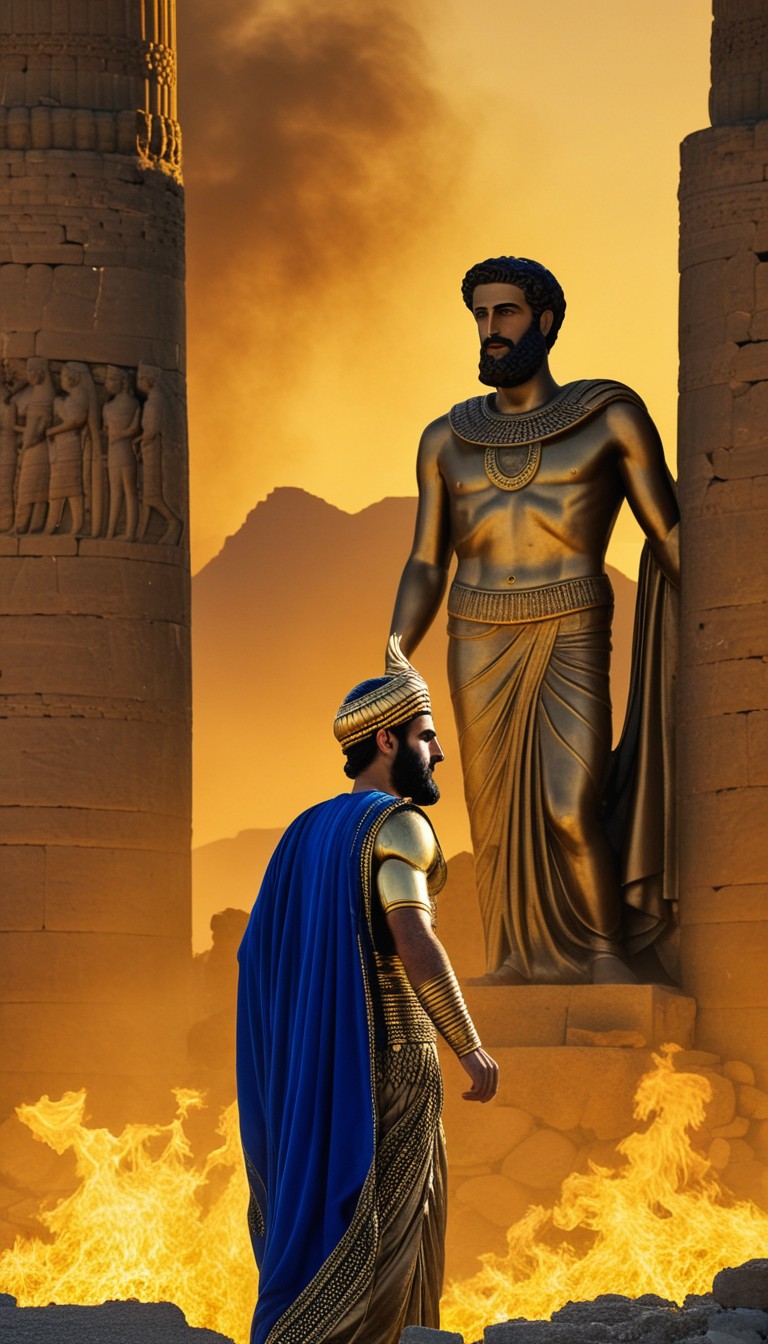
Alexander the Great standing amid the ruins of Persepolis, the city burning behind him
330 BC Persian Empire

The Fall to Alexander

By 334 BC, a Macedonian king of just twenty-two years named Alexander had set his sights on Persia. The Persian king Darius III met him in a series of battles—Granicus, Issus, Gaugamela—and was defeated each time, in part because Alexander's oblique cavalry charges repeatedly shattered the Persian line at its command point. Darius III fled Gaugamela in 331 BC, and was later murdered by his own satraps as Alexander closed in. By 330 BC, Alexander had occupied Persepolis and burned it—whether in vengeance, drunken celebration, or calculated symbolism is still debated—and declared himself heir to the Achaemenid throne. An empire that had ruled the world for two hundred years vanished in less than a decade, absorbed into the new Macedonian order.
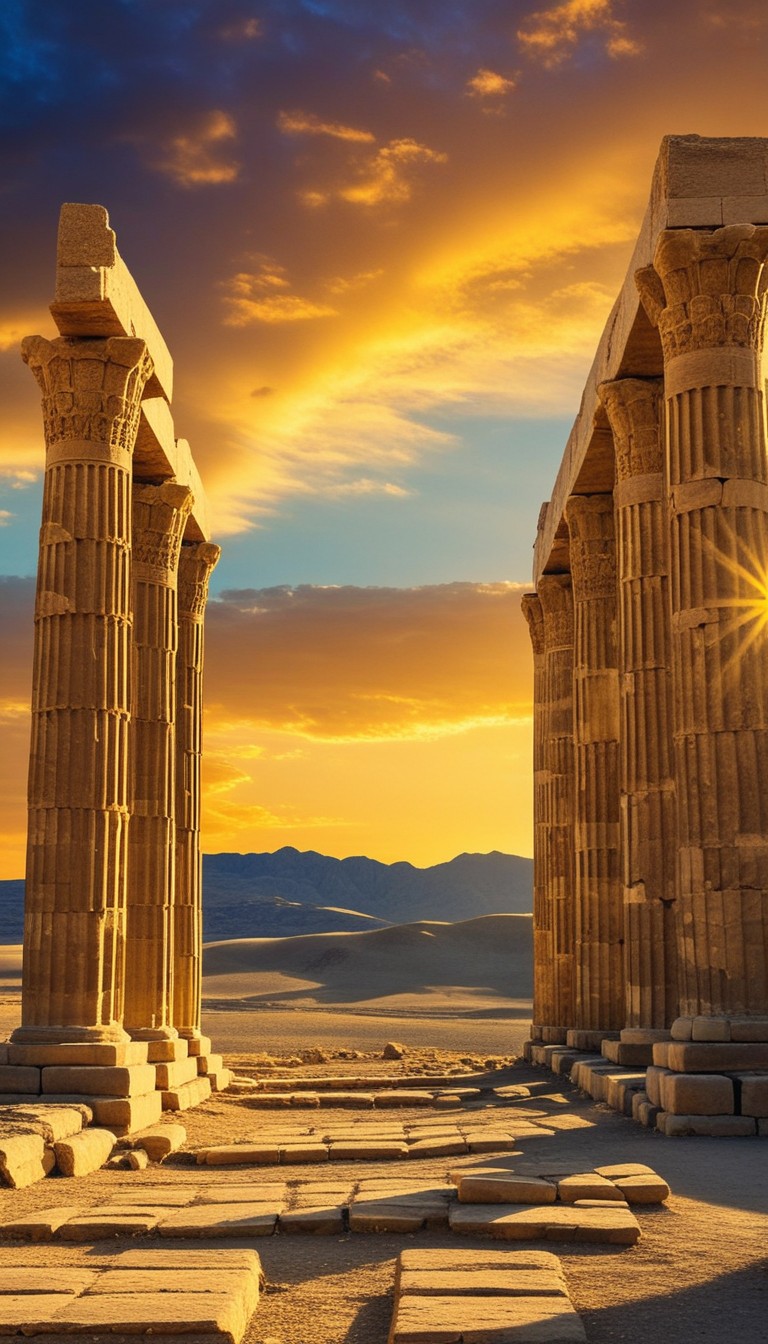
The ruins of Persepolis bathed in golden sunset light

The Empire That Taught the World to Rule

The Achaemenid Persian Empire lasted only two centuries, yet its influence on the ancient world was immeasurable. Cyrus's model of tolerant, multicultural governance influenced the empires that came after it—including the very Macedonian empire that destroyed it. The administrative systems of satrapies, standardized currency, and royal roads became templates adopted by the Romans, the Parthians, and the Sassanids. The Cyrus Cylinder is considered by many historians to be the world's first charter of human rights, and its replica stands today in the United Nations headquarters in New York. The Kings of Kings are long gone, but the idea they proved—that an empire could hold together not only through force, but through dignity and order—never truly died.

Recommended Reading

As an Amazon Associate, we earn from qualifying purchases.

Swipe to navigate