Alan Turing: The Code Breaker
Loading story...

1912–1930
London & Sherborne, England
A Mind Unlike Any Other
Alan Mathison Turing was born in London on June 23, 1912, to a family often absent in colonial India. From childhood it was clear he was exceptional—he taught himself to read in three weeks, and his headmistress noted that she had "clever boys and stupid boys, but Turing is a genius." He was fascinated by numbers, chemistry, and the hidden patterns that governed the world. His early years were marked by loneliness that sharpened his inner life and drove him deeper into mathematics, the one language that never let him down.
1931–1938
Cambridge & Princeton
The Turing Machine
At King's College, Cambridge, Turing read mathematics and graduated with first-class honours in 1934. Two years later, at just 24, he published "On Computable Numbers"—one of the most important papers in the history of mathematics. In it, he described a theoretical device now called the Turing Machine: a simple abstract machine capable of performing any computation that could be described in precise steps. He had not built a computer; he had imagined the idea of computing itself. The paper also solved the famous Entscheidungsproblem, proving that no algorithm could determine in advance whether every mathematical statement was provable.
September 1939
Bletchley Park, Buckinghamshire
Bletchley Park and the Enigma War
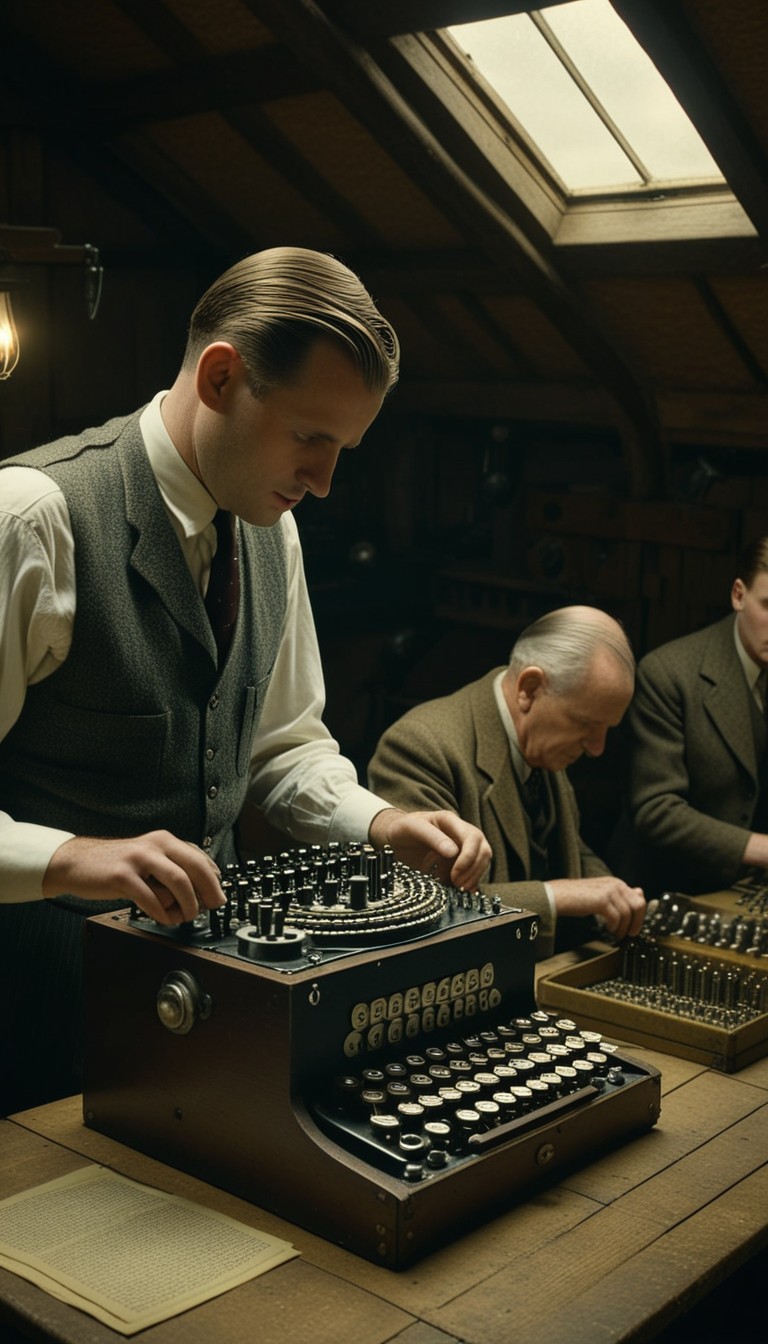
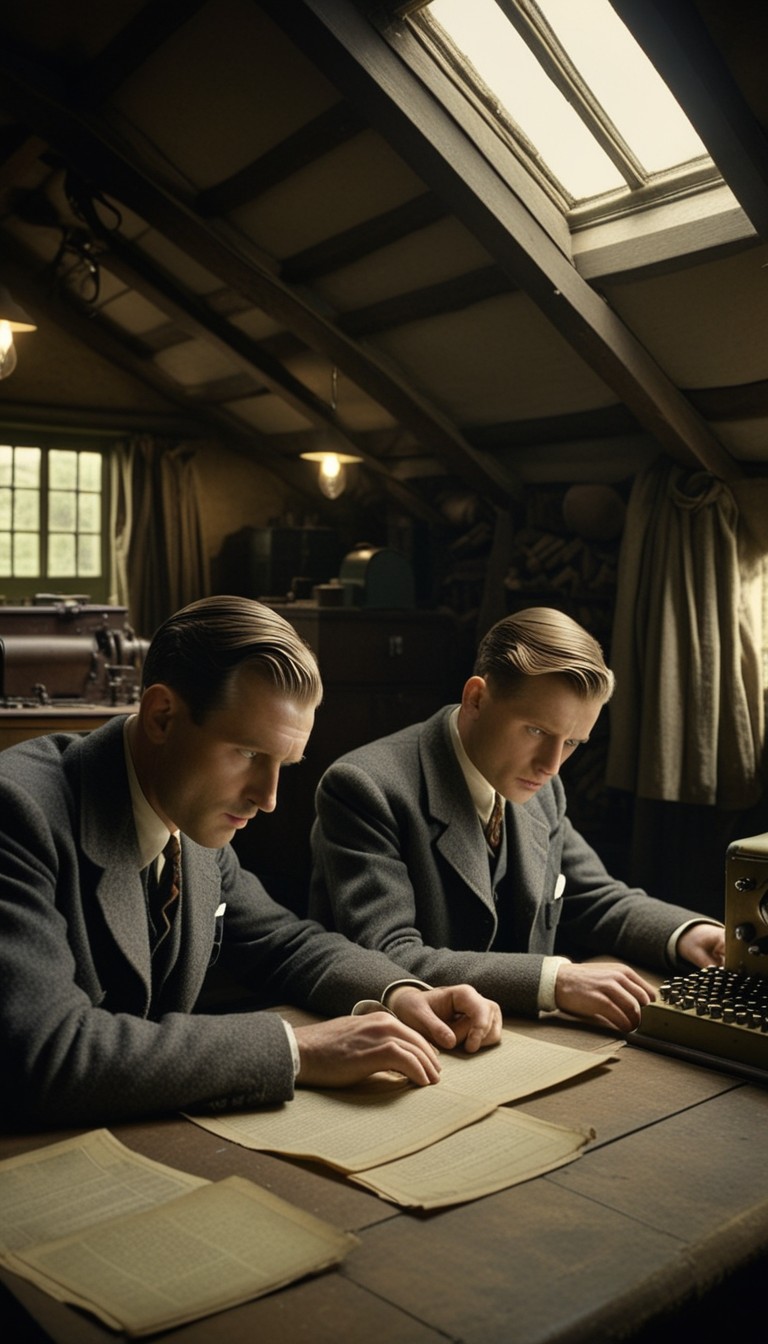
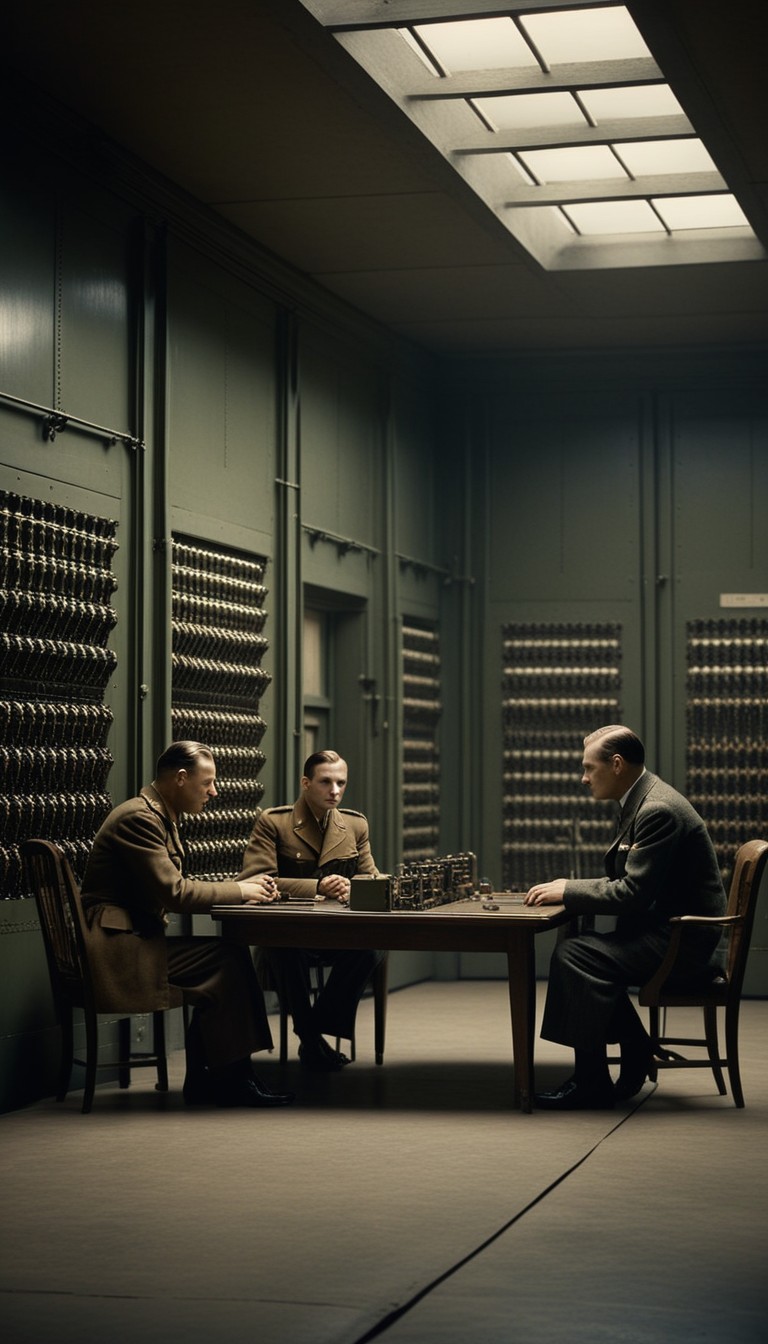
When war broke out in September 1939, Turing reported to Bletchley Park—Britain's top-secret codebreaking station in a Victorian mansion in Buckinghamshire. Germany's Enigma machine scrambled military communications through a rotating series of cipher wheels, producing 158 quintillion possible settings each day. Every morning, the settings reset. Breaking Enigma seemed mathematically impossible. Turing was unimpressed by impossible. Working in Hut 8, he led the effort to crack naval Enigma, the most difficult variant, which concealed the U-boat positions sinking Allied supply ships by the hundreds.
1940–1942
Bletchley Park, England
The Bombe
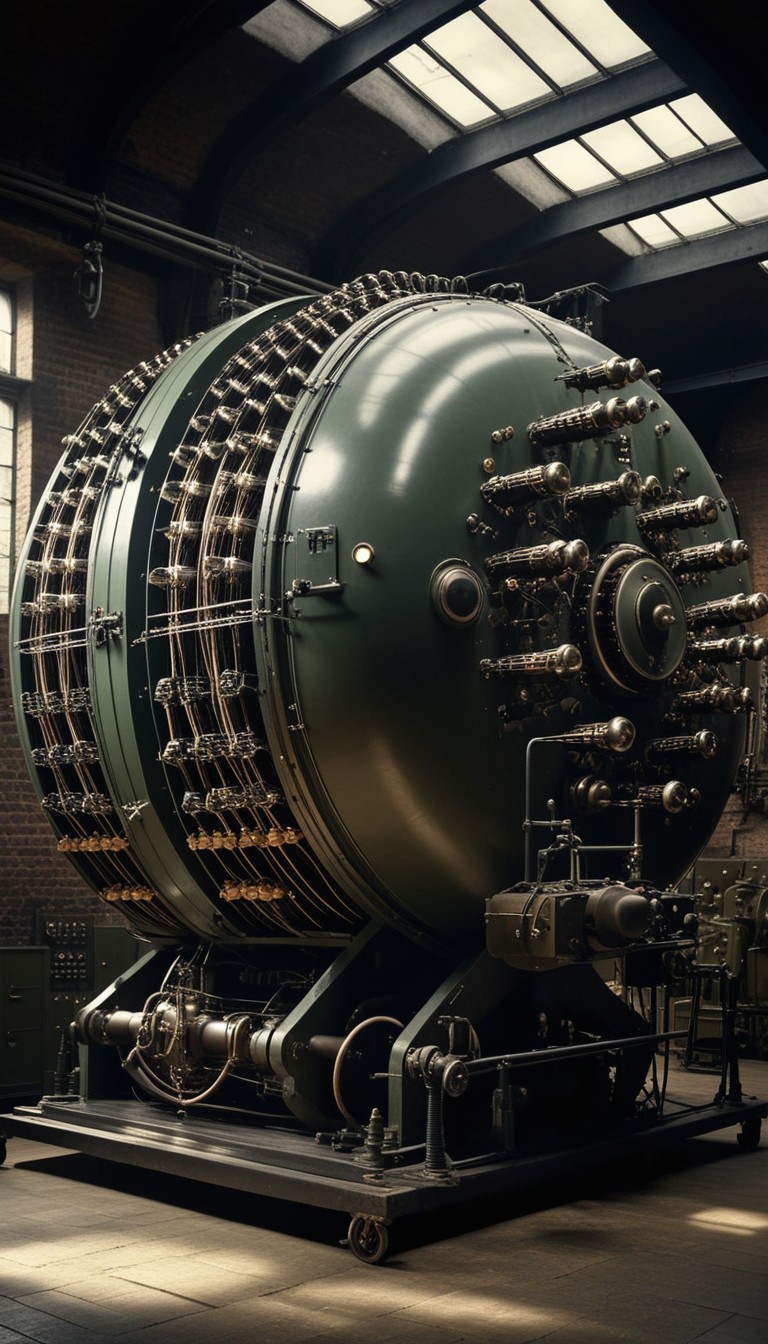
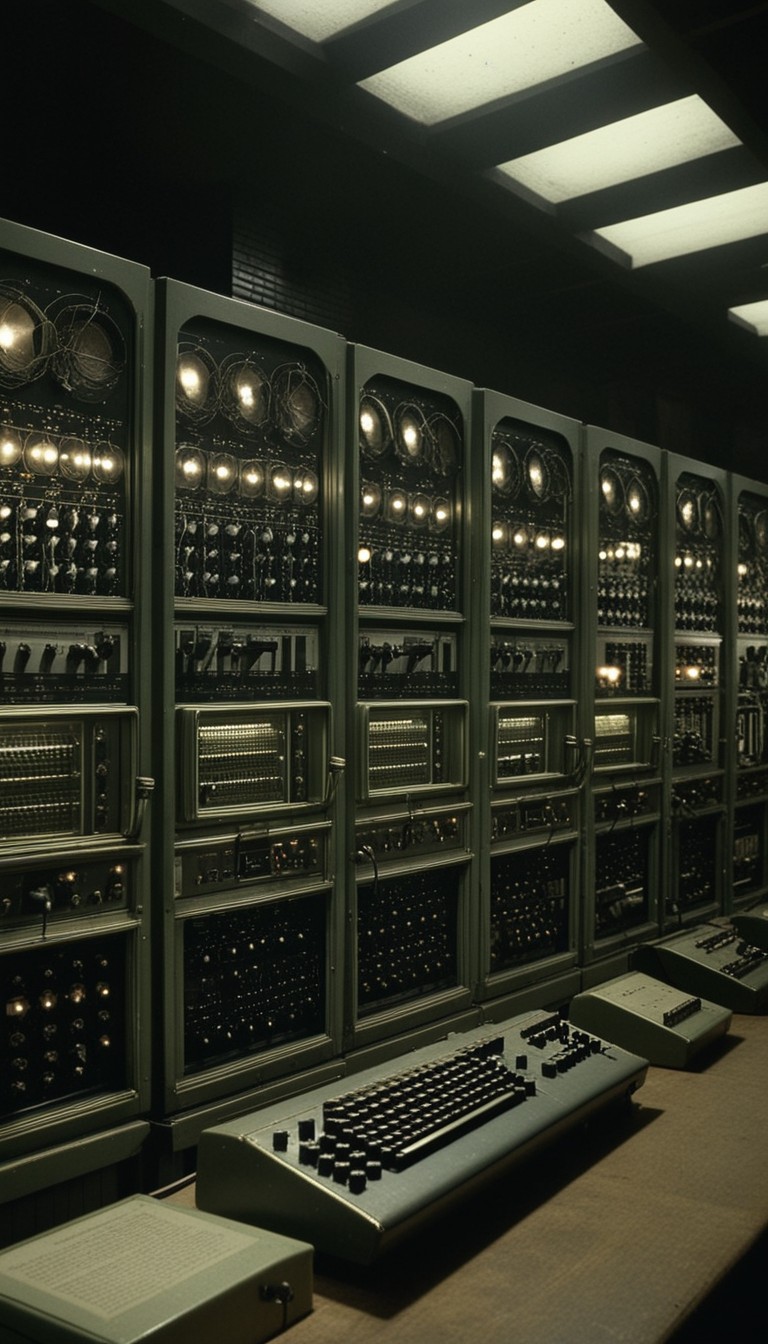
Turing's answer to Enigma was the Bombe—an electromechanical machine that could systematically test thousands of possible Enigma settings in minutes by exploiting predictable phrases in German messages. Building on a Polish design, Turing refined the mathematics so that the Bombe could eliminate wrong settings far faster, working backwards from known cribs—guessed plain-text fragments. By 1942, over 200 Bombes were operating around the clock. Each day, they handed Allied commanders a window into Hitler's orders—troop movements, supply routes, U-boat positions—intelligence that turned the tide of battle at sea and on land.

1940–1945
Atlantic & European Theatre
Millions of Lives Saved
Historians estimate that the intelligence produced at Bletchley Park, and Turing's work in particular, shortened World War II in Europe by at least two to four years. The Battle of the Atlantic—where German U-boats were sinking Allied ships faster than they could be built—was turned by decrypted naval Enigma. Convoy routes were rerouted around U-boat wolf-packs. D-Day was preceded by intelligence that allowed planners to deceive Hitler about the landing site. Churchill called the Bletchley codebreakers "the geese that laid the golden eggs and never cackled." Turing was the chief goose, and his silence cost him everything.
1945–1950
London & Manchester, England
Building the Computer Age
After the war, Turing turned his theoretical machine into reality. At the National Physical Laboratory in London he designed the ACE—Automatic Computing Engine—one of the earliest stored-program computer designs. Frustrated by institutional delays, he moved to Manchester, where he contributed to the Manchester Mark 1, one of the world's first computers to run a stored program. He also produced the first detailed design for a chess-playing program, anticipating artificial intelligence decades before the field had a name. The computer on which you may be reading these words traces a direct intellectual lineage to Turing's 1936 paper and his post-war engineering.
1950
Manchester, England
Can Machines Think?
In 1950, Turing published "Computing Machinery and Intelligence," opening with the disarming question: "Can machines think?" To make the question rigorous, he proposed what he called the Imitation Game—now known as the Turing Test. A human judge conducts written conversations with both a human and a machine; if the judge cannot reliably tell them apart, the machine has demonstrated something indistinguishable from intelligence. The paper dismantled objections one by one with calm logic and playful wit. It founded the field of artificial intelligence and planted a question at the centre of modern philosophy of mind that remains unanswered today.
1952–1954
Wilmslow, Cheshire, England
Persecution and Death
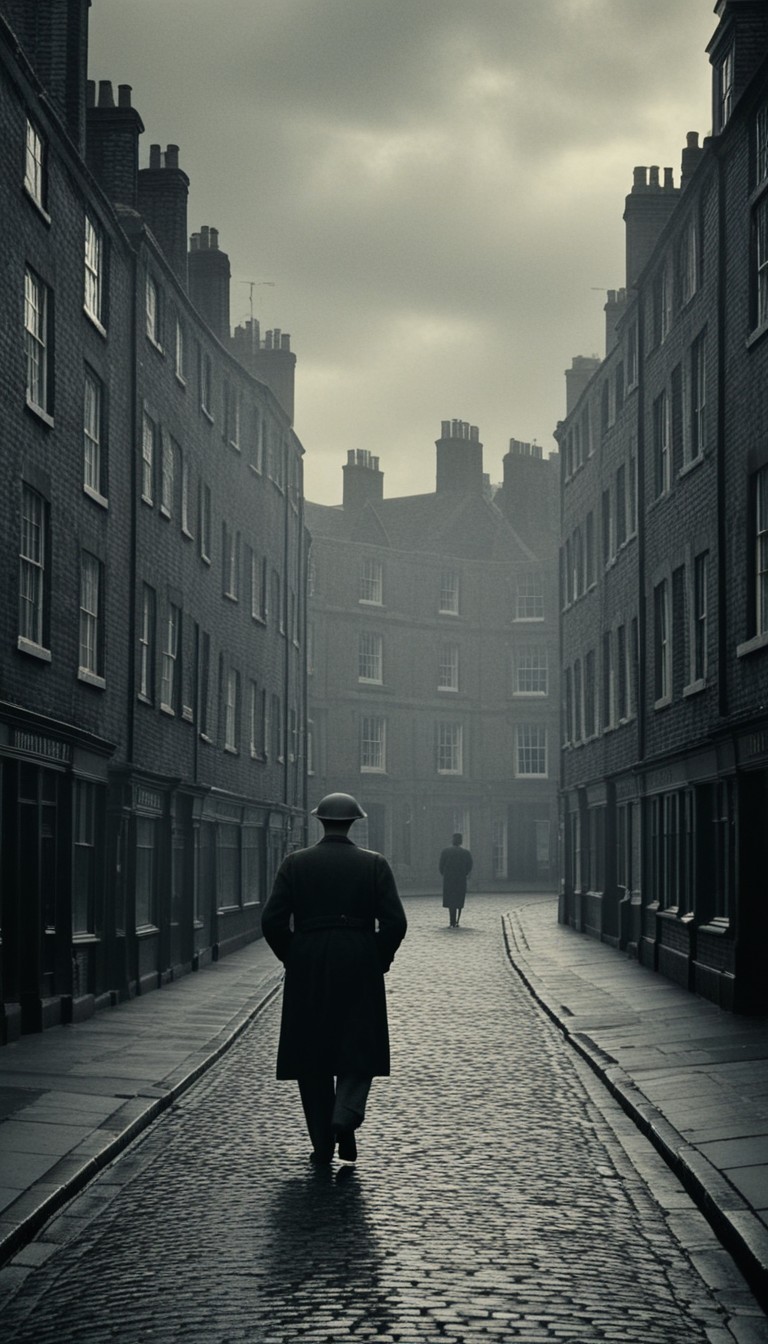
In January 1952, Turing reported a burglary to the police. During the investigation he disclosed that the burglar's acquaintance was his lover—a man named Arnold Murray. Homosexuality was a criminal offence in Britain. Turing was charged with "gross indecency" and convicted. He was given a stark choice: prison or chemical castration via injections of synthetic oestrogen. He chose the injections. His security clearance was revoked and his work for GCHQ ended. On June 7, 1954, he was found dead beside a half-eaten apple laced with cyanide. He was 41 years old. The coroner returned a verdict of suicide.

Father of Computer Science
In 2009, British Prime Minister Gordon Brown issued a formal apology for the "appalling" treatment of Alan Turing. In 2013, Queen Elizabeth II granted him a royal pardon. In 2021, Turing's face was placed on the British £50 note—the highest denomination in circulation. But the truest monument to Alan Turing is invisible and everywhere: every smartphone, laptop, server, and artificial intelligence system runs on principles he invented. The man the British government destroyed for who he loved is now recognised as the father of computer science and one of the most consequential minds in human history.
Recommended Reading
As an Amazon Associate, we earn from qualifying purchases.
Swipe to navigate