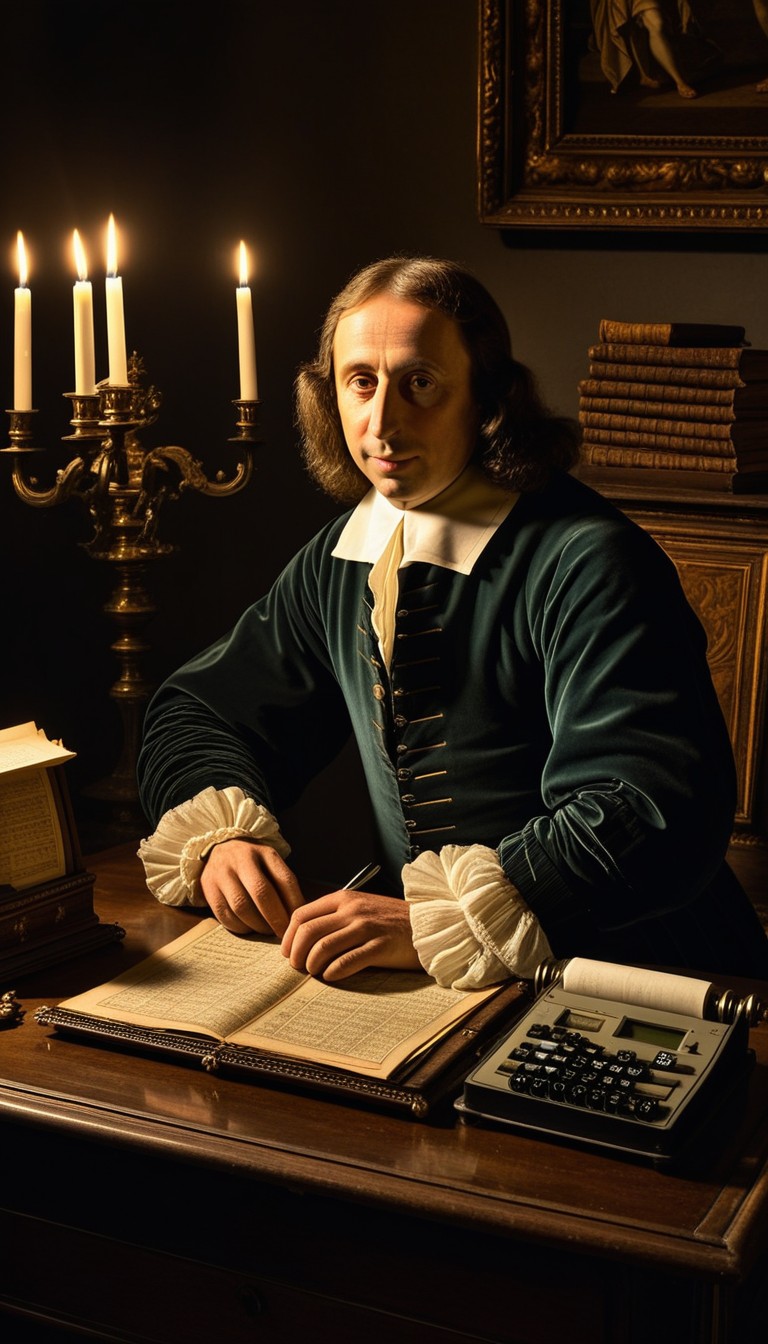
Blaise Pascal: Prodigy, Inventor, Philosopher
Loading story...
1623-1635
Clermont-Ferrand, France
A Prodigy in Clermont-Ferrand
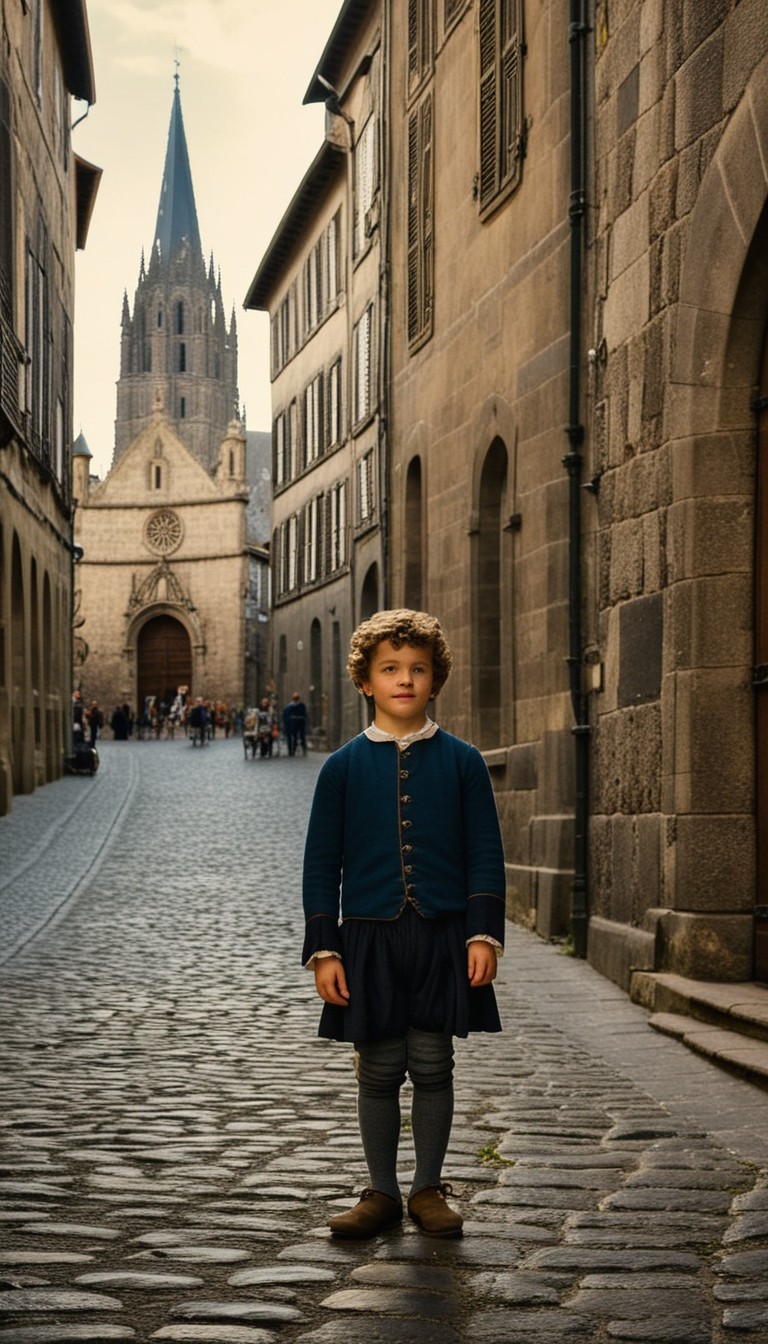
Blaise Pascal was born on June 19, 1623, in Clermont-Ferrand, France. His mother died when he was three, and his father, Etienne Pascal, a talented mathematician and tax official, took charge of his education. Etienne tried to keep mathematics away from young Blaise to focus on languages first. But at age twelve, the boy independently worked out the first thirty-two propositions of Euclid's Elements on his own, using charcoal on the floor tiles. His father relented.
1639
Paris, France
Pascal's Theorem at Sixteen
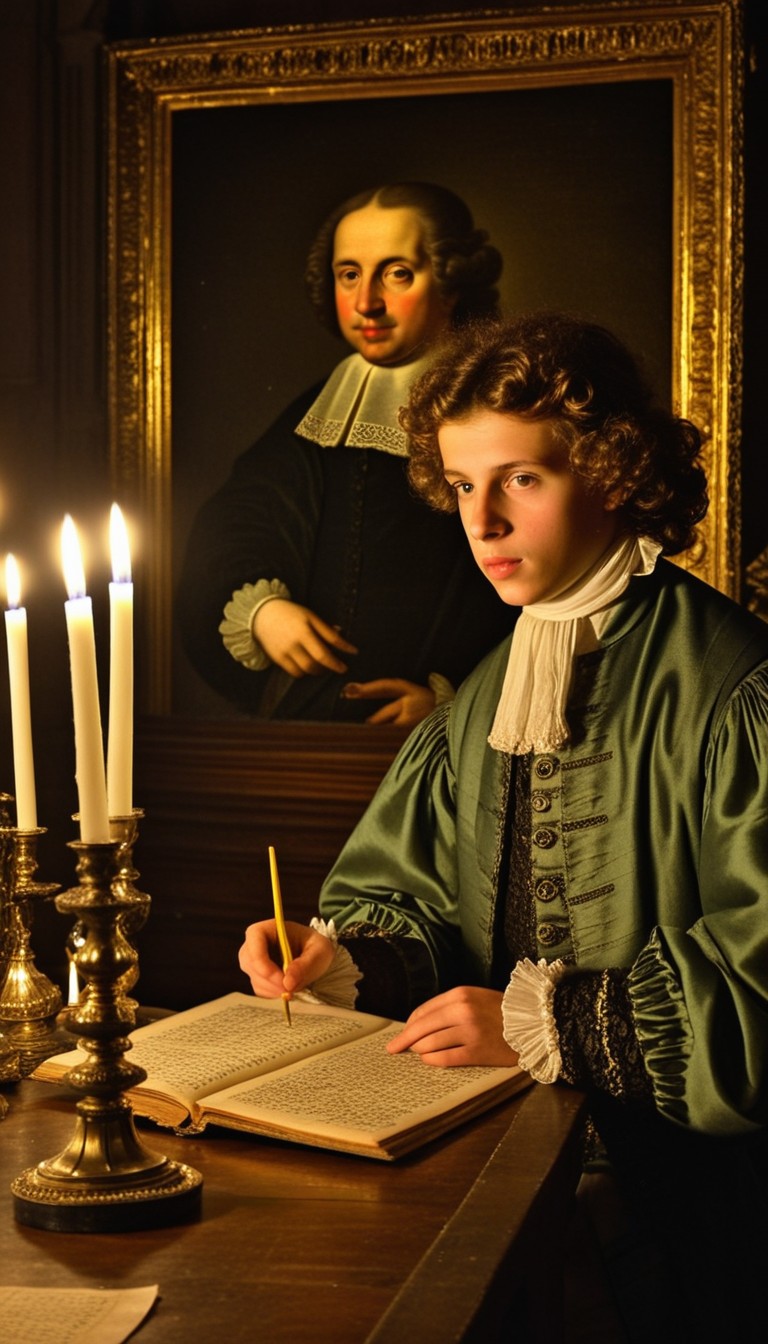
At sixteen, Pascal wrote an essay on conic sections that astonished the Parisian mathematical community. His theorem, now called Pascal's theorem, states that if a hexagon is inscribed in a conic section, the three pairs of opposite sides meet in collinear points. Descartes refused to believe a teenager had produced it. This result, a gem of projective geometry, established Pascal as a serious mathematician before he could even grow a beard.
1642-1645
Rouen, France
The Pascaline: Calculating by Machine
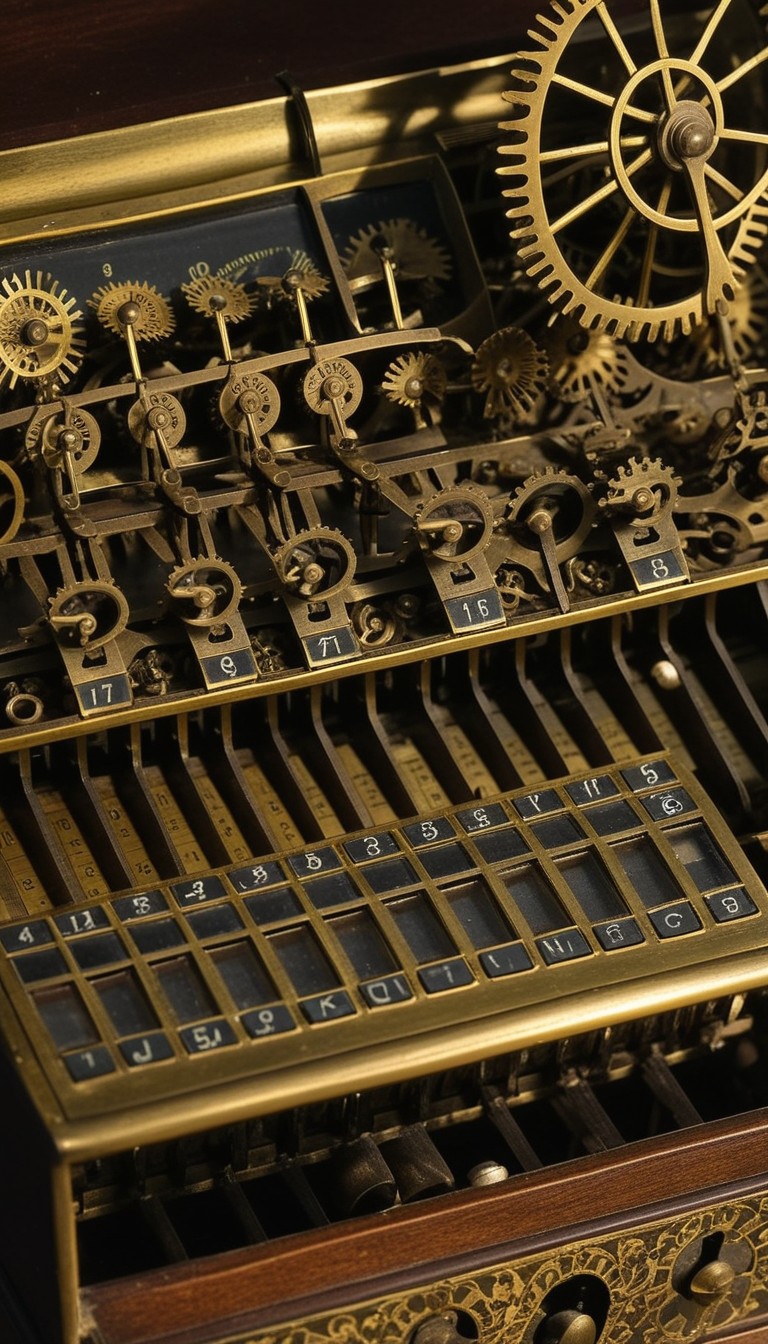
To help his father with the tedious arithmetic of tax collection, the nineteen-year-old Pascal designed and built one of the world's first mechanical calculators: the Pascaline. Using interlocking gears, it could add and subtract numbers up to six digits. He built about fifty machines over several years, constantly refining the design. Though too expensive for commercial success, the Pascaline was a landmark in the history of computing, a concrete demonstration that arithmetic could be mechanized.
1647-1648
Paris & Puy de Dome, France
The Weight of Air
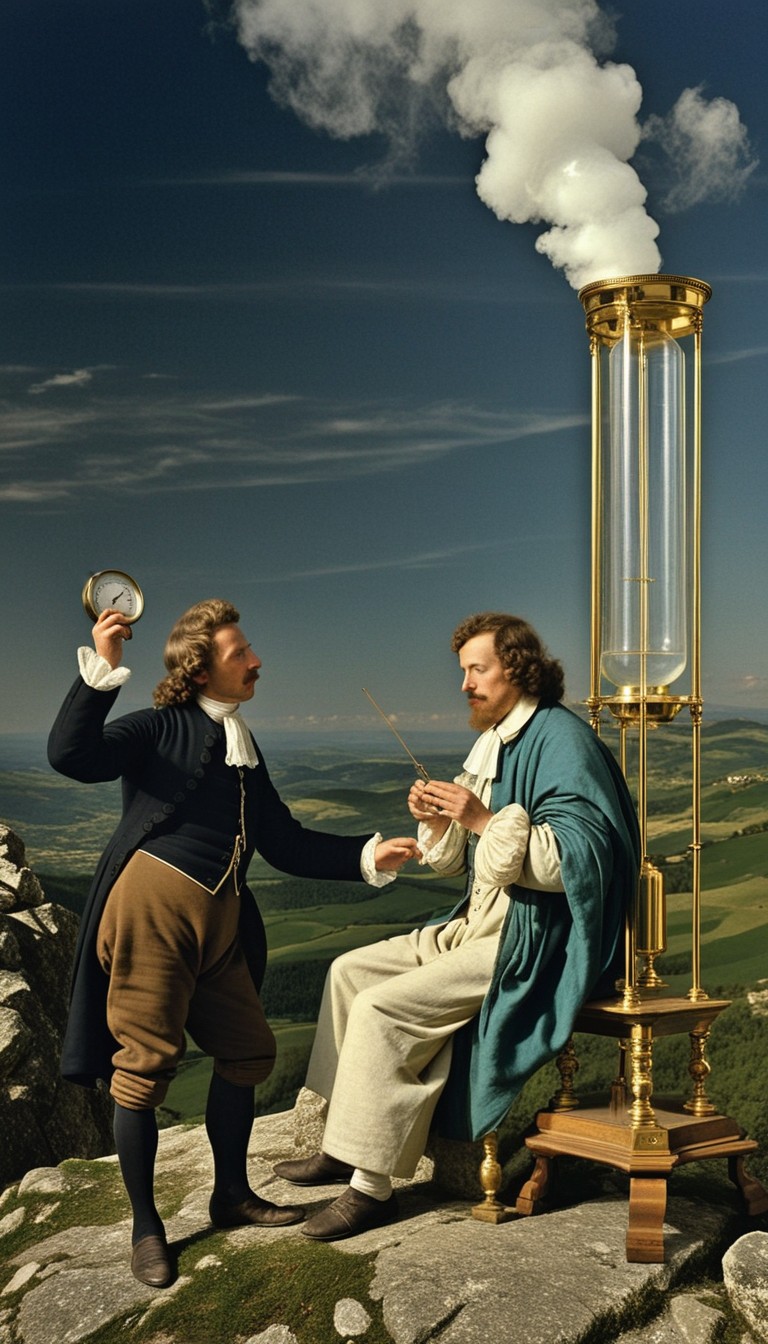
Pascal made groundbreaking contributions to physics, designing experiments that proved the existence of the vacuum and that atmospheric pressure decreases with altitude. He had his brother-in-law carry a mercury barometer up the Puy de Dome mountain, recording the drop in mercury level at different heights. This confirmed Torricelli's hypothesis and demolished Aristotle's ancient claim that nature abhors a vacuum. The pascal, the SI unit of pressure, is named in his honor.
1654
Paris, France
Pascal's Triangle and the Arithmetic of Combinations
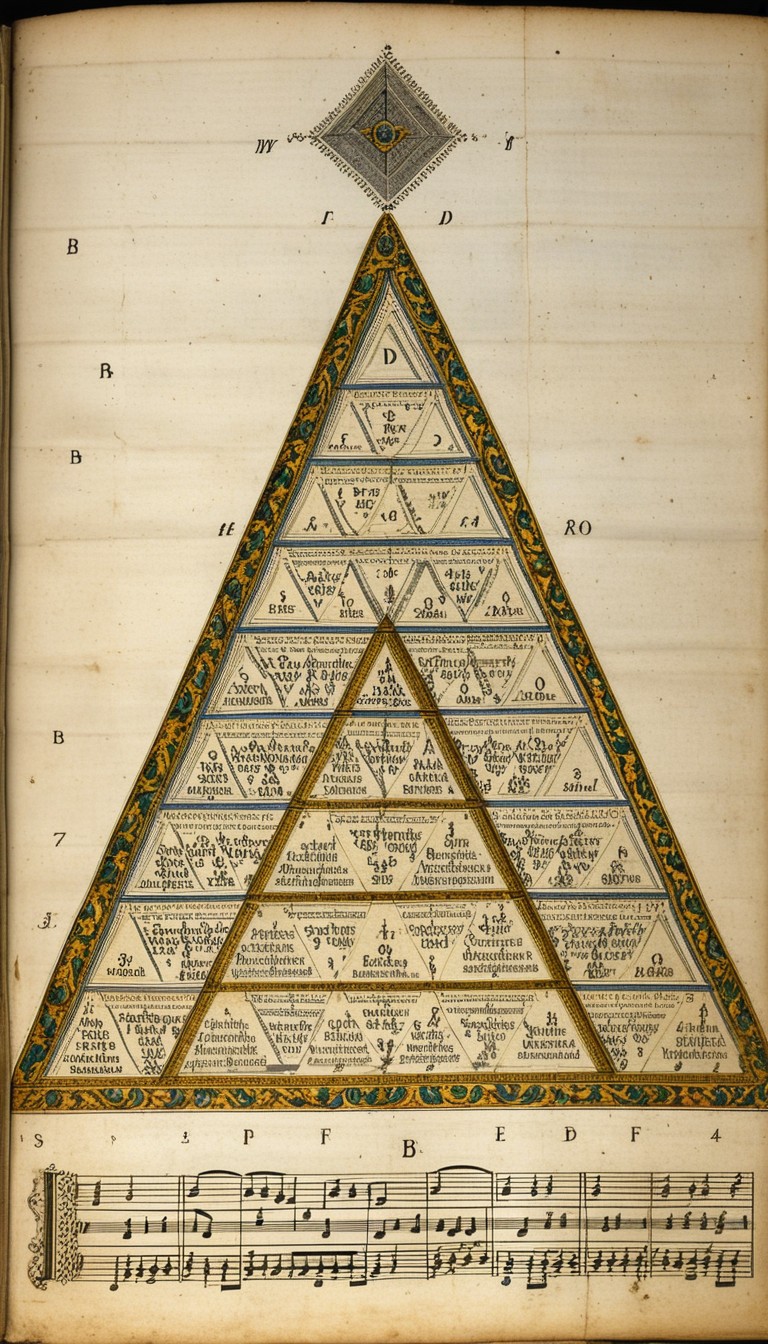
In his 1654 Traite du triangle arithmetique, Pascal systematically explored the triangular array of binomial coefficients now known as Pascal's triangle. Though the pattern had been studied by Chinese, Indian, and Persian mathematicians centuries earlier, Pascal was the first to provide a comprehensive treatment of its properties and applications. He showed how the triangle connects to combinations, powers, and figurate numbers, making it an essential tool in algebra and combinatorics.
1654
Paris, France
The Birth of Probability Theory
In 1654, a gambler named the Chevalier de Mere posed a question to Pascal: how should the stakes of an unfinished game of chance be divided fairly? Pascal exchanged a famous series of letters with Pierre de Fermat, and together they worked out the mathematical foundations of probability. They developed the concept of expected value and methods for calculating the likelihood of future events. From a gambling question emerged a new branch of mathematics that would transform science, economics, and insurance.
November 23, 1654
Paris, France
The Night of Fire
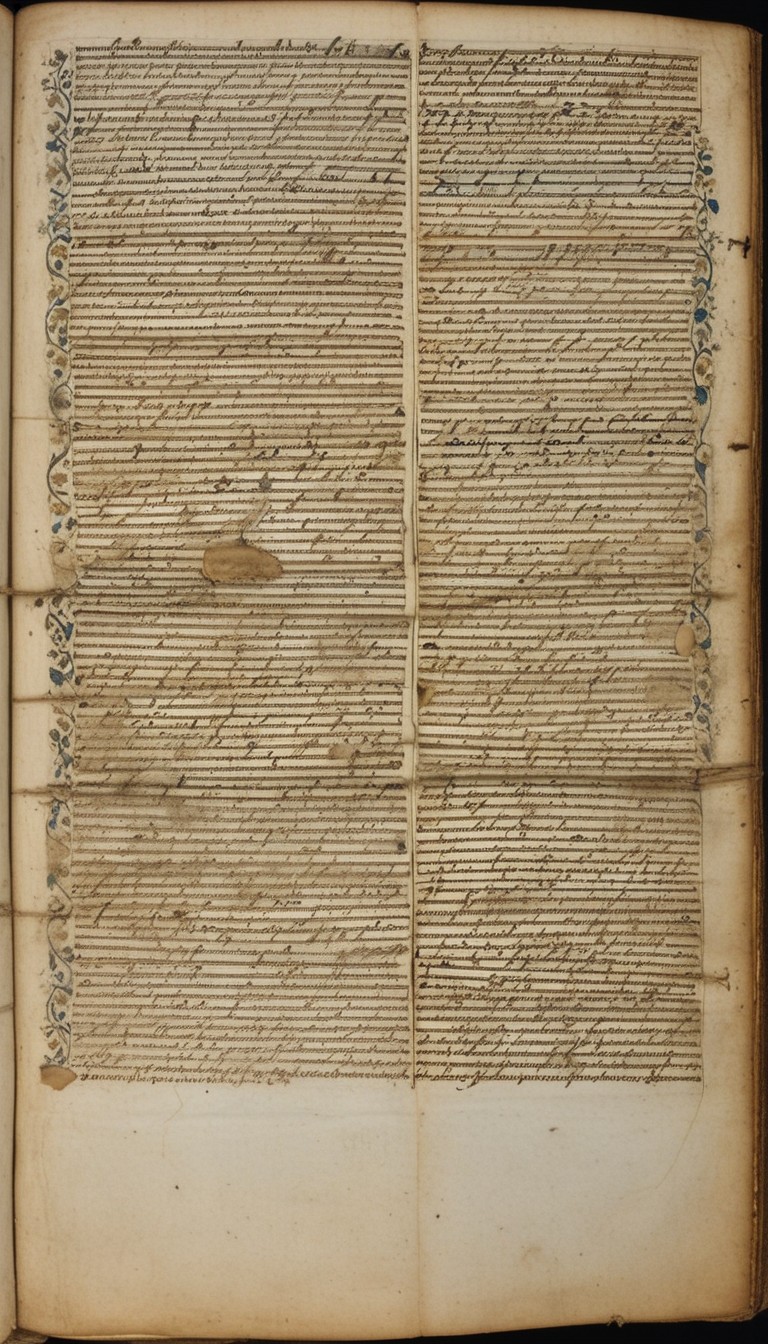
On the night of November 23, 1654, Pascal had a profound religious experience that he called his "night of fire." He wrote a feverish account on a piece of parchment, which was found sewn into his coat after his death. From this point, he largely abandoned mathematics and devoted himself to theology and philosophy. He joined the Jansenist movement at the Port-Royal abbey and turned his formidable intellect to questions of faith, reason, and human nature.
1656-1662
Paris, France
The Pensees and Pascal's Wager
Pascal's unfinished masterpiece, the Pensees, published posthumously in 1670, contains some of the most quoted passages in Western literature. His famous wager argues that it is rational to bet on God's existence, since the potential gain is infinite while the cost is finite. He died on August 19, 1662, at just thirty-nine years old, ravaged by chronic illness. In his brief life, he had been a geometer, inventor, physicist, probabilist, philosopher, and one of the finest prose stylists in the French language.
The Heart Has Its Reasons
Blaise Pascal lived only thirty-nine years, yet he left marks on geometry, physics, computing, probability, philosophy, and literature. He built machines that calculated, designed experiments that measured the invisible weight of air, and co-founded the mathematics of chance. Then he turned his penetrating mind to the deepest questions of existence itself. "The heart has its reasons," he wrote, "which reason does not know." Few have embodied that tension between logic and mystery so completely.
Swipe to navigate