Srinivasa Ramanujan: The Man Who Knew Infinity
Loading story...

1887-1903
Erode & Kumbakonam, Tamil Nadu, India
A Brahmin Boy in South India
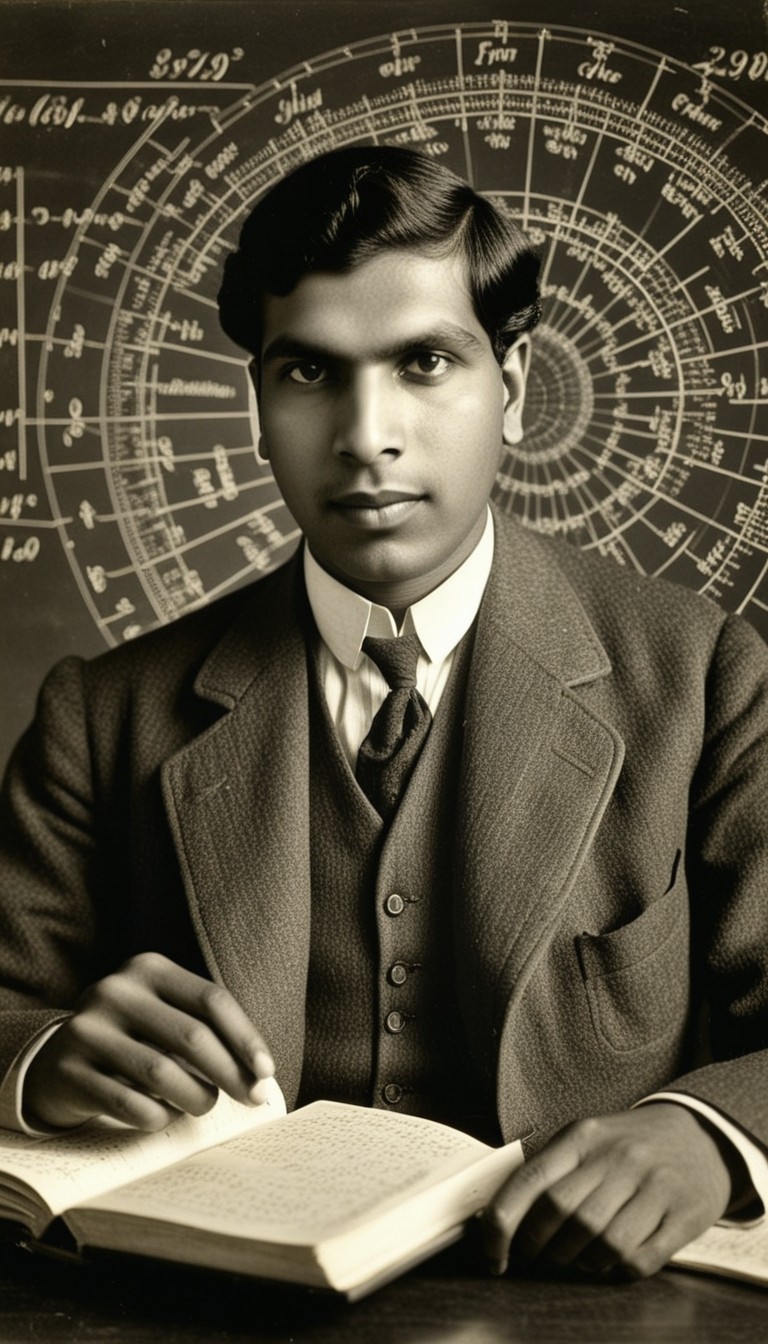
Srinivasa Ramanujan was born on December 22, 1887, in Erode, Tamil Nadu, into a poor Brahmin family. His father was a clerk in a sari shop, his mother a homemaker who sang at a local temple. By age twelve, Ramanujan had mastered advanced trigonometry on his own. At fifteen, he obtained a copy of George Shoobridge Carr's Synopsis of Elementary Results in Pure Mathematics, a dry compendium of five thousand formulas. It became his bible, and he began producing original results at an astonishing pace.
1904-1912
Kumbakonam & Madras, India
The Notebooks of a Self-Taught Genius
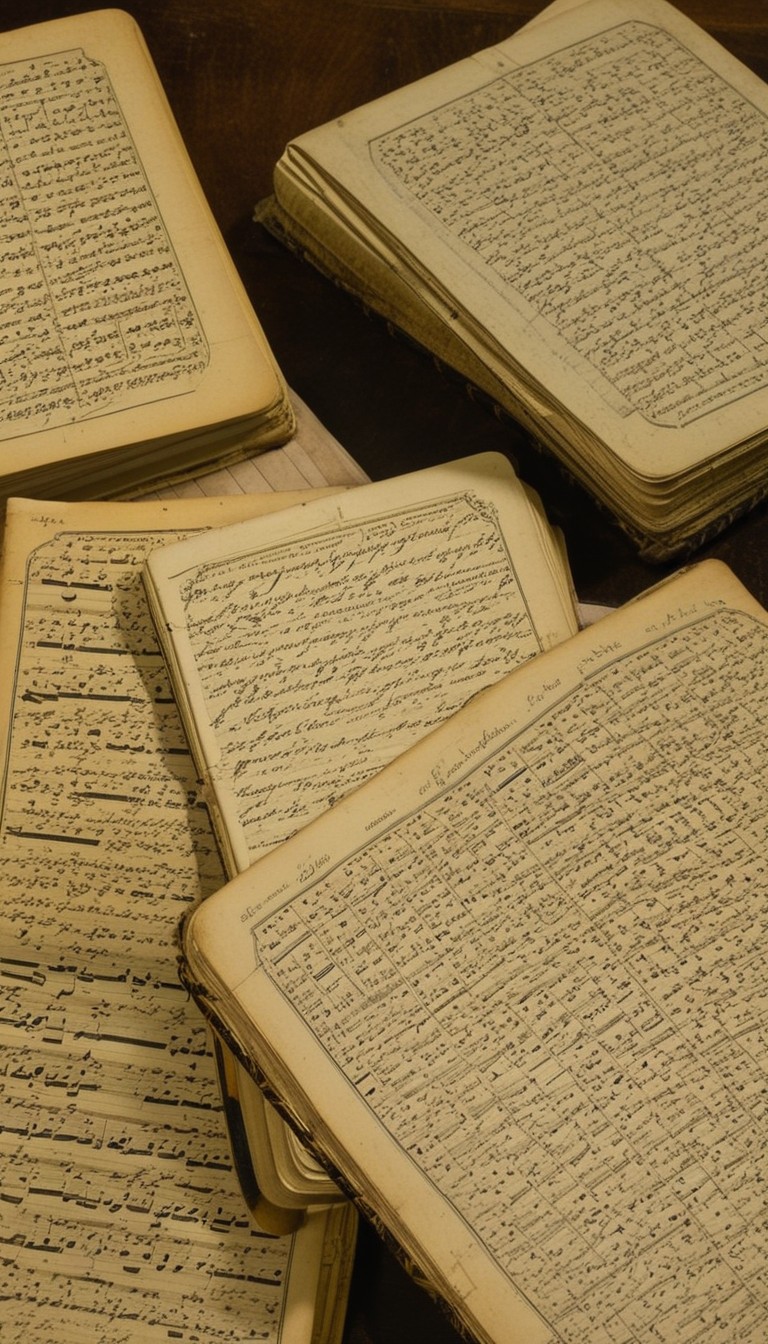
Ramanujan's obsession with mathematics cost him his college scholarship. He failed exams in every subject except math because he spent all his time filling notebooks with original theorems. Working in isolation with almost no access to modern mathematical literature, he independently rediscovered results by Euler, Gauss, and Jacobi, and went far beyond them. His notebooks, dense with formulas written without proofs, contained thousands of results in infinite series, number theory, and continued fractions.
January 1913
Madras, India to Cambridge, England
The Letter That Changed Everything
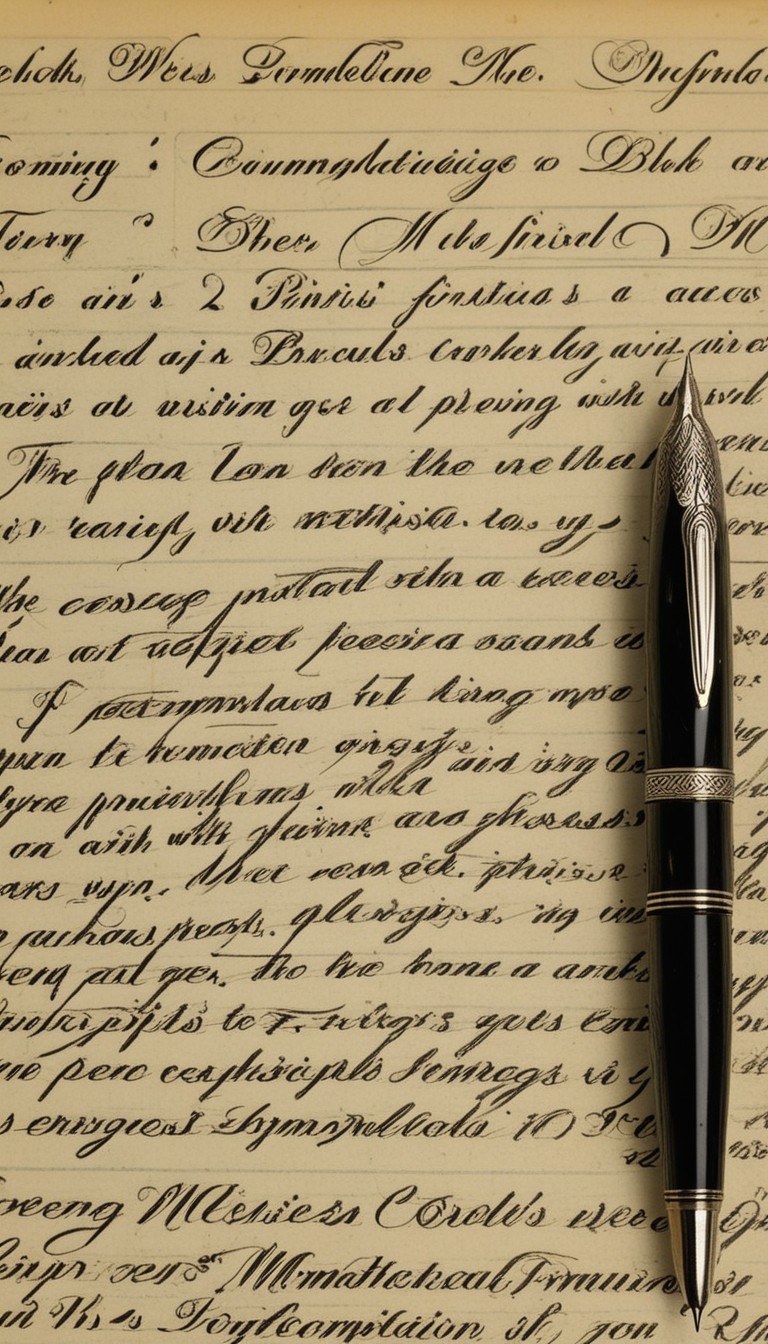
In January 1913, Ramanujan wrote to G.H. Hardy, a leading mathematician at Cambridge, enclosing nine pages of formulas. Hardy initially suspected a fraud, but as he and his colleague J.E. Littlewood studied the results, they realized they were looking at the work of a genius. Some formulas were known, some were new, and some were so strange they had to be true because no one could have invented them. Hardy called it "the most remarkable letter I have ever received."

1914-1919
Cambridge, England
Cambridge: A Fish Out of Water
In 1914, Ramanujan traveled to England, leaving India for the first time. As a strict vegetarian Brahmin, he struggled with the cold, the food, and the loneliness of wartime Cambridge. But mathematically, his collaboration with Hardy was electric. Together they produced groundbreaking work on the partition function, calculating the number of ways an integer can be written as a sum of positive integers. Their asymptotic formula, using the circle method, was a landmark in analytic number theory.
1914-1920
Cambridge, England
Formulas from Another World
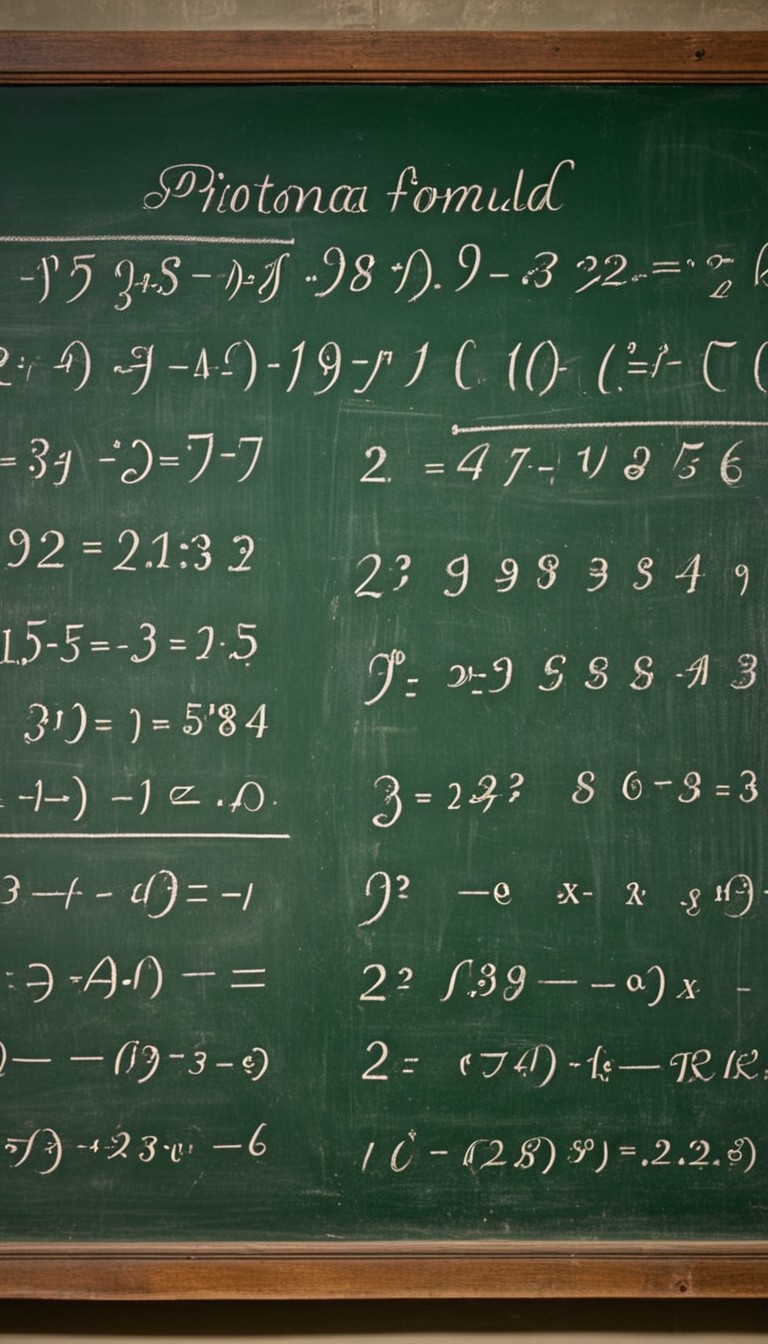
Ramanujan produced formulas of breathtaking originality. His rapidly converging infinite series for pi, discovered in 1914, became the basis for modern algorithms used to calculate pi to trillions of digits. His work on mock theta functions, described in his last letter to Hardy in 1920, was so far ahead of its time that it took mathematicians eighty years to fully understand it. When asked where his formulas came from, he said the goddess Namagiri revealed them to him in dreams.

1918
London, England
1729: The Hardy-Ramanujan Number
When Hardy visited Ramanujan in the hospital and mentioned that his taxicab number, 1729, seemed dull, Ramanujan instantly replied that it was actually very interesting: it is the smallest number expressible as the sum of two cubes in two different ways. One cubed plus twelve cubed, and nine cubed plus ten cubed. This anecdote perfectly captures Ramanujan's relationship with numbers. They were not abstract symbols to him. They were friends, each with a personality he knew intimately.
1918-1919
Cambridge, England
Fellow of the Royal Society
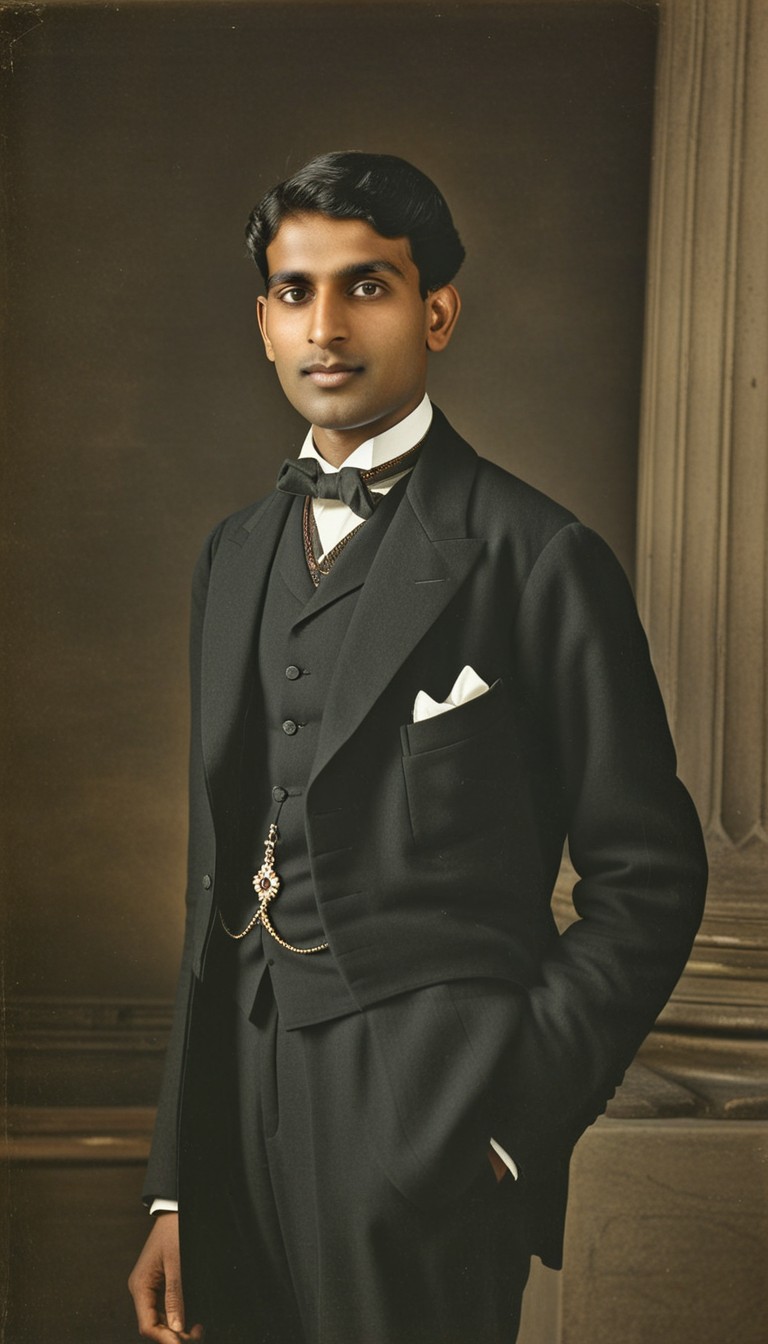
In 1918, Ramanujan was elected a Fellow of the Royal Society, one of the youngest in history and only the second Indian to receive the honor. He was also elected a Fellow of Trinity College, the first Indian to achieve this distinction. But his health was failing. Tuberculosis, compounded by malnutrition and the harsh English climate, was destroying him. He returned to India in 1919, desperately ill but still working on mathematics until his final days.
April 26, 1920
Kumbakonam, Tamil Nadu, India
A Legacy Written in Notebooks
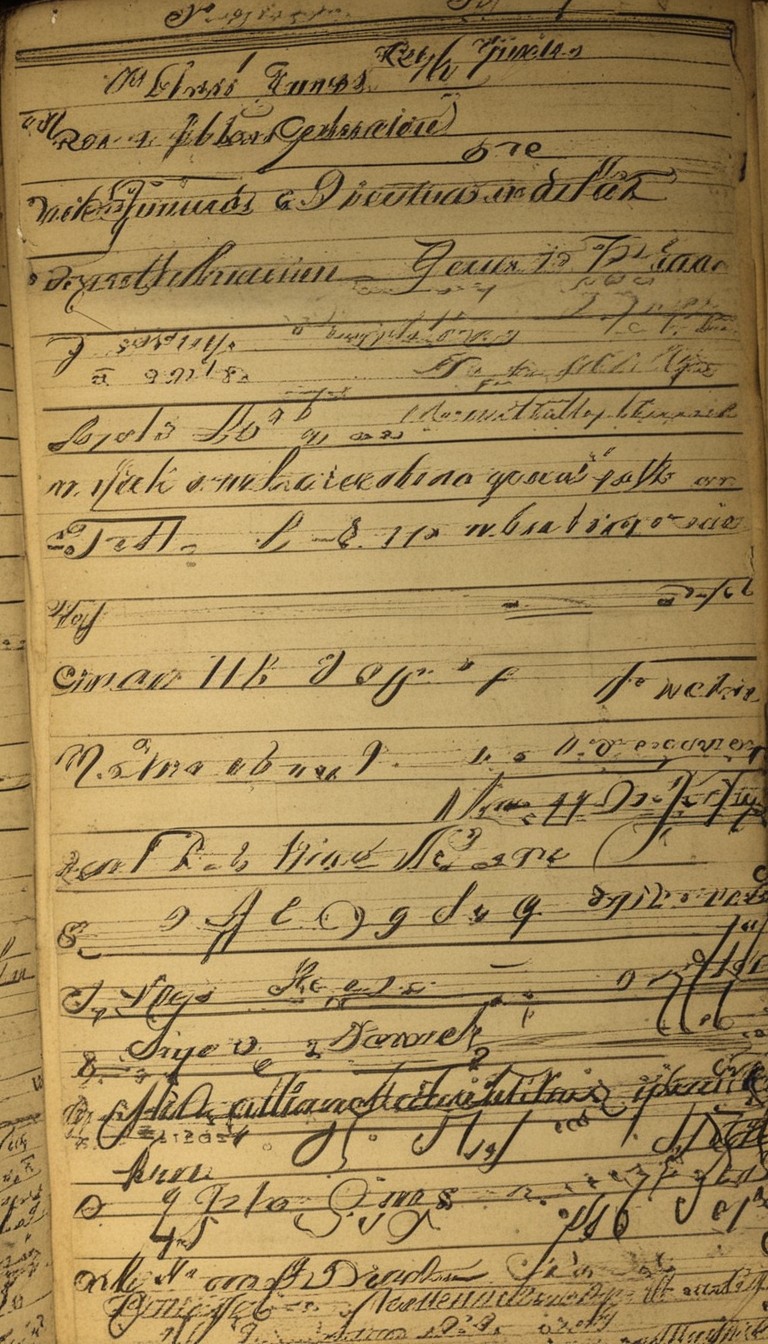
Ramanujan died on April 26, 1920, at the age of thirty-two. He left behind three notebooks and a collection of loose papers containing approximately 3,900 results. A "lost notebook," discovered in 1976 in a library at Trinity College, contained hundreds more formulas from his final year of life. Mathematicians continue to study these results today. His mock theta functions have found applications in string theory, statistical mechanics, and the theory of black holes.
An Equation Has No Meaning Unless It Expresses a Thought of God
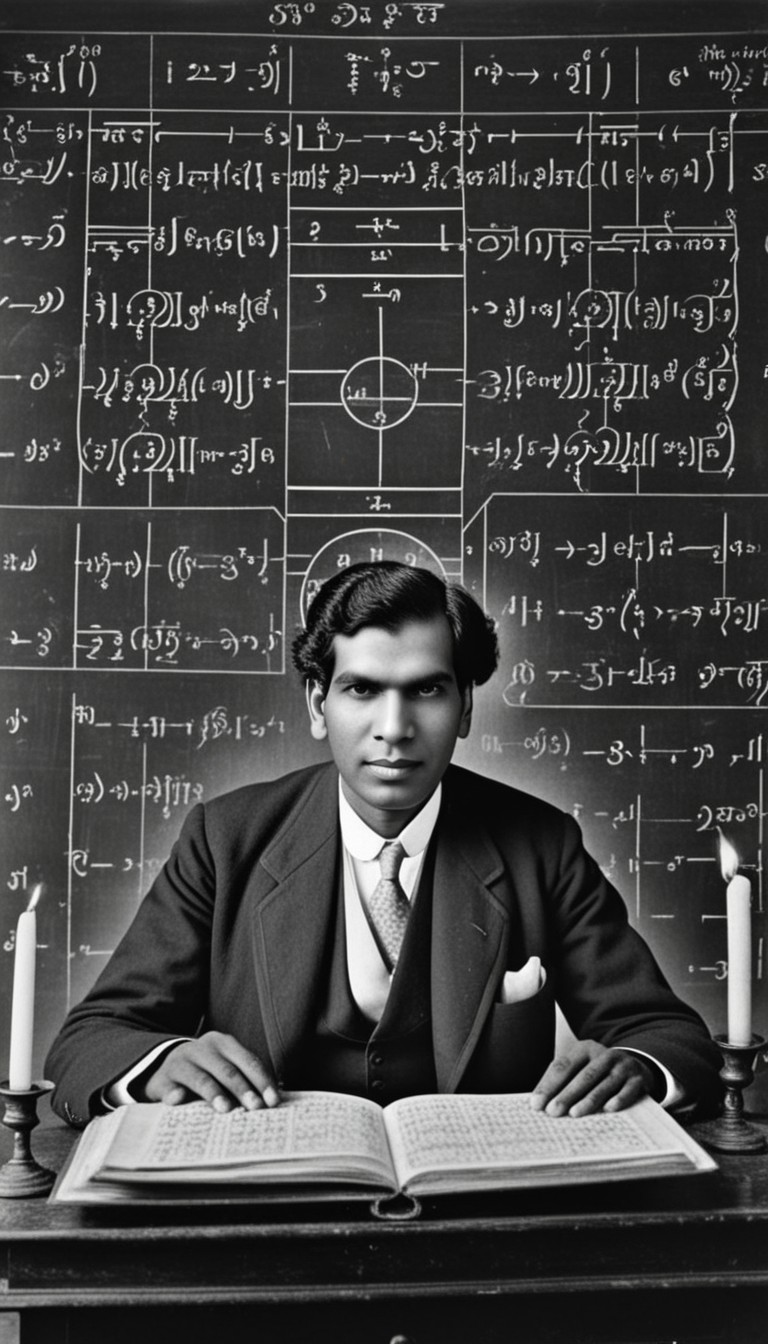
Srinivasa Ramanujan emerged from the most unlikely circumstances to produce mathematics of staggering depth and beauty. With almost no formal training, he saw truths about numbers that the best-educated minds in Europe had missed. His story is a testament to the universality of mathematical genius: it can appear anywhere, in any culture, at any time. A century after his death, his formulas still surprise, his notebooks still teach, and his story still inspires.



Swipe to navigate