Carl Friedrich Gauss: The Prince of Mathematicians
Loading story...

1777-1784
Brunswick, Germany
The Boy Who Stunned His Teacher
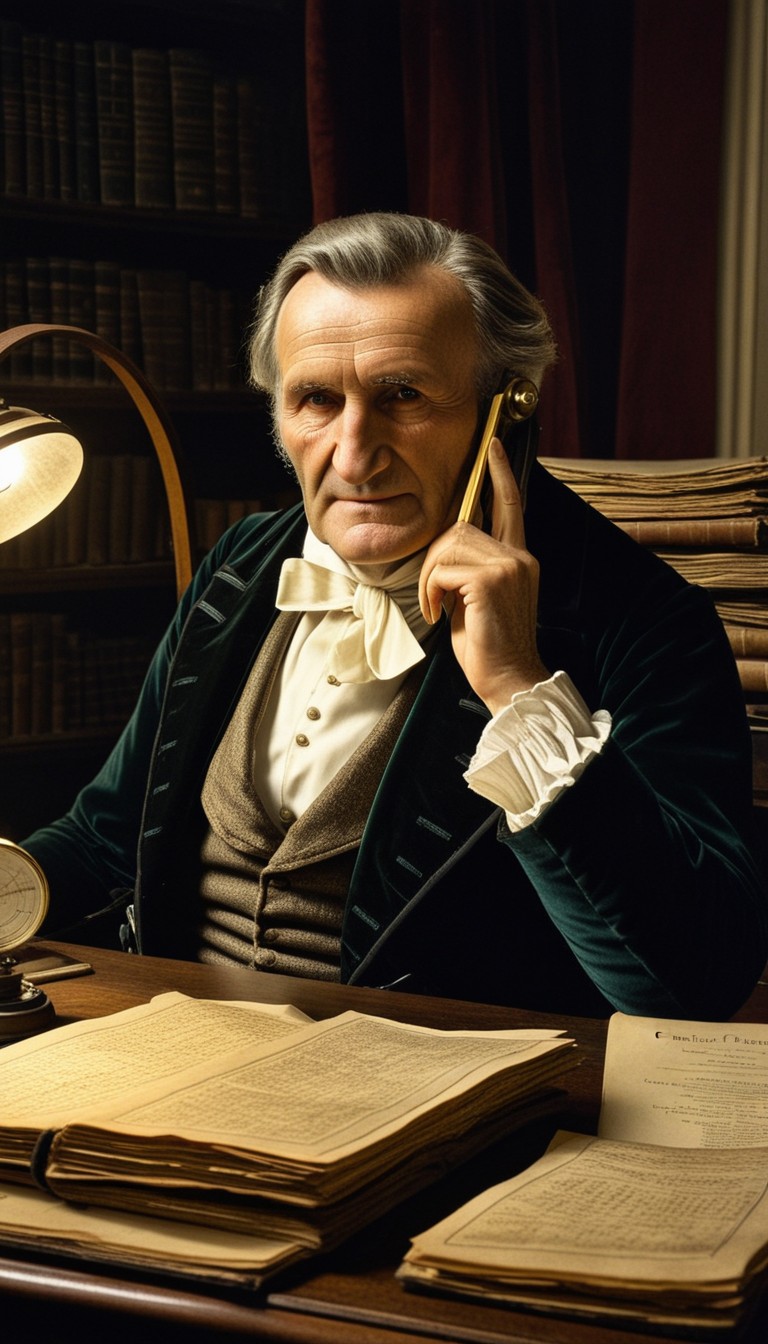
Born on April 30, 1777, in Brunswick, Germany, to a poor laboring family, Carl Friedrich Gauss showed extraordinary talent from the start. At age seven, when his teacher asked the class to sum all integers from 1 to 100, young Carl produced the answer almost instantly: 5,050. He had seen that pairing numbers from opposite ends, 1 plus 100, 2 plus 99, always gives 101, and there are fifty such pairs. A legend was born in a schoolroom.
1791-1798
Brunswick & Gottingen, Germany
A Duke's Patronage
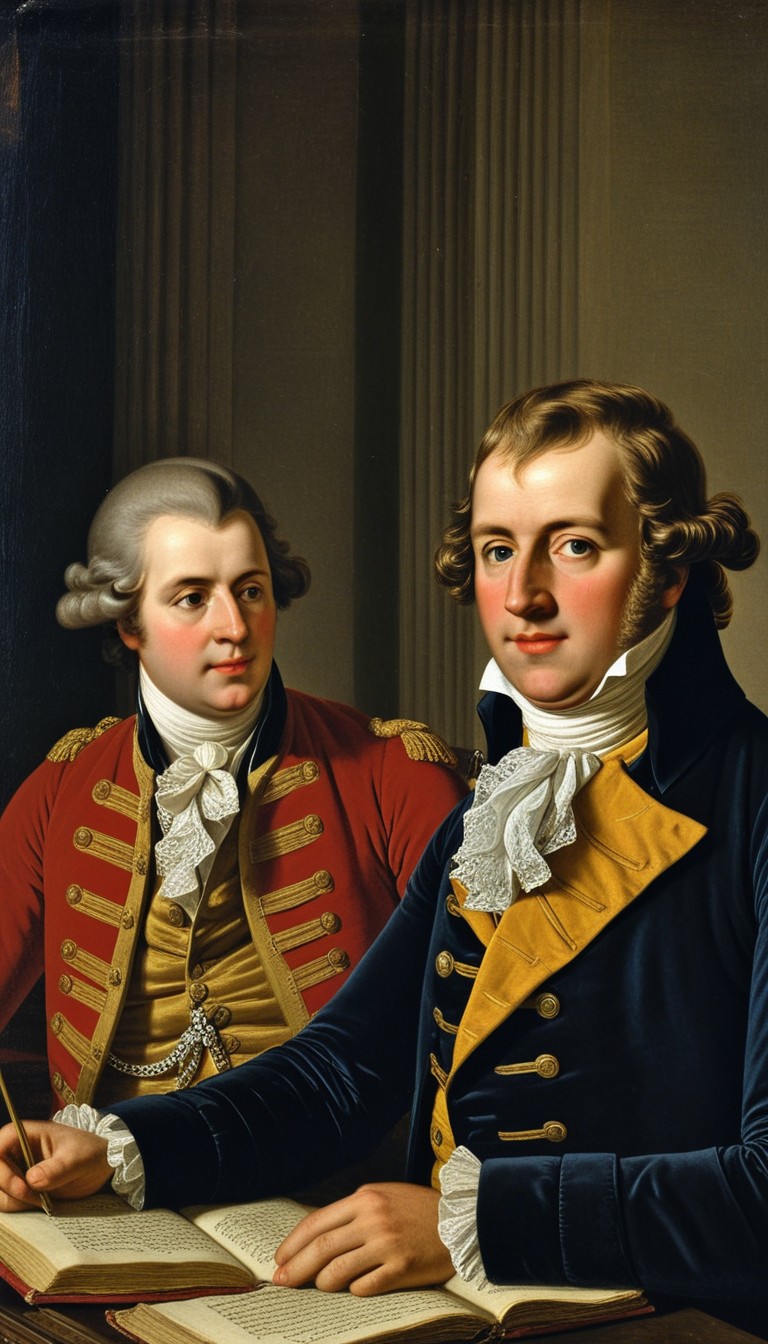
Gauss's brilliance attracted the attention of Carl Wilhelm Ferdinand, Duke of Brunswick, who funded his education from age fourteen onward. At the University of Gottingen, Gauss devoured mathematics and made his first great discovery at just nineteen: a method for constructing a regular 17-sided polygon using only compass and straightedge, a problem that had been open since antiquity. This result convinced him to devote his life to mathematics rather than philology.
1801
Brunswick, Germany
Disquisitiones Arithmeticae: The Bible of Number Theory
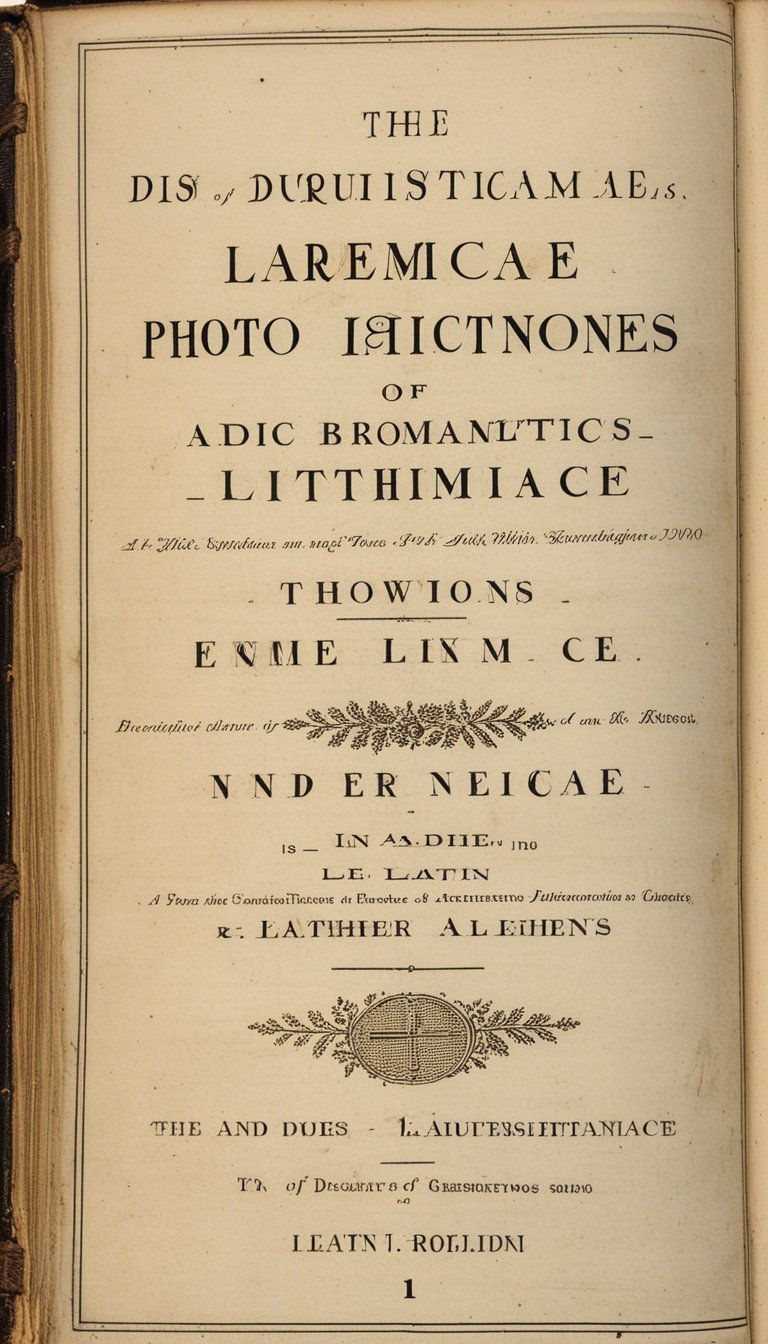
In 1801, at age twenty-four, Gauss published Disquisitiones Arithmeticae, a masterwork that transformed number theory from a collection of curiosities into a rigorous discipline. He introduced modular arithmetic, proved the law of quadratic reciprocity, and laid out the theory of congruences. The book was so far ahead of its time that mathematicians spent decades unpacking its implications. It remains one of the most important mathematical texts ever written.
1801
Brunswick, Germany
Finding a Lost Planet
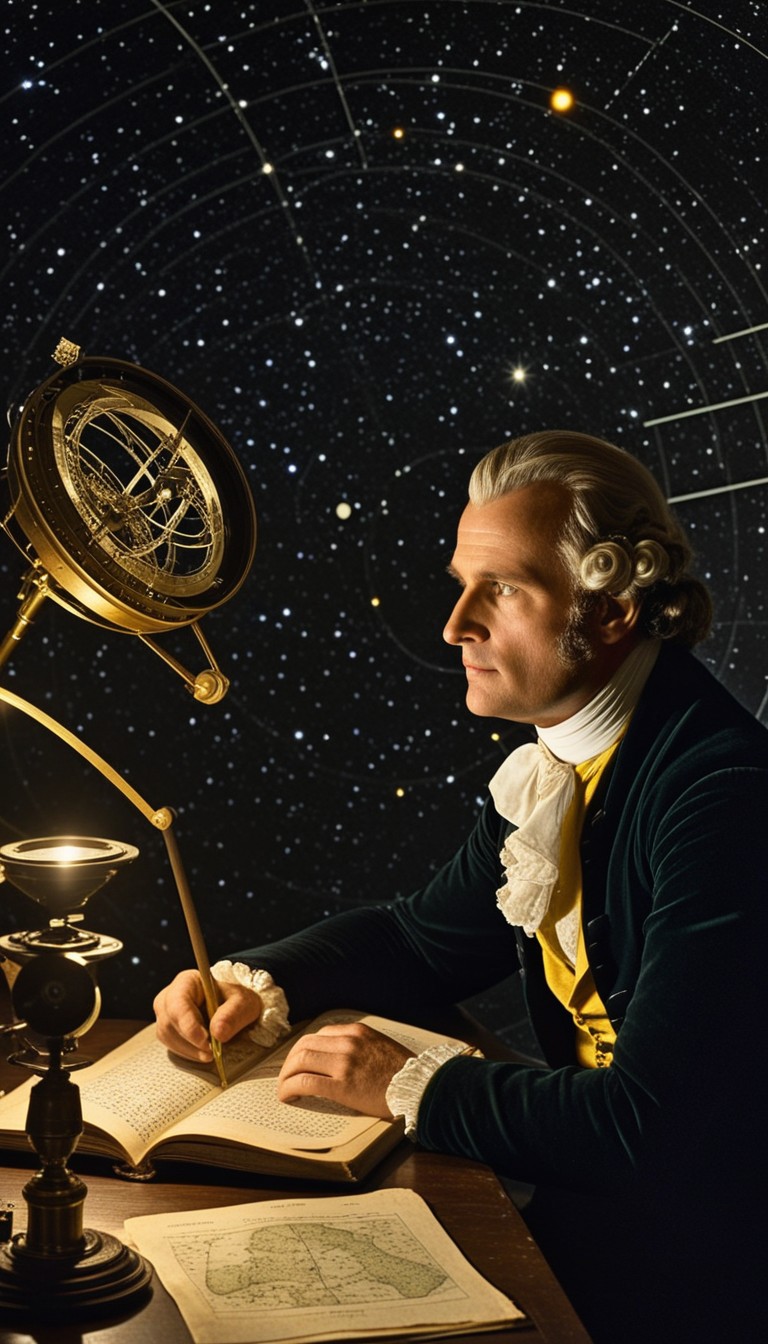
Also in 1801, the asteroid Ceres was discovered and then lost behind the sun. Astronomers could not predict where it would reappear. Using a new method of least squares that he had invented, Gauss calculated the orbit from a handful of observations. When Ceres was found exactly where he predicted, Gauss became famous across Europe. His method of least squares is still used today in statistics, GPS systems, and machine learning.
1809
Gottingen, Germany
The Bell Curve and the Shape of Chance
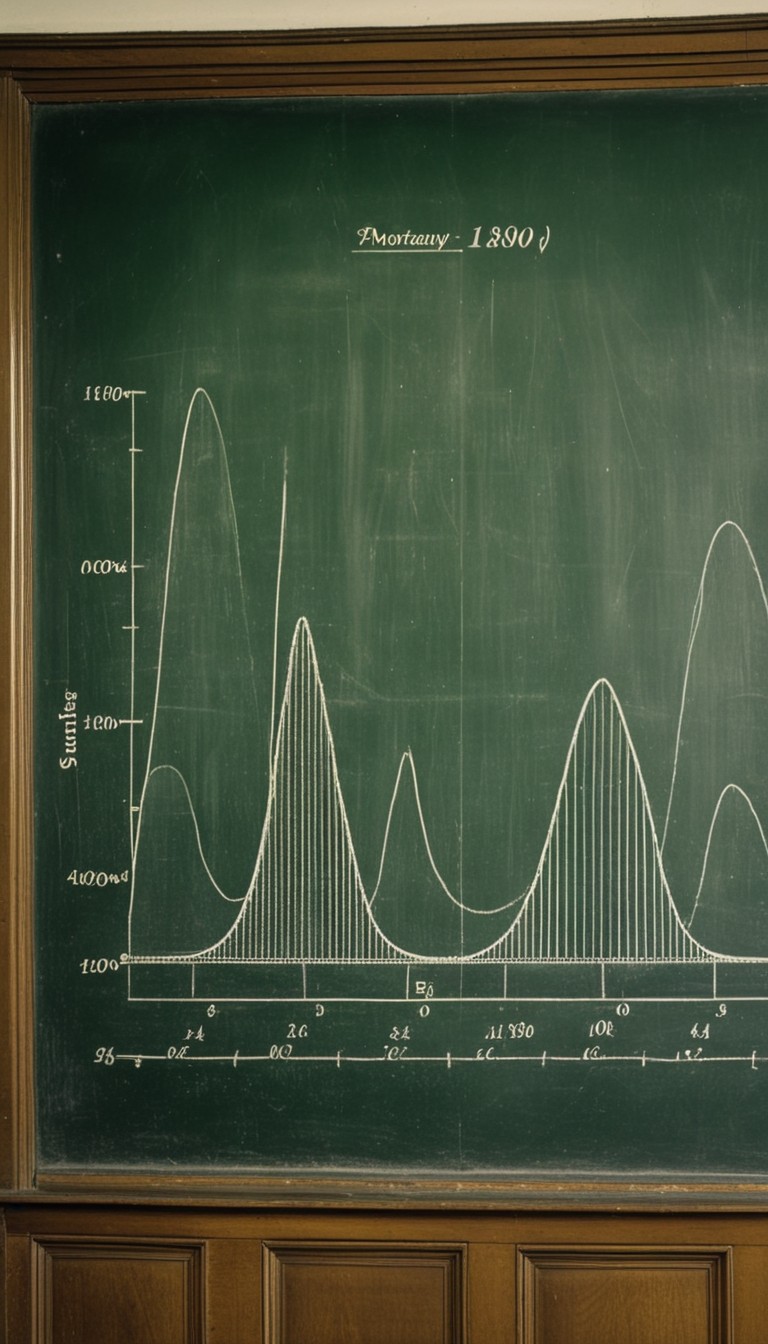
Gauss developed the normal distribution, the famous bell-shaped curve that describes how measurements cluster around an average. Whether it is human heights, exam scores, or measurement errors, the Gaussian distribution appears everywhere in nature and science. He showed that random errors follow this pattern, giving scientists a rigorous way to quantify uncertainty. The curve appears on Germany's old ten-mark banknote, a fitting tribute to a man whose face became the face of German mathematics.
1818-1832
Kingdom of Hanover, Germany
Mapping the Earth and Bending Space
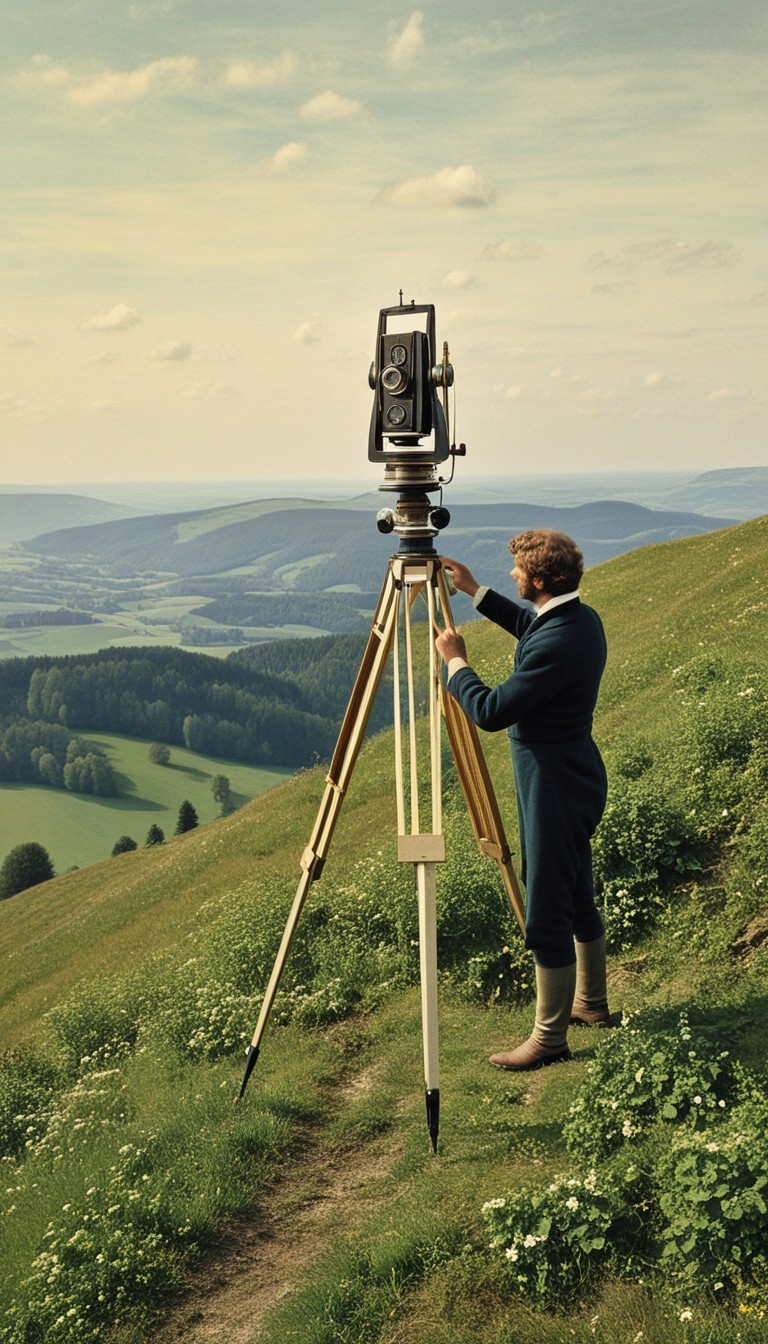
From 1818 to 1832, Gauss directed a geodetic survey of the Kingdom of Hanover, inventing the heliotrope to improve measurements. This practical work led him to profound theoretical insights about curved surfaces. His Theorema Egregium proved that curvature is an intrinsic property of a surface, independent of how it is embedded in space. This work laid the foundations for differential geometry, which Bernhard Riemann would later extend into the mathematics underpinning Einstein's general relativity.
1831-1840
Gottingen, Germany
From Pure Math to the Physical World
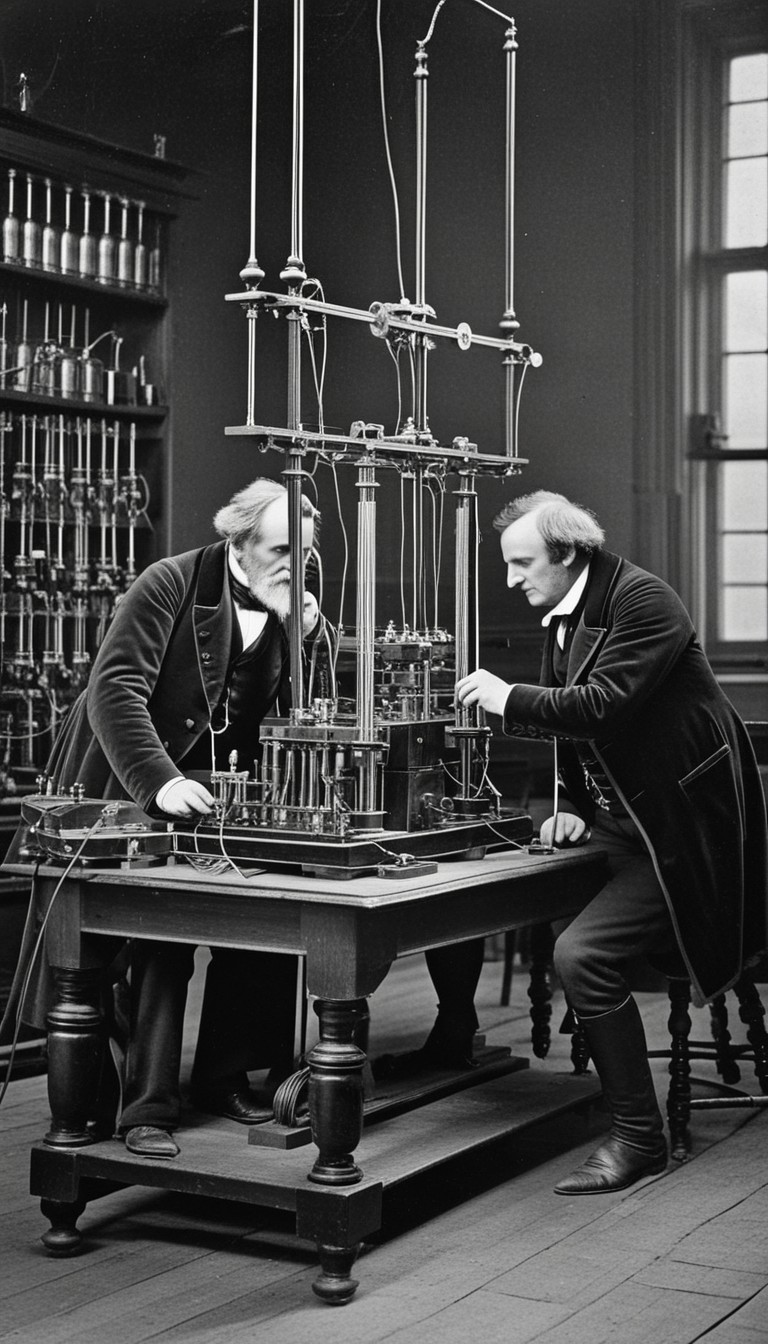
Gauss collaborated with physicist Wilhelm Weber to study electromagnetism, and together they built one of the world's first electromagnetic telegraphs in 1833, stringing a wire between Gauss's observatory and Weber's laboratory in Gottingen. Gauss also made major contributions to the mathematical theory of magnetism. The gauss, the unit of magnetic flux density, is named in his honor. He showed that pure mathematics and applied science are not separate worlds but deeply intertwined.
1840-1855
Gottingen, Germany
The Perfectionist's Unpublished Treasures
Gauss was famously reluctant to publish. His motto was "pauca sed matura," few but ripe. After his death in 1855, colleagues discovered that he had privately anticipated non-Euclidean geometry, the fast Fourier transform, and parts of complex analysis decades before others published them. He worked alone, demanded perfection, and kept results in his notebooks rather than risk publishing anything less than flawless. The mathematics he left behind in private notes alone would have made another person famous.
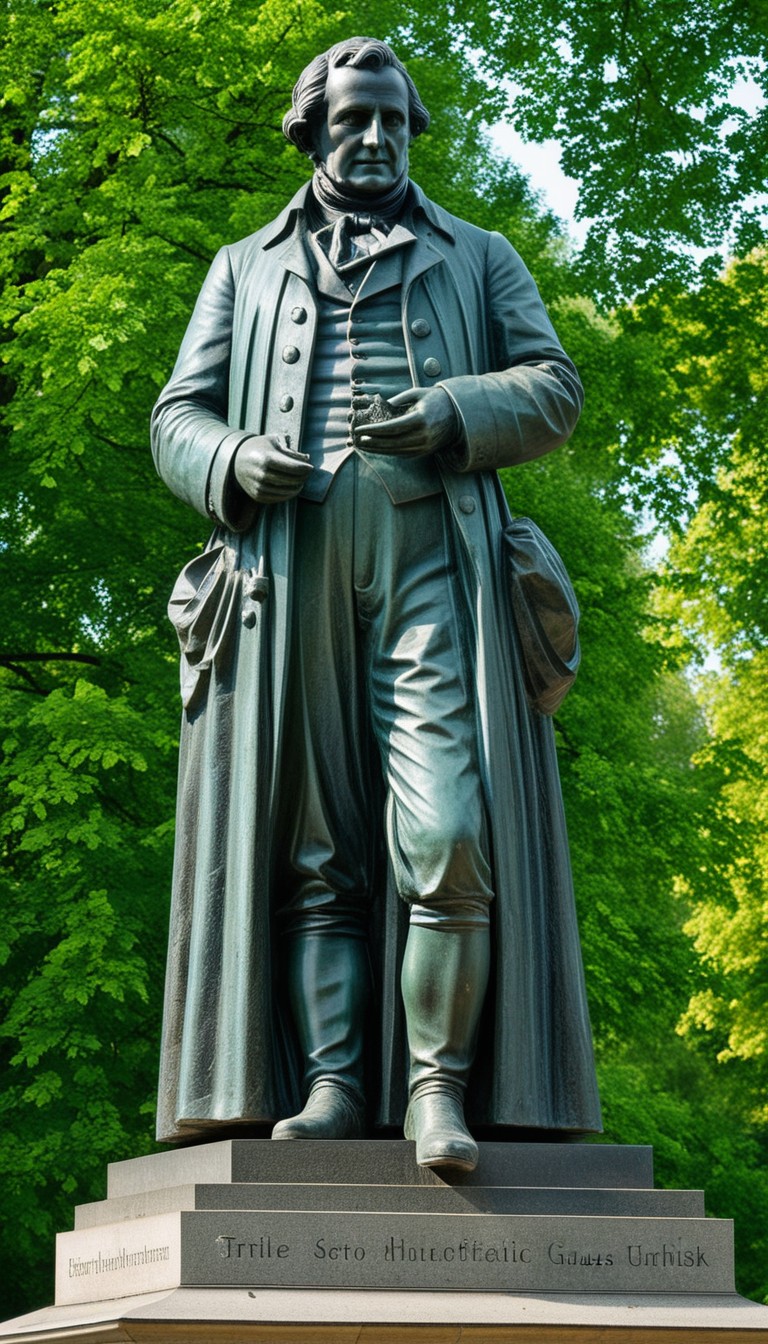
The Prince of Mathematicians
Carl Friedrich Gauss rose from poverty to become the towering figure of nineteenth-century mathematics. His contributions span number theory, statistics, geometry, astronomy, and physics. He demanded proof where others accepted intuition, and he saw patterns where others saw only numbers. His bell curve shapes modern statistics, his geometry shapes modern physics, and his standard of rigor shapes modern mathematics itself. Few have ever seen so deeply into the structure of the world.

Swipe to navigate