Pythagoras: The Mystic Who Made Math Sacred
Loading story...

c. 570-530 BCE
Samos, Greece
Born on the Island of Samos
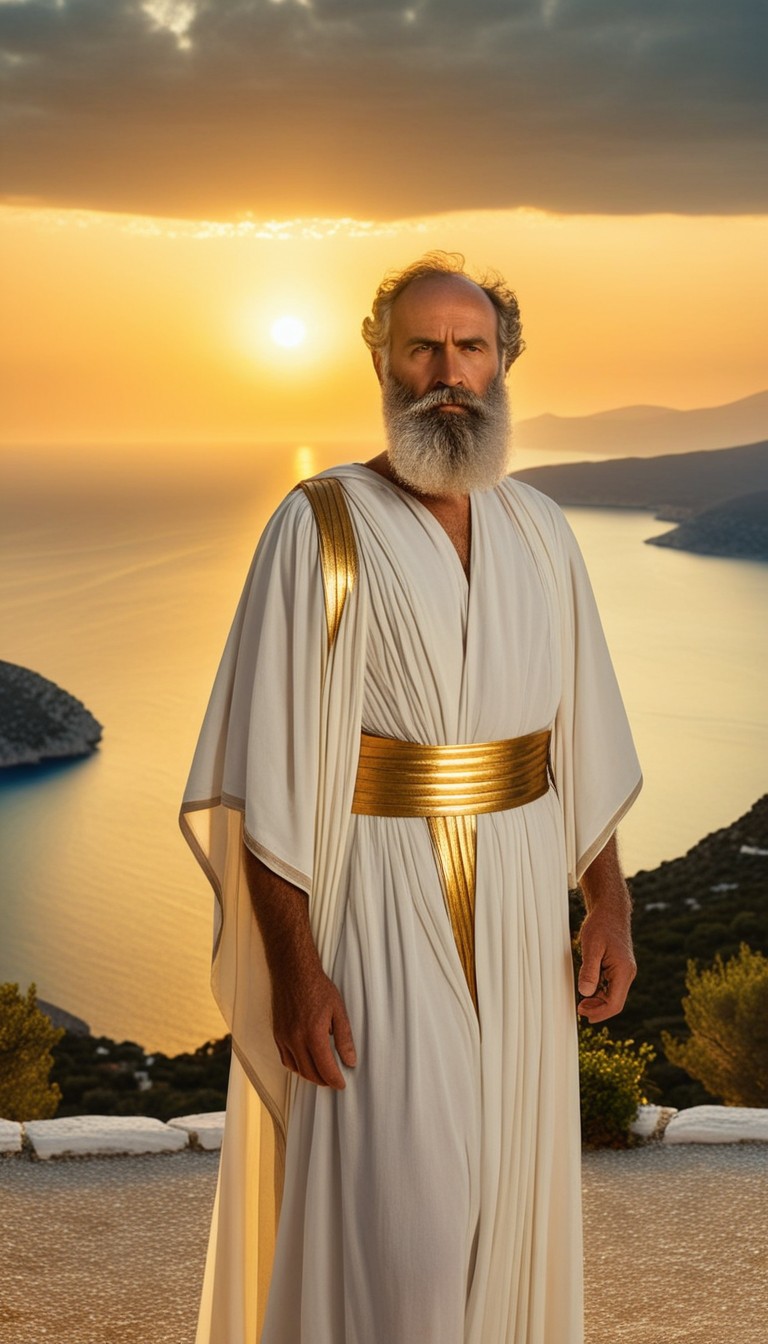
Around 570 BCE, Pythagoras was born on the Greek island of Samos, a prosperous trading hub in the Aegean Sea. His father was a merchant, and as a young man Pythagoras traveled widely, reportedly studying in Egypt, Babylon, and perhaps even India. These journeys steeped him in the mathematical and mystical traditions of the ancient world. By the time he returned to the Greek world, he was no ordinary philosopher.
c. 530 BCE
Croton, Southern Italy
The Brotherhood of Numbers
Around 530 BCE, Pythagoras settled in Croton, a Greek colony in southern Italy, and founded a secretive community of followers. The Pythagoreans lived by strict rules: communal property, vegetarianism, silence during initiation, and the belief that numbers were the ultimate reality. They swore oaths of secrecy about their mathematical discoveries. It was part school, part monastery, part political movement, and entirely devoted to the pursuit of mathematical truth.
c. 6th Century BCE
Croton, Southern Italy
The Theorem That Bears His Name
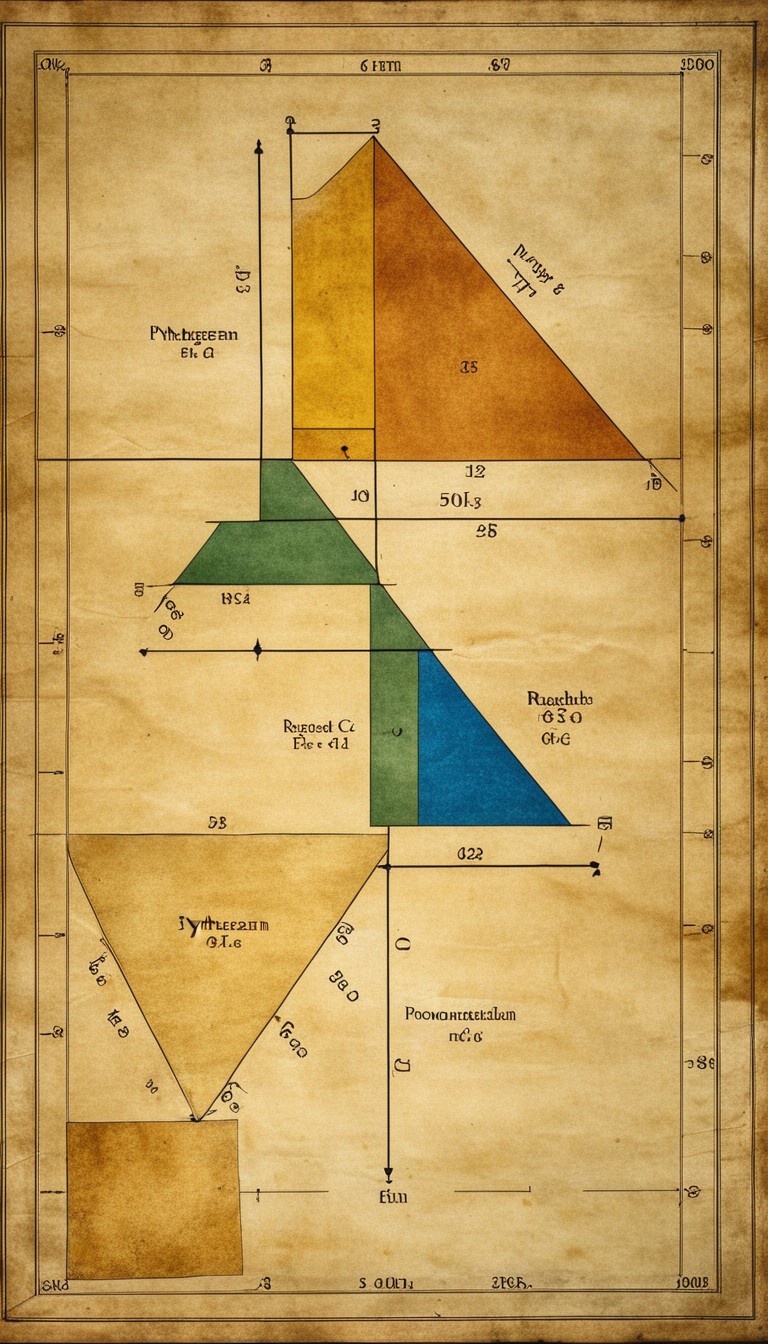
In any right triangle, the square of the hypotenuse equals the sum of the squares of the other two sides: a squared plus b squared equals c squared. The Babylonians knew specific examples of this relationship a thousand years earlier, but Pythagoras and his followers are credited with the first general proof. This single theorem connects algebra to geometry and remains one of the most used results in all of mathematics, from architecture to GPS navigation.
c. 6th Century BCE
Croton, Southern Italy
The Music of Mathematics
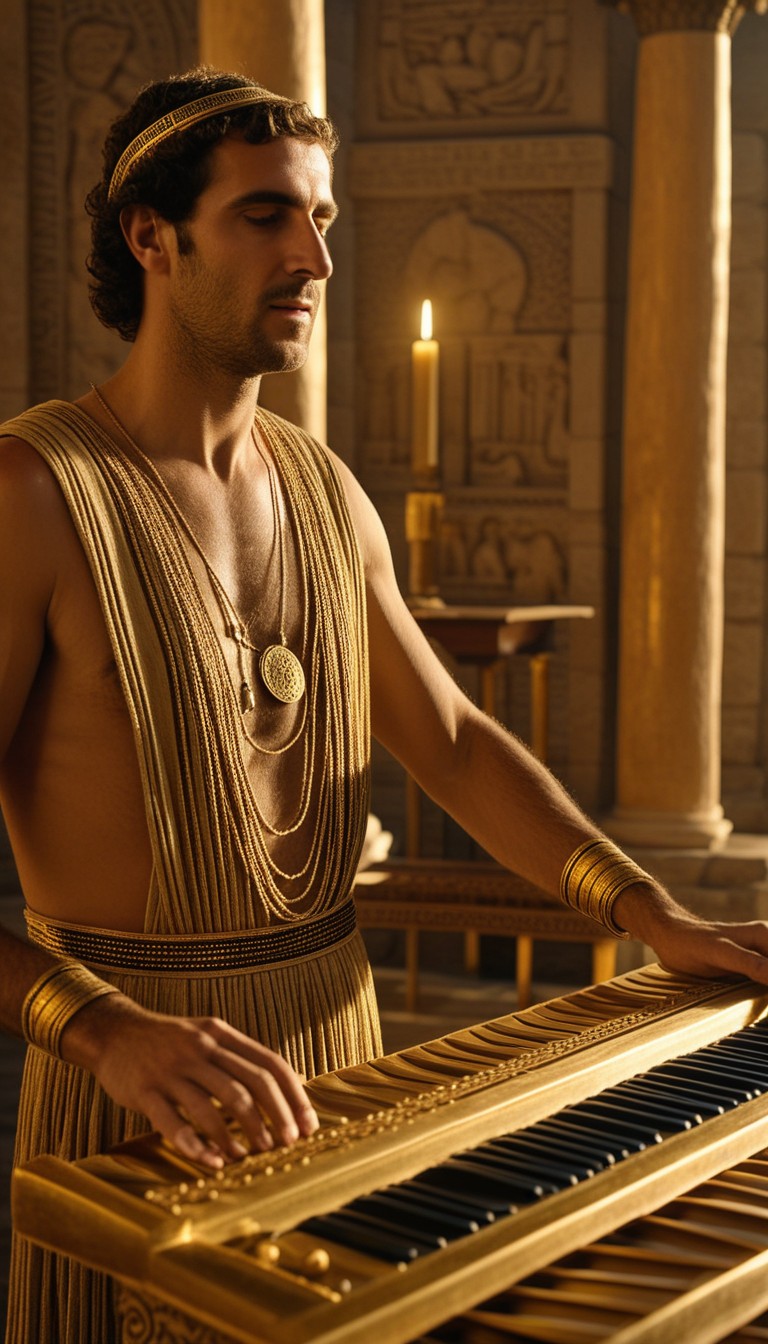
Pythagoras discovered that musical harmony is governed by simple numerical ratios. When a string is divided in the ratio 2:1, it produces an octave. A ratio of 3:2 gives a perfect fifth. This was a thunderbolt: beauty itself could be expressed in numbers. The Pythagoreans extended this idea to the cosmos, imagining a "music of the spheres" in which the planets produce harmonies as they orbit. It was poetic, profound, and surprisingly prescient about the mathematical nature of physics.

c. 6th Century BCE
Croton, Southern Italy
All Is Number
The Pythagoreans believed that whole numbers and their ratios were the building blocks of reality. They studied figurate numbers, arranging pebbles into triangles, squares, and other shapes to discover patterns. They proved that the sum of the first n odd numbers always equals a perfect square. They classified numbers as perfect, abundant, or deficient. For the Pythagoreans, understanding numbers was not just mathematics. It was understanding the mind of the universe.

c. 5th Century BCE
Southern Italy
The Crisis of the Irrational
The Pythagorean worldview suffered a devastating blow when one of its own members, Hippasus, proved that the square root of two cannot be expressed as a ratio of whole numbers. It is irrational. Legend says the Pythagoreans were so horrified that they drowned Hippasus at sea. Whether or not the story is true, the discovery shattered the belief that all numbers are rational. It was the first great crisis in the history of mathematics.
c. 509-495 BCE
Croton & Metapontum, Italy
The Fall of the Brotherhood
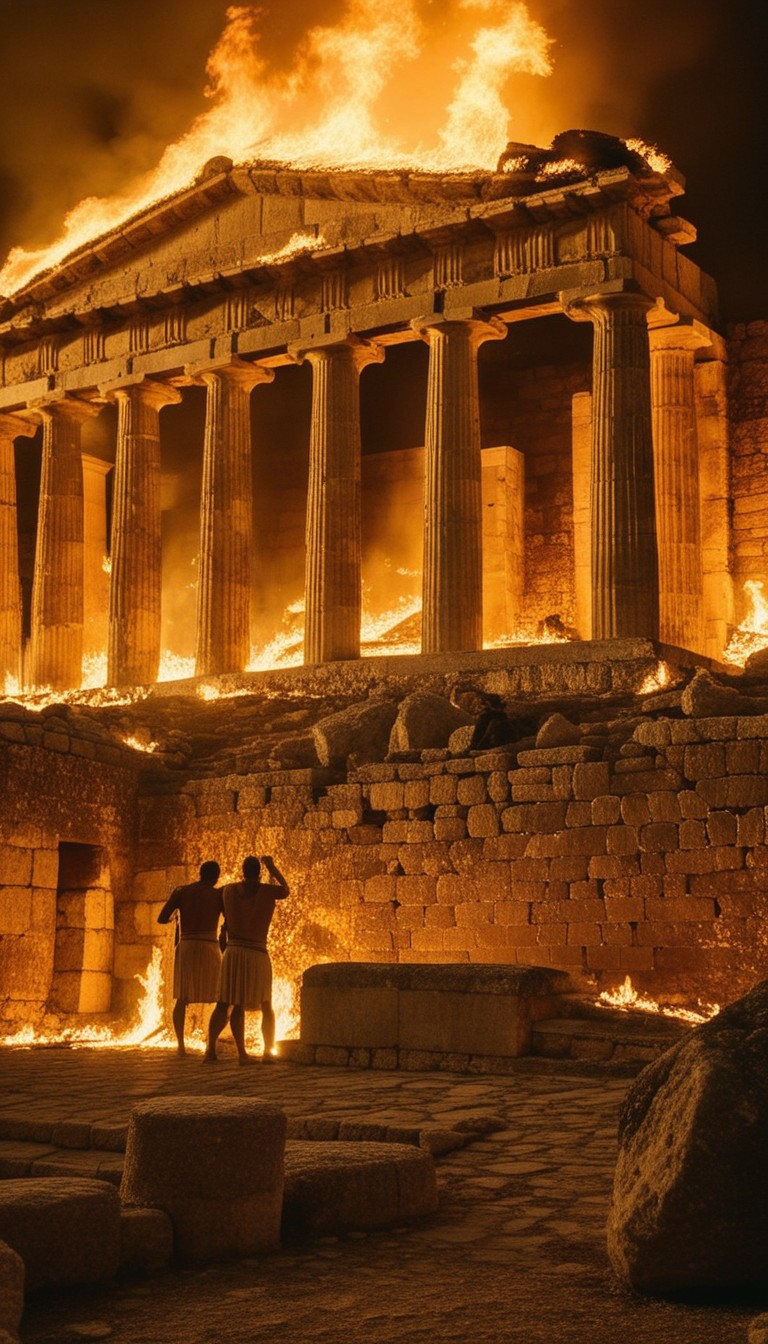
The Pythagorean community's political influence in Croton eventually sparked resentment. Around 509 BCE, a mob attacked their meeting house and set it ablaze. Many members were killed. Pythagoras himself fled, reportedly to Metapontum, where he died around 495 BCE. But the ideas survived. Pythagorean philosophy scattered across the Greek world, influencing Plato, who embedded Pythagorean number mysticism deep into the foundations of Western thought.

c. 500 BCE - Present
Global Legacy
An Immortal Legacy
Pythagoras left behind no writings. Everything we know comes through his followers and later authors. Yet his influence is staggering. His theorem is taught in every school on Earth. His insight that nature obeys mathematical laws became the central creed of modern science. His work on musical ratios launched the mathematical study of harmony. Kepler, Galileo, and Einstein all walked paths that Pythagoras first cleared twenty-five centuries ago.
The Universe Speaks in Numbers
Pythagoras dared to believe that behind the chaos of the world lies an elegant mathematical order. He was part philosopher, part mystic, and part mathematician, and he was right about the thing that mattered most: the universe really does speak in numbers. From the geometry of triangles to the harmonics of a vibrating string, his vision endures wherever reason seeks the hidden patterns of reality.

Swipe to navigate