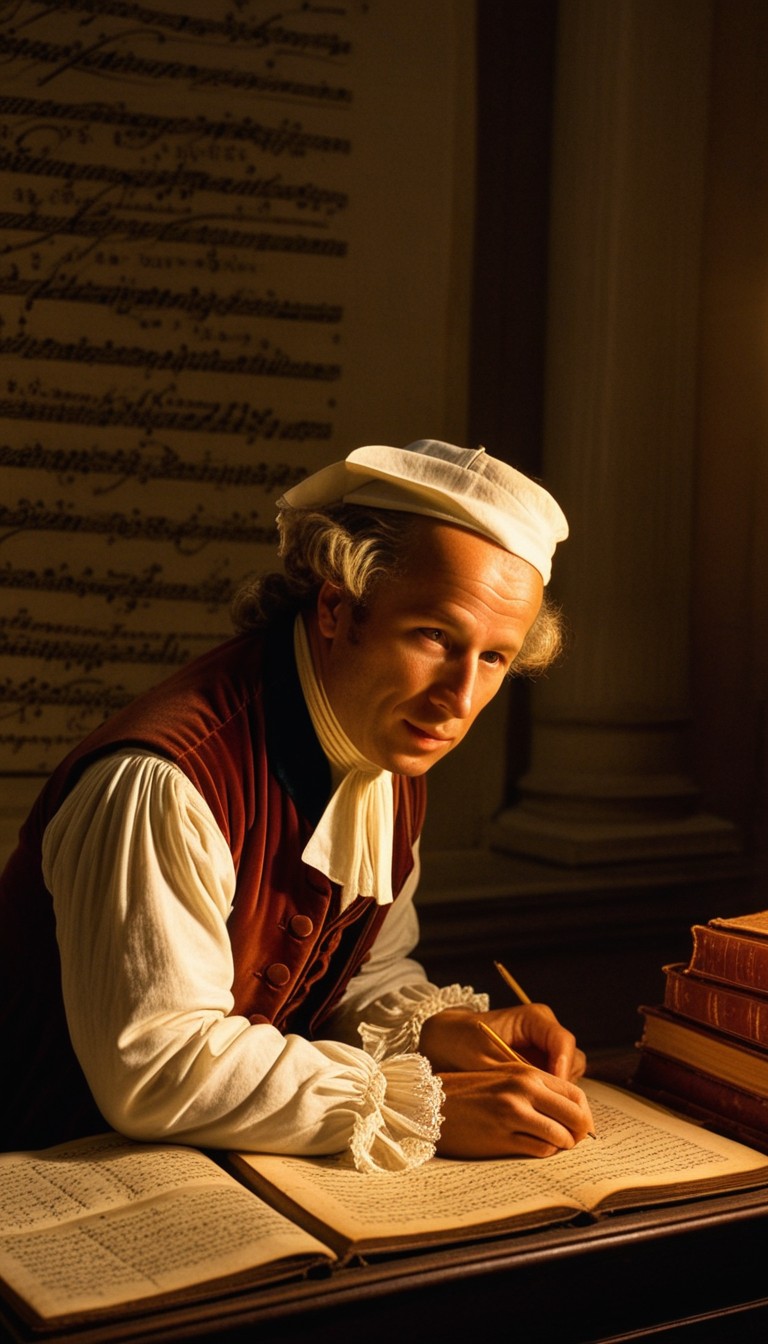
Leonhard Euler: The Master of Us All
Loading story...

1707-1727
Basel, Switzerland
A Pastor's Son in Basel
Leonhard Euler was born on April 15, 1707, in Basel, Switzerland, to a Protestant minister who had studied mathematics under the great Jacob Bernoulli. His father intended him for the church, but young Leonhard's talent was impossible to ignore. Johann Bernoulli, the leading mathematician in Europe, took the teenager under his wing and recognized him as a generational talent. By age twenty, Euler had already published his first mathematical paper.

1727-1741
St. Petersburg, Russia
St. Petersburg: A Career Begins
In 1727, Euler accepted a position at the newly founded St. Petersburg Academy of Sciences in Russia. Though he initially came as a medical officer, he quickly moved into mathematics. Over the next fourteen years, he produced an astonishing stream of discoveries in analysis, mechanics, and number theory. He lost sight in his right eye in 1738, possibly from overwork, but his productivity never wavered. Euler was just getting started.
1748
Berlin, Prussia
The Most Beautiful Equation
Euler discovered what many call the most beautiful equation in mathematics: e to the power of i times pi, plus one, equals zero. This single formula connects five fundamental constants: e, i, pi, one, and zero, bridging arithmetic, calculus, geometry, and complex analysis in one elegant line. He also established the notation we use for these constants and for functions, summation, and much more. Modern mathematical language is largely Euler's invention.
1736
Konigsberg, Prussia
Seven Bridges and the Birth of Graph Theory
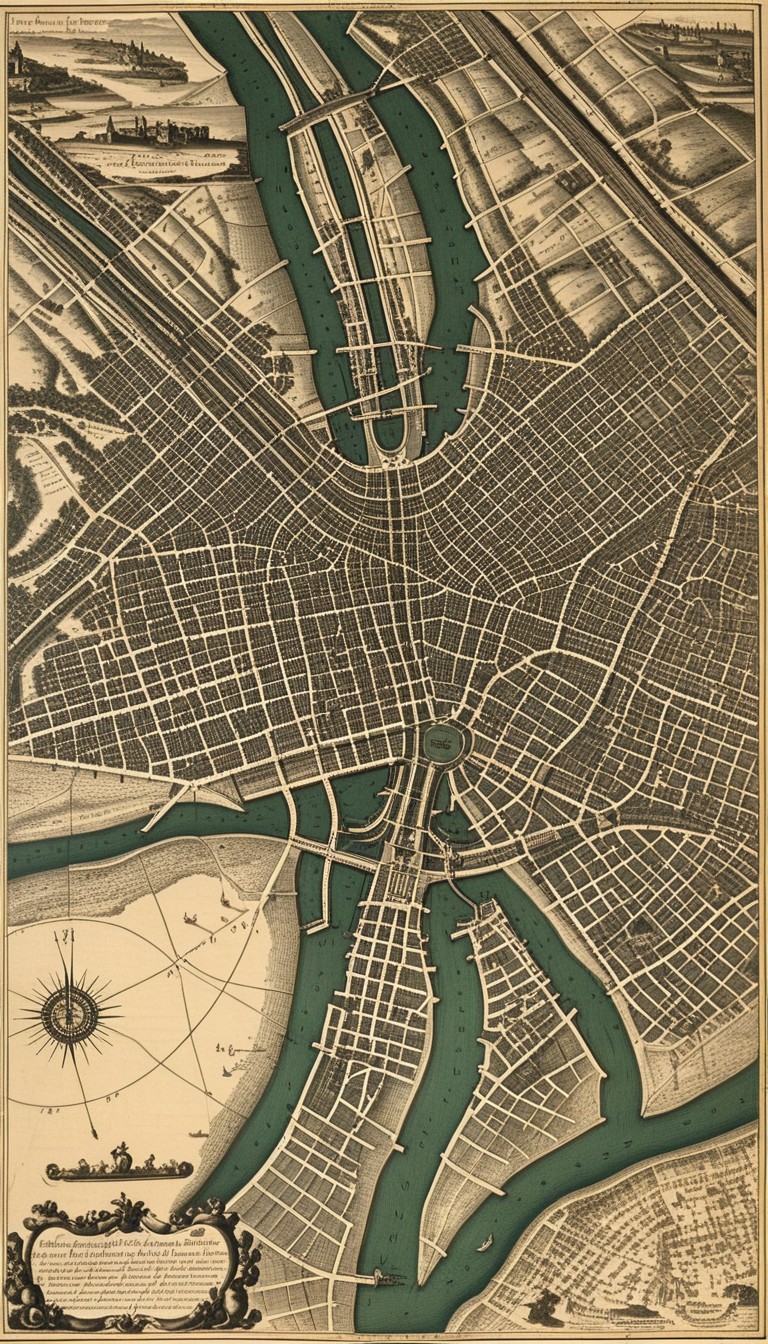
In 1736, Euler solved the famous Konigsberg bridge problem: is it possible to walk through the city crossing each of its seven bridges exactly once? He proved it is not, and in doing so, invented graph theory, the study of networks and connections. This seemingly playful problem launched an entirely new branch of mathematics. Today, graph theory underpins everything from social networks and internet routing to airline scheduling and molecular biology.
1741-1766
Berlin, Prussia
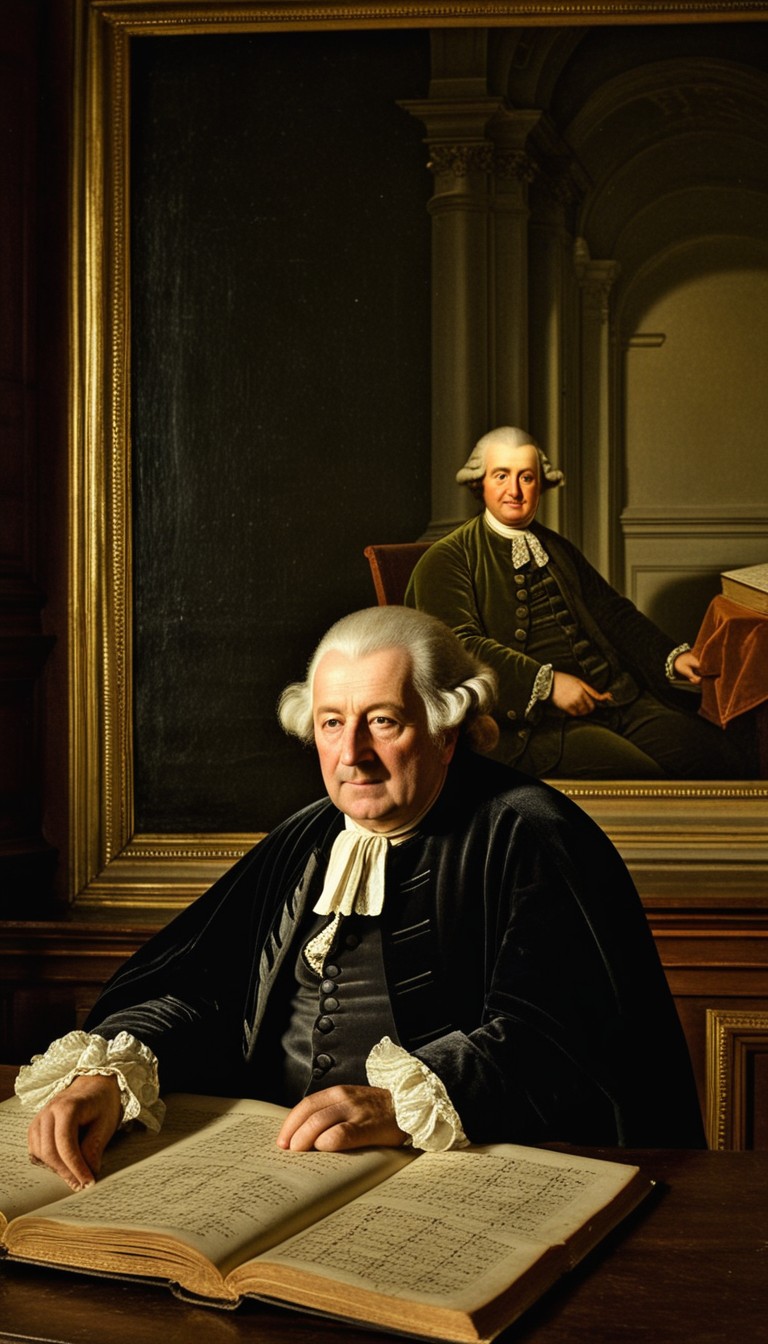
The Berlin Years
From 1741 to 1766, Euler worked at the Berlin Academy under Frederick the Great. These twenty-five years were phenomenally productive. He wrote his landmark textbooks on calculus, Introductio in Analysin Infinitorum and Institutiones Calculi Differentialis, which standardized the field. He solved the Basel problem, proving that the sum of the reciprocals of perfect squares equals pi squared over six, stunning the mathematical world. He worked on optics, astronomy, fluid mechanics, and music theory.

1766-1783
St. Petersburg, Russia
Blind but Unstoppable
In 1766, Euler returned to St. Petersburg, and within a few years he lost sight in his remaining eye, becoming completely blind. It barely mattered. His phenomenal memory allowed him to perform complex calculations entirely in his head, and he dictated his papers to assistants. His output during his blind years actually increased. He produced roughly half of his life's work after losing his sight, a feat of mental power that astonished his contemporaries.

1727-1783
Europe
A Mountain of Mathematics
Euler published approximately 900 papers and books, more than any mathematician in history. The publication of his collected works, the Opera Omnia, has been ongoing since 1911 and fills over eighty volumes. He made major contributions to calculus, number theory, topology, mechanics, fluid dynamics, optics, and astronomy. Pierre-Simon Laplace reportedly said, "Read Euler, read Euler, he is the master of us all." It was not an exaggeration.
September 18, 1783
St. Petersburg, Russia
Formulas That Shape Modern Science
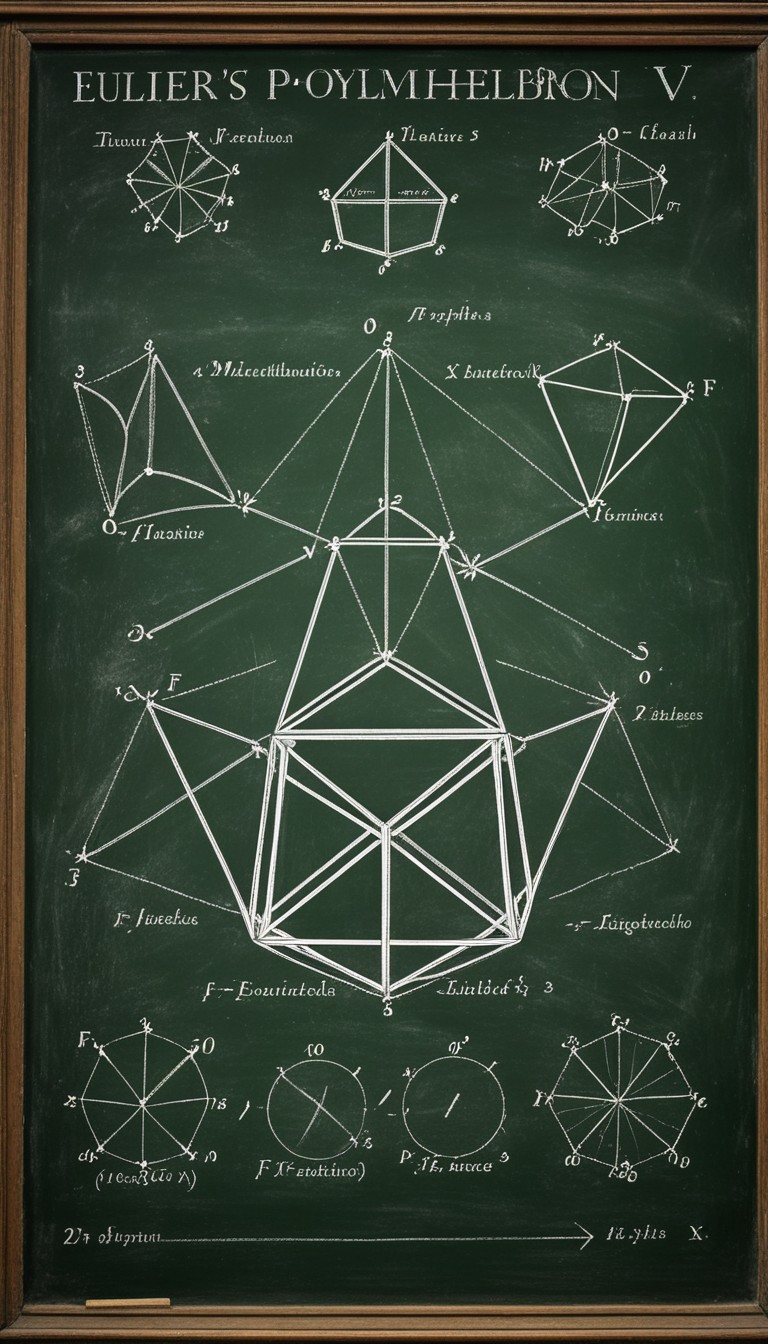
Euler's polyhedron formula, which states that vertices minus edges plus faces equals two for any convex polyhedron, was the starting point of topology. His work on the calculus of variations shaped physics for centuries. His number theory results anticipated modern cryptography. He died on September 18, 1783, in St. Petersburg, reportedly doing calculations until his final hours. As the mathematician Condorcet eulogized, "He ceased to calculate, and he ceased to live."
The Language We All Speak
Leonhard Euler did not merely solve problems. He built the language and tools that allow all mathematicians to solve problems. His notation, his methods, his textbooks, and his sheer volume of discovery shaped mathematics into the discipline we know today. When you write f of x, when you use e or i or sigma notation, you are speaking Euler's language. He saw mathematics whole, in all its branches, and advanced every one of them.
Swipe to navigate