Emmy Noether: The Mother of Modern Algebra
Loading story...

1882-1915
Erlangen, Germany
A Mathematician's Daughter in Erlangen
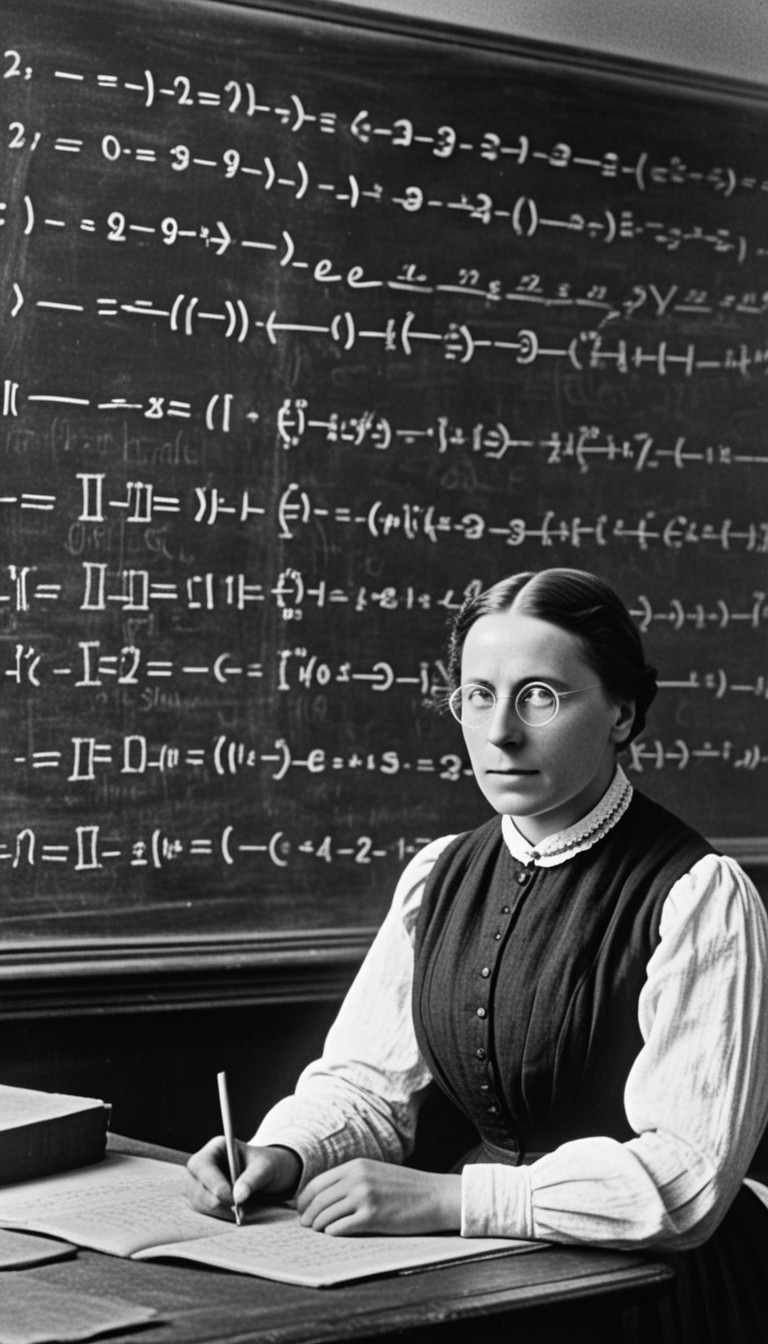
Amalie Emmy Noether was born on March 23, 1882, in Erlangen, Germany, the daughter of Max Noether, a distinguished mathematician. As a woman, she was barred from formally enrolling at the University of Erlangen; she could only audit classes with individual professors' permission. Undeterred, she attended lectures, passed the doctoral examinations, and earned her PhD in 1907 with a dissertation on algebraic invariants. Then she worked unpaid at the university for seven years.
1915
Gottingen, Germany
Gottingen and a Controversial Invitation
In 1915, David Hilbert and Felix Klein, two of the world's foremost mathematicians, invited Noether to the University of Gottingen. They needed her expertise in invariant theory to help resolve mathematical problems arising from Einstein's new general theory of relativity. The philosophy faculty objected furiously to a woman lecturer. Hilbert reportedly retorted, "I do not see that the sex of the candidate is an argument against her admission. After all, we are a university, not a bathing establishment."
1918
Gottingen, Germany
Noether's Theorem: Symmetry Equals Conservation
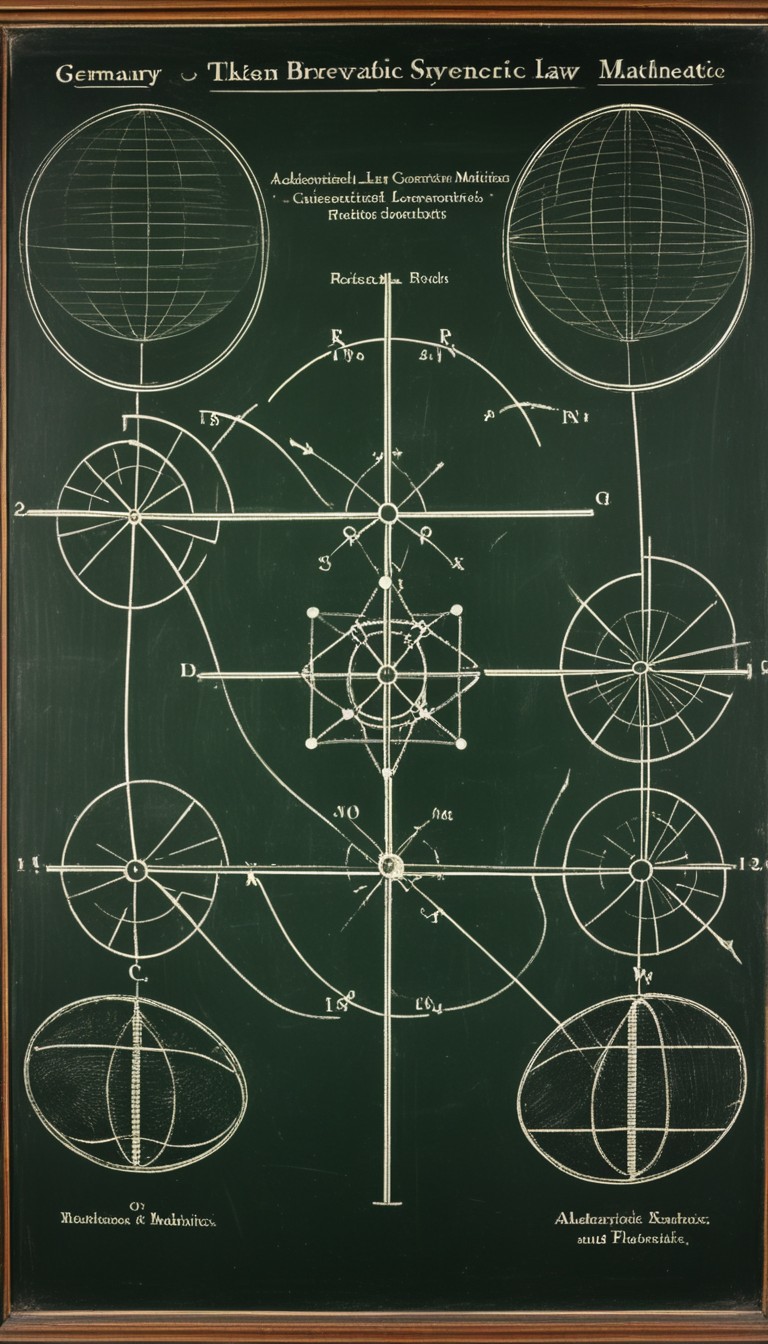
In 1918, Noether proved her most famous result. Noether's theorem states that every continuous symmetry of a physical system corresponds to a conservation law. Time symmetry gives conservation of energy. Spatial symmetry gives conservation of momentum. Rotational symmetry gives conservation of angular momentum. This insight is one of the deepest in all of physics, unifying disparate conservation laws under a single elegant principle. It remains a foundational tool in particle physics and quantum field theory.

1920-1926
Gottingen, Germany
Reinventing Algebra from the Ground Up
In the 1920s, Noether turned her attention to abstract algebra and transformed it utterly. She shifted the focus from performing specific calculations to studying the deep structures underneath: rings, ideals, modules, and their relationships. Her 1921 paper on the theory of ideals in ring domains is considered a landmark. She showed that the right way to understand algebra is not through individual equations but through the abstract structures that govern them. Modern algebra is built on her vision.

1920s-1930s
Gottingen, Germany
The Noether Boys
Despite never holding a proper professorship for most of her career, Noether attracted a brilliant circle of students and collaborators known as the "Noether boys," though they included women as well. She taught with infectious enthusiasm, often continuing discussions over long walks through the woods around Gottingen. Her lectures were famously difficult, demanding that students think abstractly. She mentored a generation of algebraists who spread her methods worldwide.
1927-1933
Gottingen, Germany
Noetherian Rings and Lasting Abstractions
Noether introduced the ascending chain condition for ideals, a property now called "Noetherian." A Noetherian ring is one in which every ascending chain of ideals eventually stabilizes. This seemingly technical idea proved extraordinarily powerful, simplifying and unifying vast areas of algebra and algebraic geometry. Her work also advanced homological algebra and representation theory. Concepts bearing her name appear throughout modern mathematics, from commutative algebra to algebraic topology.

1933-1935
Bryn Mawr, Pennsylvania
Exile to America
When the Nazis came to power in 1933, Noether was dismissed from Gottingen because she was Jewish. She emigrated to the United States and took a position at Bryn Mawr College in Pennsylvania, where she also lectured at the Institute for Advanced Study in Princeton. For the first time in her career, she held a proper paid academic position. She thrived in America, continuing her research and inspiring a new group of students. Einstein became a friend and champion of her work.
April 14, 1935
Bryn Mawr, Pennsylvania
A Light Extinguished Too Soon
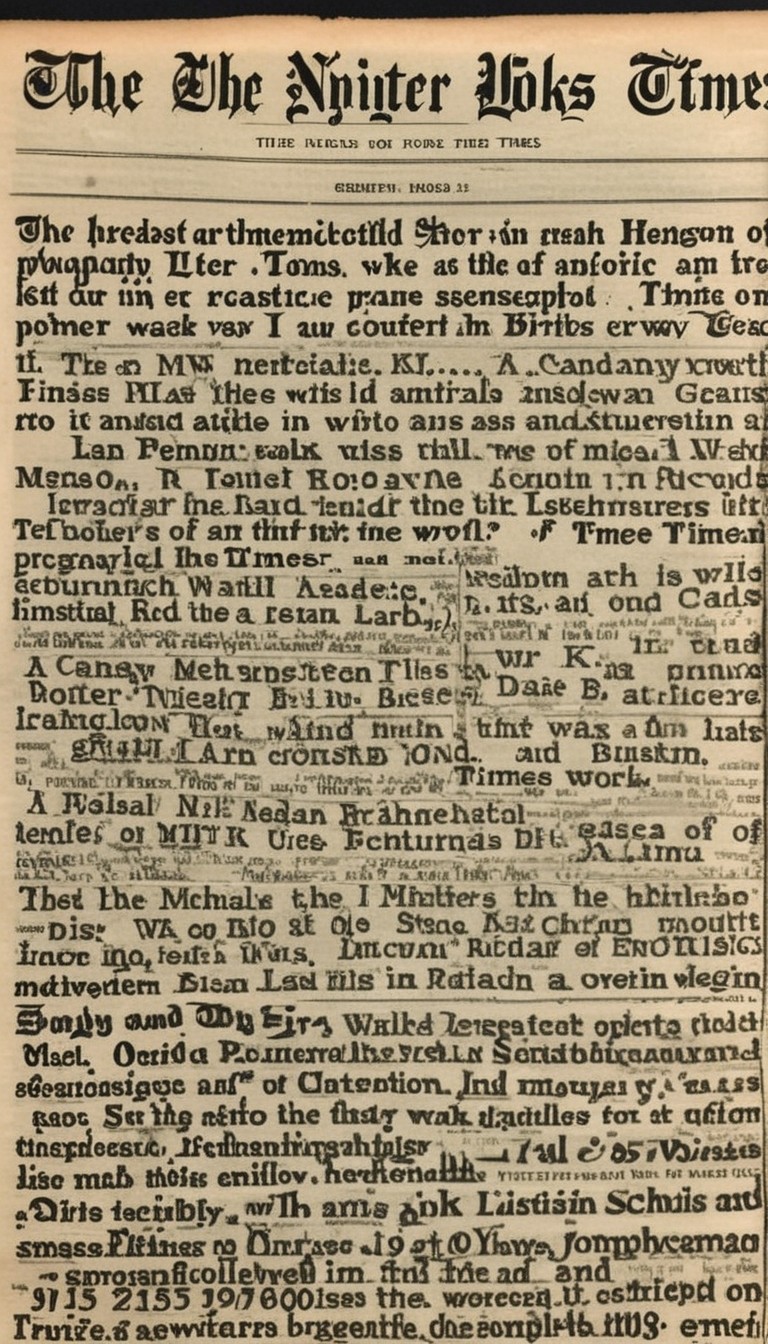
On April 14, 1935, Emmy Noether died unexpectedly from complications following surgery, at the age of fifty-three. Einstein wrote to the New York Times: "In the judgment of the most competent living mathematicians, Fraulein Noether was the most significant creative mathematical genius thus far produced since the higher education of women began." Her work underpins the Standard Model of particle physics, modern algebraic geometry, and the mathematical language of symmetry itself.

The Power of Abstraction
Emmy Noether showed that the deepest truths in mathematics and physics are structural, not computational. Her theorem revealed that the conservation laws governing the universe flow from symmetry itself. Her algebra showed that understanding abstract structure is more powerful than solving individual equations. She achieved all of this while facing barriers that would have stopped most people from even entering the field. Her legacy is not just in the theorems but in the way mathematicians think.


Swipe to navigate