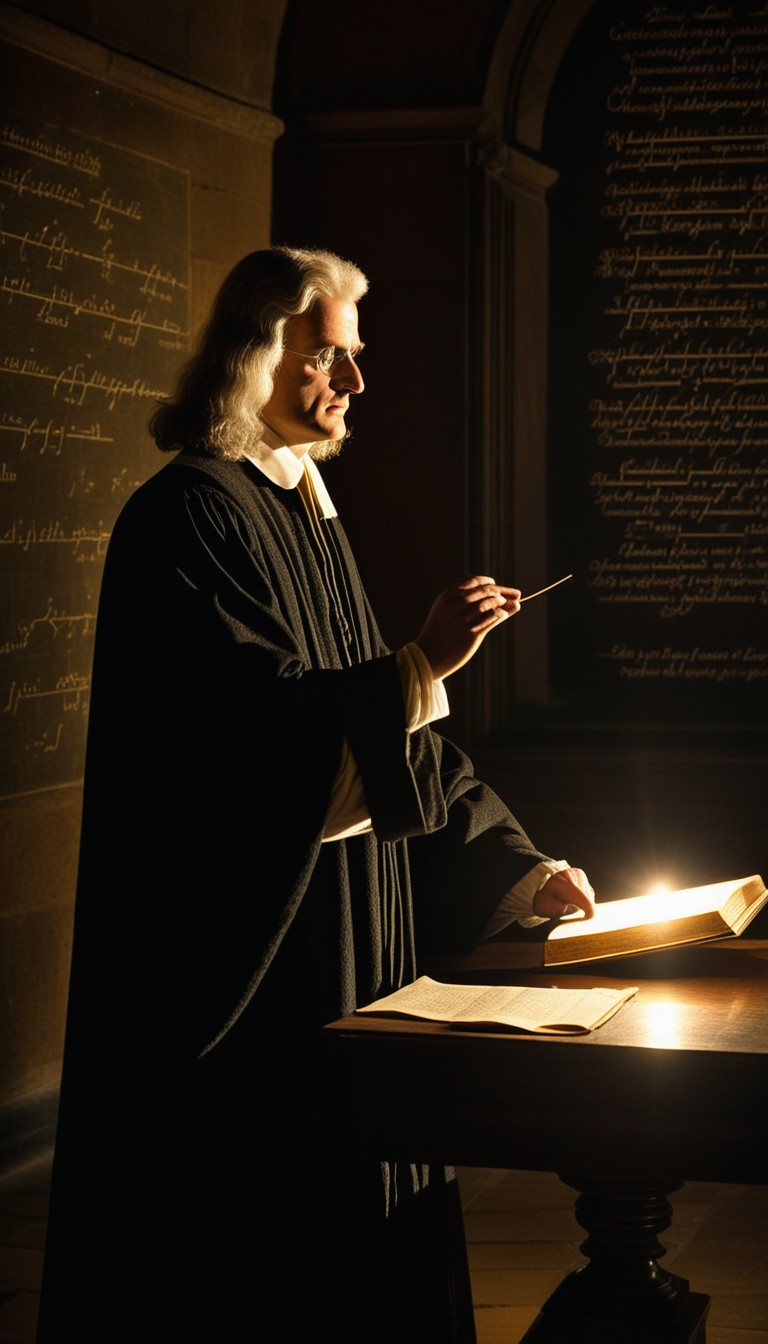
Isaac Newton: The Inventor of Calculus
Loading story...
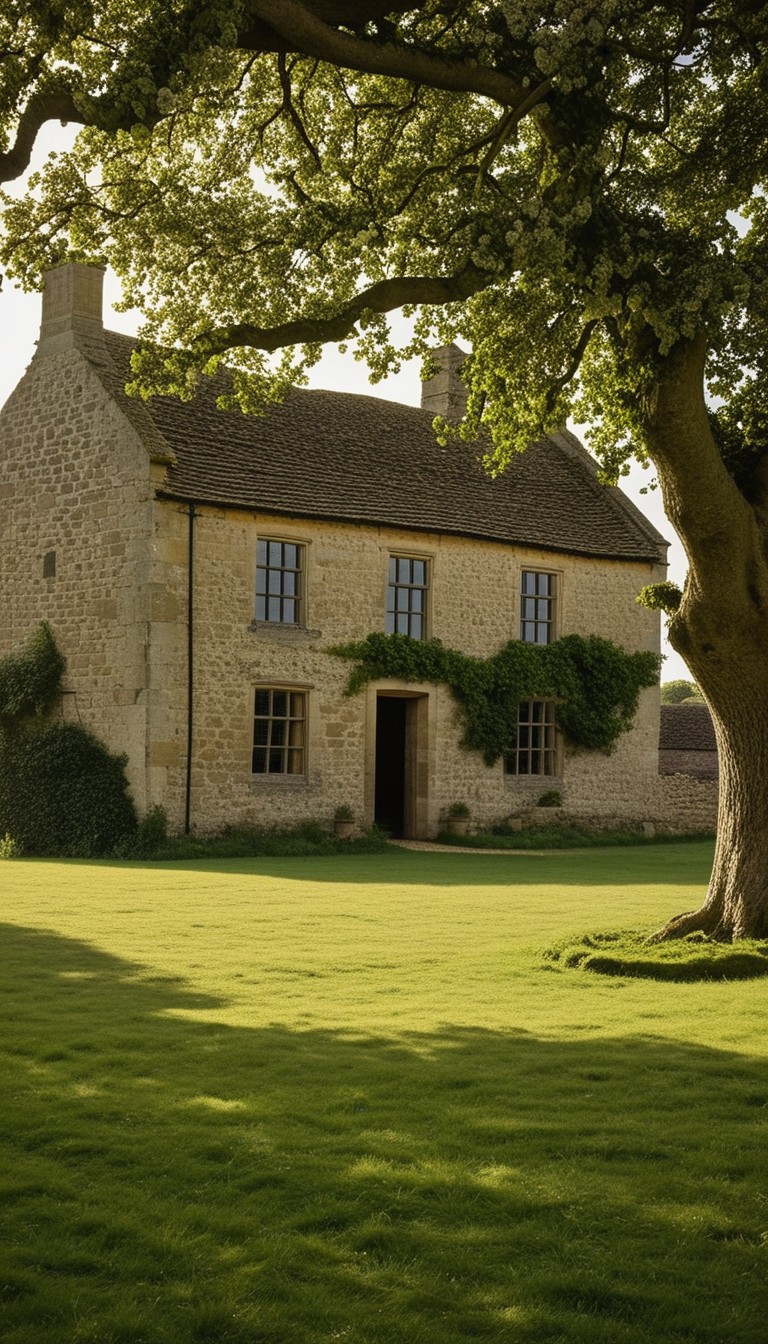
1642-1661
Woolsthorpe, Lincolnshire, England
A Premature Child in Lincolnshire
Isaac Newton was born on Christmas Day 1642 at Woolsthorpe Manor in Lincolnshire, England, so small and premature that no one expected him to survive the night. His father had died three months earlier, and his mother remarried when he was three, leaving him with his grandmother. The lonely, resentful boy threw himself into books and mechanical tinkering. He built sundials, water clocks, and miniature windmills. The isolation forged an intensely self-reliant mind.
1665-1667
Woolsthorpe, England
Cambridge and a Plague Year of Genius
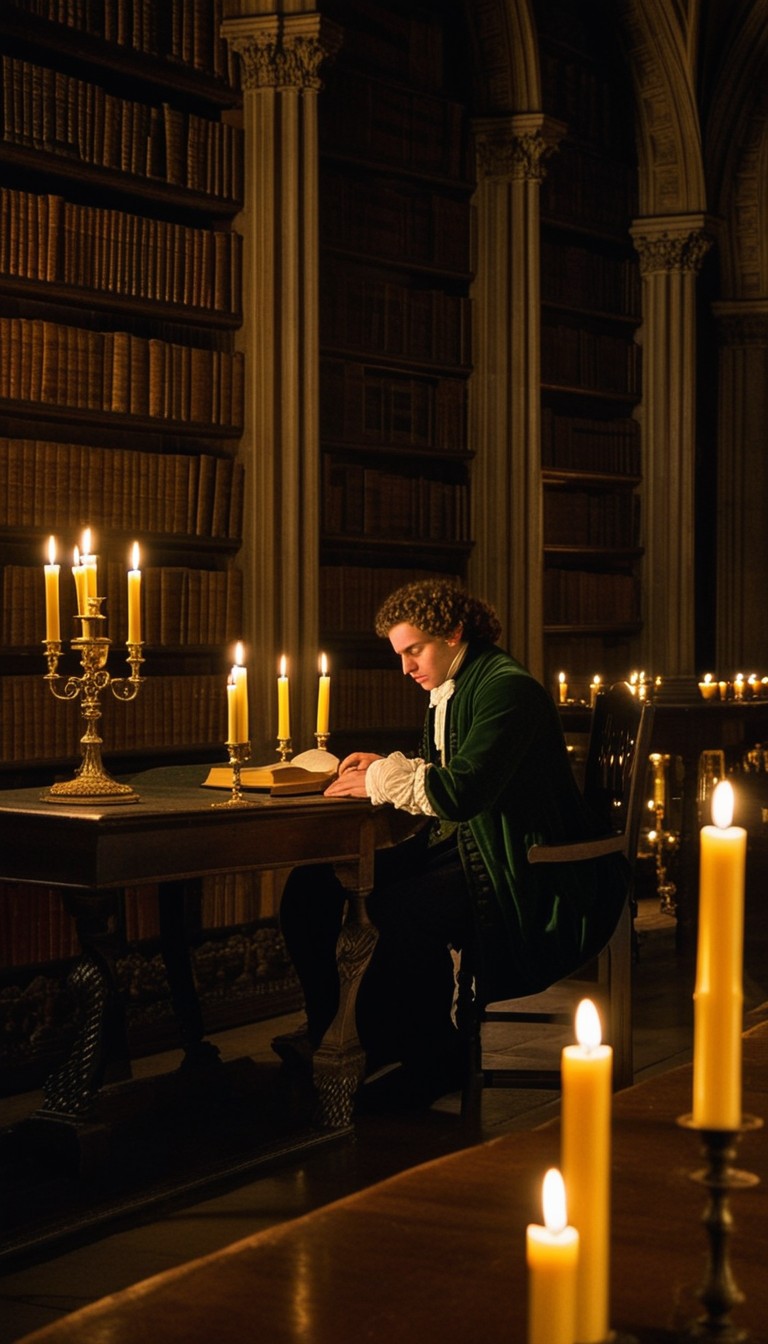
Newton entered Trinity College, Cambridge, in 1661, where he devoured the works of Descartes, Kepler, and Euclid. When plague closed the university in 1665, Newton retreated to Woolsthorpe for nearly two years. In this miraculous isolation, he developed the foundations of calculus, which he called "the method of fluxions," discovered the generalized binomial theorem, and began his work on gravity and optics. No single period of private thought has ever produced so much.
1665-1666
Woolsthorpe, England
The Invention of Calculus
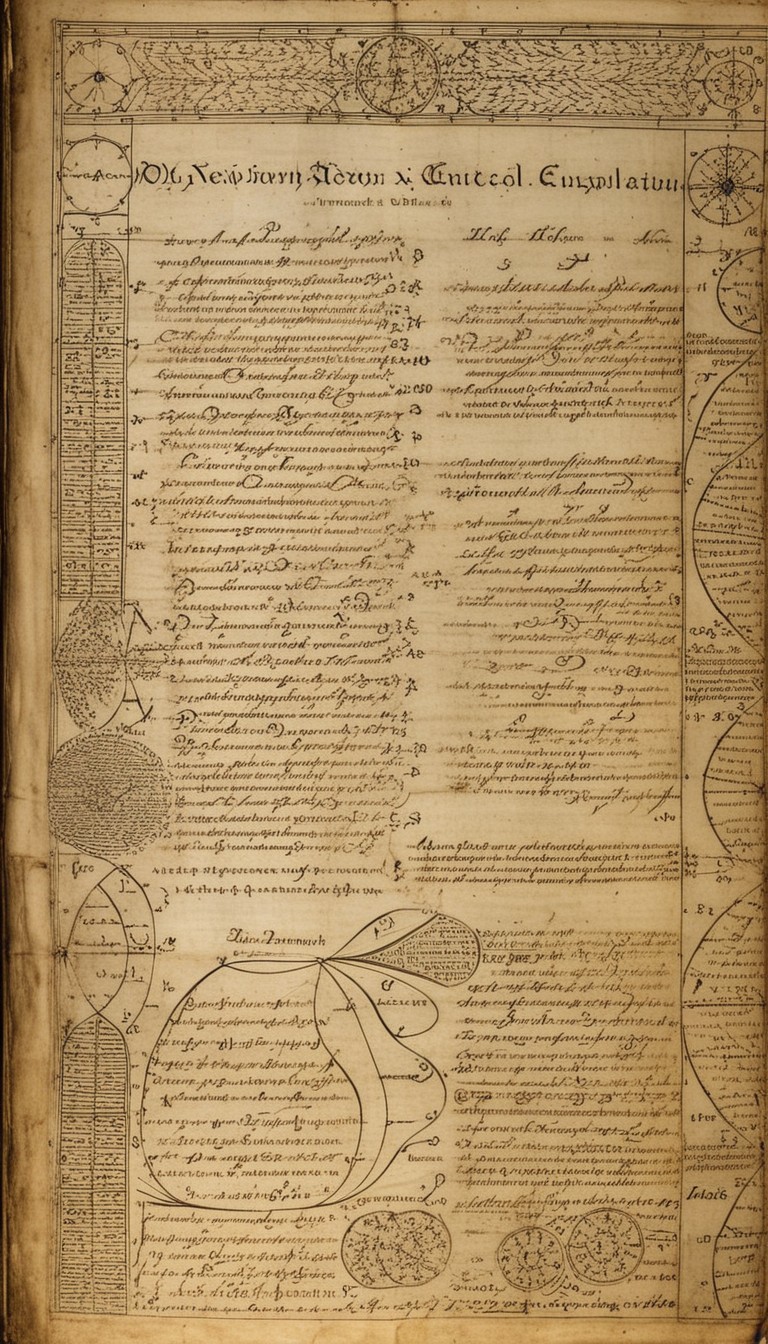
Newton invented calculus to solve problems that had defeated every mathematician before him: how to find instantaneous rates of change, areas under curves, and the behavior of quantities that vary continuously. His method of fluxions treated variables as flowing quantities and their rates of change as fluxions. He could now calculate the slope of any curve at any point, the area under any curve, and the motion of any object. He had built the mathematical engine of modern science.
1665
Woolsthorpe, England
The Generalized Binomial Theorem
While still in his early twenties, Newton generalized the binomial theorem to work with any exponent, not just positive integers. This allowed him to expand expressions like the square root of one plus x as infinite series. The result was transformative: it gave mathematicians a powerful tool for approximating functions and solving equations that had no exact closed-form solutions. Newton used these series extensively in his development of calculus and gravitational theory.
1687
Cambridge, England
The Principia: Mathematics Meets the Cosmos
In 1687, Newton published Philosophiae Naturalis Principia Mathematica, a work that unified terrestrial and celestial mechanics under one mathematical framework. He proved that the same force that makes an apple fall also holds the moon in orbit. The Principia is written in the language of geometry, but its methods required the calculus Newton had invented. It demonstrated, for the first time, that the physical universe obeys precise mathematical laws that can predict the future from the present.
1684-1716
London & Hanover
The Calculus Wars
Gottfried Wilhelm Leibniz independently invented calculus in the 1670s and published his version before Newton. A bitter priority dispute erupted that poisoned relations between British and Continental mathematics for a century. Newton had developed his methods first, but Leibniz published first and created the superior notation we use today. Modern historians credit both men as independent co-inventors. The feud was petty, but the mathematics was immortal.
1669-1711
Cambridge & London, England
Newton's Method and Numerical Analysis
Newton developed iterative methods for approximating the roots of equations, now called Newton's method or Newton-Raphson method. Starting from an initial guess, the method uses the tangent line to converge rapidly toward a solution. It is one of the most widely used algorithms in computational mathematics, essential in engineering, physics, and computer science. He also made contributions to interpolation, classification of cubic curves, and the study of power series.
1696-1727
London, England
The Recluse Who Remade the World
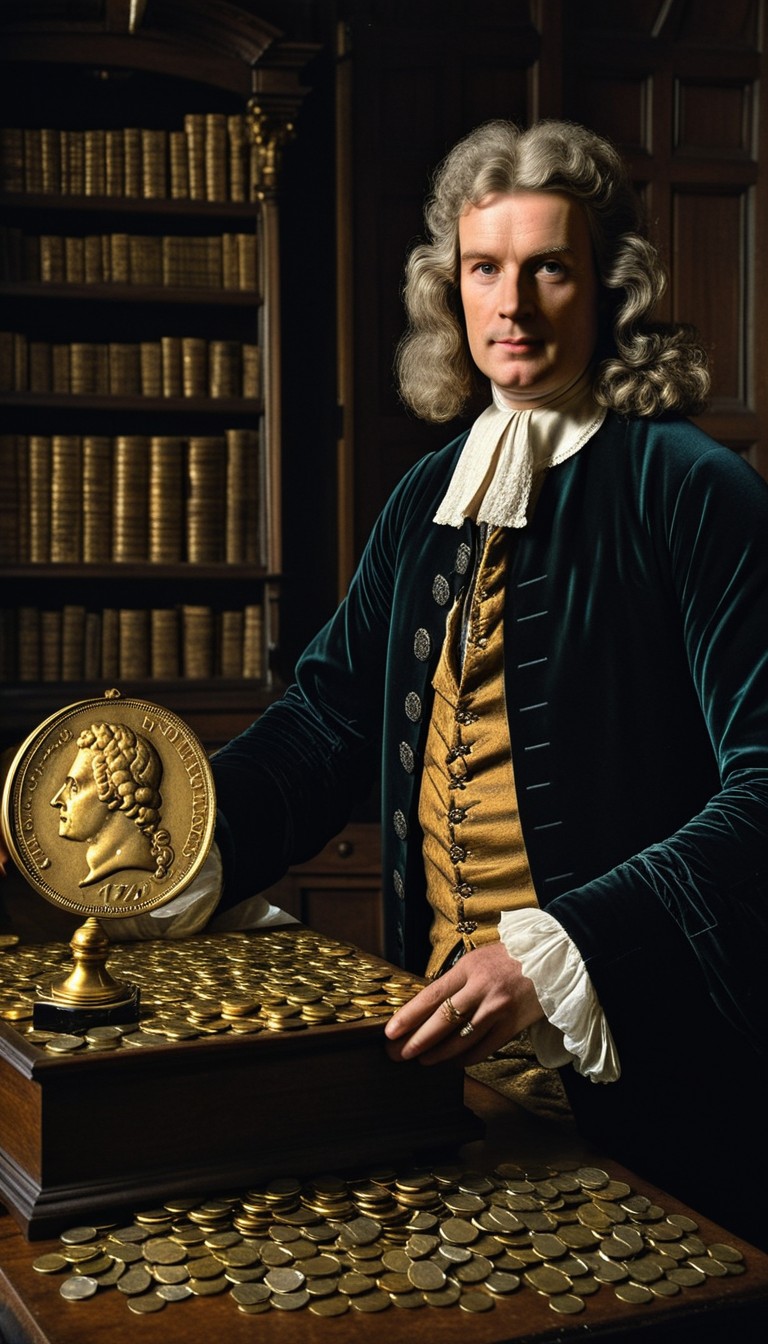
Newton spent his later years as Warden and then Master of the Royal Mint, ruthlessly pursuing counterfeiters. He was elected President of the Royal Society in 1703 and held the post until his death in 1727. He was knighted by Queen Anne. Yet Newton remained secretive, vindictive, and solitary to the end. He famously said, "If I have seen further, it is by standing on the shoulders of giants." His mathematics gave science the tools to see further than anyone had dreamed.
The Mathematical Universe
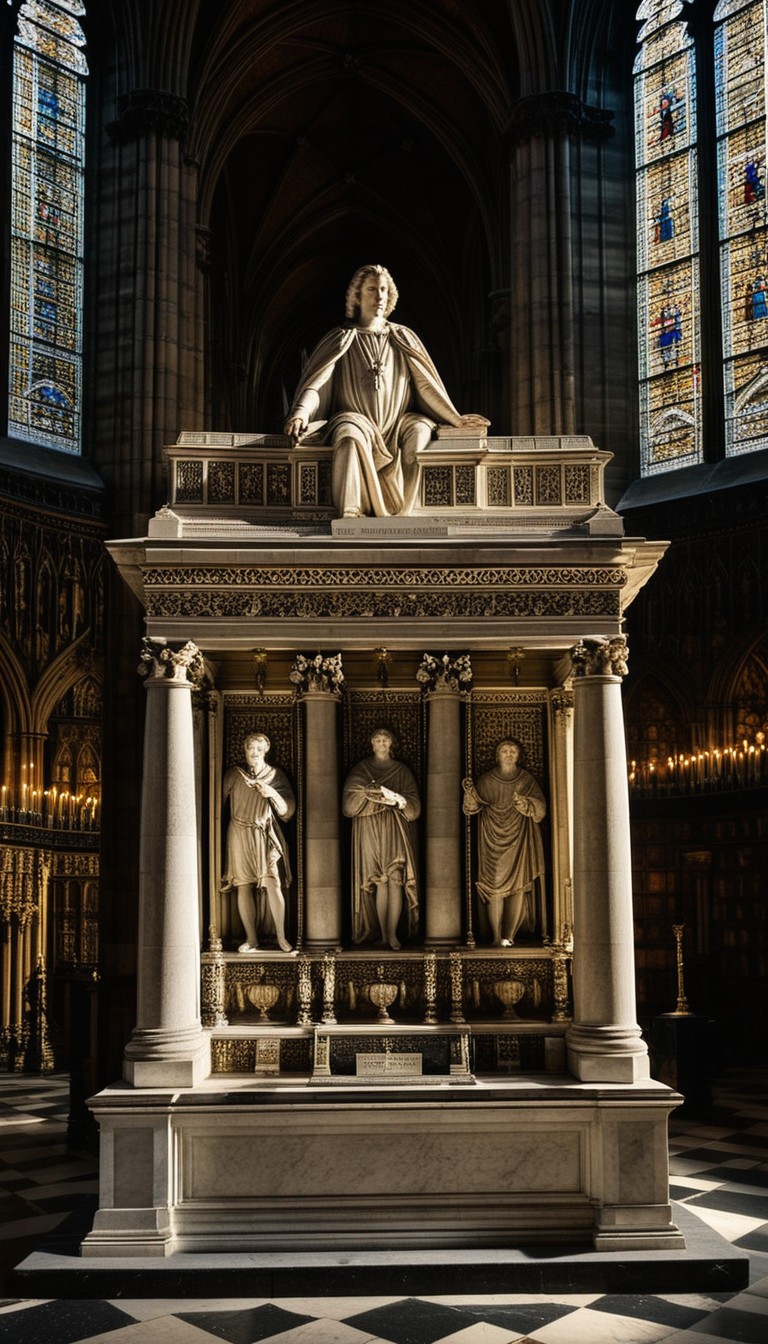
Isaac Newton proved that the universe can be understood through mathematics. His invention of calculus gave humanity a language for describing change itself, from the orbit of a planet to the flow of a river to the growth of a population. His Principia showed that a few elegant laws, expressed in precise mathematical form, can explain the motions of everything in the cosmos. He did not just advance mathematics. He showed what mathematics is for.
Swipe to navigate