Ferdinand Magellan: Around the World

Loading story...
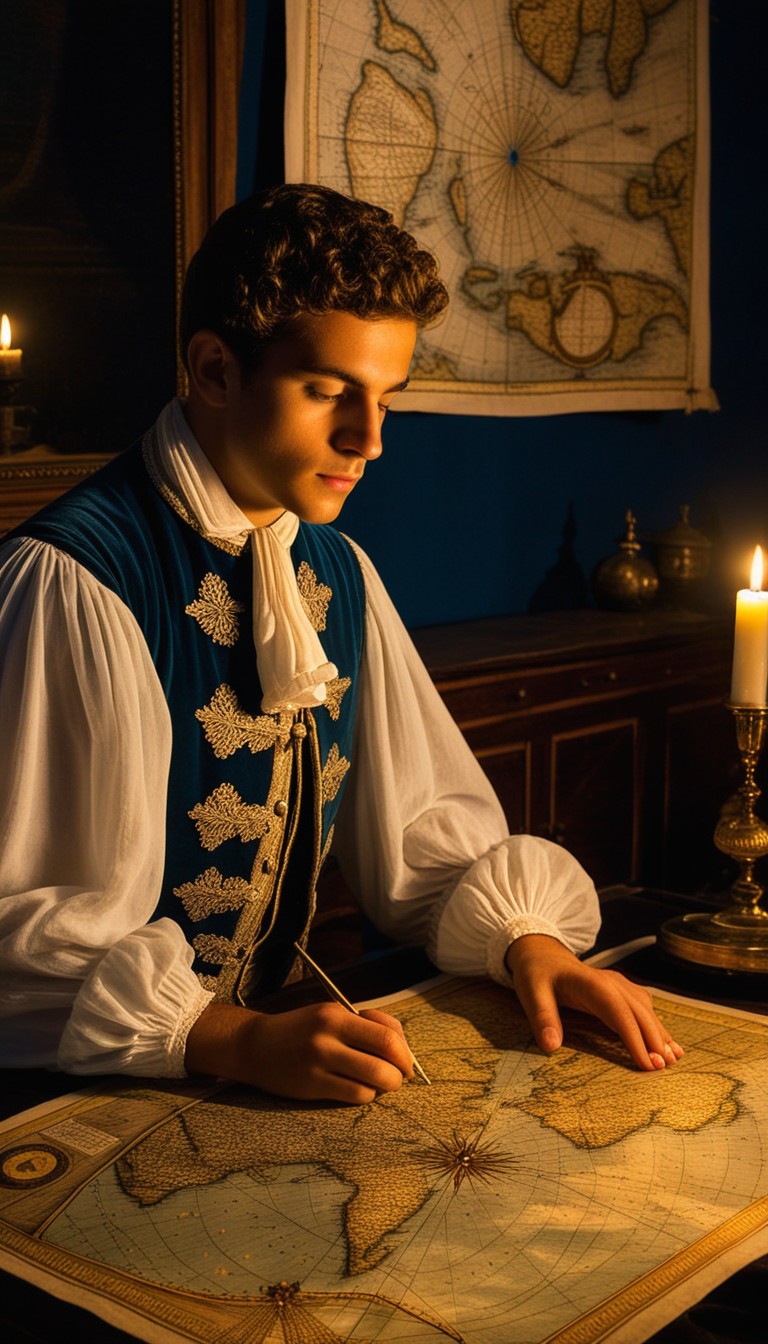
A young Portuguese nobleman studying maps and navigational charts by candlelight
c. 1480 Portugal

A Son of Portugal

Ferdinand Magellan was born around 1480 into a noble Portuguese family, and from an early age the sea was his classroom. As a page at the Portuguese royal court, he gained access to the most advanced navigational charts of his era and witnessed firsthand the fever of exploration gripping Lisbon. He sailed east with Portuguese fleets to India and gained hard-won combat experience fighting along the Moroccan coast. These voyages forged in him a conviction that the known world was only the beginning, and that somewhere beyond the horizon lay an undiscovered passage to the riches of Asia.
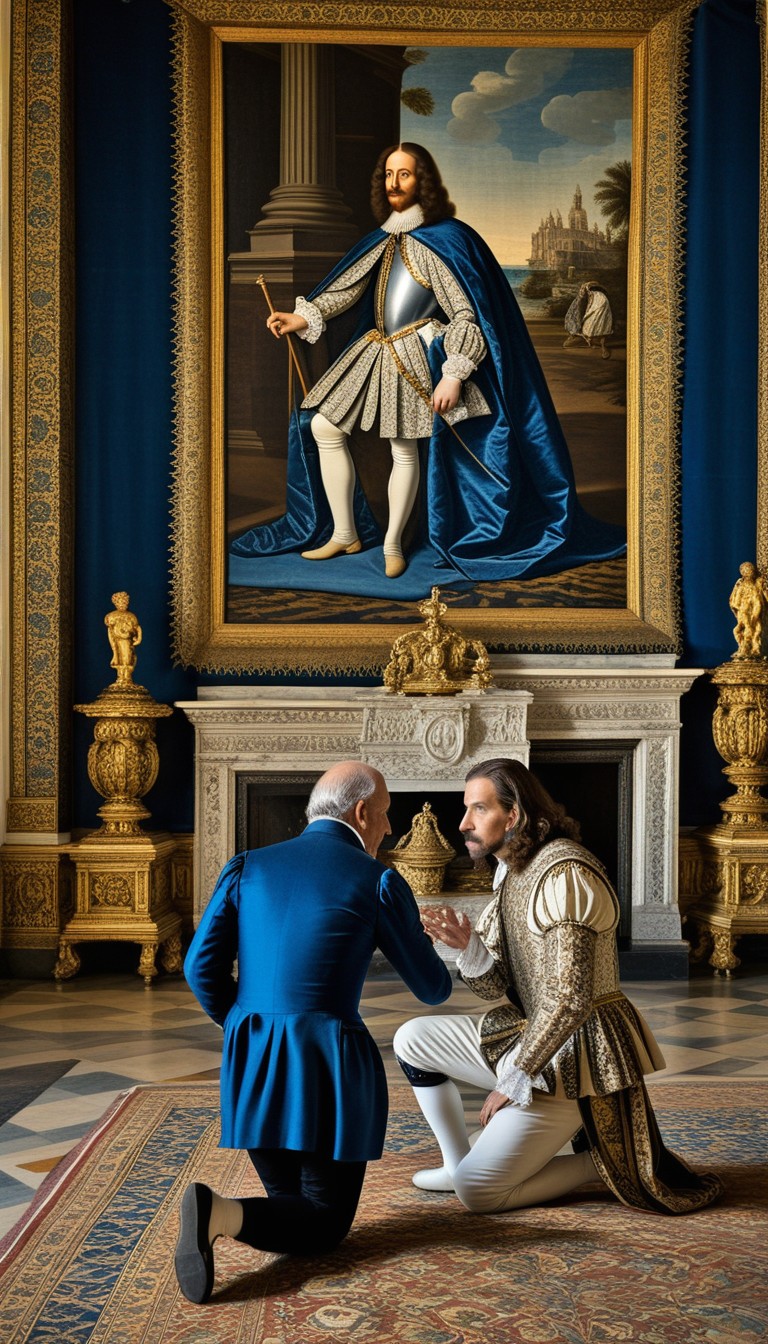
Magellan kneeling before King Charles I of Spain in a grand Seville palace
1517 Seville, Spain

Rejected by Portugal, Embraced by Spain
When Magellan returned from Morocco wounded and accused by rivals of trading illegally with the Moors, the Portuguese King Manuel I twice refused him a pension or a command. Stung by his king's dismissal, Magellan renounced his Portuguese citizenship and traveled to Seville in 1517 to lay his audacious proposal before the young Habsburg king, Charles I of Spain. He argued that the Spice Islands—the source of the world's most valuable commodities—could be reached by sailing west, skirting the tip of South America through an undiscovered strait. Charles, eager to challenge Portugal's dominance of the eastern spice routes, approved the expedition and granted Magellan command of five ships.
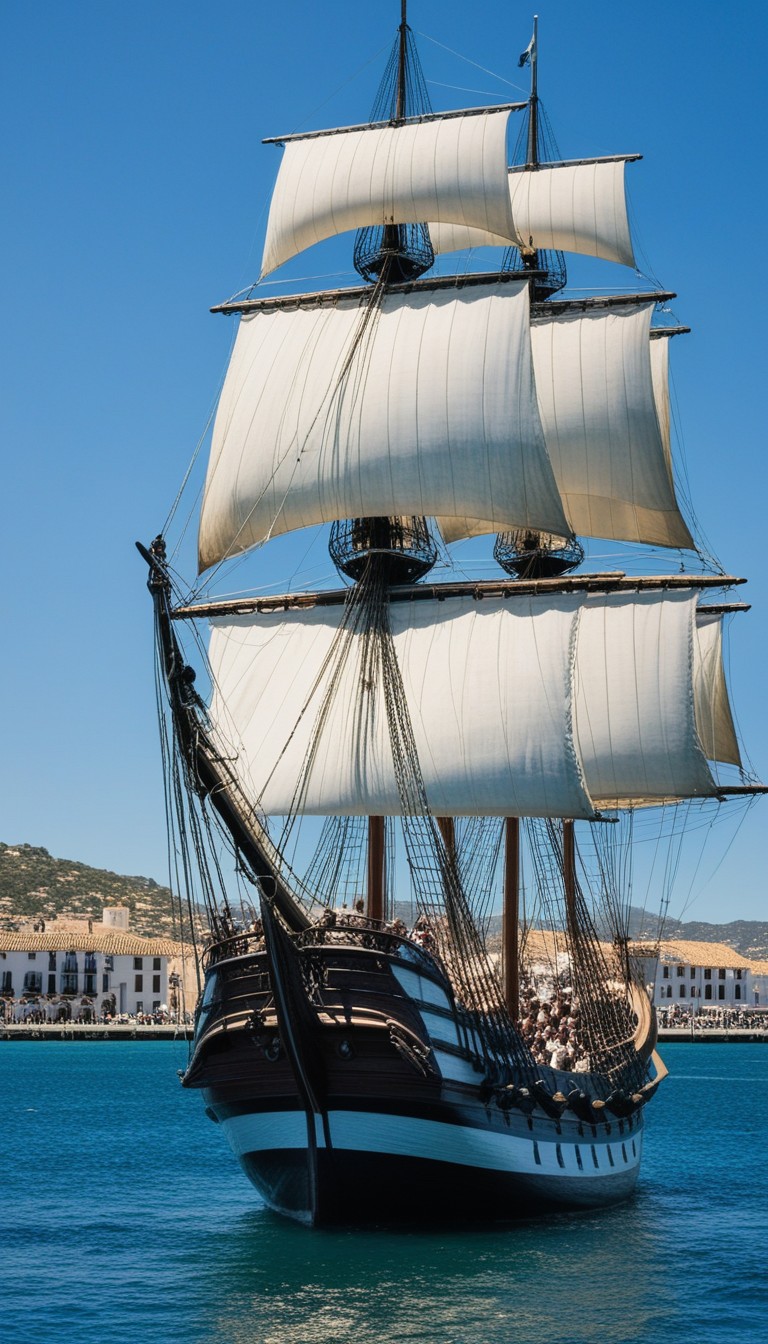
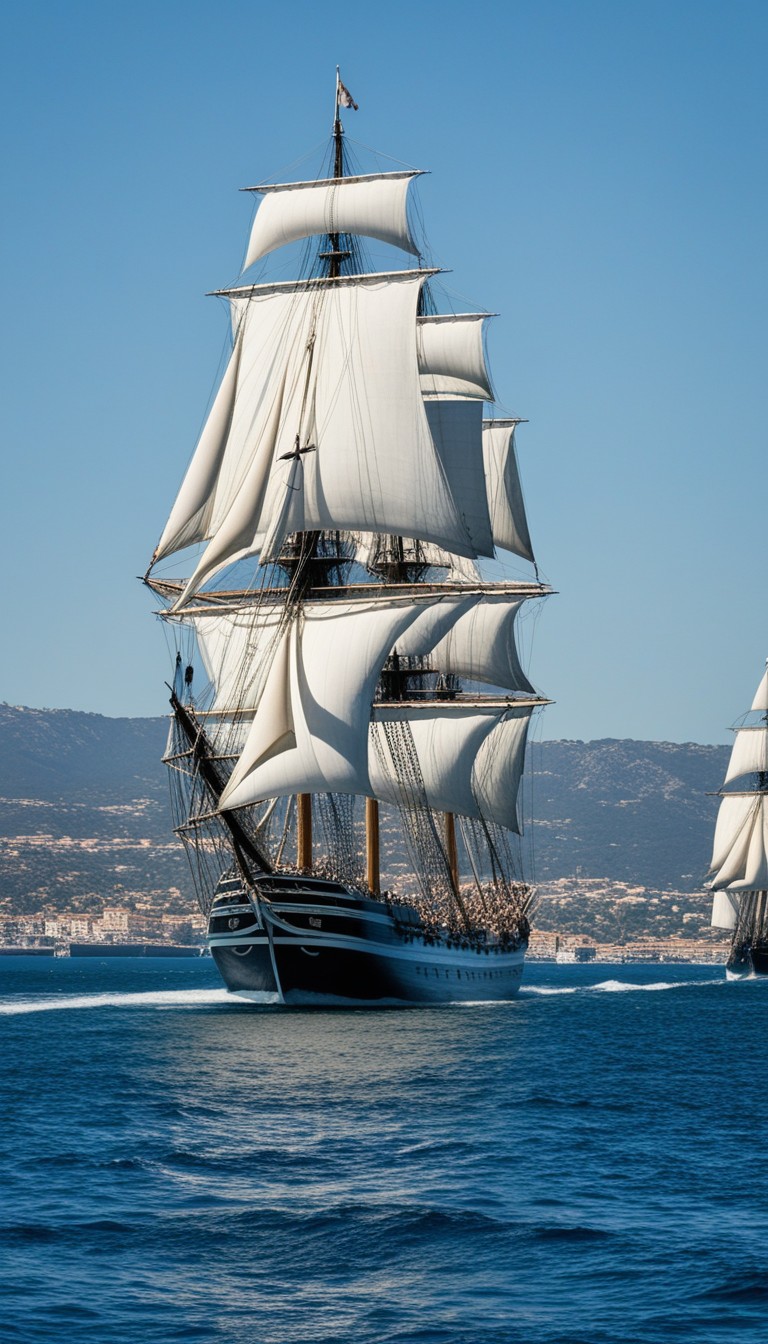
Five tall ships departing a busy Spanish harbor under full sail
September 1519 Seville, Spain

Into the Unknown

On September 20, 1519, Magellan's armada of five ships—the Trinidad, San Antonio, Concepción, Victoria, and Santiago—slipped out of the port of Sanlúcar de Barrameda carrying 270 men from over a dozen nations. The fleet was a floating city of ambition, crammed with trade goods, weapons, and enough provisions for two years at sea. Magellan kept his true route secret, sharing his plans with no one, which immediately bred suspicion among his Spanish captains who resented being commanded by a Portuguese outsider. They crossed the Atlantic, skirted the coast of Brazil, and pushed steadily south into waters no European had ever charted.
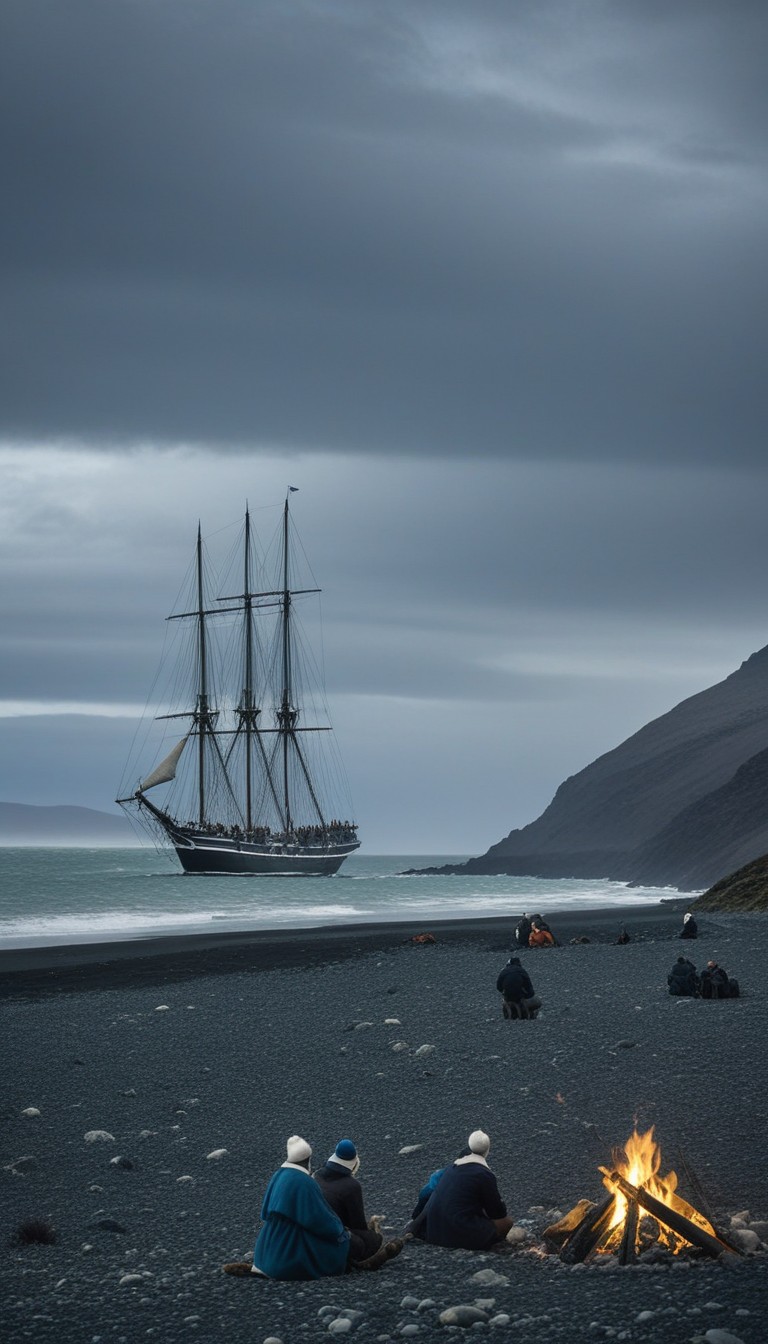
Sailors huddled around fires in a desolate Patagonian landscape under a grey sky
March–August 1520 Puerto San Julián, Argentina

Mutiny on the Edge of the World

The fleet anchored at Puerto San Julián in Patagonia in March 1520 to wait out the brutal southern winter, and the savage cold and unrelenting darkness pushed the crews to the breaking point. Three of the four Spanish captains launched a coordinated mutiny, seizing control of the San Antonio, Victoria, and Concepción. Magellan responded with swift and ruthless force: he had one mutiny leader killed, another drawn and quartered, and a third marooned on the desolate shore. His iron nerve crushed the rebellion, but months of bitter cold and dwindling rations still lay ahead, and the Santiago was lost in a scouting storm. The survivors pressed on, shaken but unbroken.
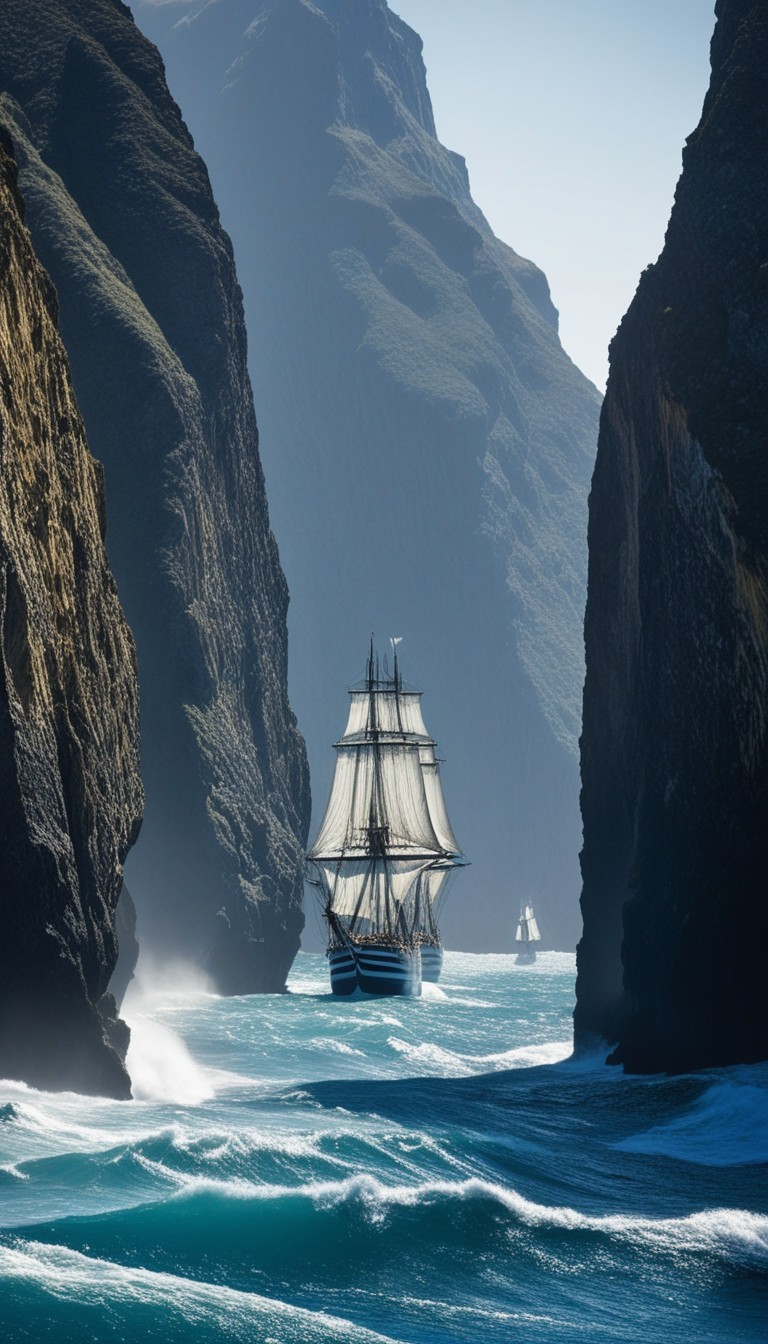
Ships threading through a dramatic narrow strait between towering Patagonian cliffs
October–November 1520 Strait of Magellan

The Strait That Bore His Name

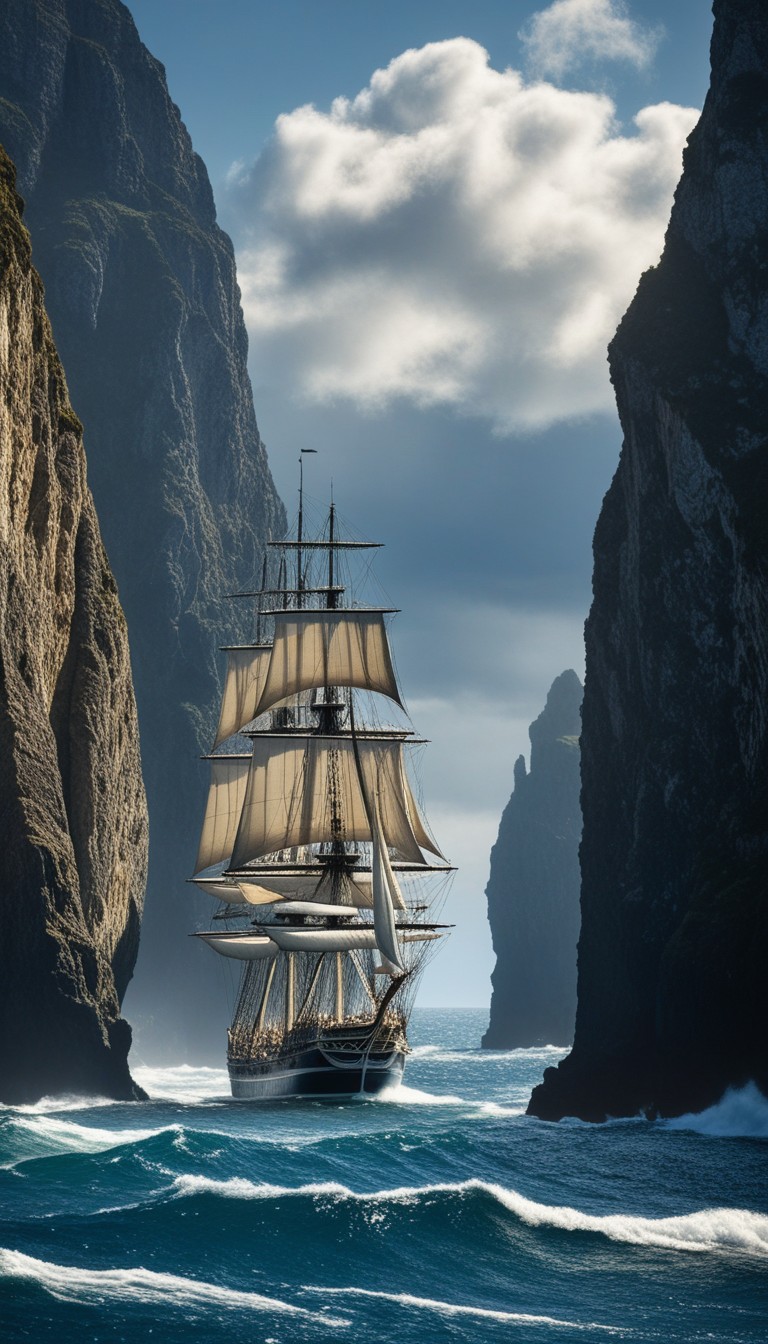
On October 21, 1520, the fleet rounded a headland and discovered the tortured channel that Magellan had dreamed of—a winding, treacherous passage between the South American mainland and the island of Tierra del Fuego. For thirty-eight days the ships picked their way through the maze of glaciers, fierce tidal currents, and howling winds. The San Antonio, carrying most of the fleet's provisions, deserted and turned back for Spain. Then, emerging from the western mouth of the channel on November 28, Magellan wept at the sight that greeted him: a vast, perfectly calm ocean stretching to the horizon. He named it the Mar Pacífico—the Peaceful Sea—and the strait behind him would carry his name forever.
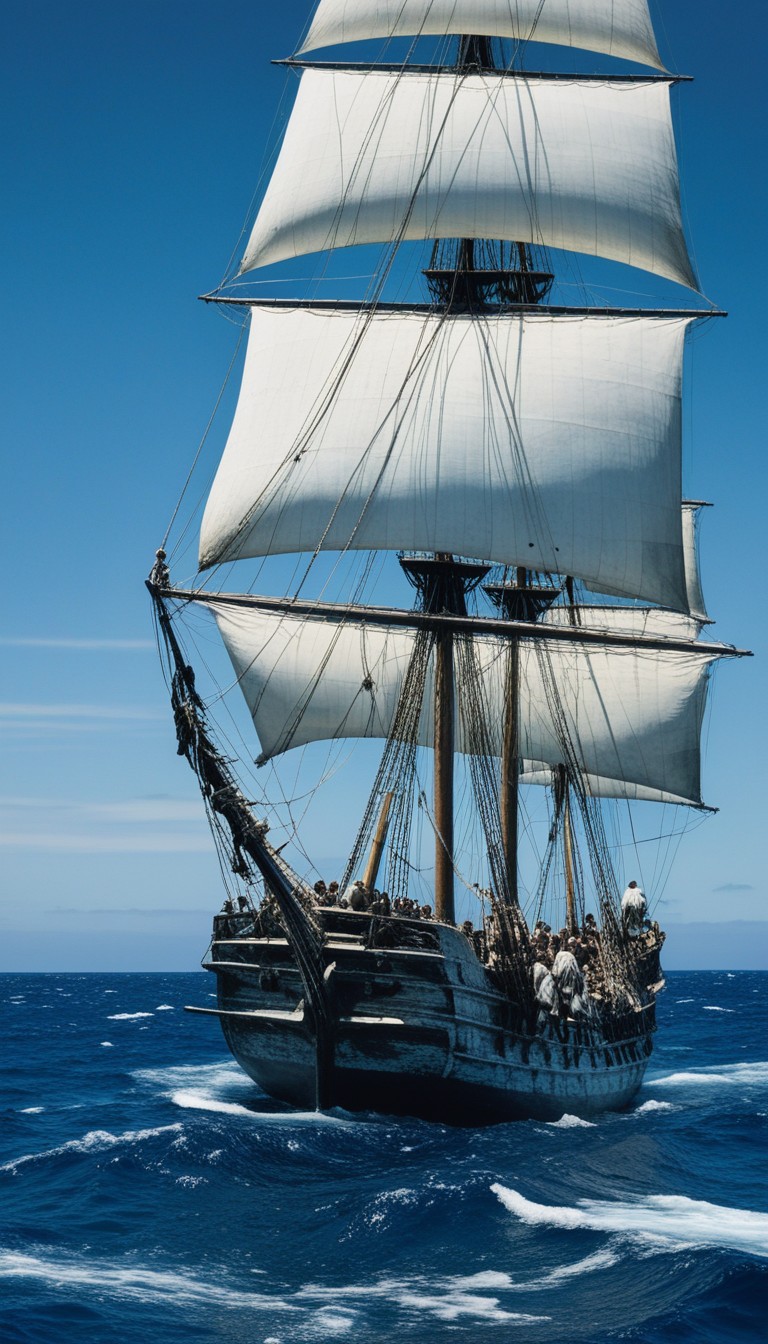
Emaciated sailors on a battered ship adrift on an endless blue ocean
November 1520 – March 1521 Pacific Ocean

Crossing the Endless Pacific

What Magellan could not know was that the Pacific was incomprehensibly vast—roughly twelve thousand miles of open water stretching between South America and Asia. The crossing took nearly four months, and the crew descended into a living nightmare of starvation and disease. Scurvy rotted their gums and blackened their skin; men chewed leather rigging strips and drank putrid water to survive. Nineteen men died before the fleet finally reached the island of Guam in March 1521. Those who survived were skeletal shadows of themselves, yet Magellan pressed on with relentless purpose toward the Philippine Islands.
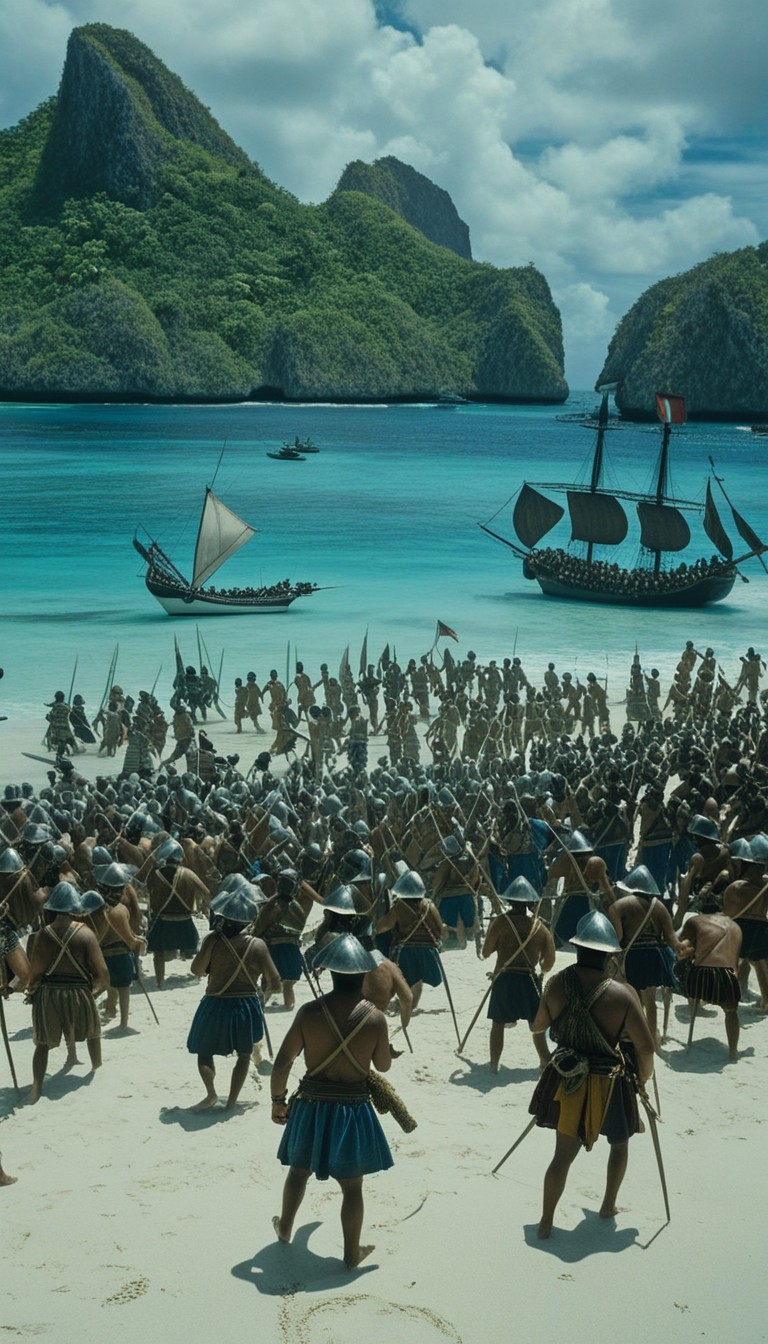
A fierce beach battle on a Philippine shore, with warriors surrounding outnumbered Spanish soldiers
April 27, 1521 Mactan, Philippines

Death at the Battle of Mactan

In the Philippines, Magellan made a fateful error—he allowed his mission of exploration to become entangled in local politics. He allied himself with Rajah Humabon of Cebu and agreed to help him subdue the defiant chieftain Lapu-Lapu on the nearby island of Mactan. On April 27, 1521, Magellan waded ashore with just sixty men against over a thousand warriors. His small force was overwhelmed, and Magellan himself was cut down in the shallows, fighting to the last to cover his men's retreat. He was forty years old. The first man to conceive of and lead a circumnavigation of the globe would not live to complete it.
A single battered ship sailing into a Spanish harbor, greeted by astonished crowds on the dock
September 6, 1522 Sanlúcar de Barrameda, Spain

Elcano Closes the Circle

After Magellan's death, the expedition descended into further disaster—massacres, desertions, and the burning of the Concepción left only two ships, the Trinidad and Victoria. The Trinidad was captured by the Portuguese, leaving Juan Sebastián Elcano to command the Victoria alone across the Indian Ocean, around the Cape of Good Hope, and north through the Atlantic. On September 6, 1522, the Victoria limped into the Spanish port of Sanlúcar de Barrameda with just eighteen gaunt survivors from the original 270—completing the first circumnavigation of the Earth. They had sailed nearly sixty thousand kilometers and been at sea for nearly three years.
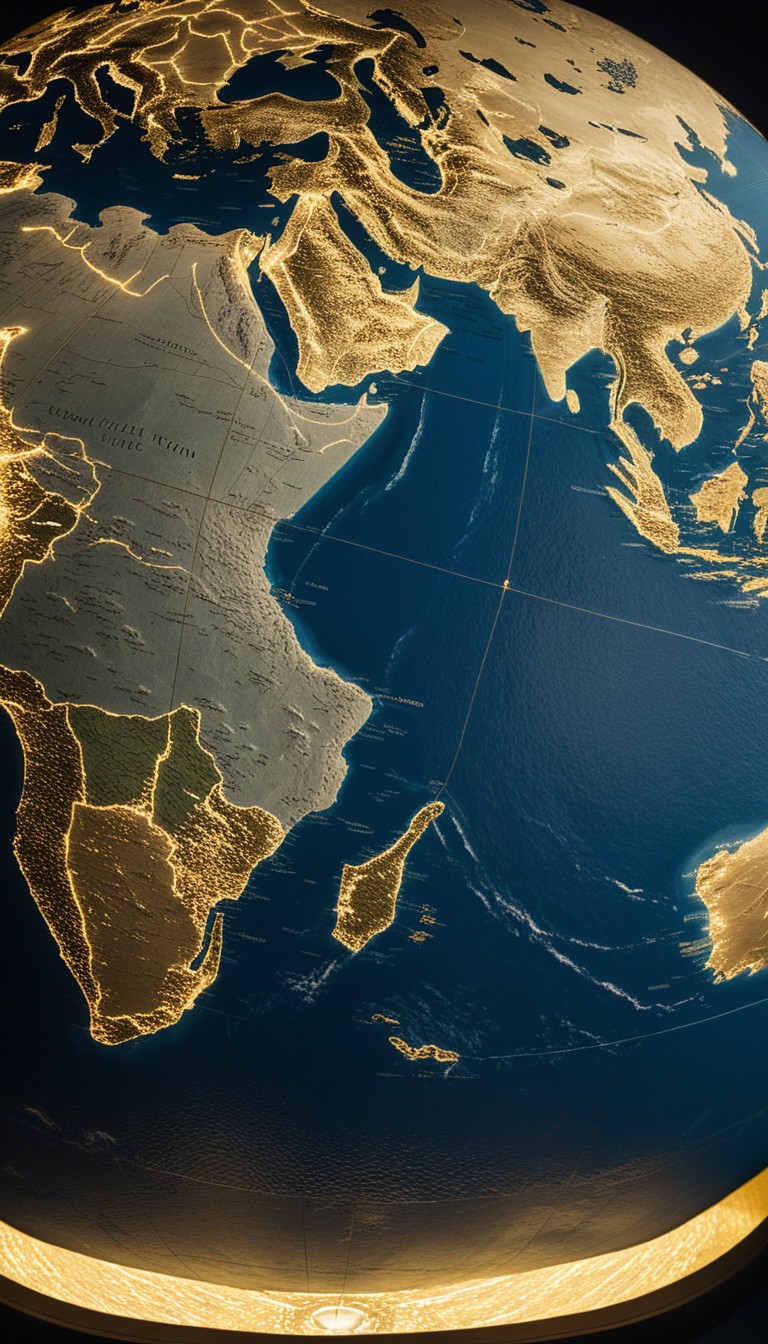
A globe illuminated by golden light, the route of Magellan's circumnavigation traced across its surface

The World Was Round—And He Proved It

The Magellan–Elcano expedition did more than complete a remarkable feat of navigation: it fundamentally changed how humanity understood the planet it lived on. The voyage confirmed that the Earth was a sphere, that the Americas were a distinct landmass separate from Asia, and that a single unbroken ocean connected all the world's seas. Magellan himself never lived to see the completion of his dream, but his name is inseparable from the achievement. The Strait of Magellan, the Magellanic Clouds visible in the southern sky, and the very concept of circumnavigation all bear witness to the Portuguese captain who dared to sail where no map could guide him.

Recommended Reading

As an Amazon Associate, we earn from qualifying purchases.
Swipe to navigate