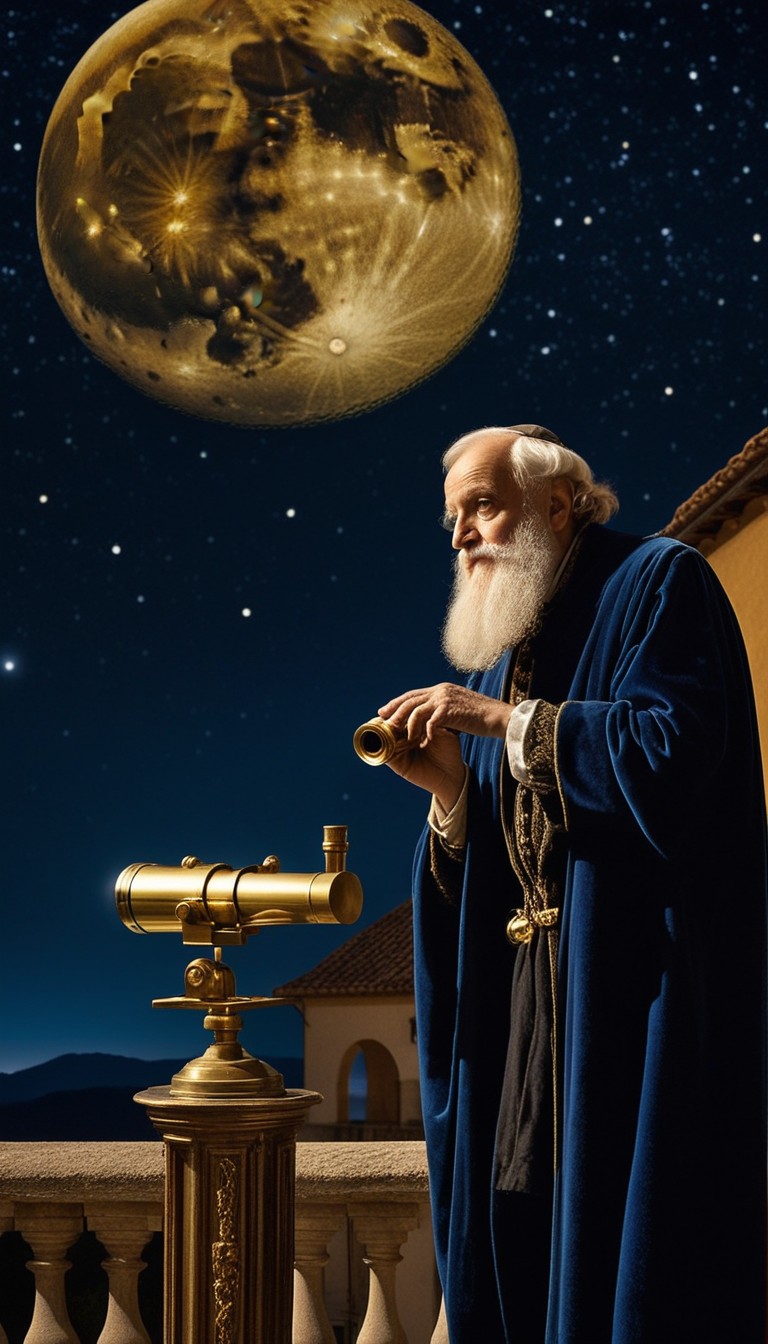
Galileo Galilei: Father of Modern Science
Loading story...
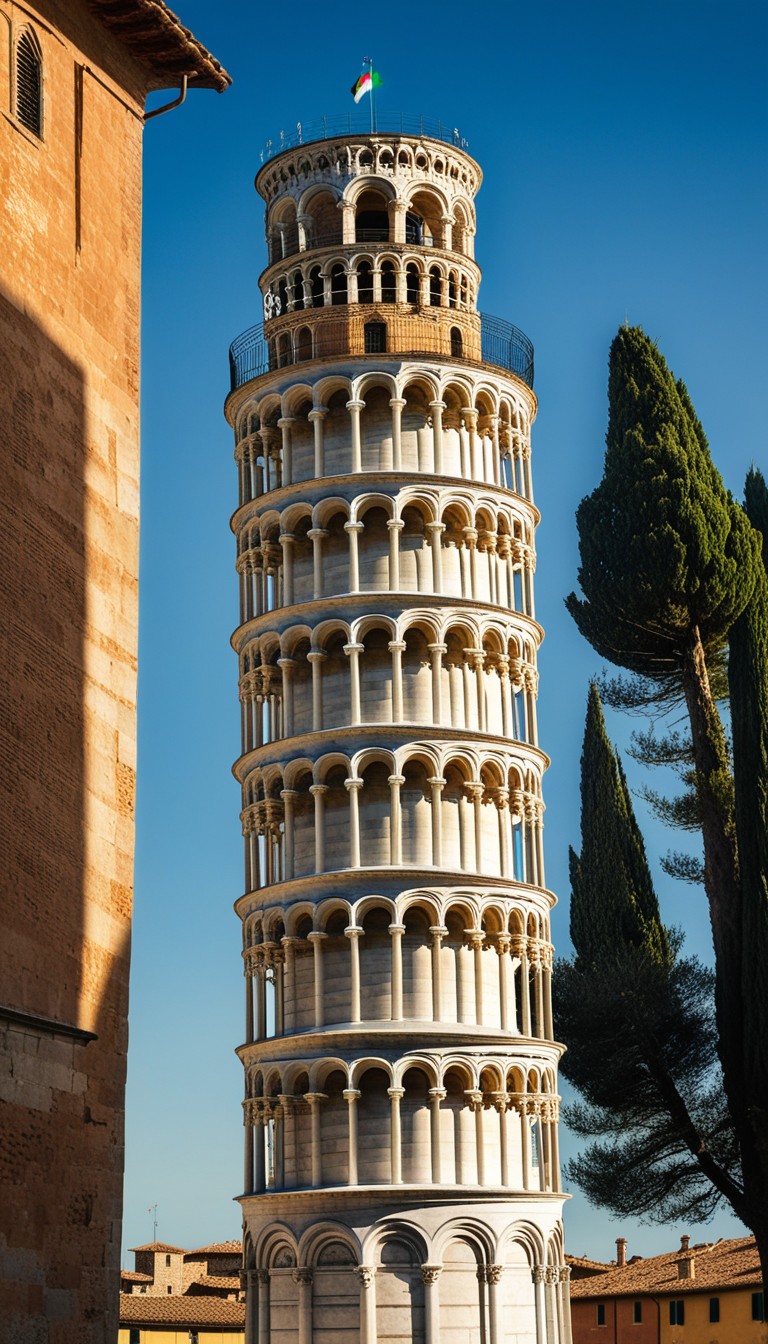
1564
Pisa, Italy
A Curious Child in Pisa
On February 15, 1564, Galileo Galilei was born in Pisa, Italy—the same year Shakespeare was born and Michelangelo died. His father, Vincenzo, was a musician and cloth merchant who valued questioning authority. Young Galileo inherited that rebellious streak. He watched the world with restless, observant eyes, always asking why things worked the way they did.
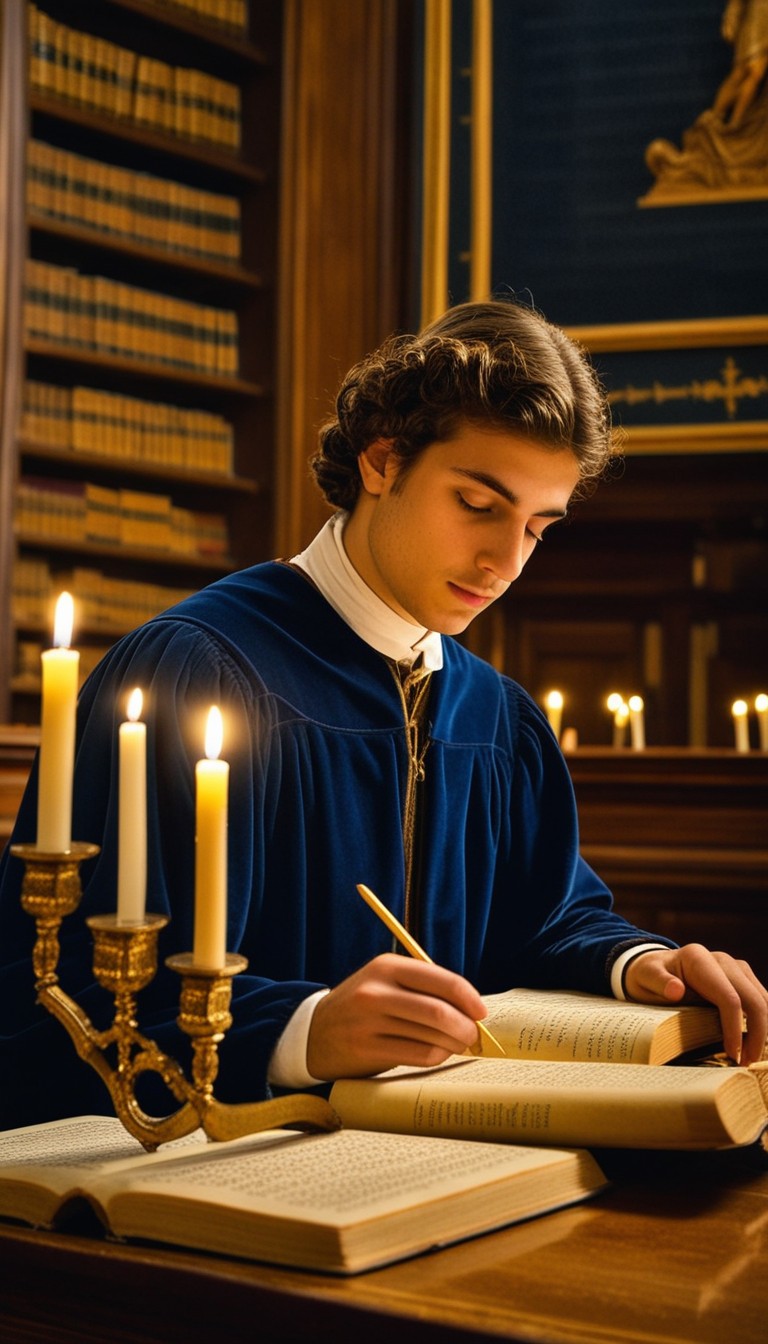
1581-1585
Pisa, Italy
The University Dropout
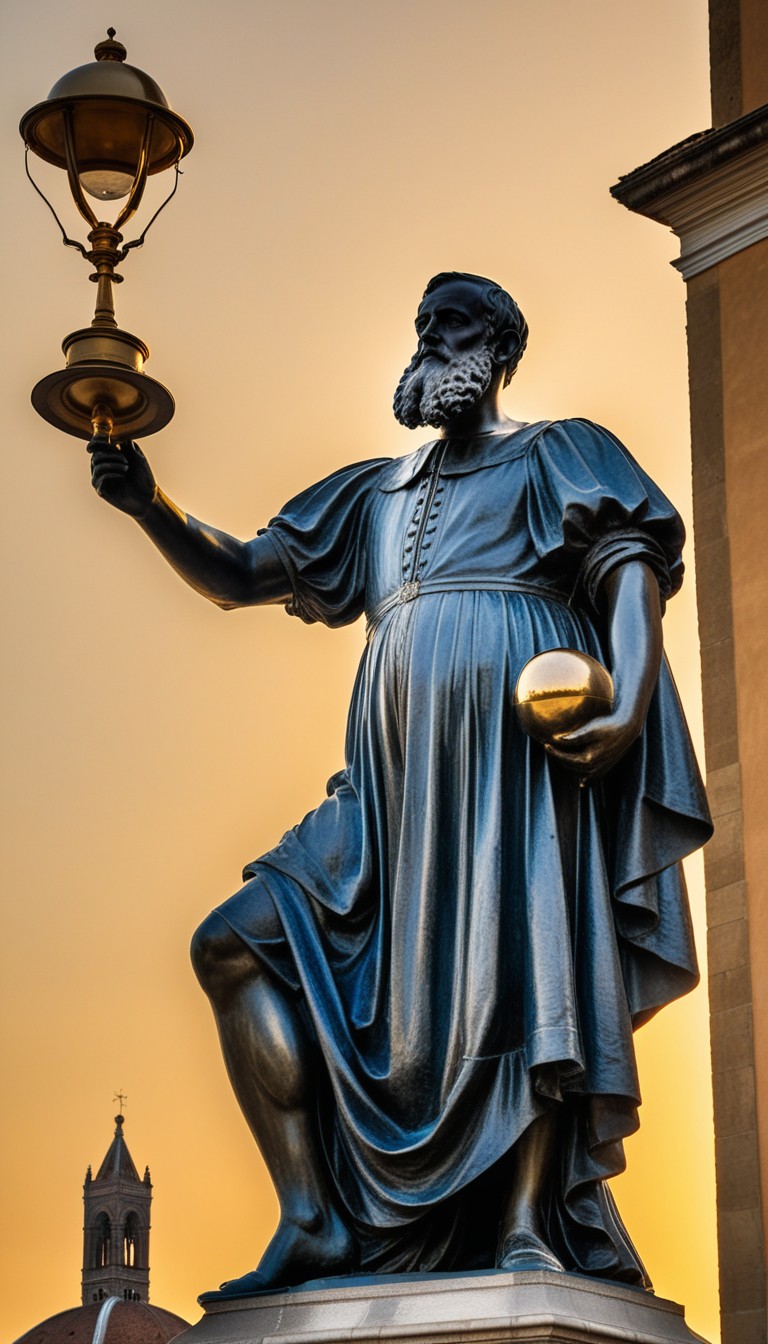
Galileo enrolled at the University of Pisa in 1581 to study medicine—his father's wish. But he was captivated by mathematics and geometry instead. He noticed a swinging chandelier in the cathedral kept perfect time regardless of its arc, sparking his study of pendulums. Unable to afford tuition and bored by traditional teaching, he left without a degree to pursue mathematics on his own terms.
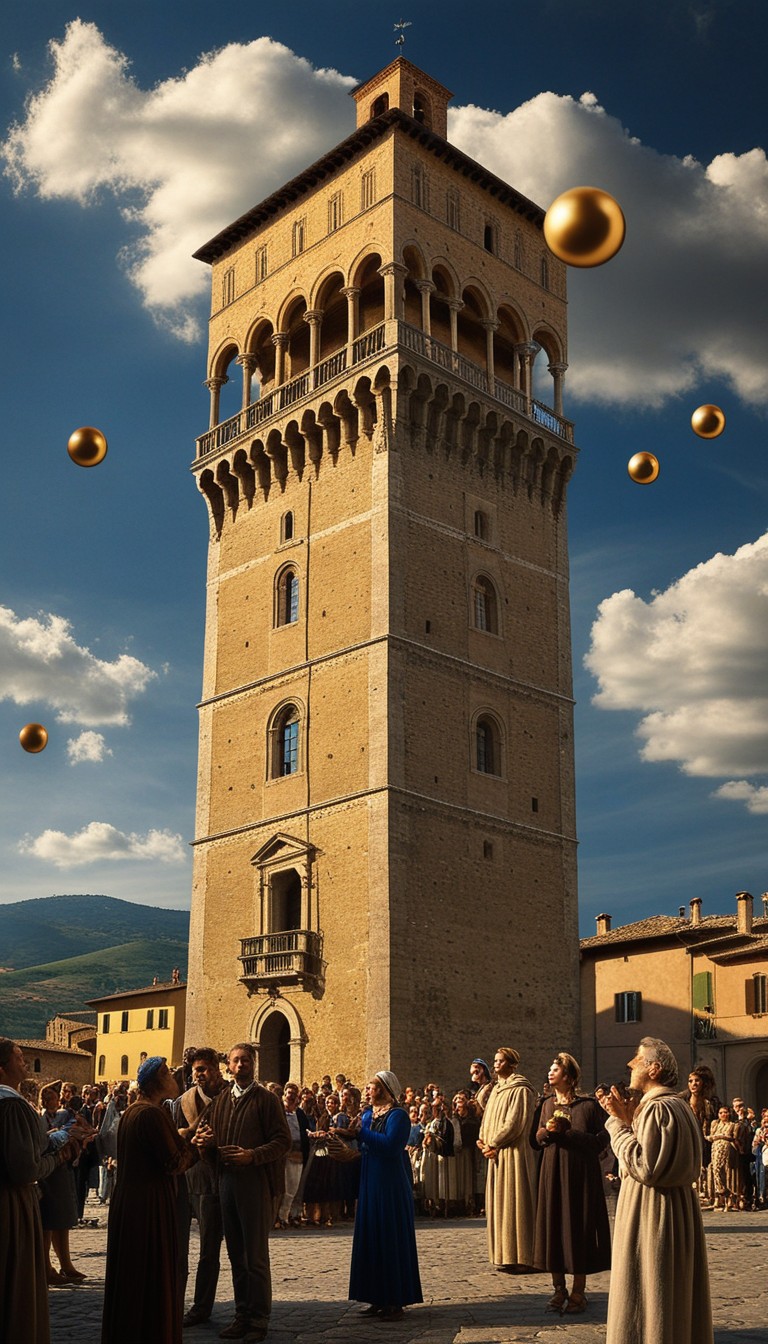
1589-1592
Pisa, Italy
Challenging Aristotle
For nearly two thousand years, scholars accepted Aristotle's claim that heavier objects fall faster than lighter ones. Galileo wasn't buying it. Through careful experiments with inclined planes and rolling balls, he demonstrated that all objects fall at the same rate regardless of weight. Legend places him atop the Leaning Tower of Pisa dropping two cannonballs—true or not, his conclusions toppled ancient physics.
1609
Padua, Italy
The Telescope Revolution
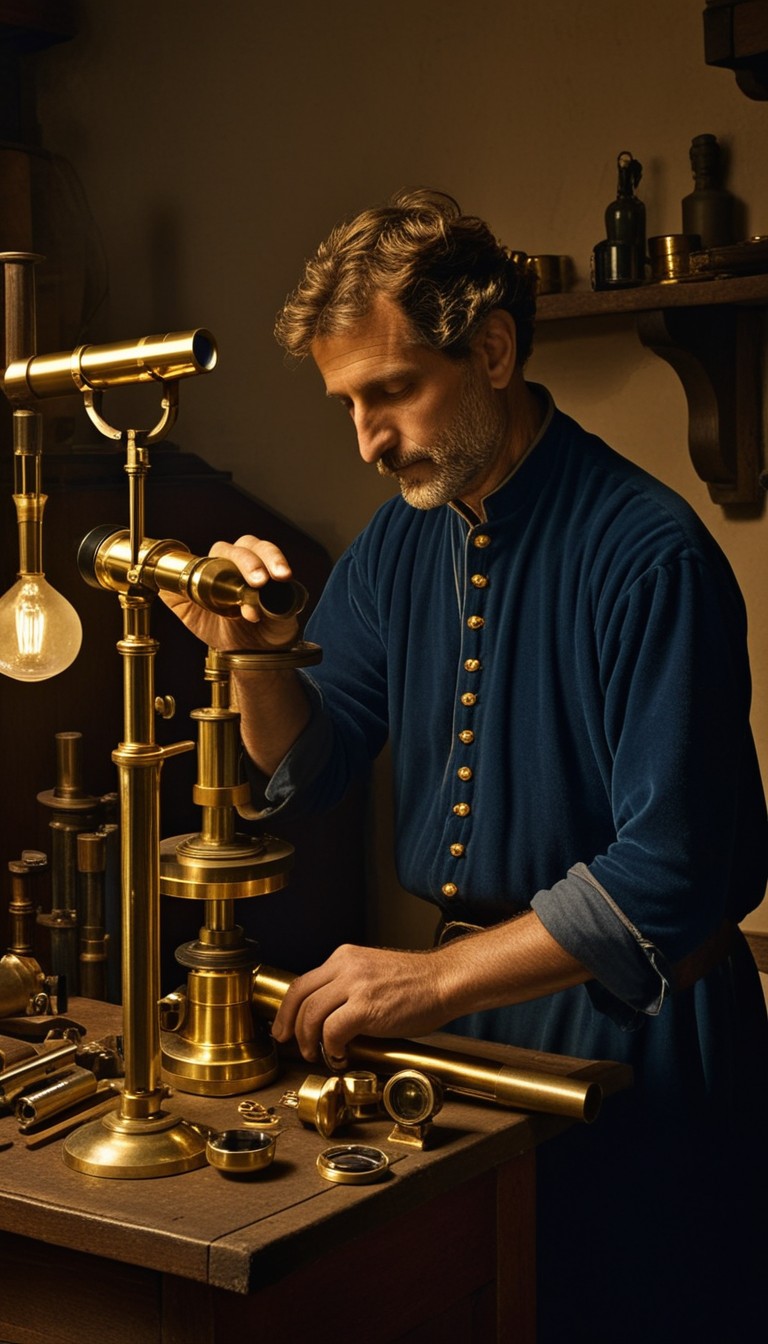
In 1609, Galileo heard about a Dutch invention that made distant objects appear closer. Within months he had built his own version—and then improved it dramatically, achieving 20x magnification. While others saw a novelty for merchants and soldiers, Galileo saw something else entirely. He pointed his telescope upward, toward the night sky, and nothing would ever be the same.
1610
Padua, Italy
Moons, Rings, and a New Universe
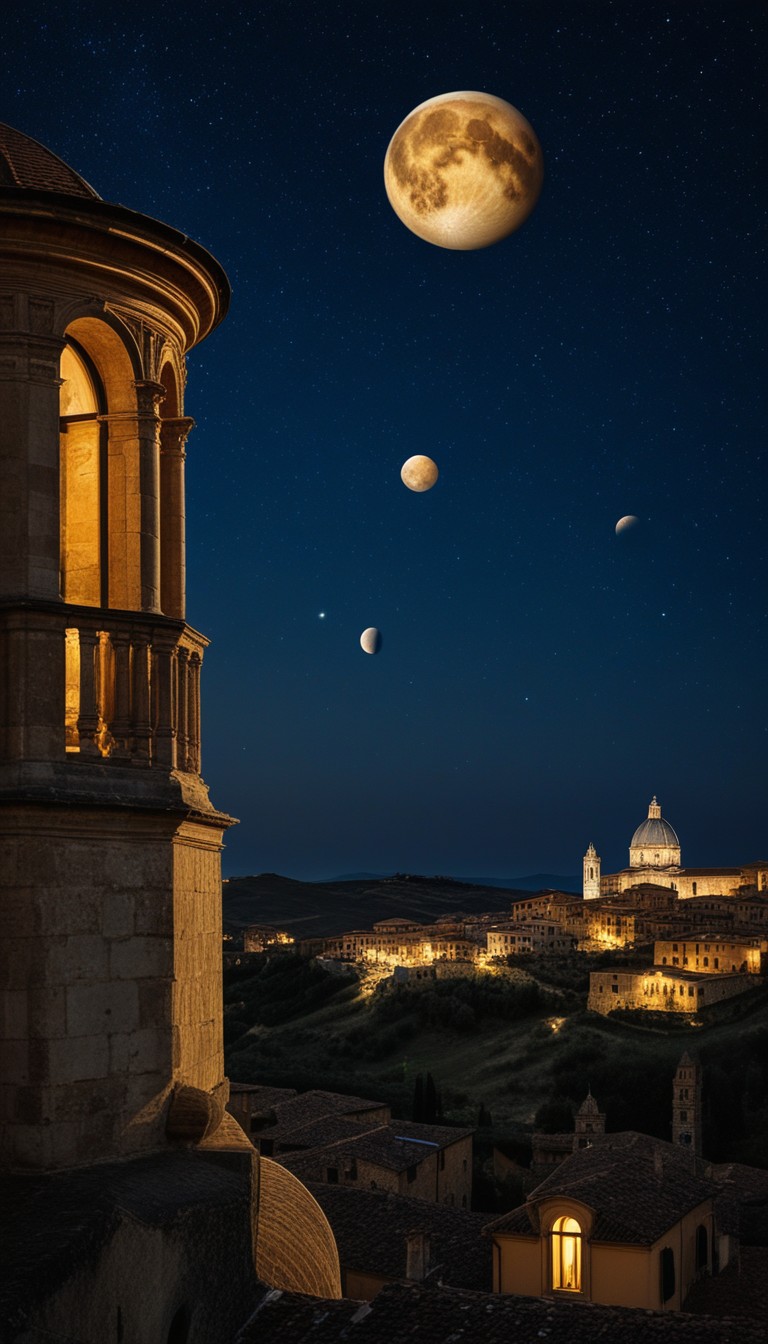
What Galileo saw through his telescope stunned the world. He discovered four moons orbiting Jupiter—proof that not everything revolved around Earth. He observed the rugged mountains of our Moon, the phases of Venus, and the strange "ears" of Saturn (later revealed as rings). Each discovery was a hammer blow to the old Earth-centered model of the universe.
1610
Venice & Florence, Italy
The Starry Messenger
In March 1610, Galileo published Sidereus Nuncius—The Starry Messenger—and it caused a sensation across Europe. The slim book described his telescopic observations in vivid detail, complete with his own illustrations of the Moon's surface. It sold out almost immediately. Galileo became the most famous scientist in Europe overnight, and the Medici family made him their court philosopher in Florence.
1616-1633
Florence & Rome, Italy
Collision with the Church
Galileo's support for Copernicus's sun-centered model put him on a collision course with the Catholic Church. In 1616, the Church declared heliocentrism "formally heretical." Galileo was warned to abandon the idea. But in 1632, he published his Dialogue Concerning the Two Chief World Systems, a thinly veiled argument for Copernicus. The Pope was furious. Galileo was summoned to Rome.
1633-1642
Rome & Arcetri, Italy
And Yet It Moves
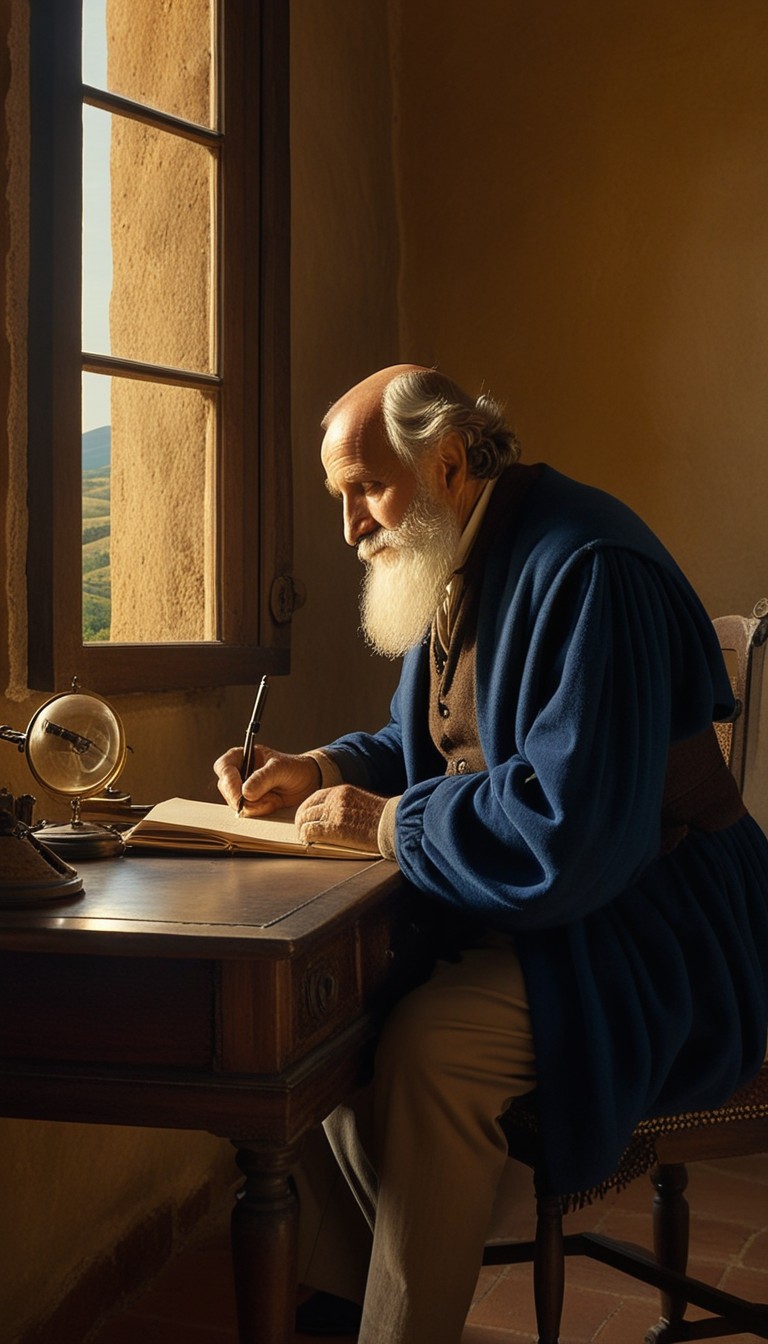
In 1633, the 69-year-old Galileo stood trial before the Roman Inquisition. Under threat of torture, he was forced to recant his belief that the Earth moves around the Sun. He was sentenced to house arrest for the rest of his life. Legend says that as he rose from his knees, he muttered: "Eppur si muove"—"And yet it moves." He spent his final years blind but still working, dying in 1642.
The Father of Modern Science
Galileo Galilei proved that observation and experiment trump dogma and tradition. He didn't just look at the sky—he changed how humanity understood its place in the cosmos. In 1992, the Catholic Church formally acknowledged its error. Today, NASA's Galileo spacecraft and Jupiter's Galilean moons bear his name, a fitting tribute to the man who dared to look up and question everything.
Recommended Reading
As an Amazon Associate, we earn from qualifying purchases.
Swipe to navigate