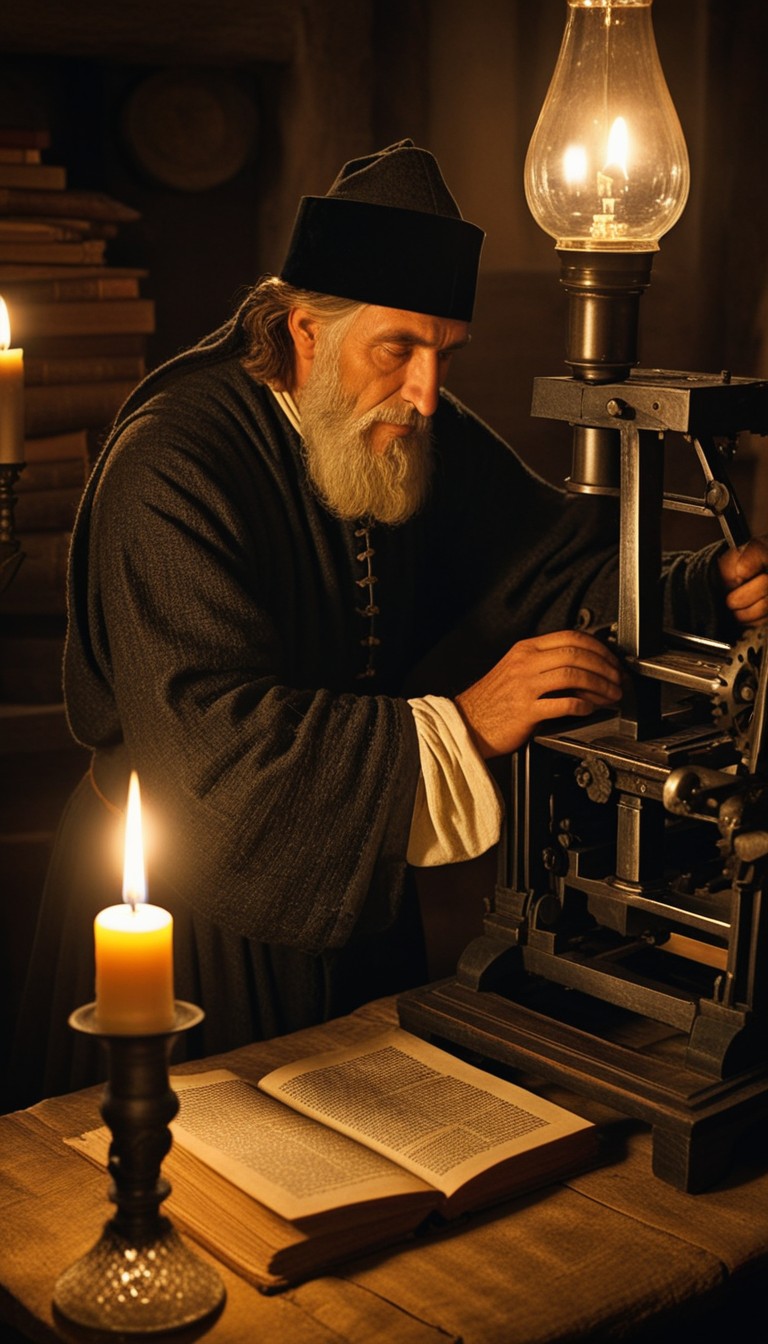
Gutenberg: The Printing Revolution
Loading story...

Early 1400s
Mainz, Holy Roman Empire
A World of Handwritten Words
In the early 1400s, every book in Europe was a labor of months or years. Monks and scribes bent over vellum in cold scriptoria, copying texts letter by letter with quill and ink. A single Bible might take a skilled scribe a full year to complete. Books were so rare and expensive that only churches, universities, and the very wealthy could own them. Knowledge moved slowly, and the power of literacy belonged to the few.

c. 1400–1448
Mainz and Strasbourg
The Goldsmith's Eye
Johannes Gutenberg was born around 1400 into a patrician family in Mainz. Trained as a goldsmith, he developed a precise mastery of metals—how to cast them, alloy them, and work them to fine tolerances. He spent years in Strasbourg experimenting in secrecy, borrowing money from investors while hinting at a mysterious new process. His metalworking skills gave him a crucial insight: the same precision used to stamp coins could be used to cast individual letters that could be set, inked, pressed, and reset again and again.
c. 1440s
Mainz
The Breakthrough: Movable Type
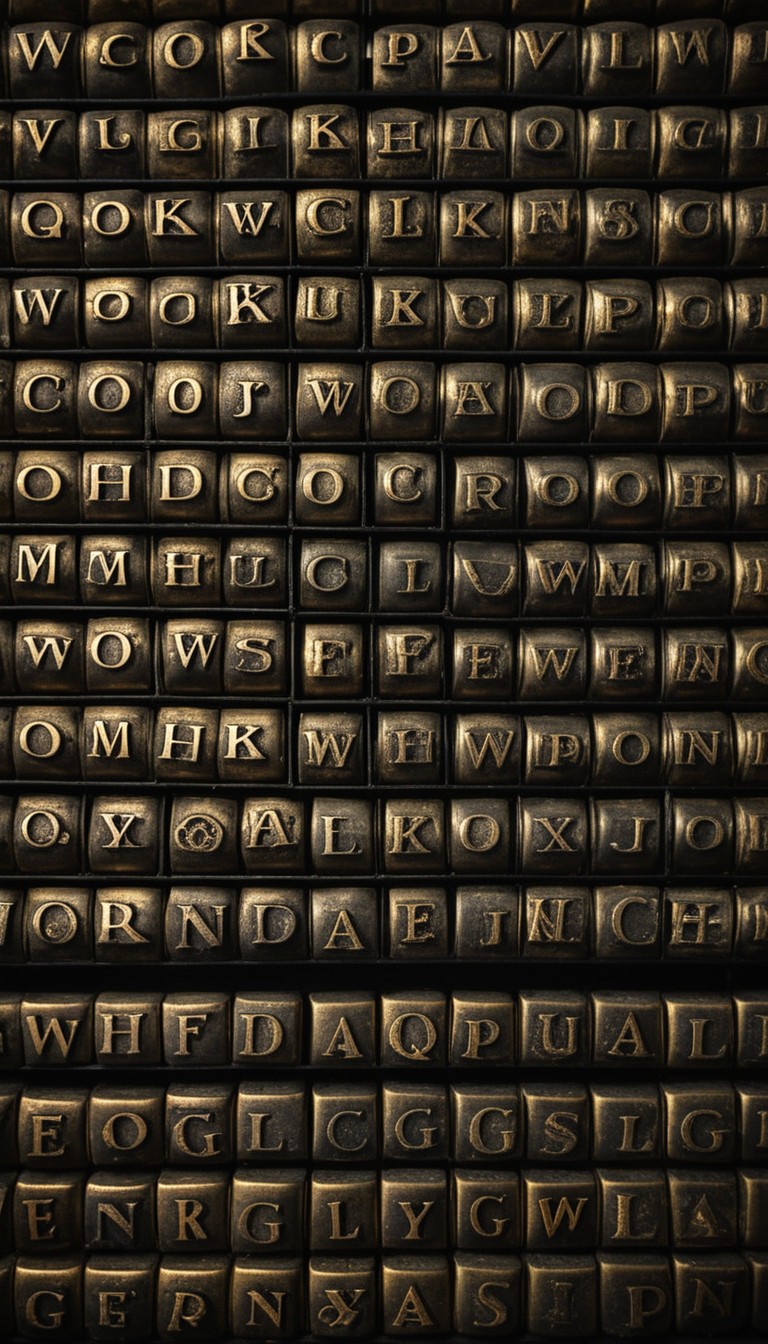
Gutenberg's genius lay in combining existing technologies into something entirely new. He developed a hand mold that could cast individual metal letters—called type—quickly and in large quantities. Each letter was cast from a precise alloy of lead, tin, and antimony that was hard enough to withstand repeated impressions without wearing down. Letters could be arranged into words, locked into a frame called a forme, inked with an oil-based ink that adhered to metal, and then pressed onto paper or vellum. After printing, the type could be disassembled and reused for the next page.
c. 1450
Mainz
The Press Itself
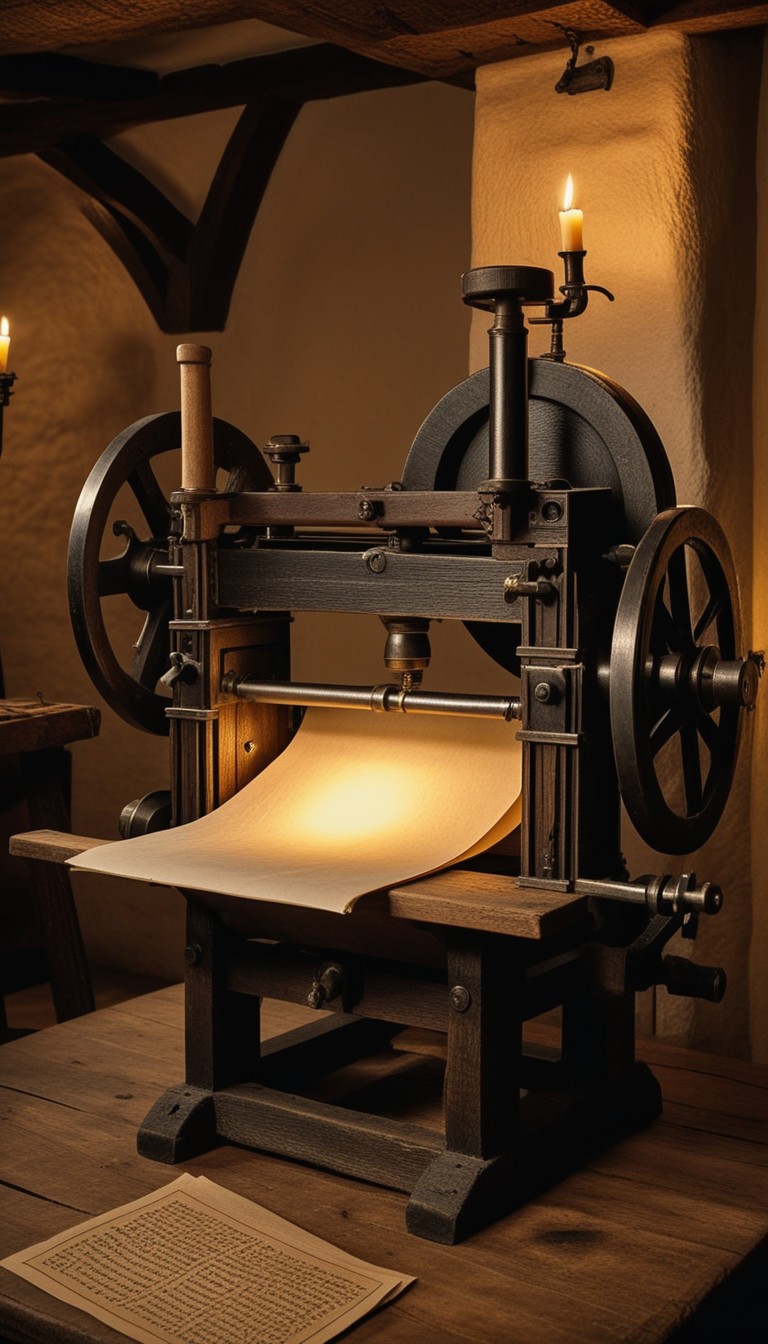
To transfer ink from type to page, Gutenberg adapted the screw press—a machine long used to squeeze grapes for wine and olives for oil. He modified it to apply firm, even pressure across an entire page of type simultaneously. The process was elegantly efficient: ink the type, lay the paper, pull the lever, lift the sheet, repeat. A single press could produce hundreds of pages per day, compared to a scribe's handful. The machine married the precision of metalworking with the muscle of the winepress.
c. 1455
Mainz
The Bible of 1455
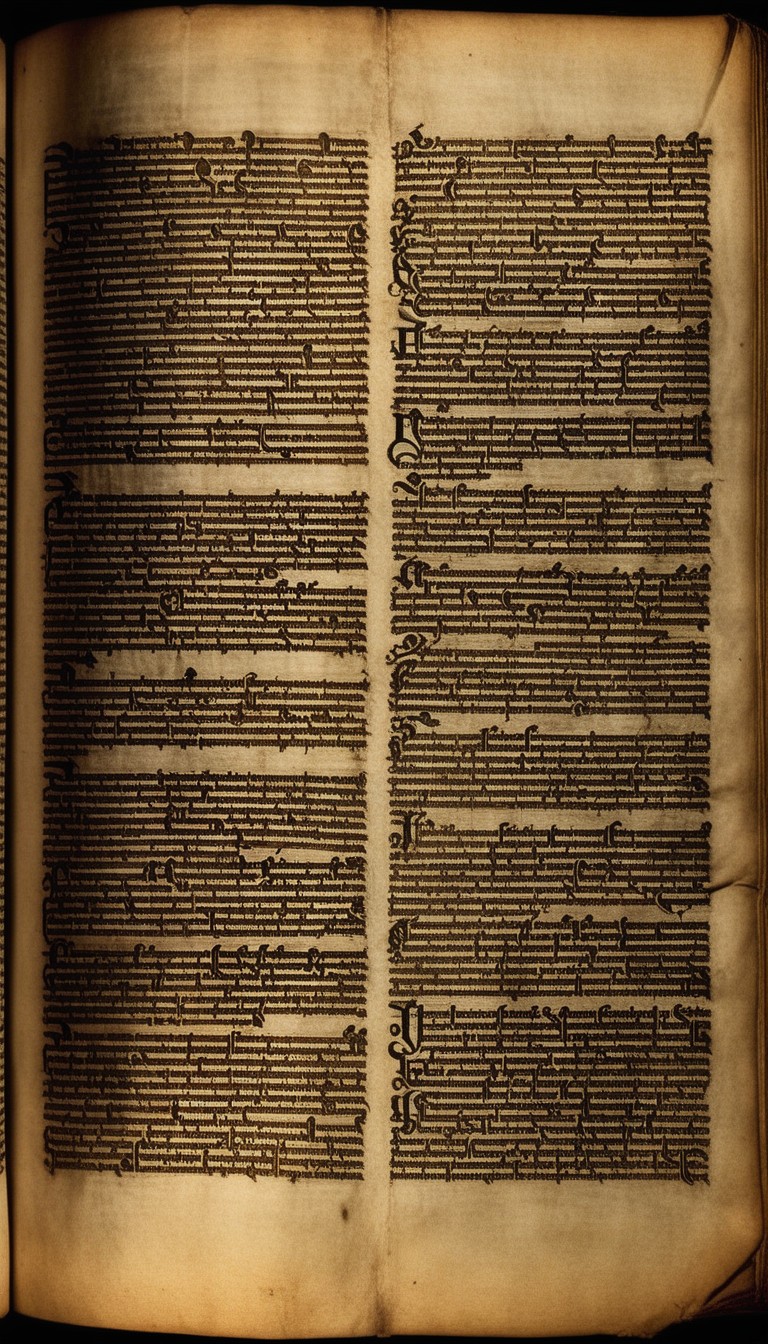
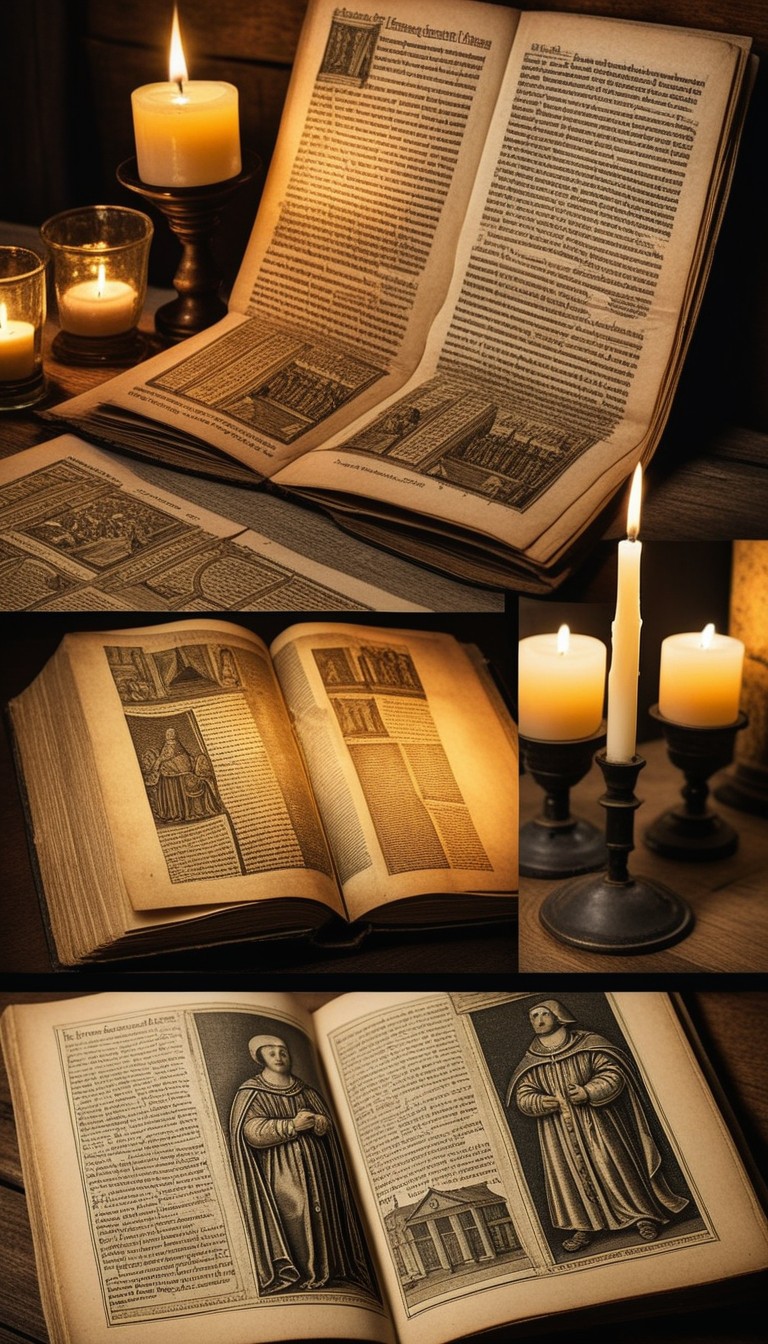
Around 1455, Gutenberg completed his masterpiece: the first major book printed with movable type in Europe. The forty-two-line Bible—named for its column depth—was printed in a Gothic typeface so beautiful that many who saw it assumed it must have been written by hand. Approximately 180 copies were produced, some on paper and some on fine vellum. Today, fewer than fifty survive. They are among the most valuable books in the world, monuments to a moment when one man's workshop changed the course of human civilization.

1455
Mainz
The Lawsuit That Took Everything
Gutenberg's triumph quickly turned to ruin. His primary financial backer, the wealthy businessman Johann Fust, had loaned him large sums to fund the press operation. In 1455—the very year the Bible was completed—Fust sued Gutenberg for repayment plus compound interest, a sum Gutenberg could not pay. The court ruled in Fust's favor. Gutenberg lost his press, his type, and his workshop. Fust took control of the printing operation and, with Gutenberg's former assistant Peter Schöffer, continued to print profitably. Gutenberg was left with almost nothing.
1455–1500
Europe
The Press Spreads Across Europe
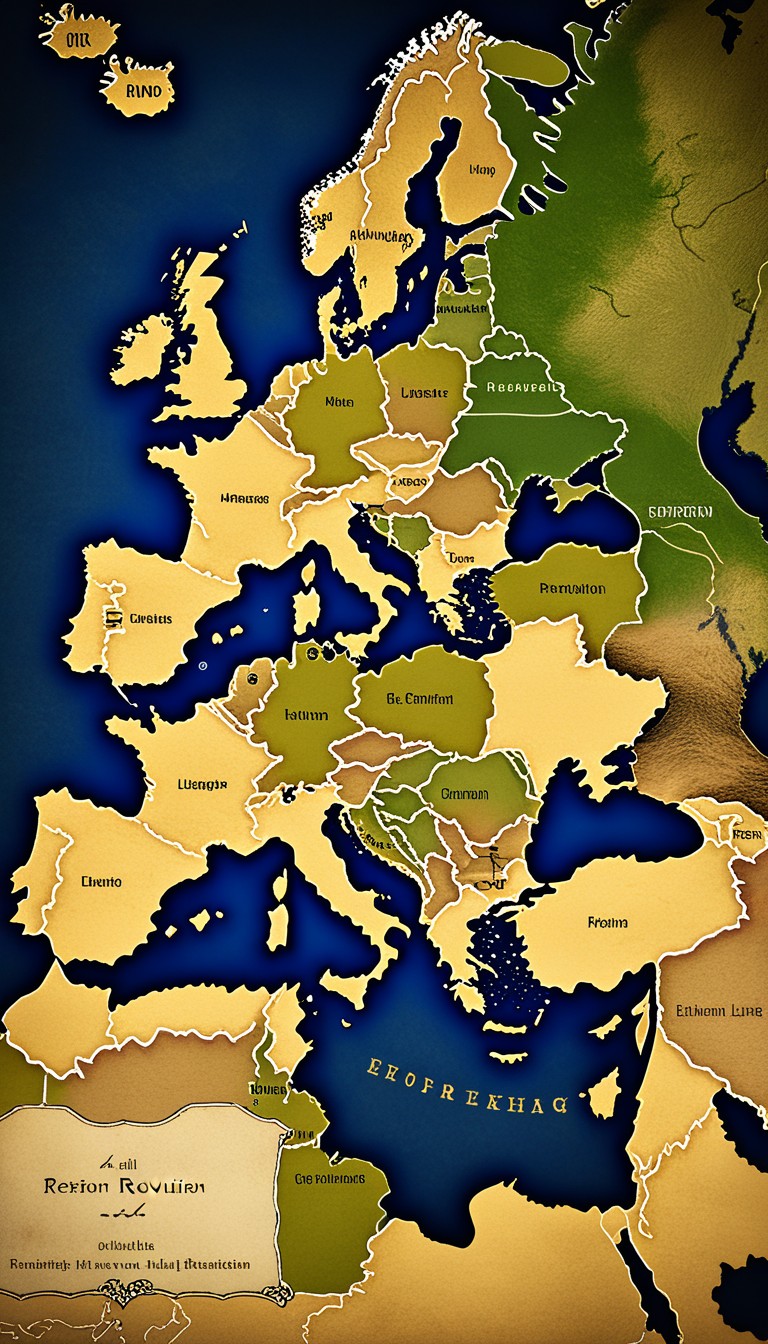
Despite Gutenberg's personal misfortune, his invention could not be contained. By 1460 there were presses in several German cities. By 1470 the technology had reached Rome, Paris, and Venice. By 1500—just fifty years after the Gutenberg Bible—there were printing presses in more than 250 cities across Europe, and an estimated twenty million books had been produced. The price of books collapsed. Literacy began its long climb. The knowledge that had been locked behind monastery walls was flooding into the world.
1450s–1600s
Europe
The Information Revolution
The printing press did not merely spread books—it transformed the entire structure of European society. Martin Luther's ninety-five theses, nailed to a church door in 1517, became a continent-wide phenomenon within weeks because printers reproduced them by the thousands. Scientists like Copernicus and Galileo could now share precise findings with colleagues across thousands of miles. Literacy rates climbed as cheap books and pamphlets made reading worthwhile for ordinary people. The Renaissance, the Reformation, and the Scientific Revolution were all, in part, children of Gutenberg's press.

The Man Who Gave Words to the World
Johannes Gutenberg died in 1468, largely forgotten, having received only a modest pension from the Archbishop of Mainz in his final years. He never grew rich from his invention. Yet no single individual did more to shape the modern world. Every newspaper, textbook, novel, scientific journal, and religious pamphlet traces its lineage back to that workshop in Mainz. In 1999, a panel of scholars named Gutenberg's printing press the most important invention of the second millennium. The goldsmith who lost his press gave the world its voice.
Recommended Reading
As an Amazon Associate, we earn from qualifying purchases.


Swipe to navigate