The Moon Landing: One Giant Leap
Loading story...
May 25, 1961
Washington, D.C.
A President's Challenge
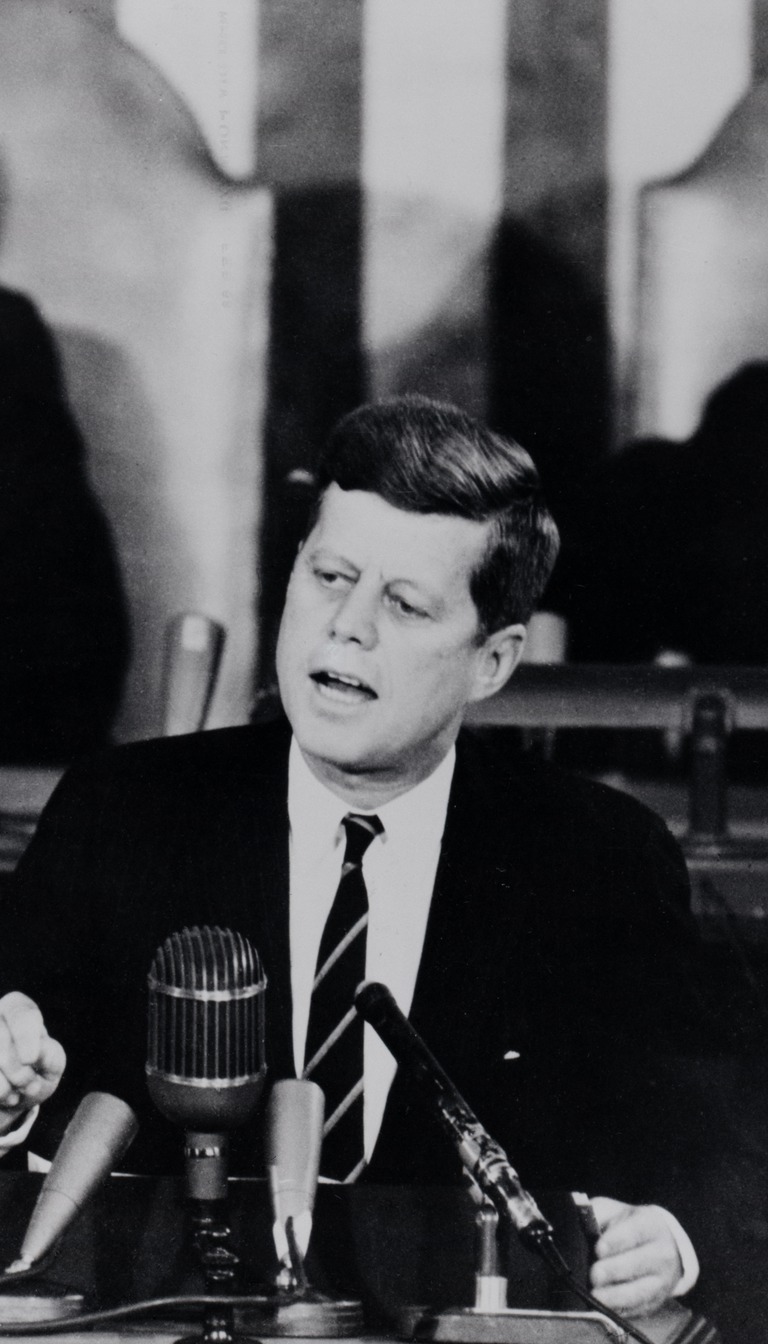
On May 25, 1961, President John F. Kennedy stood before a joint session of Congress and issued one of the most audacious challenges in American history: put a man on the Moon and return him safely to Earth—before the decade was out. The Soviet Union had already launched Sputnik and sent Yuri Gagarin into orbit. Kennedy's words were not just a scientific goal; they were a declaration of will. A nation that had barely reached space was now aiming for the Moon.
1961–1966
Cape Canaveral, Florida
The Space Race: Mercury and Gemini
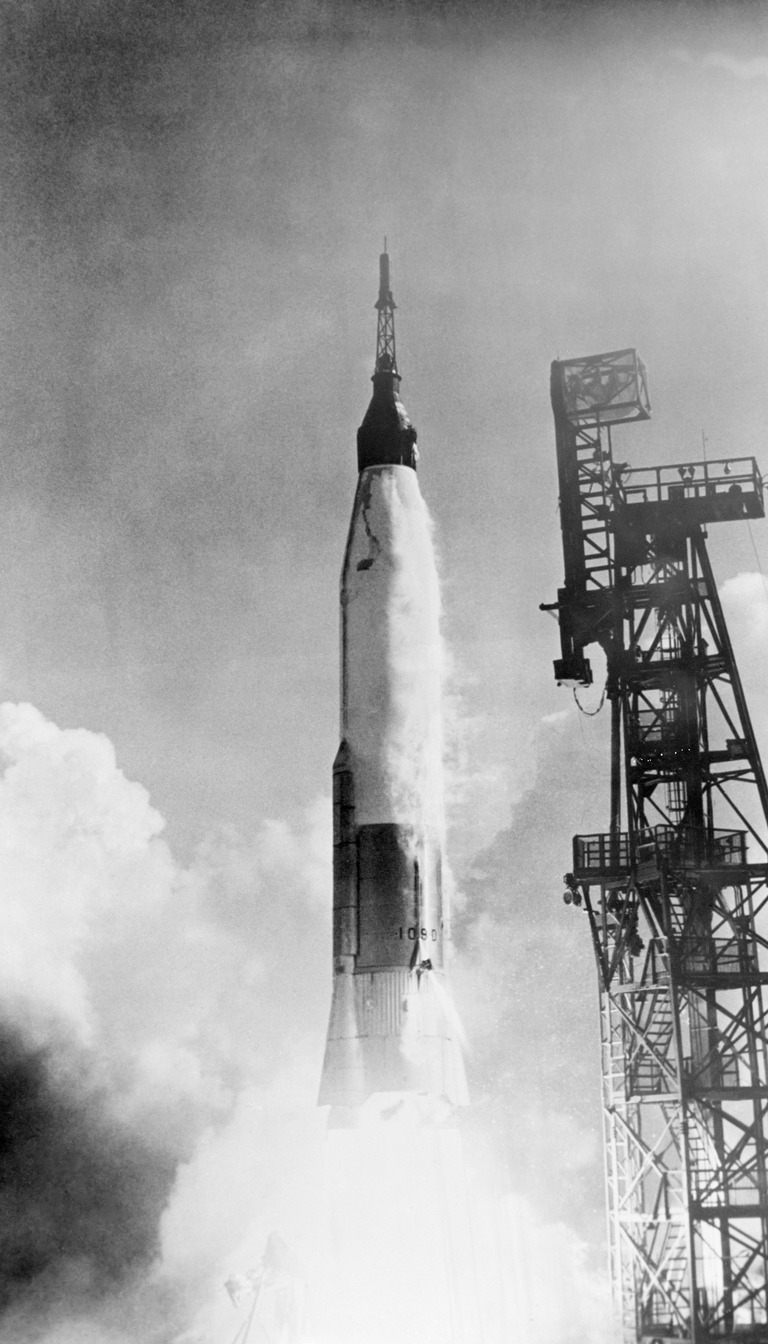
NASA answered Kennedy's challenge by building the Moon mission piece by piece. Project Mercury proved Americans could survive in space—Alan Shepard became the first American in space just weeks before Kennedy's speech. Project Gemini then taught astronauts the critical skills needed for the Moon: spacewalks, orbital rendezvous, and long-duration missions. By 1966, NASA had learned enough to begin the final chapter. The Moon was within reach.
January 27, 1967
Launch Complex 34, Florida
Apollo 1: A Terrible Price
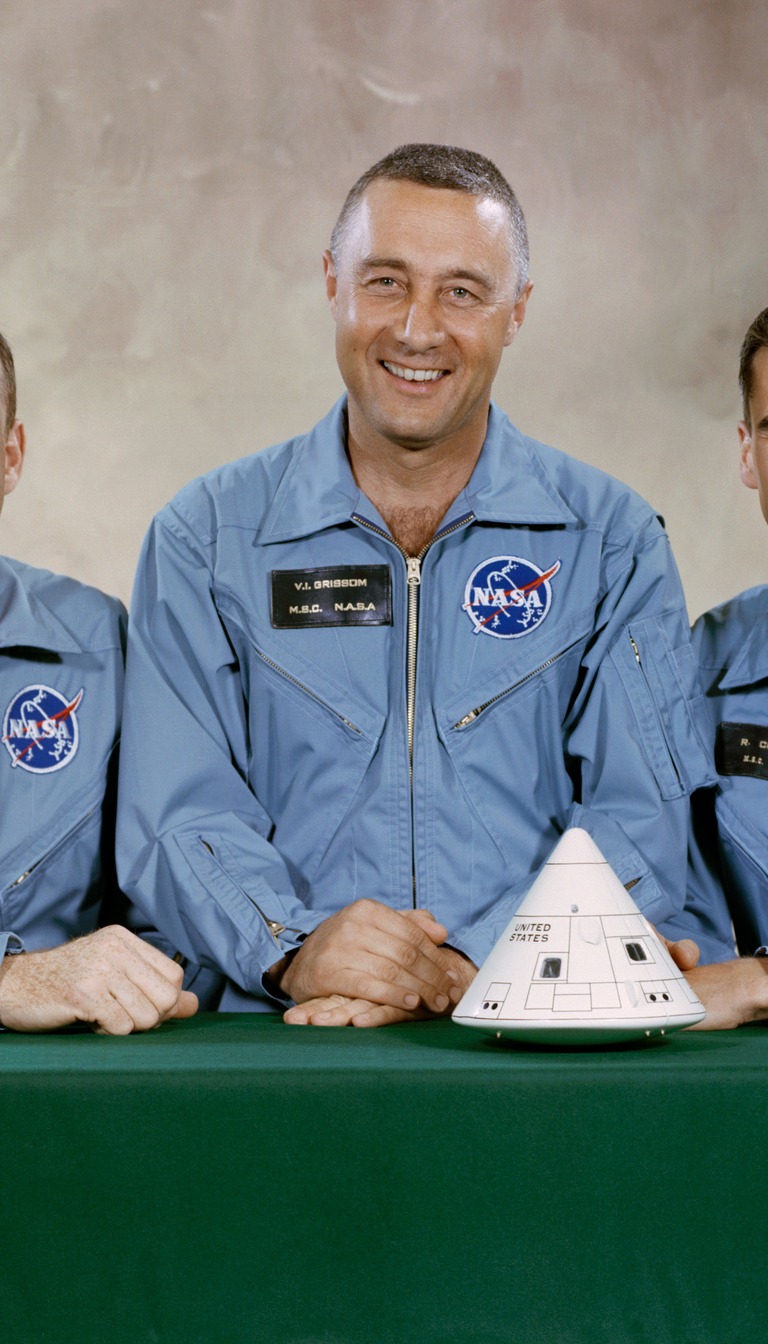
The road to the Moon ran through tragedy. On January 27, 1967, astronauts Gus Grissom, Ed White, and Roger Chaffee were conducting a routine launch rehearsal aboard Apollo 1 when a fire erupted inside the pure-oxygen cabin. All three men perished within seconds. The program was grounded for twenty months while NASA redesigned the capsule from the ground up. Their sacrifice forced the changes that would make Apollo safe enough to reach the Moon.
July 16, 1969
Kennedy Space Center, Florida
Apollo 11 Launches
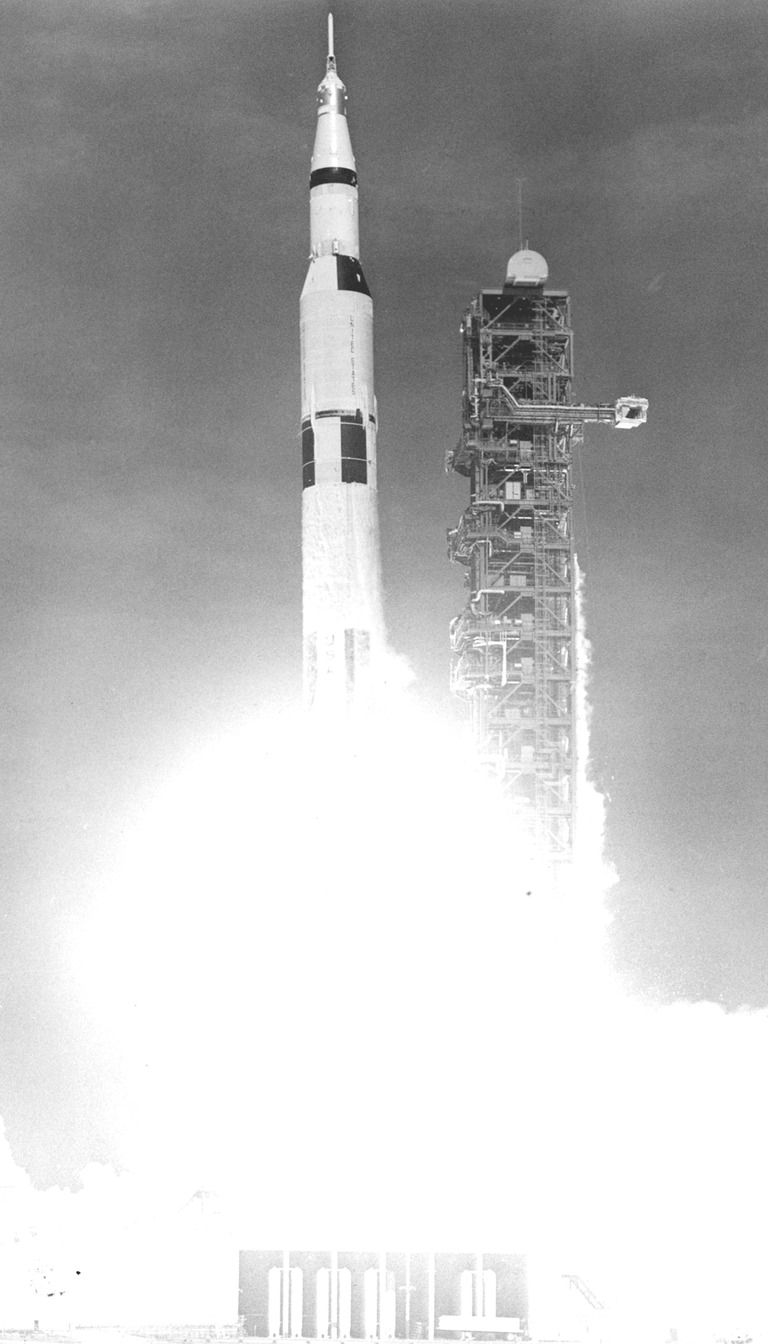
On July 16, 1969, the Saturn V rocket—the most powerful machine ever built—roared to life at Kennedy Space Center. Astronauts Neil Armstrong, Buzz Aldrin, and Michael Collins rode a column of fire into history. The rocket stood 363 feet tall and burned 20 tons of fuel every second. Half a million people watched from the Florida shores. Hundreds of millions more watched on television around the world. Humanity was going to the Moon.
July 20, 1969
Sea of Tranquility, Moon
Eagle Has Landed
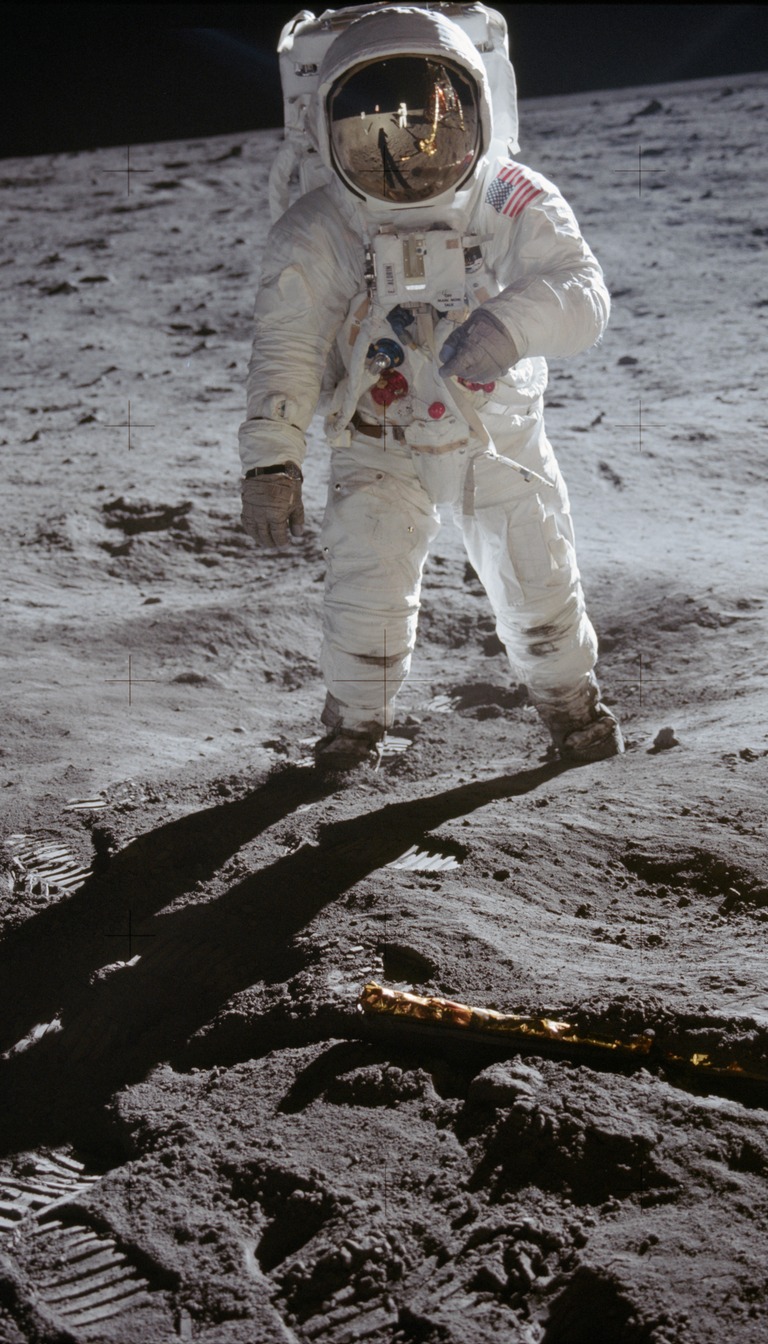
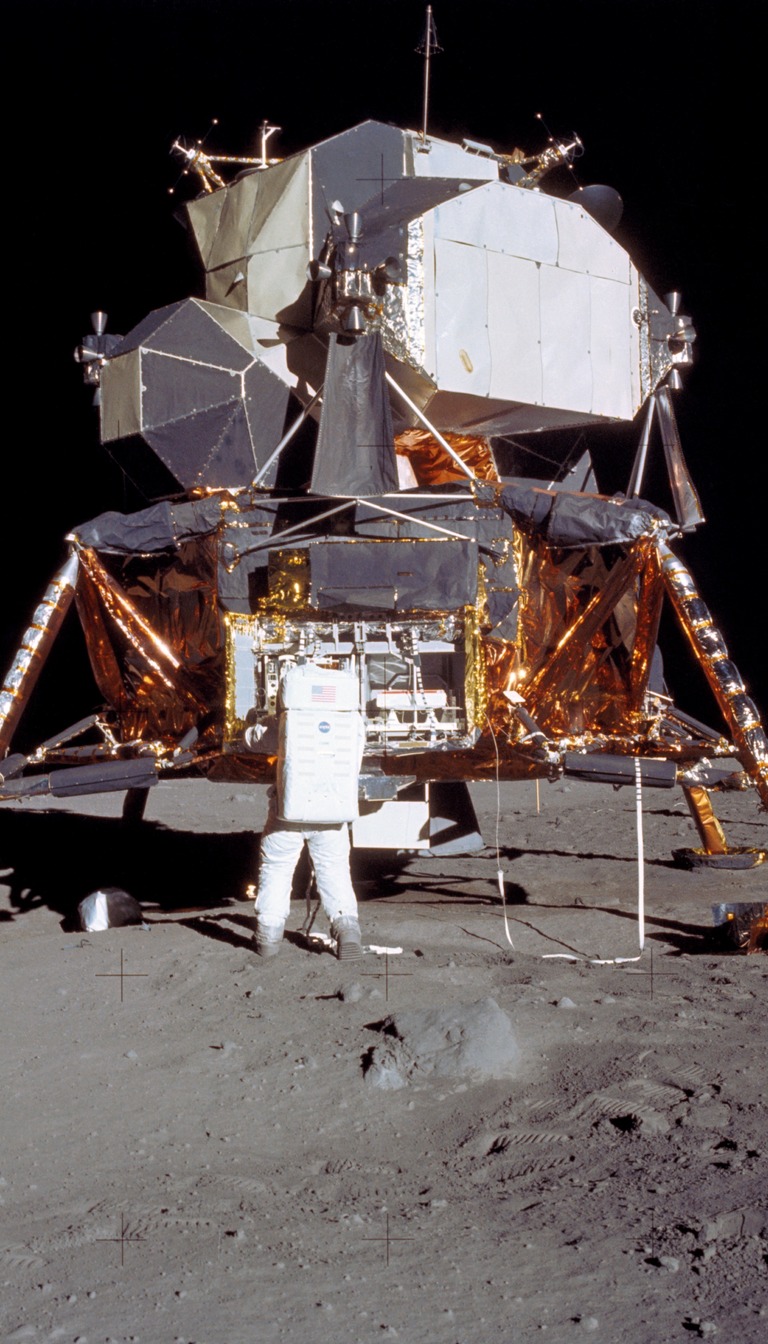
Four days after launch, the lunar module Eagle separated from the command module Columbia and began its descent. With only seconds of fuel remaining and alarms sounding in the cabin, Neil Armstrong manually guided the craft past a boulder field to a flat plain. At 4:17 PM Eastern Time on July 20, 1969, Armstrong radioed back to Earth: "Houston, Tranquility Base here. The Eagle has landed." In mission control, tears flowed freely. Eight years of work had brought them here—the Sea of Tranquility.
July 20, 1969
Sea of Tranquility, Moon
One Small Step
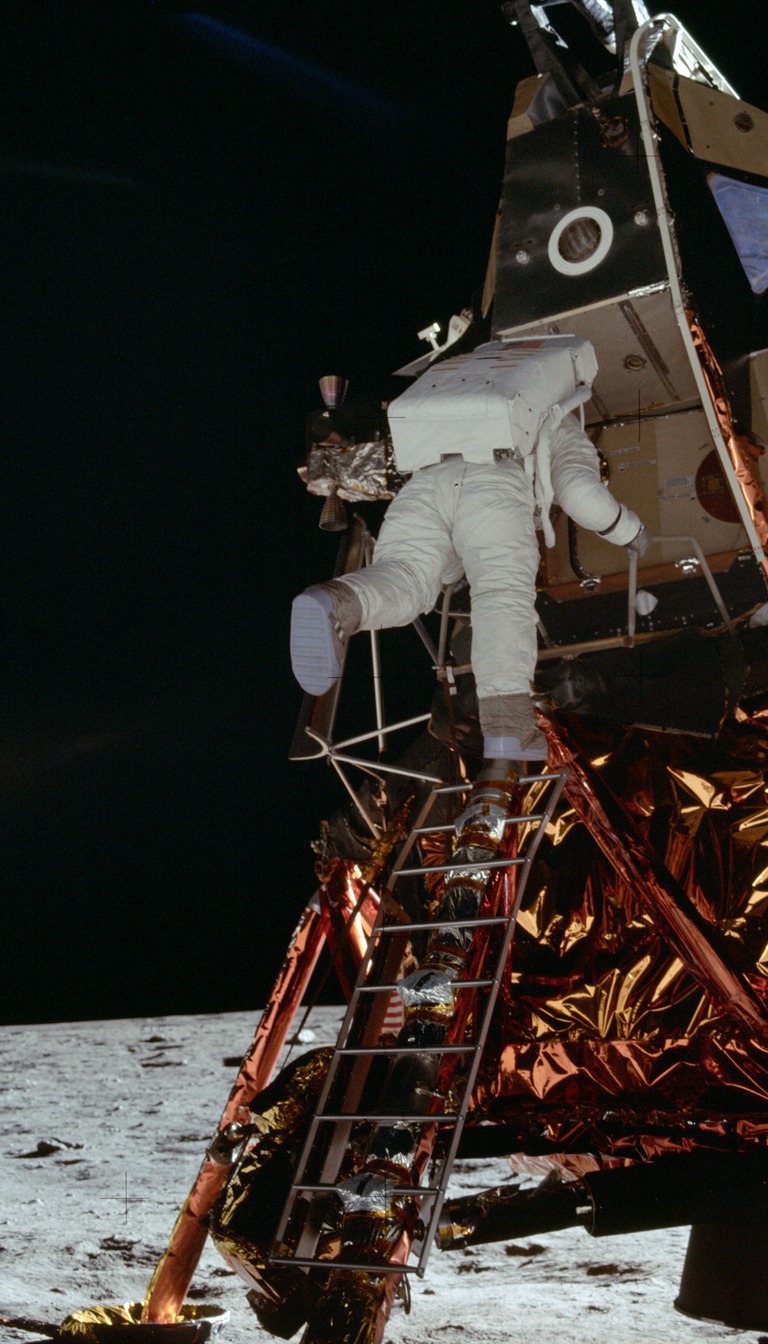
At 10:56 PM Eastern Time, Neil Armstrong descended the Eagle's ladder and placed his boot on the lunar surface. His words crackled across 238,000 miles of space: "That's one small step for man, one giant leap for mankind." Buzz Aldrin joined him nineteen minutes later, describing the view as "magnificent desolation." Together they planted an American flag, collected 47 pounds of lunar rock, and spoke by phone with President Nixon. For two hours and thirty-one minutes, humans walked on another world.

July 24, 1969
Pacific Ocean
Returning Home Safely
After their moonwalk, Armstrong and Aldrin lifted off from the lunar surface in Eagle's ascent stage, rendezvousing with Michael Collins who had orbited alone in Columbia for 21 hours. Together, the three astronauts fired their engine and began the three-day journey home. On July 24, 1969, the command module Columbia splashed down in the Pacific Ocean, where USS Hornet and Navy divers waited. Kennedy's promise—to go to the Moon and return safely—was fulfilled.
1969–1972
The Moon
Legacy: Twelve Men on the Moon
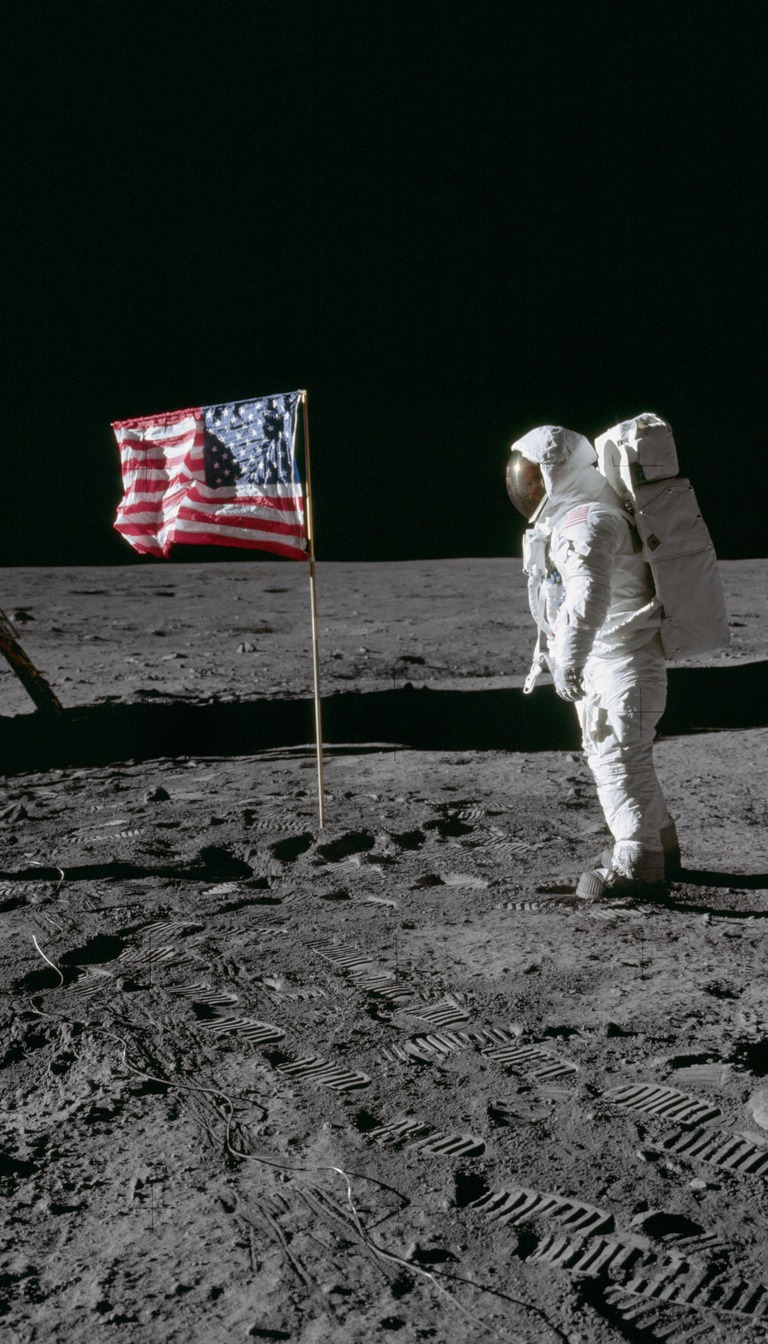
Apollo 11 was only the beginning. Between 1969 and 1972, NASA landed six more missions on the lunar surface. In total, twelve human beings walked on the Moon—Neil Armstrong, Buzz Aldrin, Pete Conrad, Alan Bean, Alan Shepard, Edgar Mitchell, David Scott, James Irwin, John Young, Charles Duke, Eugene Cernan, and Harrison Schmitt. Eugene Cernan, the last to leave, said: "We leave as we came, and God willing, as we shall return, with peace and hope for all mankind." No human has walked on the Moon since December 1972.
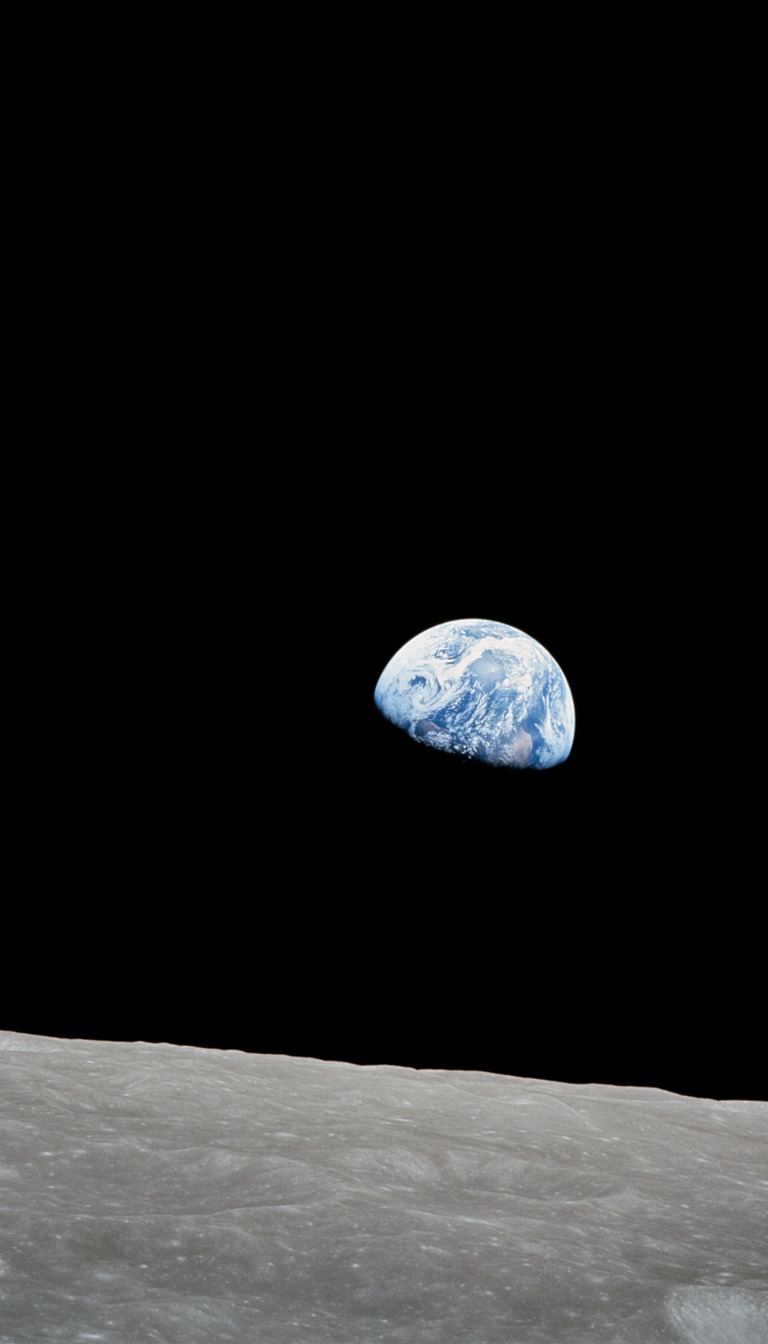
The Leap That Changed Everything
The Moon landing was not merely a feat of engineering—it was a redefinition of human potential. Driven by a president's dare, sustained through tragedy, and carried out by 400,000 engineers, technicians, and astronauts, Apollo proved that a civilization could unite around an impossible goal and achieve it. The photographs of Earth rising over the lunar horizon changed how humanity saw itself: one small, fragile world worth protecting. Kennedy gave a nation ten years to reach the Moon. It took eight.
Recommended Reading
As an Amazon Associate, we earn from qualifying purchases.


Swipe to navigate