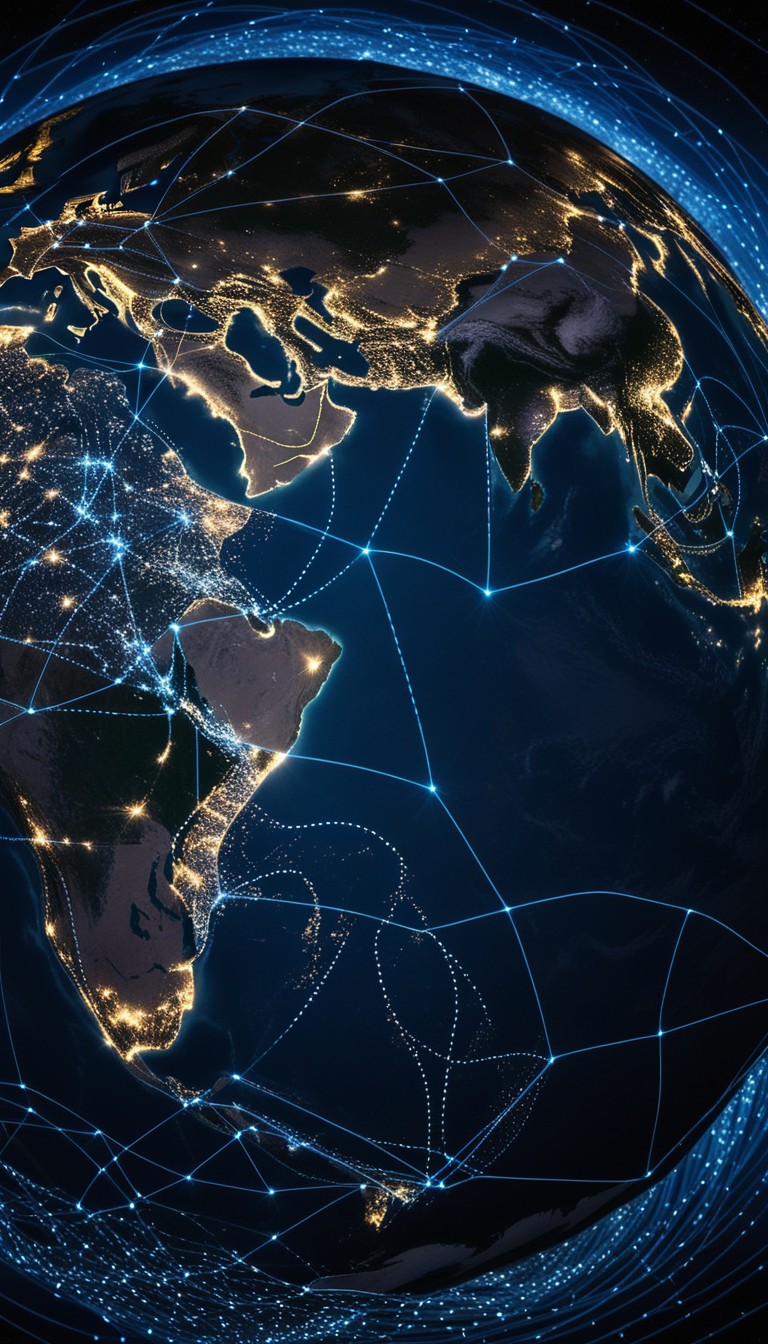
The Internet: Connecting the World
Loading story...

1957–1965
Washington D.C. & RAND Corporation, California
A Network Born from Fear
In the late 1950s, the United States and Soviet Union stood on the brink of nuclear annihilation. Military strategists realized their greatest vulnerability: a single well-placed strike could destroy centralized communications and leave the nation blind and mute. The answer, proposed by RAND Corporation researcher Paul Baran in 1964, was radical — a decentralized network with no single point of failure, where data would travel in self-routing "packets" across any available path. No headquarters. No off switch. The seed of the internet was planted not in a lab, but in the cold logic of survival.
October 29, 1969
UCLA, Los Angeles, California
ARPANET: The First Message
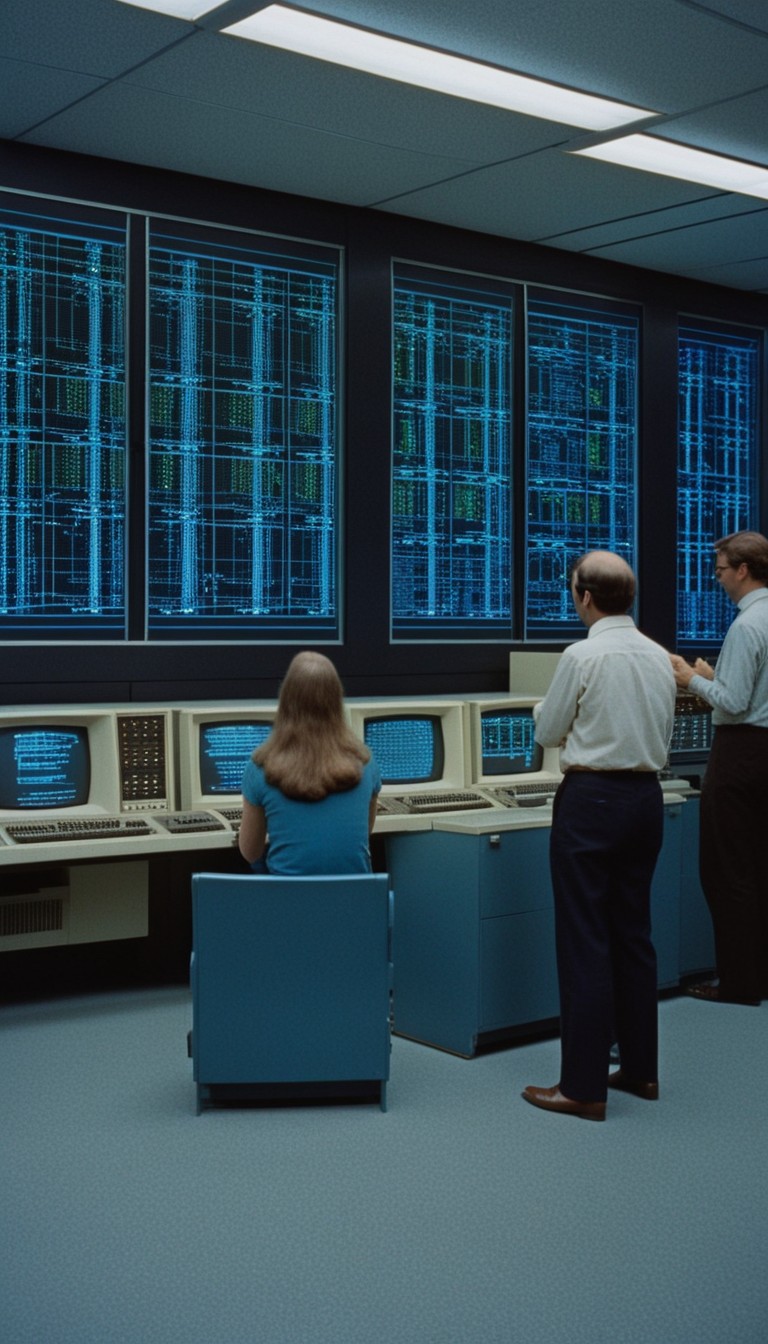
On October 29, 1969, a UCLA student named Charley Kline sat at a terminal and typed the first message ever sent over ARPANET — the U.S. Defense Department's experimental network linking four universities. The intended word was "LOGIN." The system crashed after two letters. The very first transmission in internet history was "LO." Despite the inauspicious start, the moment was historic. Within months, the network was stable. Within years, dozens of nodes connected research institutions across the country. The age of networked computing had begun.

1974–1983
Stanford University & DARPA
TCP/IP: The Language of the Internet
ARPANET worked — but different computer networks couldn't speak to one another. In 1974, researchers Vint Cerf and Bob Kahn published their solution: the Transmission Control Protocol, later paired with the Internet Protocol to form TCP/IP. This elegant pair of standards defined a universal language any computer on any network could use to send and receive data. On January 1, 1983 — a date engineers call "Flag Day" — ARPANET switched fully to TCP/IP. All the world's separate networks could now interconnect. The internet, as a concept, was real.
March 1989
CERN, Geneva, Switzerland
Tim Berners-Lee Invents the Web
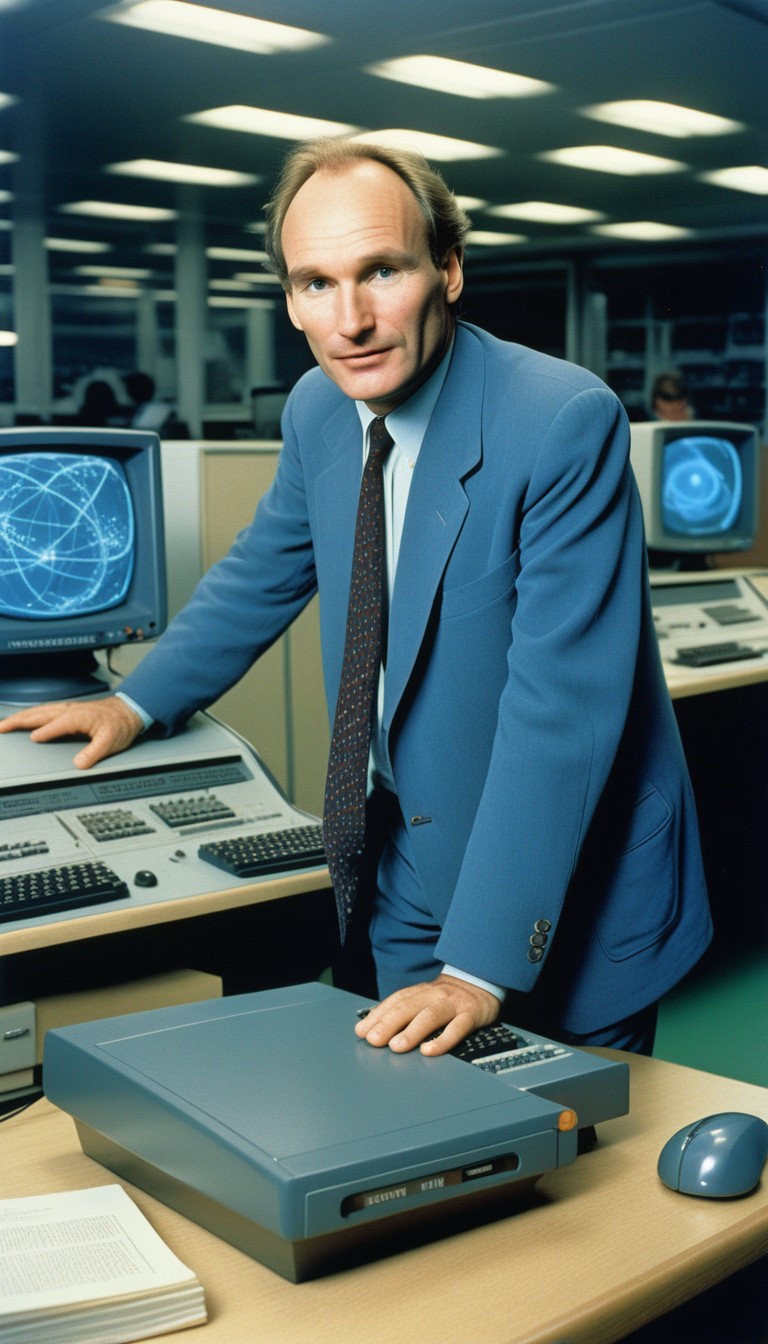
By the late 1980s, the internet connected thousands of computers — but navigating it required arcane commands and expert knowledge. A British physicist at CERN named Tim Berners-Lee had a different vision. In 1989 he proposed a system of hyperlinked documents that anyone could read and follow with a click. He called it the World Wide Web. By 1991 the first website was live at CERN. Berners-Lee made one decision that would change history: he gave it away for free, placing the Web's core standards in the public domain. The internet would belong to everyone.

January 1993
University of Illinois, Urbana-Champaign
Mosaic: The Web Goes Public
The Web existed — but it was still text-only and intimidating. In 1993, a team of undergraduate students at the University of Illinois led by Marc Andreessen released Mosaic, the first web browser capable of displaying images inline with text. For the first time, the internet looked like something ordinary people could use. Within a year, web traffic increased by 341,634 percent. Mosaic became Netscape Navigator, and suddenly every university, business, and government agency wanted a website. The public era of the internet had arrived.

1995–2001
Silicon Valley & Global Markets
The Dot-Com Boom
Through the late 1990s, the internet triggered the greatest gold rush in economic history. Investors poured billions into any company with ".com" in its name. Amazon began selling books from a garage. Google was built in a dorm room. Pets.com burned through $300 million in nine months. The NASDAQ climbed to dizzying heights before the bubble burst in March 2000, wiping out trillions in market value. Yet beneath the wreckage, something durable had been built: the infrastructure, payment systems, and digital habits that would define the 21st century economy. The survivors — Amazon, Google, eBay — would become the most powerful companies in history.
2003–2010
Global
The Social Media Revolution
In the mid-2000s, the internet stopped being a place you visited and became a place you lived. Friendster, MySpace, then Facebook transformed the Web from a library into a conversation. YouTube let anyone broadcast to the world. Twitter compressed public discourse into 140 characters. By 2010, Facebook had 500 million users. The internet was no longer about finding information — it was about sharing identity, maintaining relationships, and constructing an always-on social life. Humanity had built a global nervous system, and it was buzzing.

January 9, 2007
Global
The Mobile Internet
When Steve Jobs unveiled the iPhone in January 2007, he described it as "an iPod, a phone, and an internet communicator." The last part was the revolution. Within five years, smartphones had placed a full internet terminal in billions of pockets. Mobile data networks — 3G, then 4G LTE — made connectivity ambient and constant. The internet was no longer something you sat down to use; it was something you carried everywhere, always on, always connected. By 2016, mobile traffic surpassed desktop for the first time. The internet had become inseparable from daily human life.
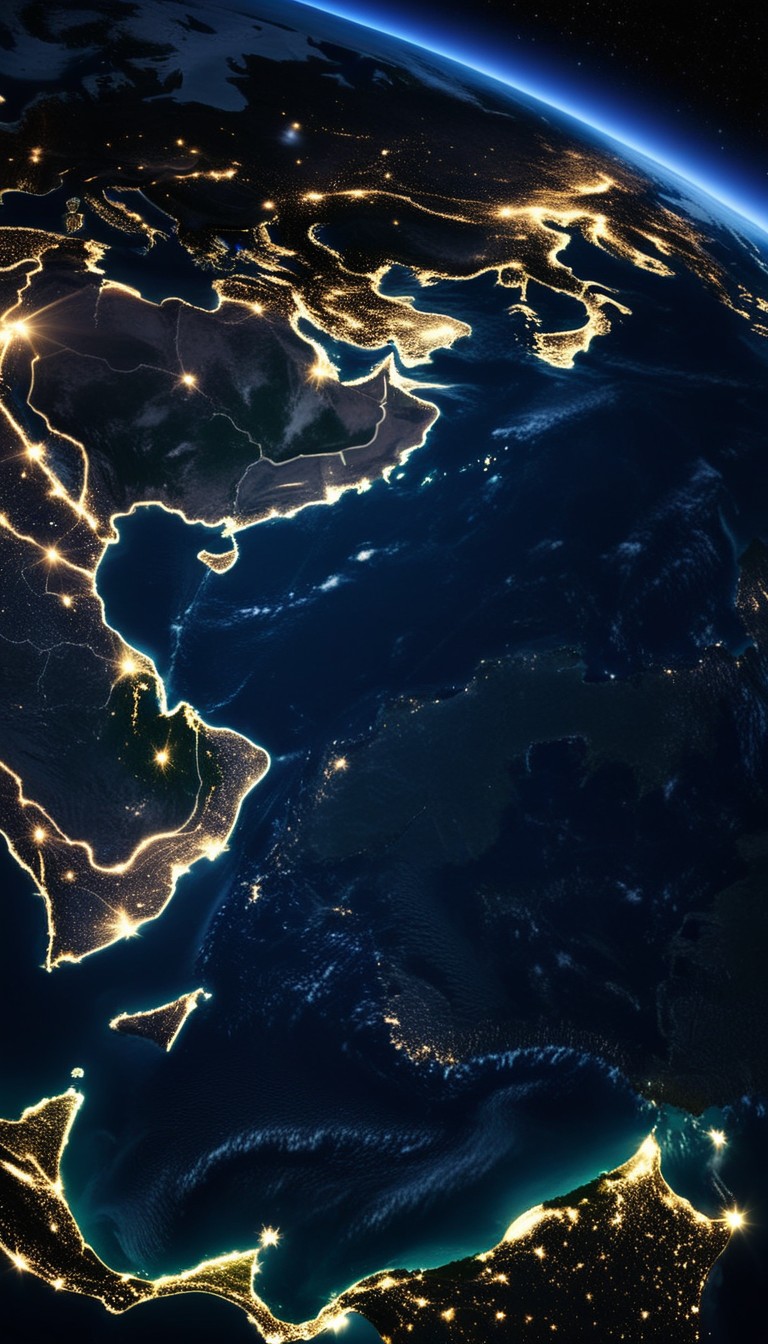
5 Billion People Connected
From a handful of university computers linked by telephone lines to a global network reaching over 5 billion people — the internet's journey is the defining technological story of the modern age. It began as a tool of survival in the Cold War, was shaped by visionaries who gave their work away freely, nearly drowned in speculative excess, and was reborn as the social and economic fabric of the world. Today it carries 5 quintillion bytes of data every day. It has compressed geography, accelerated science, amplified voices, and — for better and worse — rewired how humanity thinks, works, and connects.
Recommended Reading
As an Amazon Associate, we earn from qualifying purchases.

Swipe to navigate