The Wright Brothers: First in Flight
Loading story...
1890s
Dayton, Ohio
The Bicycle Men of Dayton
In 1892, Orville and Wilbur Wright opened a bicycle repair shop in Dayton, Ohio. They were tinkerers at heart—curious, precise, and unafraid to tackle problems others had given up on. Business was steady enough, but their minds kept drifting upward. The brothers shared a dream that had captured imaginations for centuries: powered, controlled human flight. Their shop would become the unlikely birthplace of the aviation age.
Late 1890s
Dayton, Ohio
Obsession with Flight
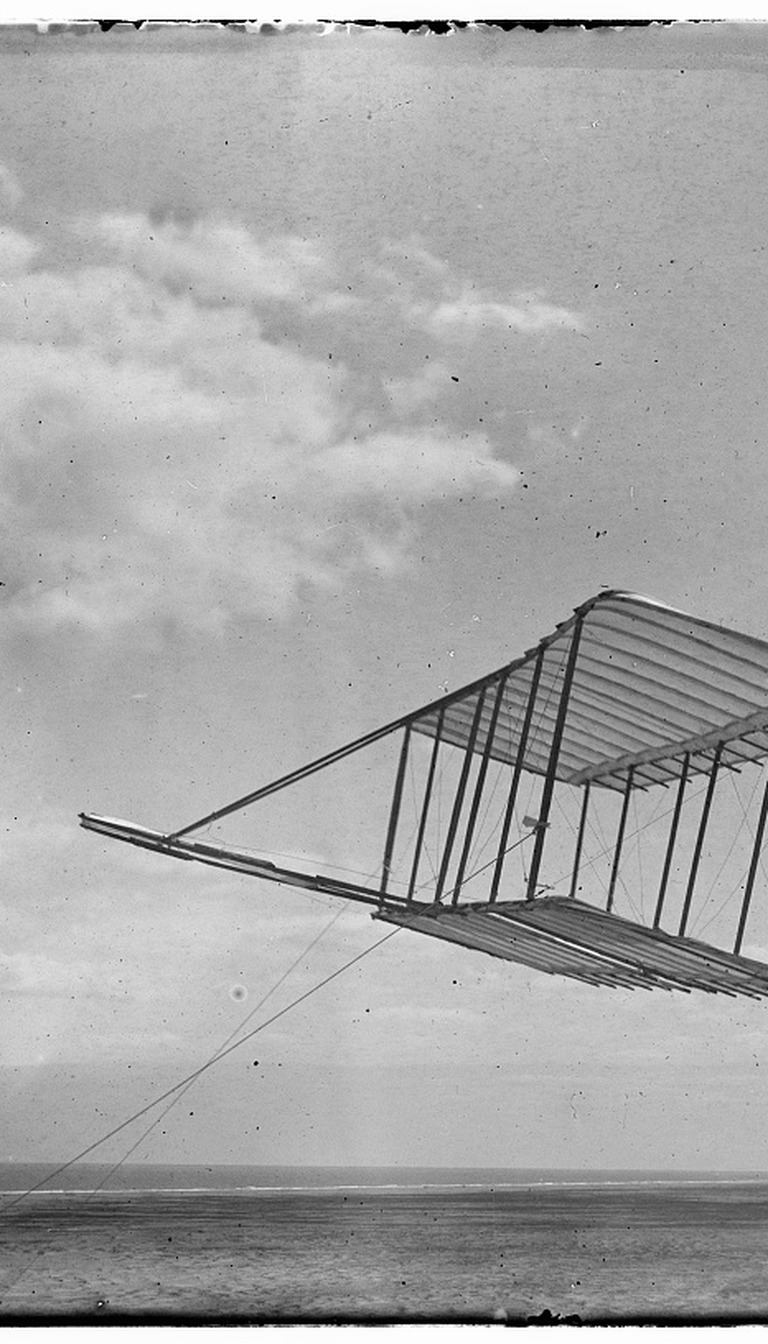
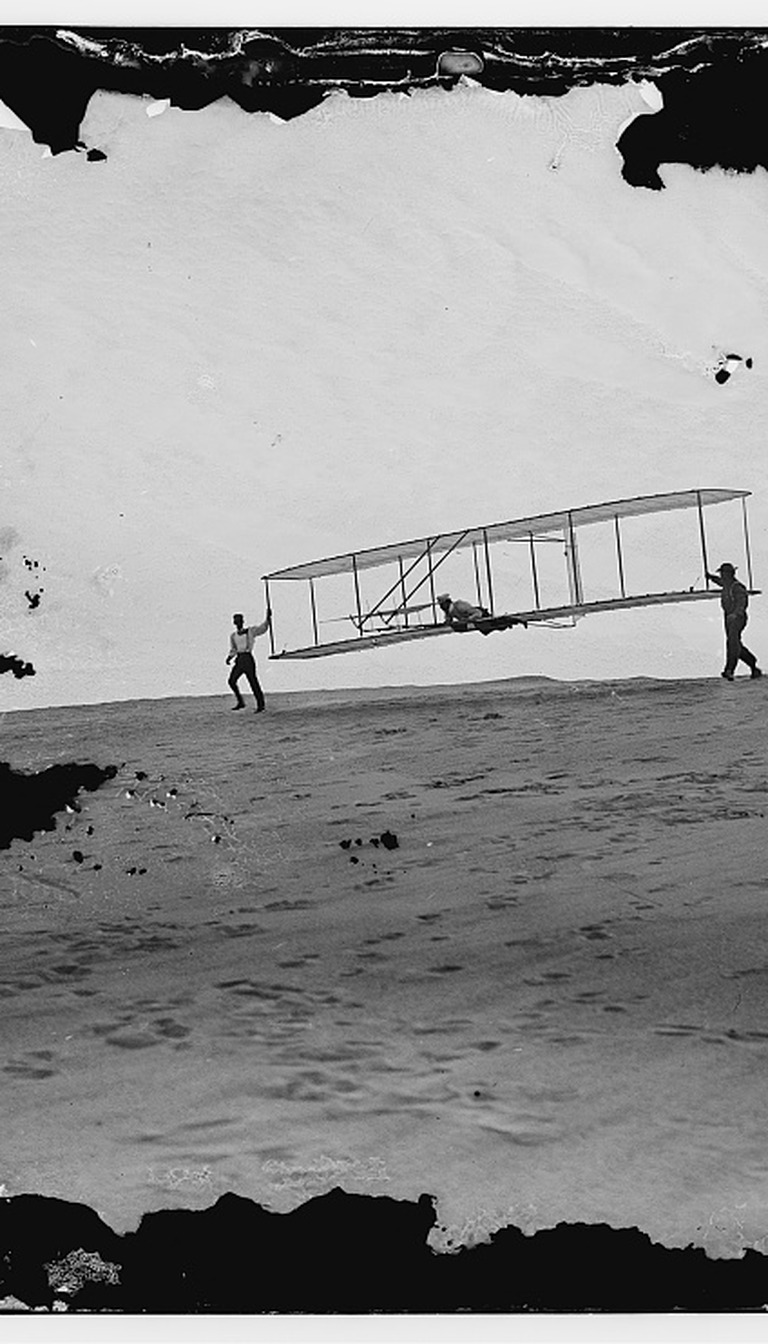
The brothers studied every attempt at flight that came before them, from Otto Lilienthal's gliders to Samuel Langley's steam-powered models. But their most important teacher had no engineering degree—it soared on the wind. Watching birds bank and turn, Wilbur noticed they twisted, or warped, the tips of their wings to maintain balance. That insight would become the key principle behind their aircraft: wing warping for lateral control.
Fall 1901
Dayton, Ohio
The Wind Tunnel
When existing aeronautical data proved unreliable, the Wright brothers built their own wind tunnel in the back of the bicycle shop. For two months in the fall of 1901, they tested over 200 miniature wing shapes, measuring lift and drag with instruments they designed themselves. Their systematic experiments produced the most accurate aeronautical data in the world at that time—data no one else had, because no one else had thought to gather it this way.
Autumn 1903
Kitty Hawk, North Carolina
Kitty Hawk — Building the Flyer
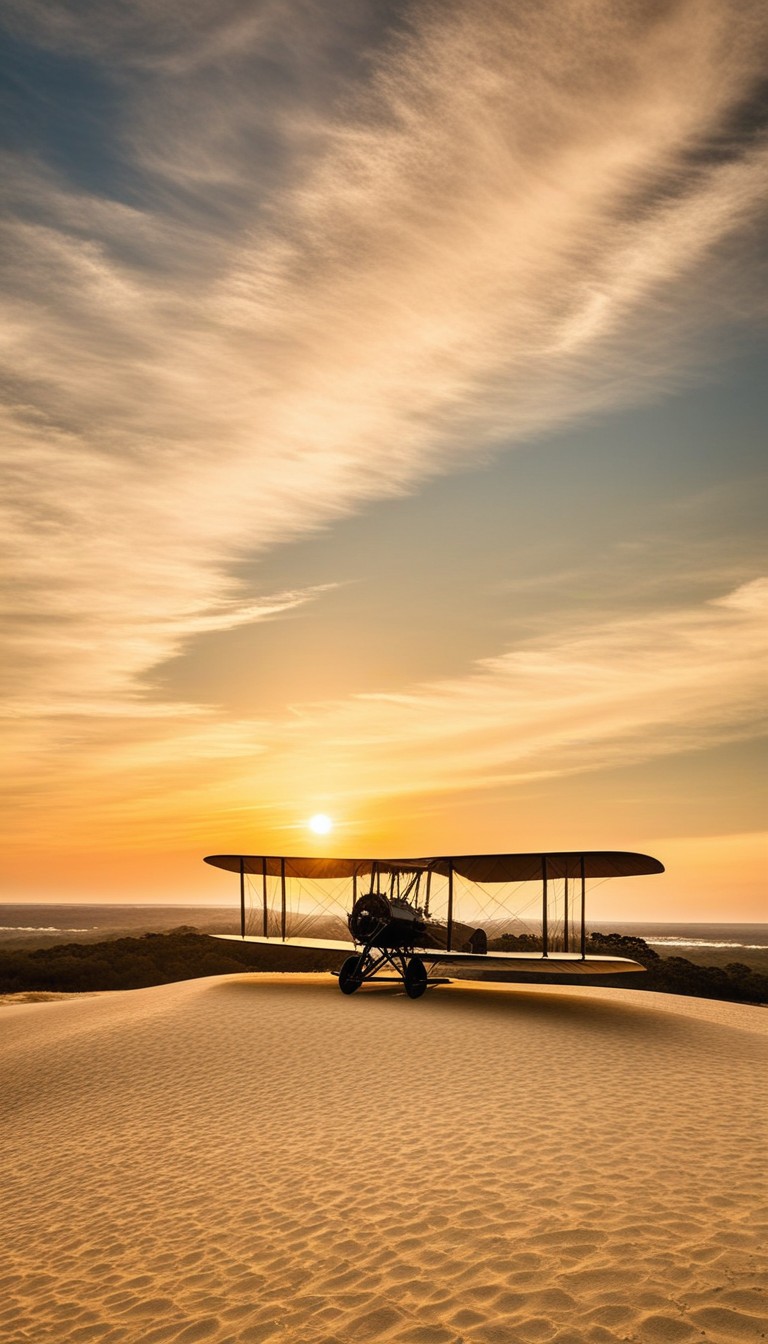
The brothers chose Kitty Hawk, North Carolina for its steady winds, soft sand for crash landings, and isolation from prying eyes. Each autumn they returned, refining their gliders before attempting powered flight. By the fall of 1903, they had shipped the components of their most ambitious machine—the Flyer. Built of spruce, muslin, and bicycle-chain drive, it weighed 605 pounds and was powered by a 12-horsepower gasoline engine they had built themselves when no manufacturer would meet their specifications.
December 17, 1903
Kill Devil Hills, North Carolina
December 17, 1903
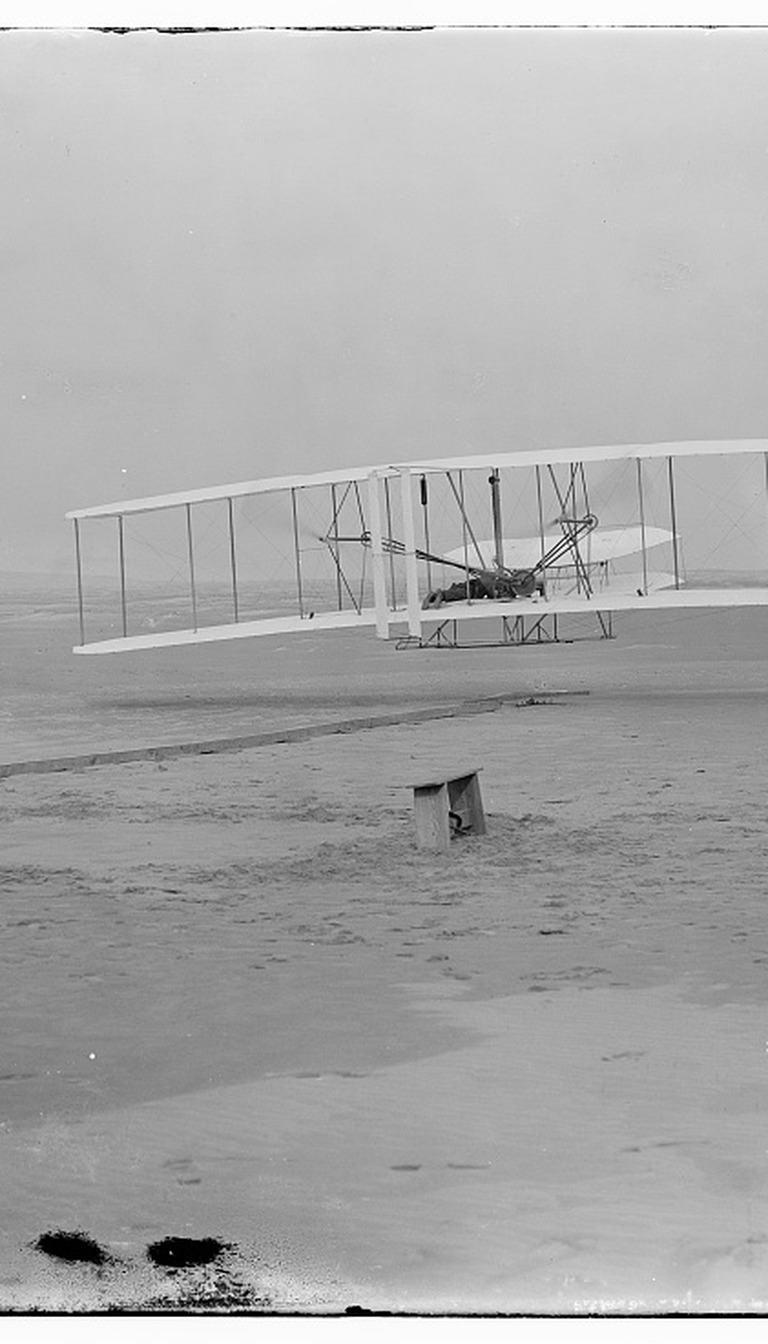
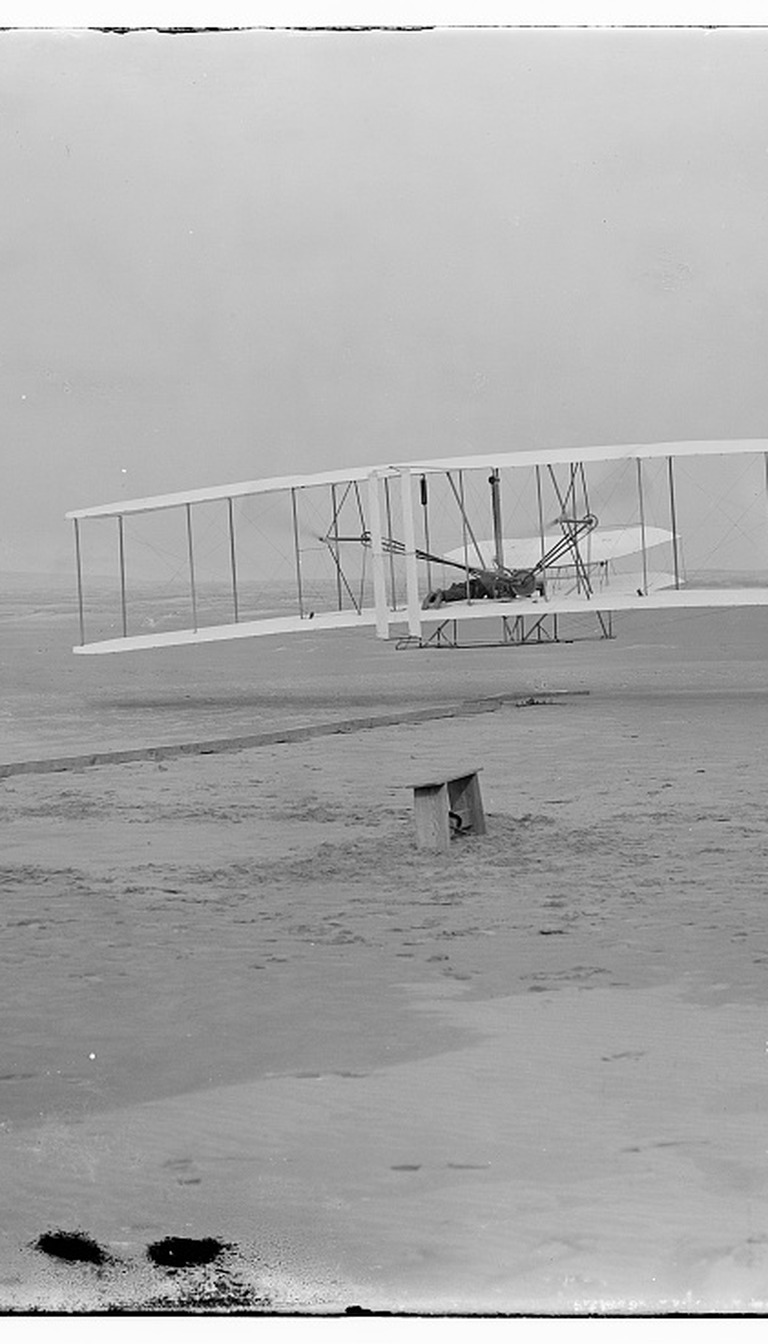
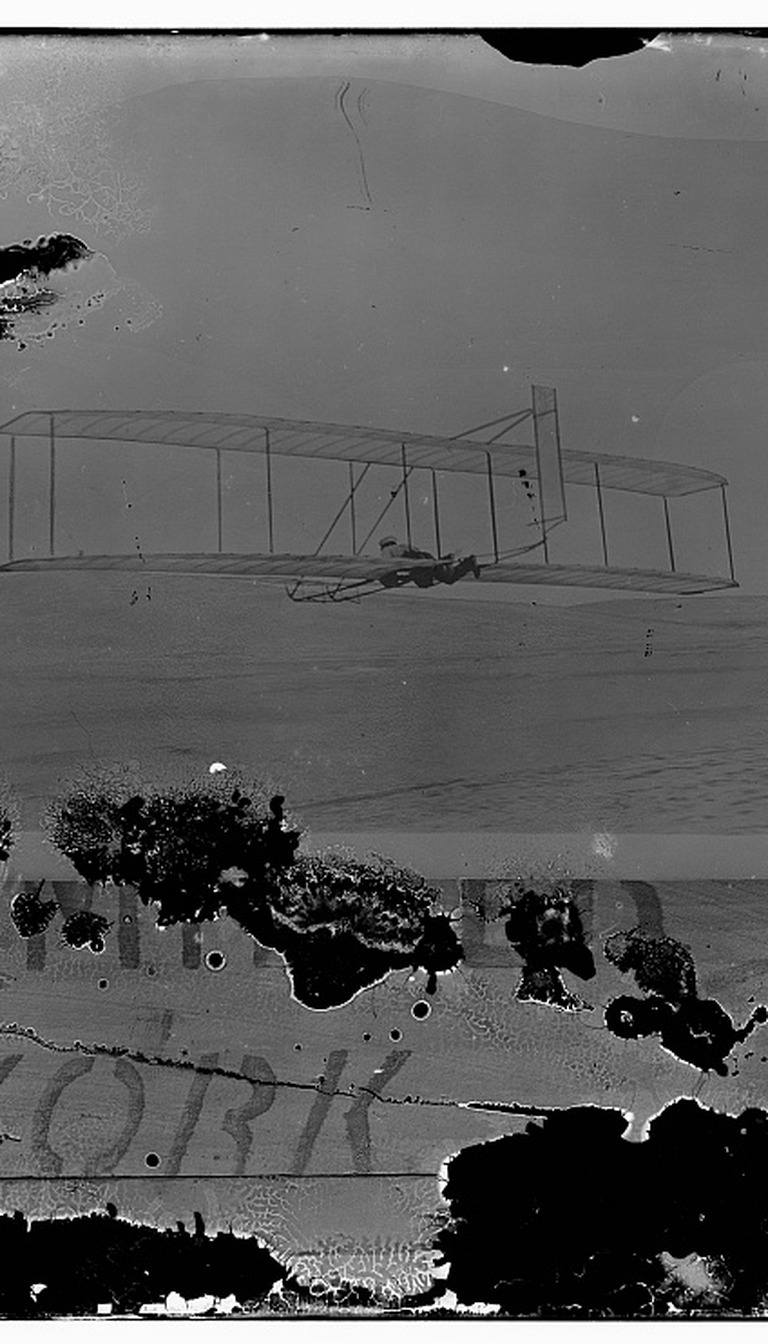
At 10:35 a.m. on December 17, 1903, Orville Wright lay flat on the lower wing of the Flyer and released the restraining wire. The machine skimmed along its launching rail and lifted into the bitter cold air. It flew for 12 seconds and covered 120 feet. Wilbur ran alongside, unable to keep up. They made four flights that day, the longest covering 852 feet in 59 seconds. A bystander's photograph captured the moment. Humanity had flown under its own power for the first time.
1904–1905
Huffman Prairie, Ohio
Improving the Design — Flyer III
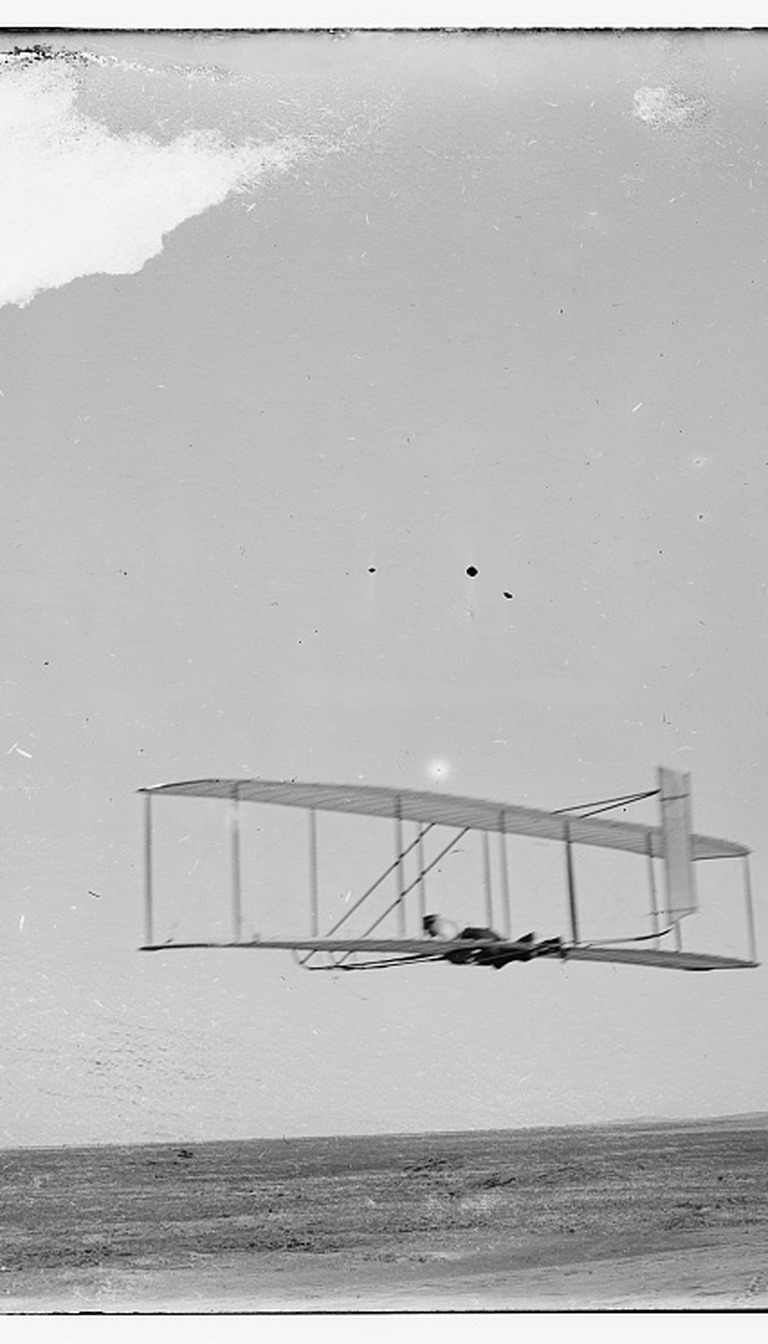
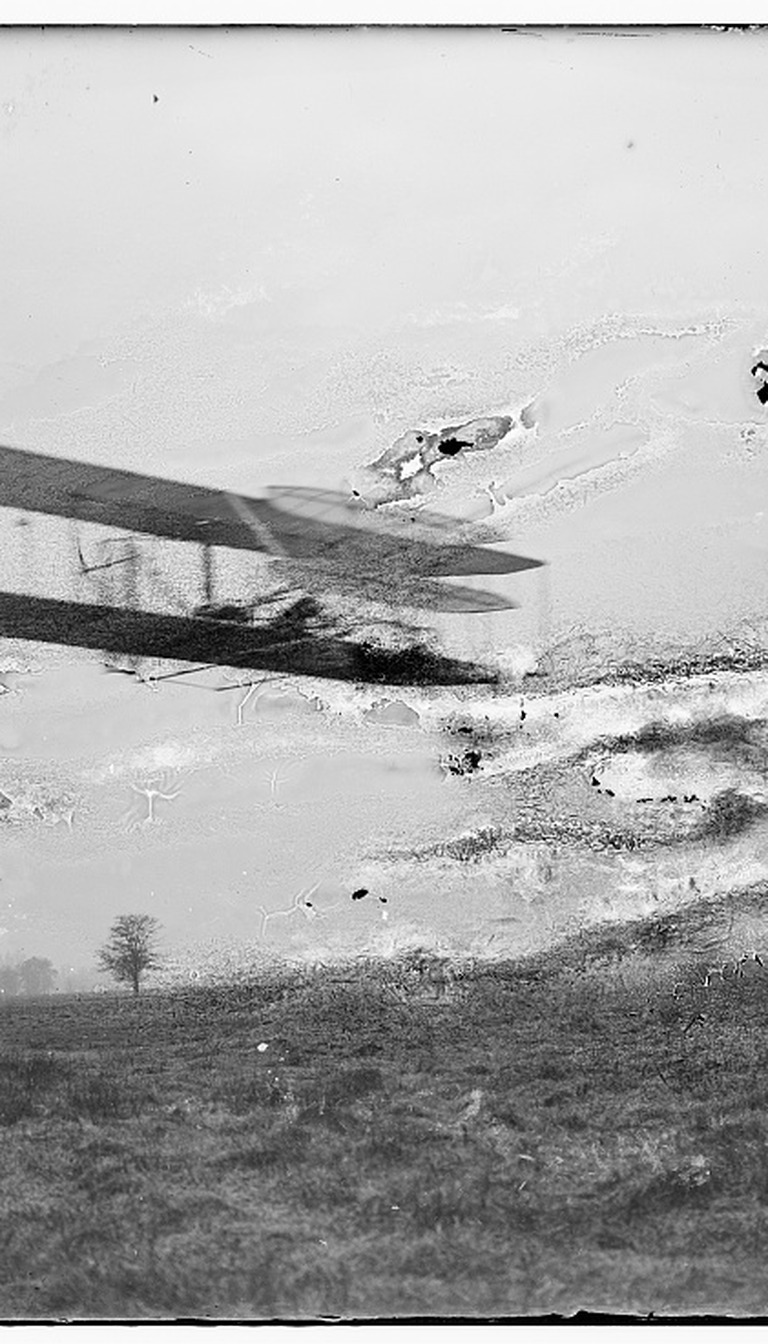
While the world remained skeptical, the Wright brothers went back to work. Their 1904 and 1905 models flew in circles over Huffman Prairie, a cow pasture outside Dayton, accumulating flight time no one else could match. The Flyer III, completed in 1905, was a practical flying machine. On October 5, 1905, Wilbur flew it for 39 minutes and covered 24 miles. The press had largely ignored them; they had quietly mastered powered flight while America slept.
1908
France and Virginia, USA
Public Demonstrations
In 1908, the Wright brothers finally flew before the world. Wilbur traveled to France, where aviation enthusiasts had dismissed American claims as a bluff. His first flight at Le Mans left the crowd stunned—he banked, circled, and landed with a grace no European aircraft had ever shown. Back in the United States, Orville demonstrated the military contract flights at Fort Myer, Virginia. Within weeks, the brothers were the most famous men on earth.
1903 — Present
Worldwide
Legacy — The Age of Aviation
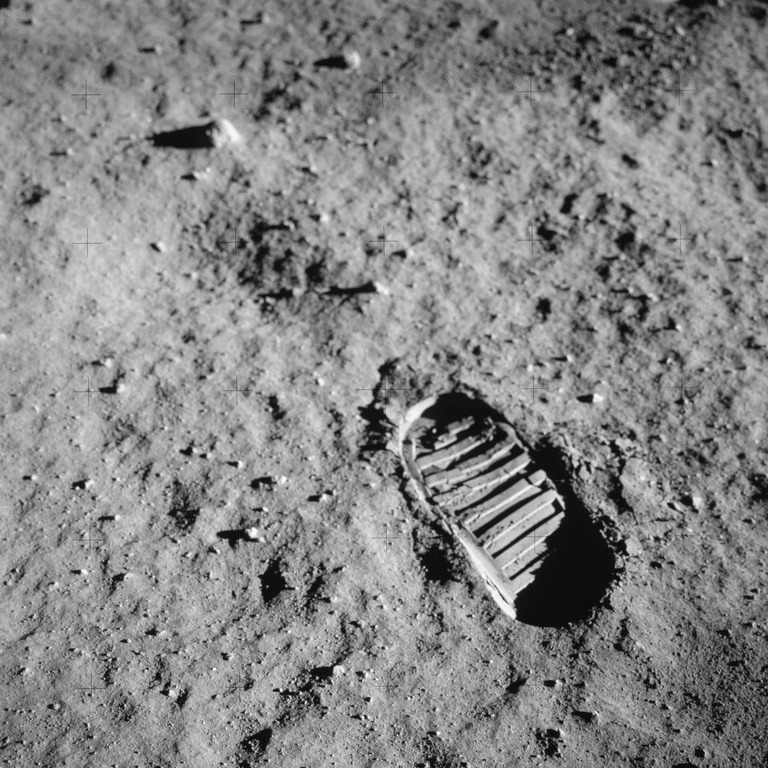
The Wright brothers' first flight lasted 12 seconds. Within 66 years, humans walked on the Moon. Commercial aviation now carries over four billion passengers annually. The military aircraft they first demonstrated transformed the nature of war. Wilbur died of typhoid fever in 1912 at 45, never seeing the full scope of what they had unleashed. Orville lived until 1948, long enough to see the jet age dawn. Their names are synonymous with the moment human beings first slipped the bonds of earth.
Twelve Seconds That Changed Everything
Orville and Wilbur Wright were not wealthy, not formally educated in engineering, and not backed by government grants. They were bicycle mechanics from Ohio who refused to accept that flight was impossible. Through patient observation, rigorous experimentation, and sheer persistence, they solved a problem that had stumped the greatest scientific minds of their age. The granite monument at Kill Devil Hills marks the spot where they flew. On it are carved the words: "In commemoration of the conquest of the air by the brothers Wilbur and Orville Wright."
Recommended Reading
As an Amazon Associate, we earn from qualifying purchases.


Swipe to navigate