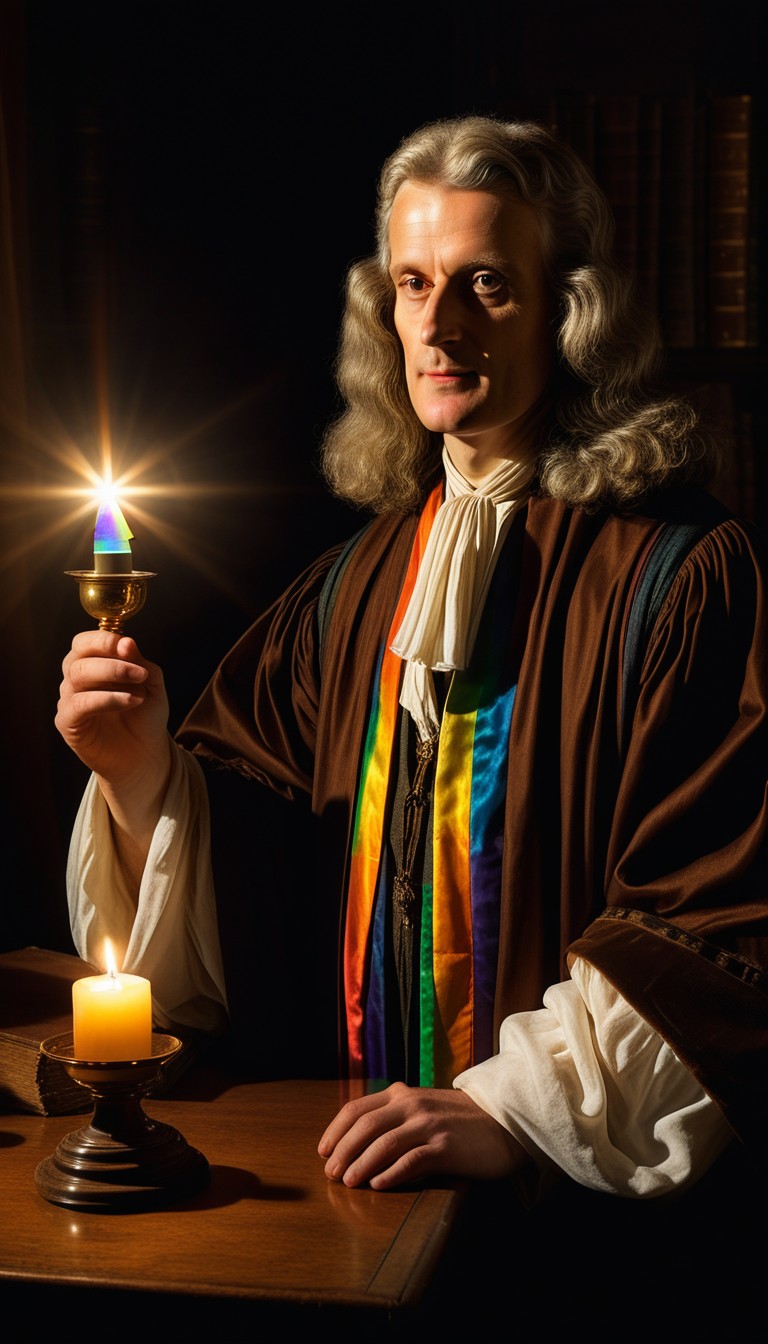
Isaac Newton: The Laws of Nature
Loading story...
1642
Woolsthorpe, England
A Fragile Beginning
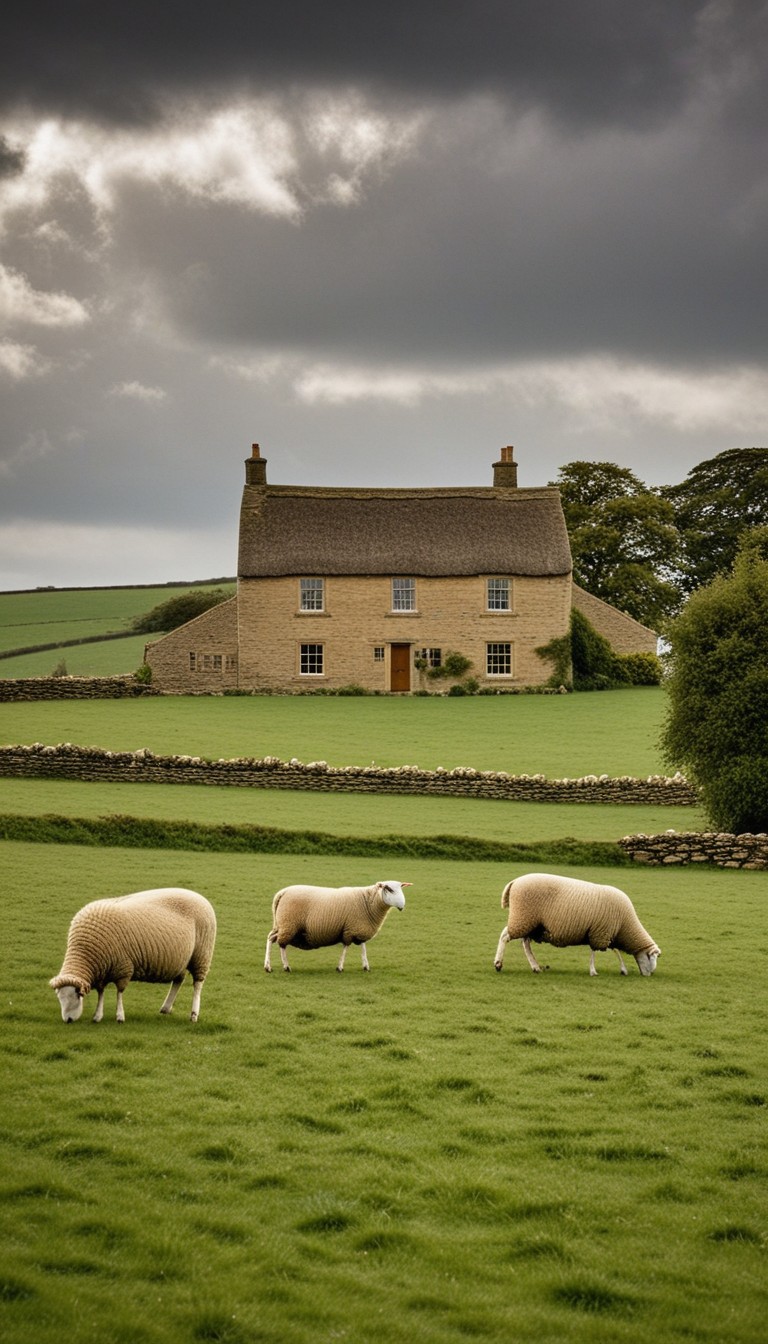
On Christmas Day 1642, Isaac Newton was born premature at Woolsthorpe Manor in Lincolnshire, England. He was so tiny he could fit inside a quart mug. His father had died three months earlier, and his mother soon remarried, leaving young Isaac with his grandmother. Lonely and resentful, the boy turned inward—toward books, tinkering, and an extraordinary inner world.
1665-1666
Cambridge & Woolsthorpe, England
The Plague Years
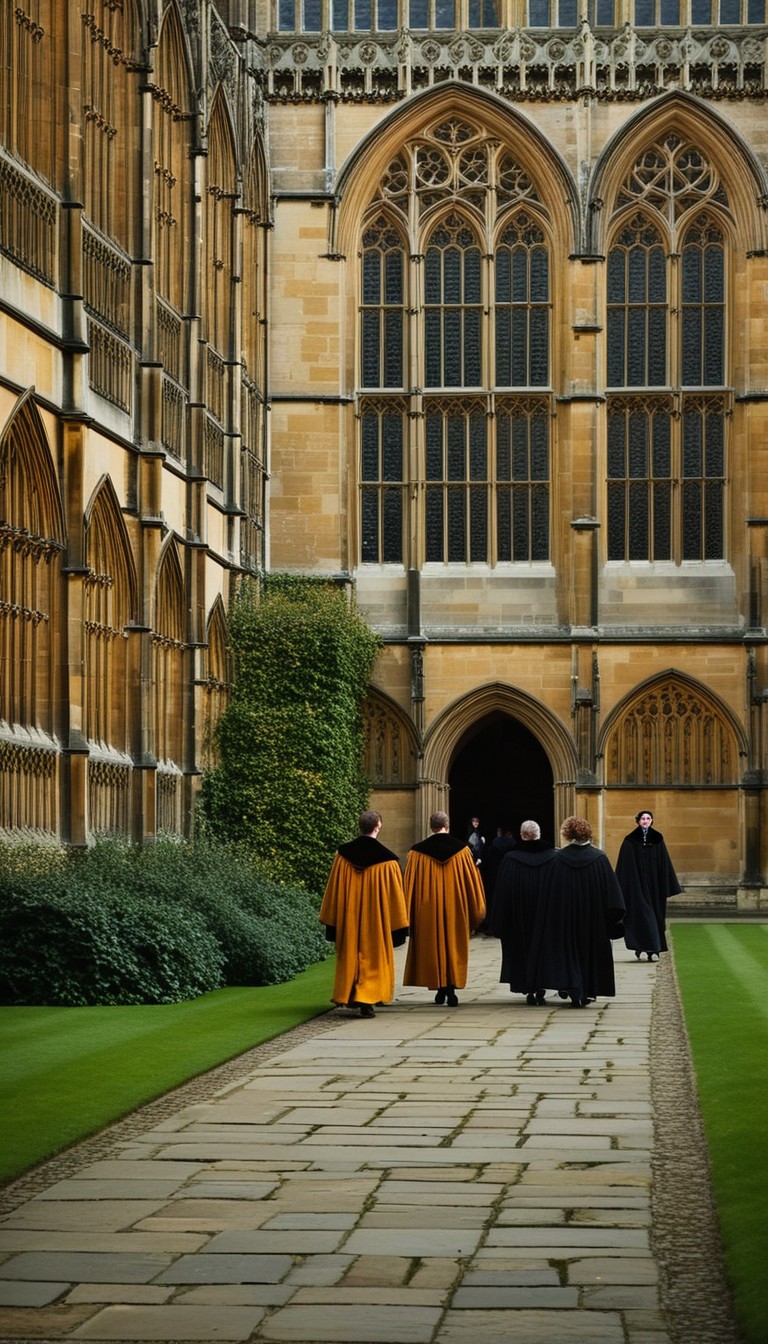
Newton entered Cambridge's Trinity College in 1661 as a subsizar—a poor student who earned his keep by serving wealthier ones. Then in 1665, the Great Plague swept through England and the university closed. Newton retreated to Woolsthorpe for nearly two years. In that quiet isolation, his mind exploded. He developed calculus, experimented with light, and began thinking about gravity. It was the most productive pause in scientific history.
1666-1672
Cambridge, England
Unlocking the Secrets of Light
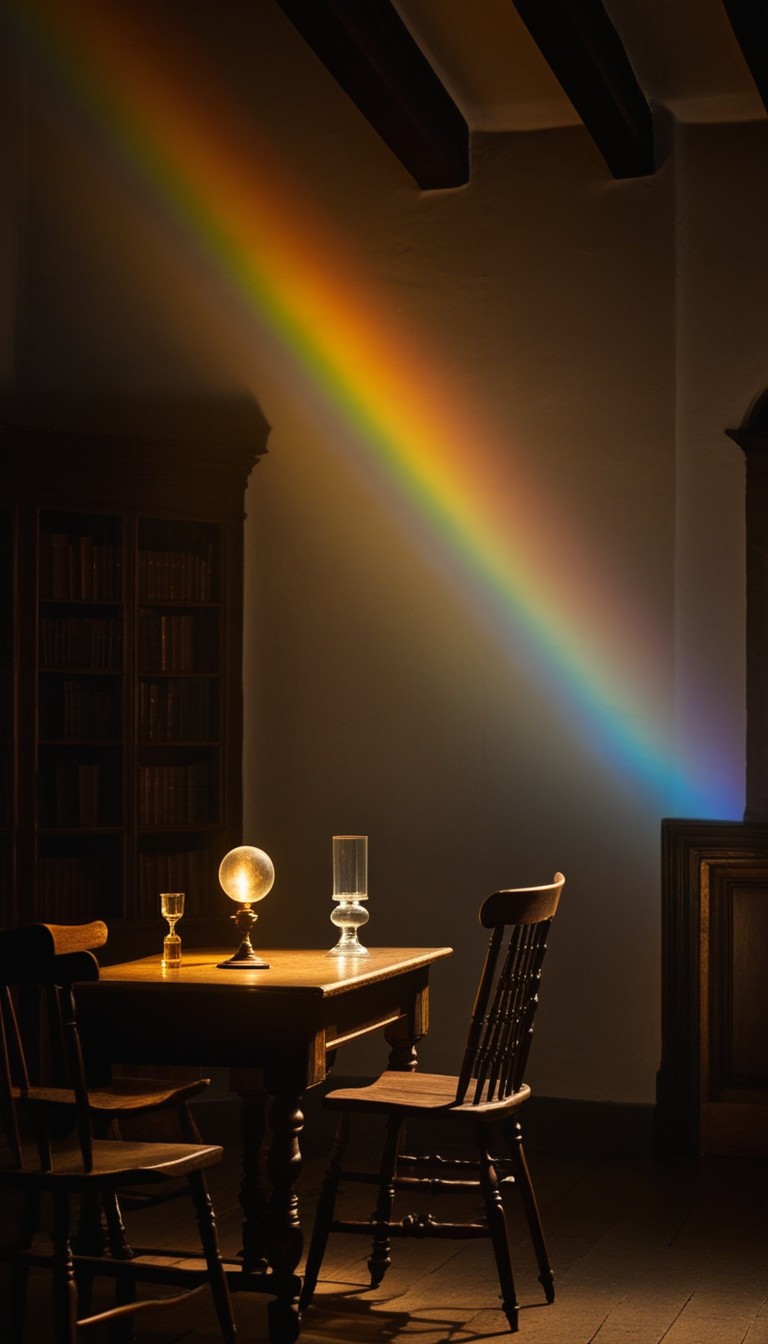
Newton bought a glass prism at a country fair and used it to crack open one of nature's deepest mysteries. By passing a beam of sunlight through the prism, he showed that white light is actually a mixture of all the colors of the rainbow. He then recombined them to prove it. His work on optics was groundbreaking, though it also sparked his first bitter scientific rivalries—especially with Robert Hooke.
1666
Woolsthorpe, England
The Apple and the Moon
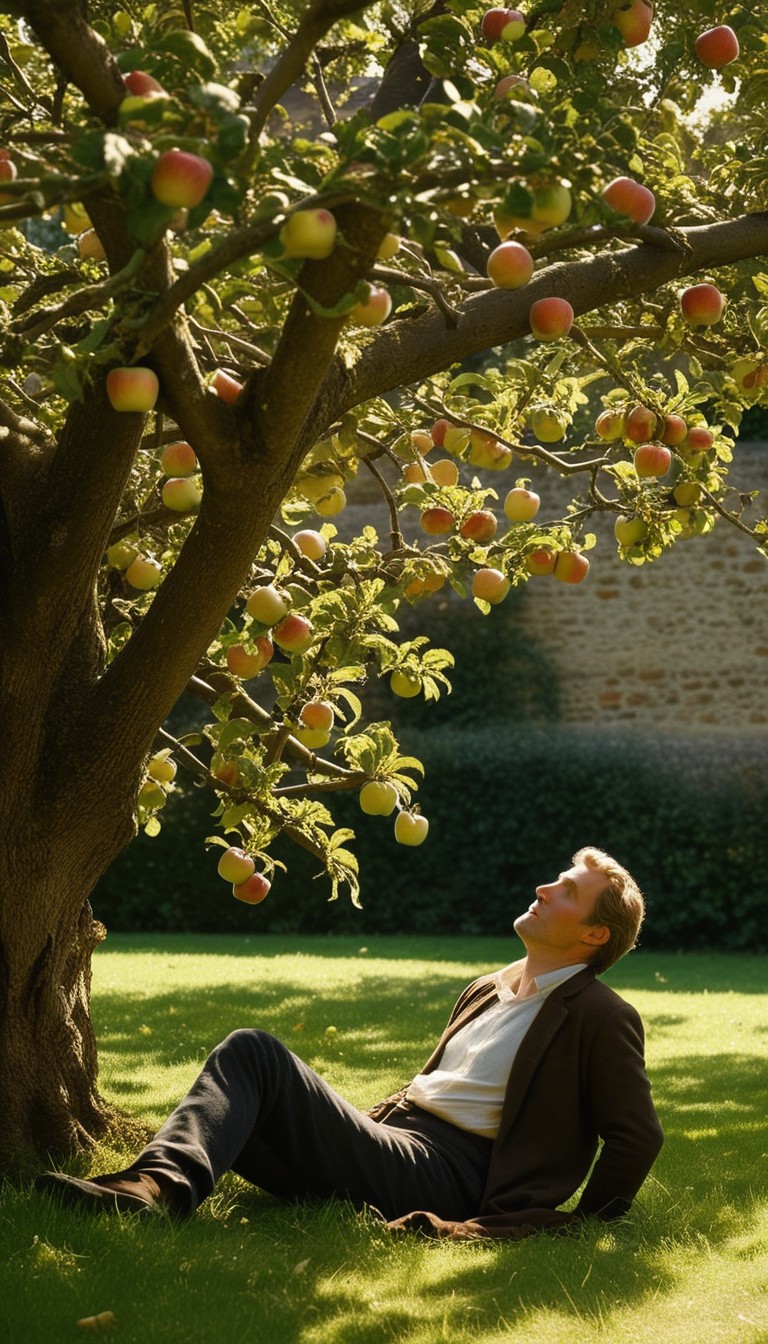
Did an apple really fall on Newton's head? Probably not—but he did watch one fall in his Woolsthorpe garden and asked a question no one else had: could the same force pulling the apple also hold the Moon in orbit? The answer was yes. Gravity wasn't just a local phenomenon—it was universal. Every object in the universe attracts every other object. It was an insight that changed everything.
1687
London, England
The Principia
In 1687, Newton published Philosophiae Naturalis Principia Mathematica—the Mathematical Principles of Natural Philosophy. It was arguably the most important scientific book ever written. In its pages, Newton laid out the law of universal gravitation and the three laws of motion. He explained the orbits of planets, the tides of the sea, and the paths of comets. Edmund Halley funded the printing; the world was never the same.
1687
London, England
Three Laws That Govern the Universe
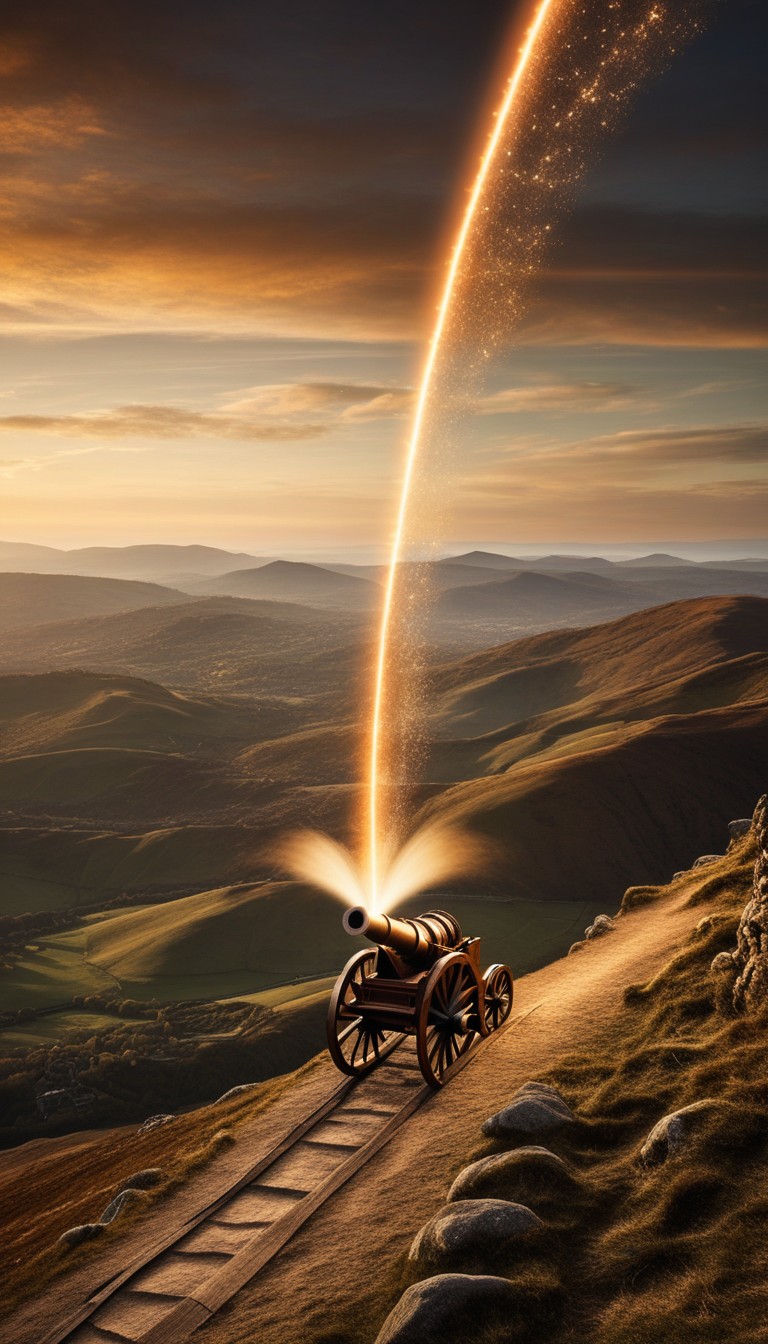
Newton's three laws of motion became the bedrock of physics. First: an object stays at rest or in motion unless acted upon by a force. Second: force equals mass times acceleration. Third: every action has an equal and opposite reaction. These deceptively simple statements explained everything from a cannonball's arc to a planet's orbit. Engineers and scientists still use them every single day.
1684-1716
England & Germany
The Calculus War
Newton developed calculus during the plague years but barely told anyone. When German mathematician Gottfried Wilhelm Leibniz independently published his own version in 1684, a vicious priority dispute erupted. Newton accused Leibniz of plagiarism. The feud consumed both men and divided European mathematics for a century. Today, historians agree both invented calculus independently—but Newton's secretive nature made the conflict inevitable.
1696-1727
London, England
Master of the Mint
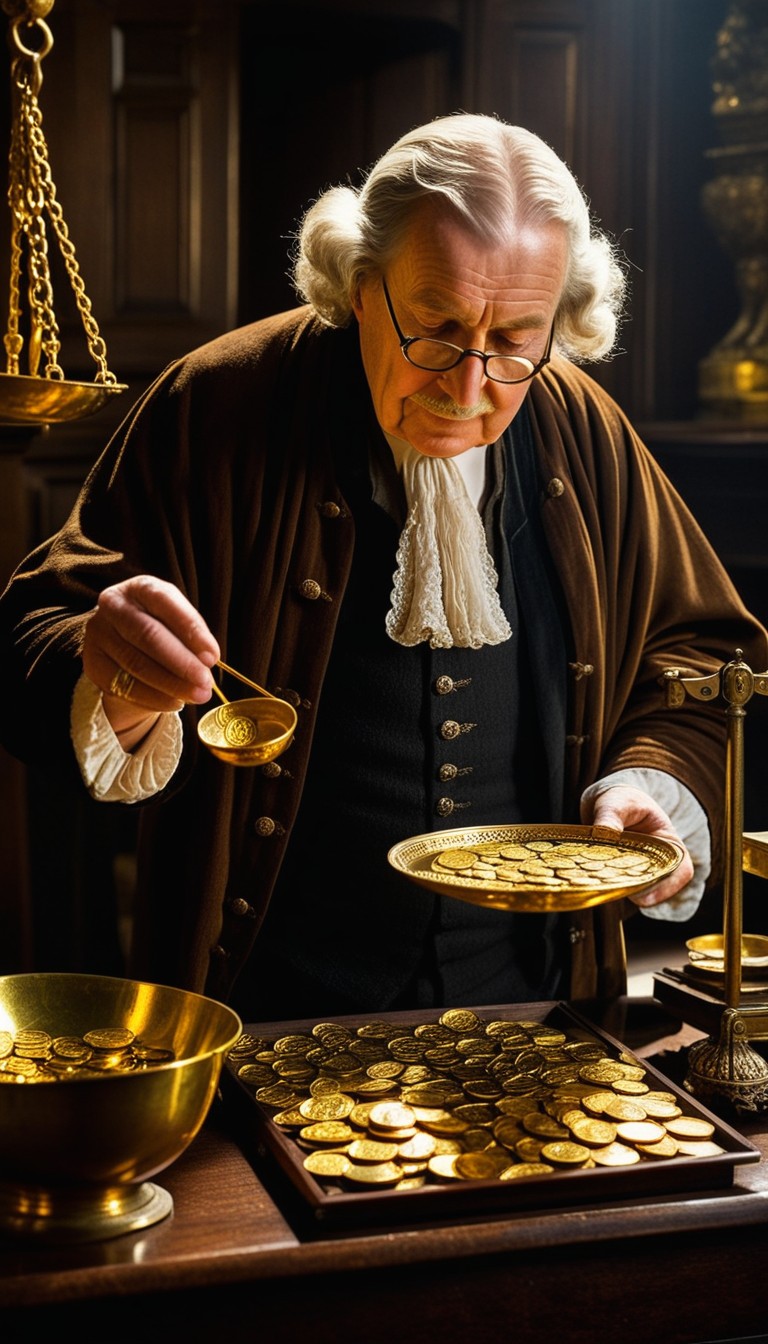
In 1696, Newton left Cambridge for London to become Warden—and later Master—of the Royal Mint. He took the job seriously, hunting counterfeiters with the zeal of a detective and overseeing England's great recoinage. He was knighted in 1705, became president of the Royal Society, and grew wealthy and powerful. He died on March 31, 1727, at age 84, revered as the greatest mind of his era.
Standing on the Shoulders of Giants
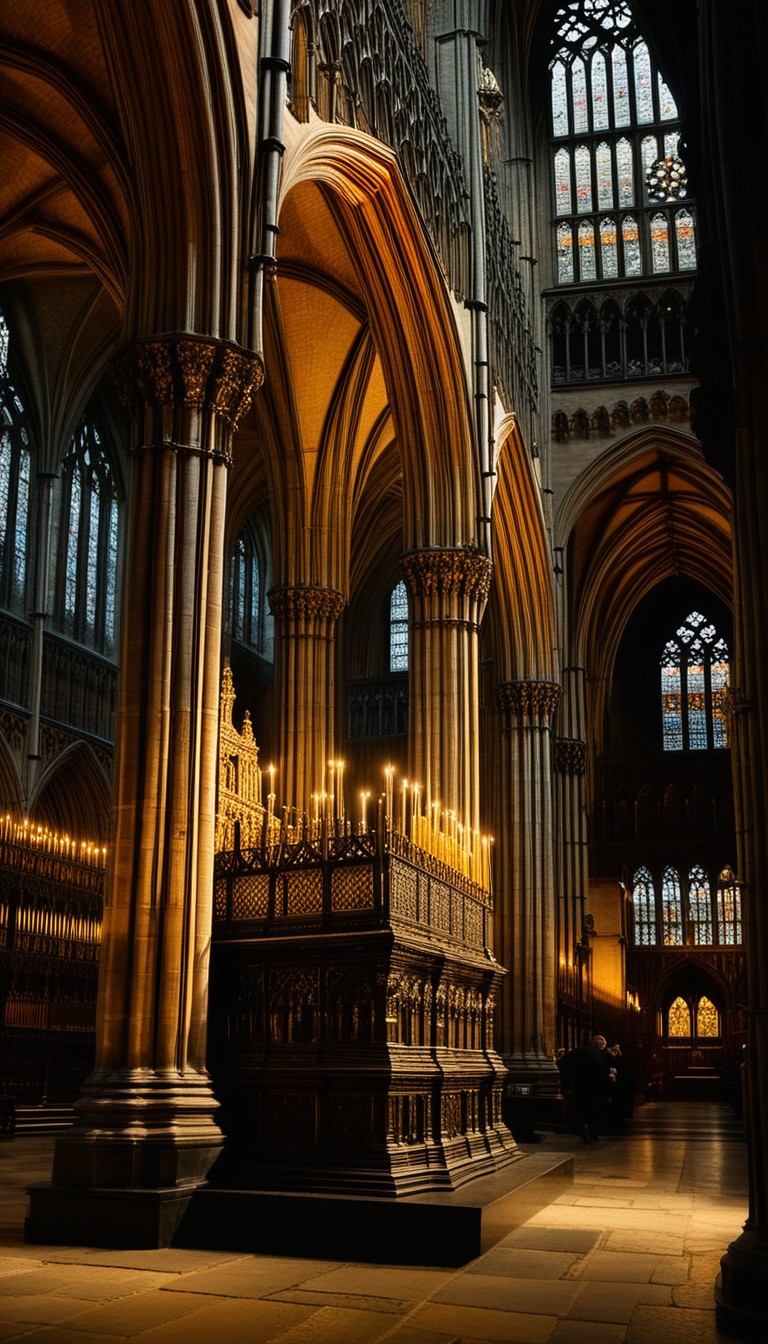
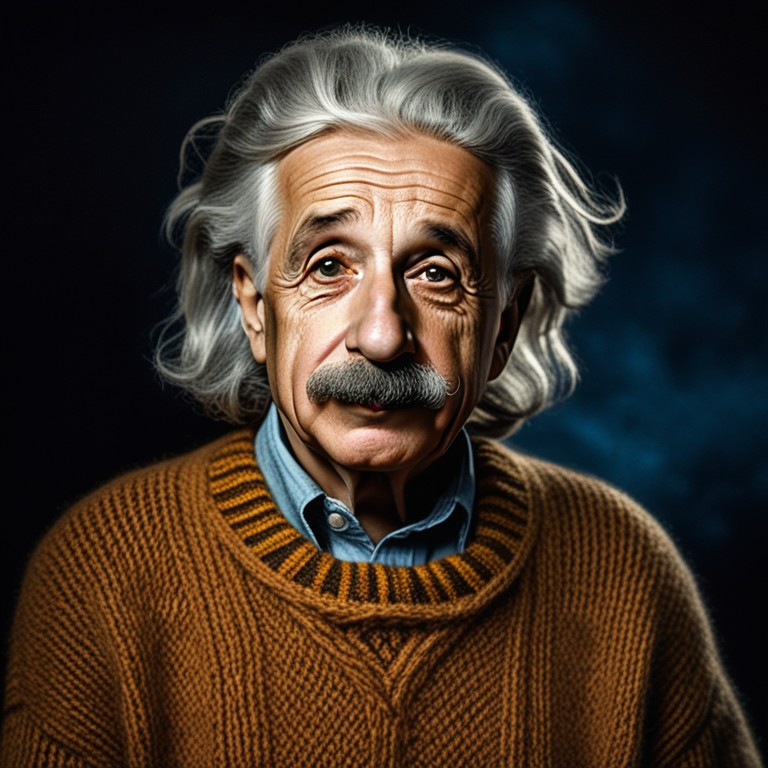
Isaac Newton once wrote: "If I have seen further, it is by standing on the shoulders of giants." Yet he himself became the tallest giant of all. His laws governed physics for over two centuries until Einstein expanded the picture. From spacecraft trajectories to bridge engineering, Newton's principles remain woven into the fabric of modern civilization. The fragile baby from Woolsthorpe truly moved the world.
Recommended Reading
As an Amazon Associate, we earn from qualifying purchases.
Swipe to navigate