James K. Polk (#11): The Expansionist
Loading story...

1795-1820
North Carolina & Tennessee
From Carolina to Tennessee
Born in 1795 in Mecklenburg County, North Carolina, Polk moved with his family to the Tennessee frontier as a boy. Sickly in his youth, he underwent gallstone surgery at seventeen without anesthesia, an ordeal that likely left him unable to have children. He graduated first in his class from the University of North Carolina and began practicing law in Nashville.

1823-1839
Washington, D.C.
Jackson's Protege
Polk entered politics as a protege of Andrew Jackson, winning a seat in the Tennessee legislature at twenty-seven. He served fourteen years in Congress, including four as Speaker of the House, the only president to hold that office. Known as "Young Hickory" for his fierce loyalty to Jackson's Democratic principles, Polk was a relentless partisan and skilled legislative tactician.

1844
Baltimore, Maryland
The First Dark Horse
At the 1844 Democratic Convention, the frontrunner Martin Van Buren opposed Texas annexation and lost Southern support. After eight deadlocked ballots, delegates turned to Polk as a compromise candidate. He was so unknown that the Whigs asked, "Who is James K. Polk?" The answer: a man with a clear vision of American expansion from the Atlantic to the Pacific.
1845
Washington, D.C.
A Four-Point Agenda
Polk entered office with four clear goals: reduce the tariff, establish an independent treasury, acquire California from Mexico, and settle the Oregon boundary with Britain. He pledged to serve only one term and accomplish all four. No president had ever laid out such a specific agenda, and no president would fulfill every major promise so completely.
1846
Oregon Territory
Fifty-Four Forty or Fight
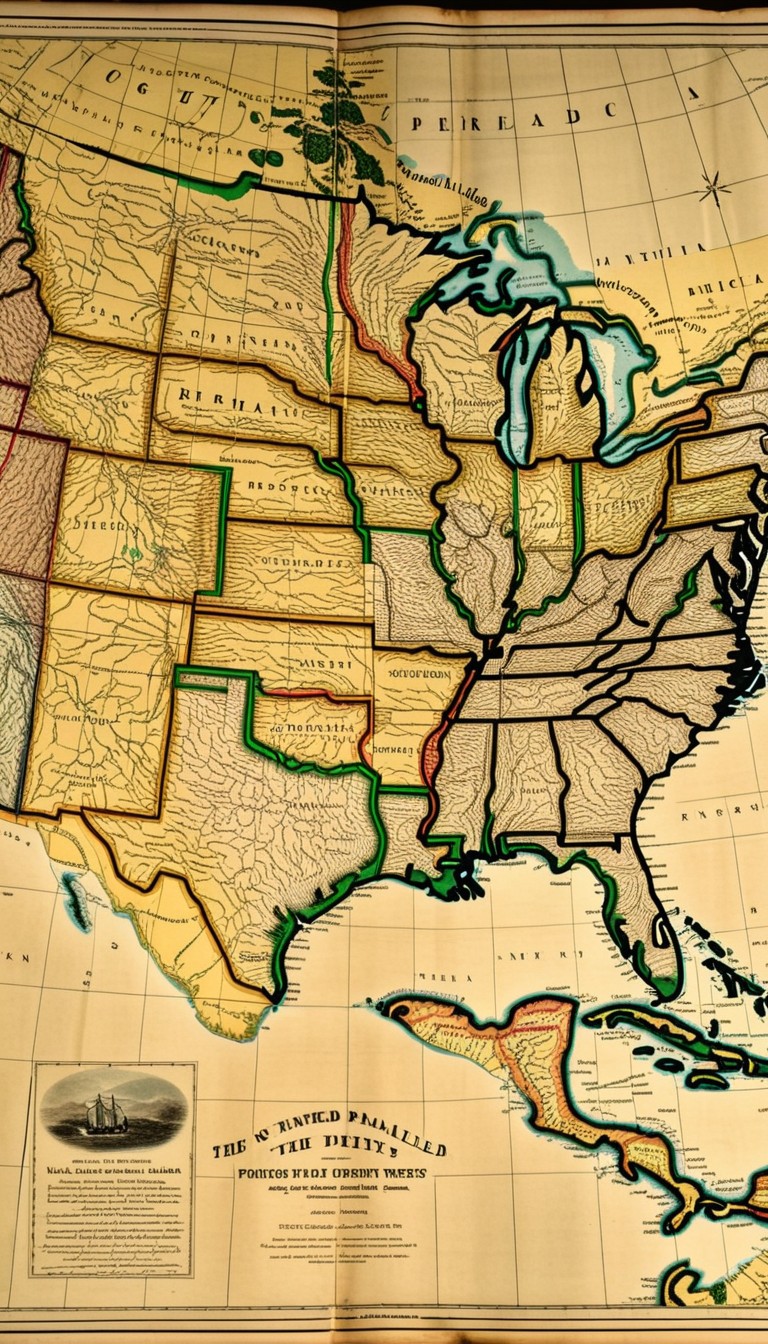
Polk campaigned on claiming all of Oregon up to the 54-40 parallel, risking war with Britain. But he was a pragmatist. He negotiated the Oregon Treaty of 1846, splitting the territory at the 49th parallel. America gained the future states of Oregon, Washington, and Idaho without firing a shot. It was masterful brinksmanship that achieved expansion through diplomacy.
1846-1848
Mexico
The Mexican-American War
When Mexico disputed the Texas border, Polk sent troops to the Rio Grande. After a skirmish, he told Congress that Mexico had "shed American blood upon American soil." Critics, including a young congressman named Abraham Lincoln, accused Polk of manufacturing the war. But Polk got what he wanted: American armies captured Mexico City in September 1847, and Mexico was forced to the negotiating table.
1848
Southwest United States
Continental Destiny
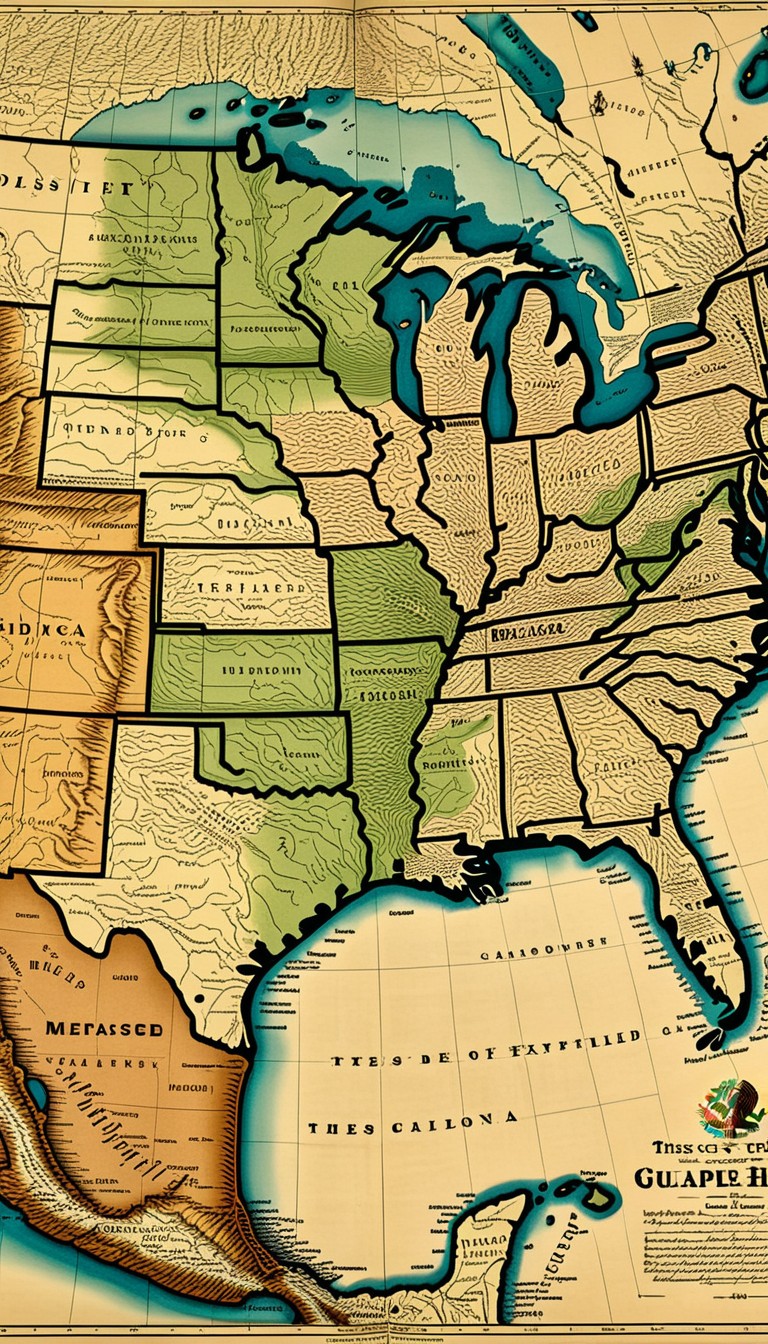
The Treaty of Guadalupe Hidalgo in 1848 ceded California, Nevada, Utah, Arizona, New Mexico, and parts of Colorado and Wyoming to the United States. Combined with Oregon, Polk had expanded American territory by over one million square miles, more than a third of the nation's current area. Just nine days before the treaty was signed, gold was discovered at Sutter's Mill in California.

1845-1849
Washington, D.C.
The Cost of Ambition
Polk was the hardest-working president in American history. He kept no regular staff, managed every detail personally, and rarely left Washington. He wrote in his diary that the presidency was "no bed of roses." True to his word, he declined to run for a second term. He left office gaunt and exhausted, a man who had literally given his life to fulfill his promises.

Promise Keeper
James K. Polk died on June 15, 1849, just 103 days after leaving office, the shortest retirement of any president. He was fifty-three years old. Historians consistently rank him among the most effective presidents, a leader who set clear goals and achieved every one. The America he left behind stretched from sea to shining sea.
Recommended Reading
As an Amazon Associate, we earn from qualifying purchases.


Swipe to navigate