The Mughal Empire: Jewel of India

Loading story...
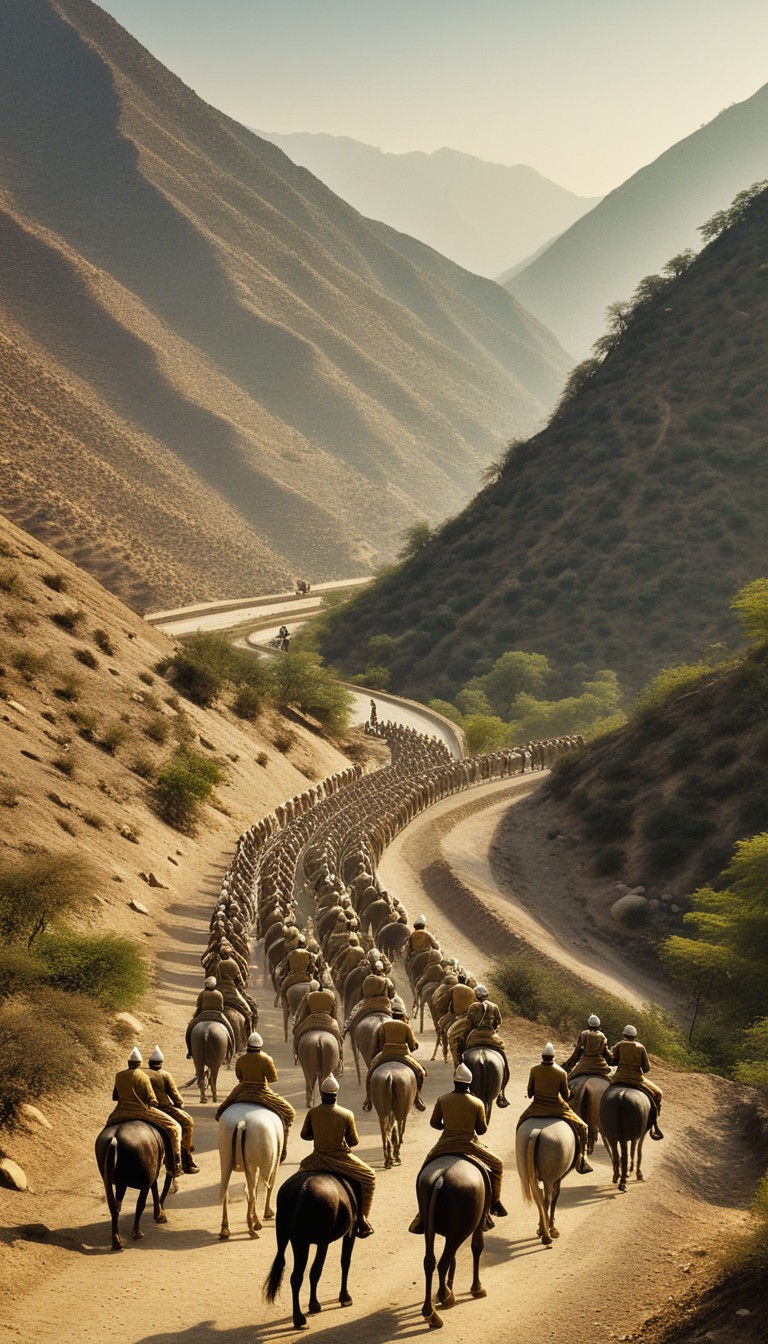
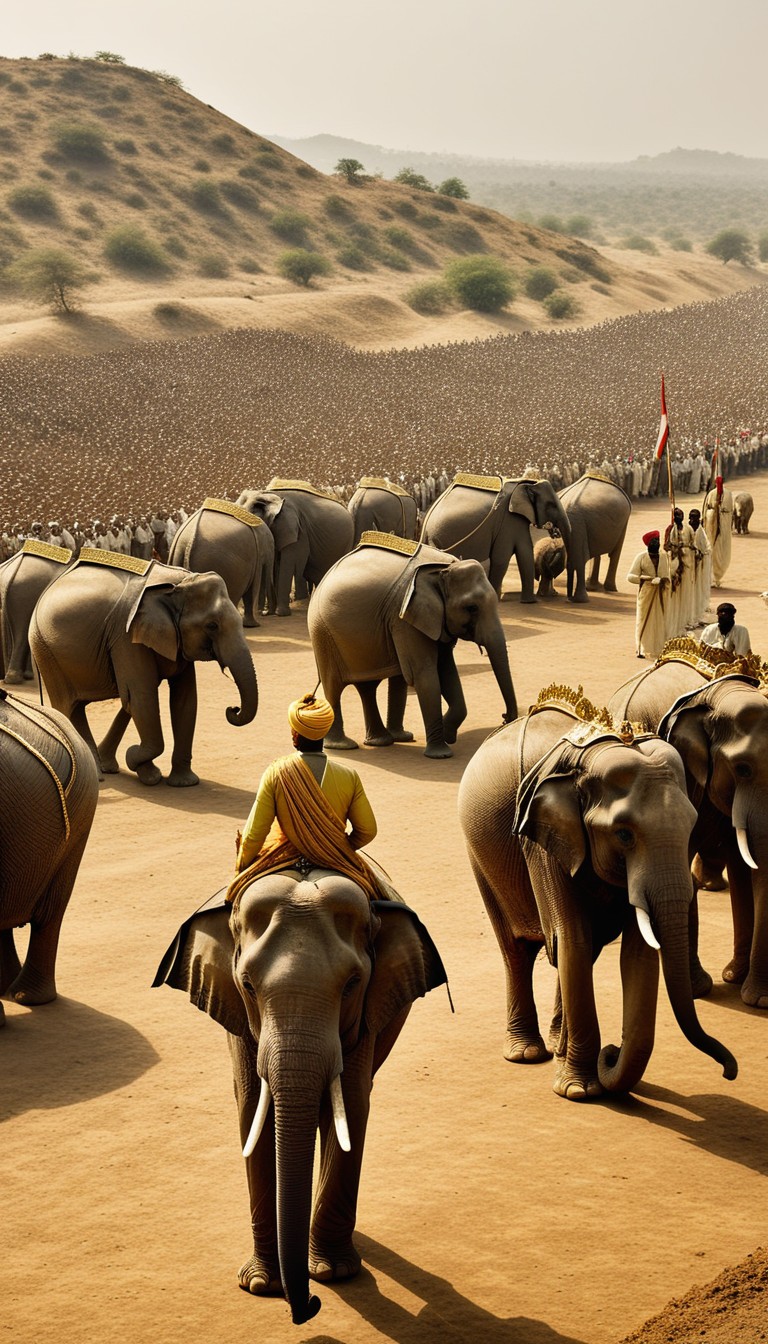
Babur and his army crossing mountain passes into the Indian subcontinent
c. 1524–1526 Kabul & the Punjab

Babur Descends on India

Zahir-ud-din Muhammad Babur was a prince without a throne—expelled from his ancestral home of Fergana, twice master and twice robbed of Samarkand, and ruler of little more than Kabul. Yet his bloodline was extraordinary: he was a direct descendant of Timur on his father's side and of Genghis Khan on his mother's. In 1524, invited by dissatisfied nobles to challenge Ibrahim Lodi, the fractious Sultan of Delhi, Babur assembled a battle-hardened army and crossed the Khyber Pass into the Punjab. He carried with him match-lock firearms and Ottoman-style field artillery—weapons that would prove decisive in the contest to come.
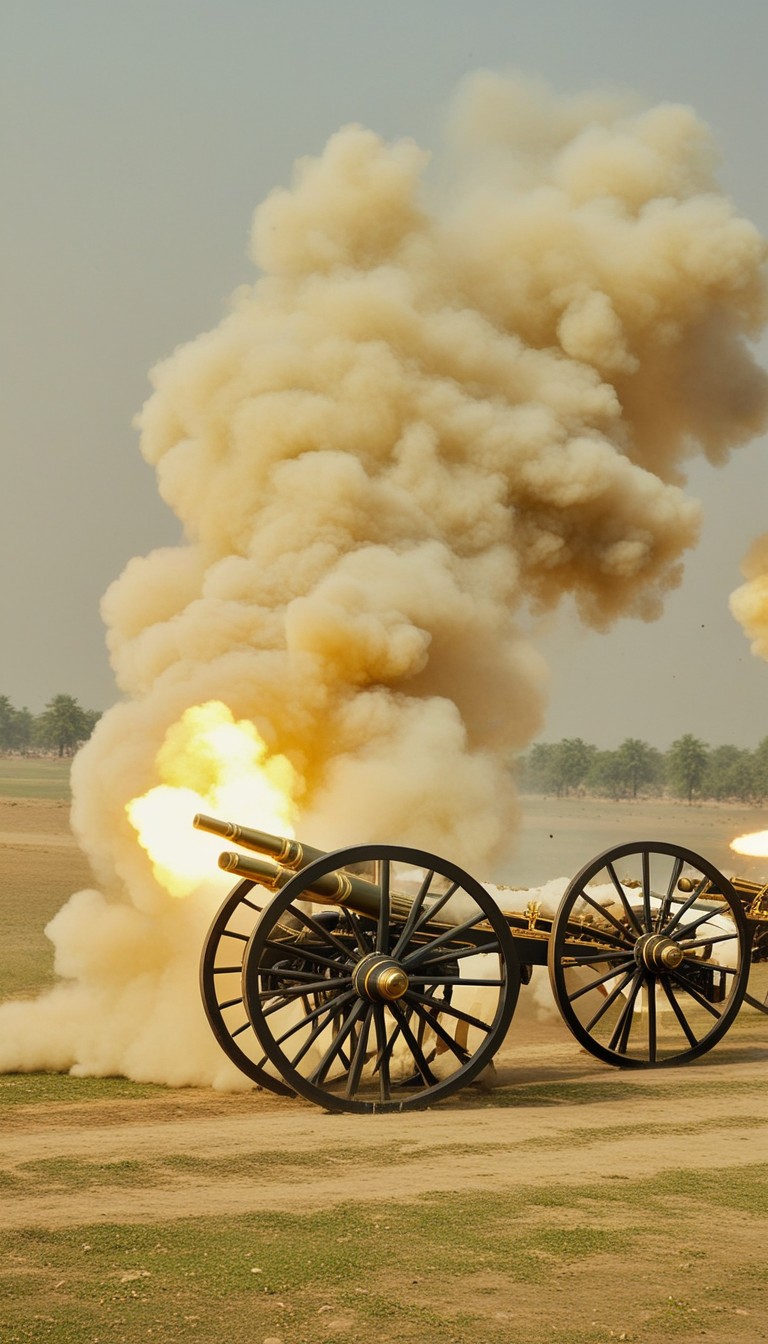
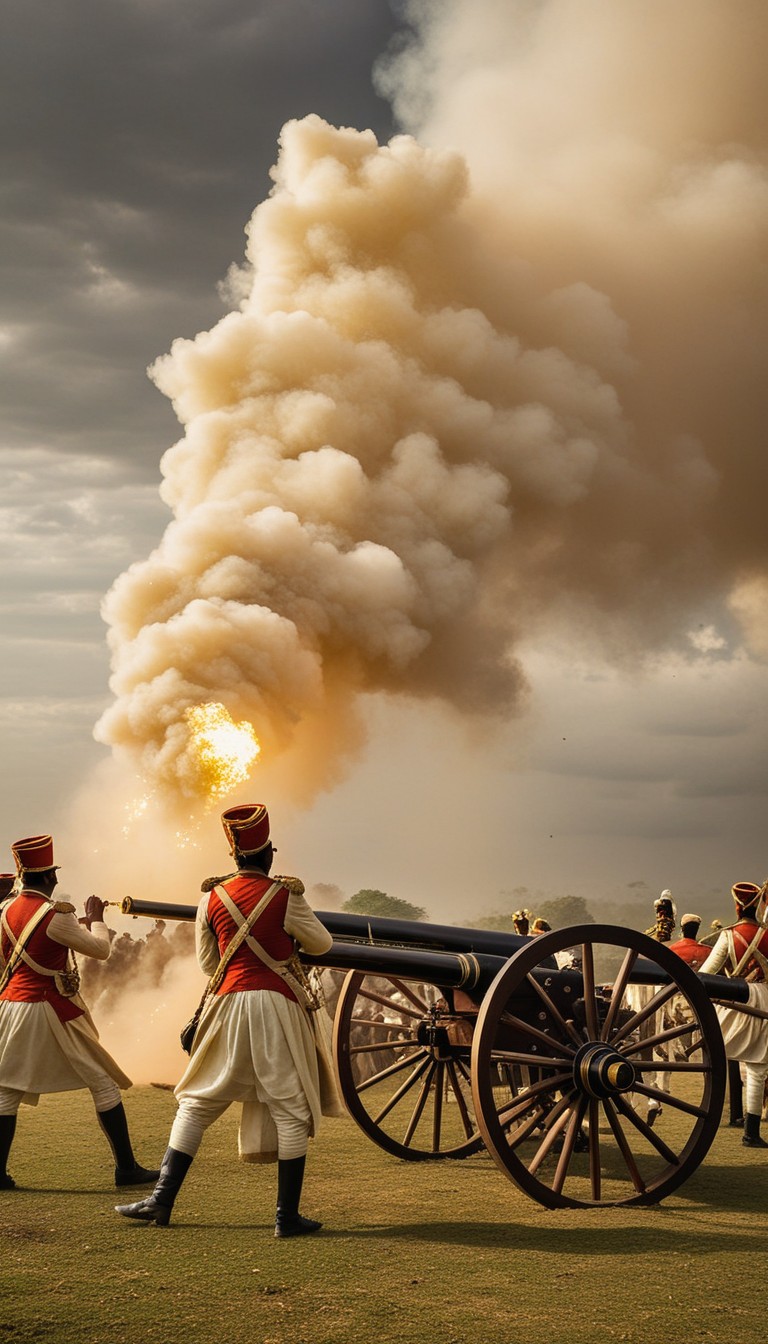
Mughal artillery firing at the massed armies of Ibrahim Lodi on the plains of Panipat
21 April 1526 Panipat, Northern India

First Battle of Panipat

On April 21, 1526, Babur's force of roughly 12,000 men faced Ibrahim Lodi's army of perhaps 100,000 soldiers and 100 war elephants on the flat plains of Panipat, north of Delhi. Babur employed the tulughma—a flanking encirclement tactic inherited from the Mongol tradition—while his artillery, positioned in carts chained together across the center, unleashed a hail of cannon fire that had never been heard on Indian soil before. Lodi's elephants panicked at the cannon blasts and stampeded back through his own ranks; within hours Ibrahim Lodi lay dead on the field. The victory gave Babur the treasury of Delhi and Agra, and it extinguished the Lodi Sultanate. The Mughal dynasty—from the Persian rendering of "Mongol"—was born.
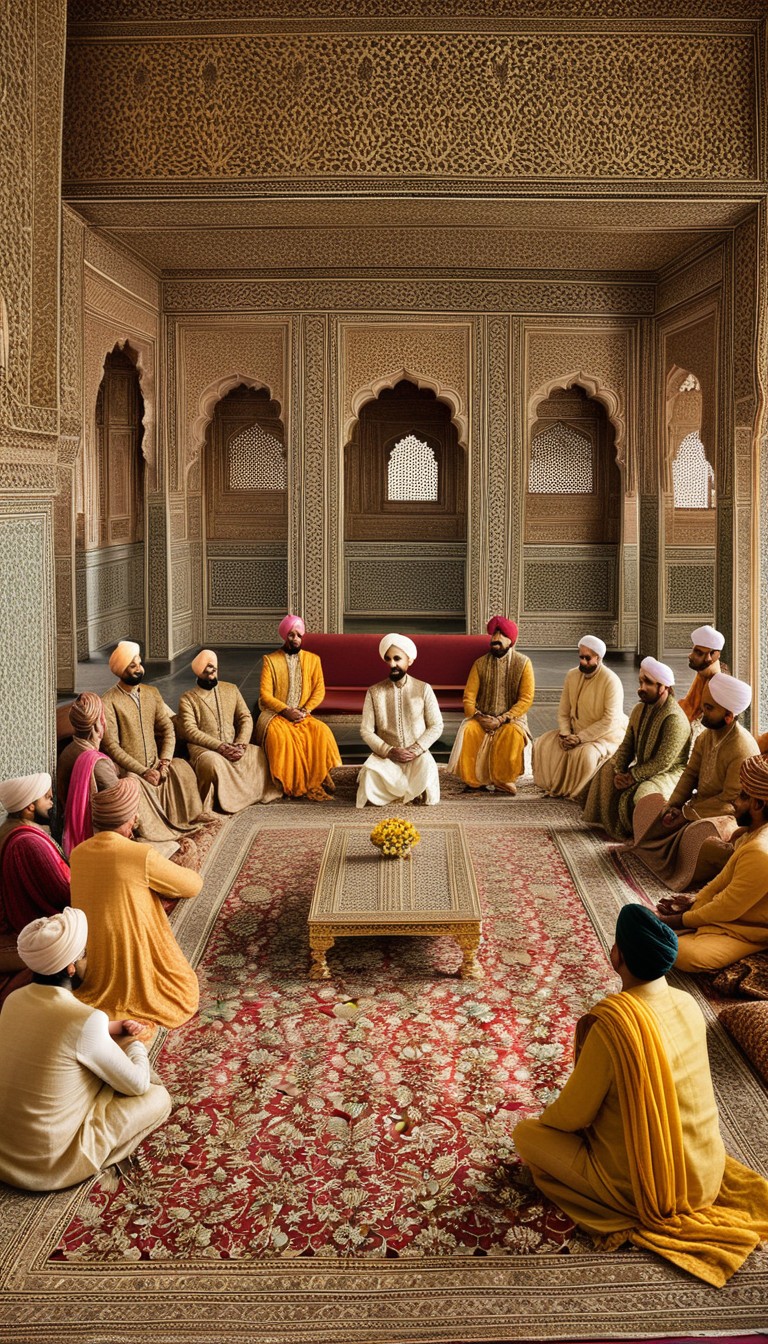
Emperor Akbar holding court before nobles of many faiths and ethnicities
1556–1605 Agra & Fatehpur Sikri

Akbar the Great

When Akbar inherited the throne in 1556 at age thirteen, the empire was fragile and contested; when he died in 1605, it covered most of the Indian subcontinent. Through relentless military campaigns he annexed Rajputana, Gujarat, Bengal, Kashmir, and the Deccan, but he understood that arms alone could not hold such diversity together. He abolished the jizya tax on non-Muslims, appointed Hindus, Rajputs, and Christians to the highest offices of state, and created the Din-i-Ilahi—a syncretic spiritual movement blending elements of Islam, Hinduism, Zoroastrianism, and Christianity that reflected his genuine curiosity about faith. His court at Fatehpur Sikri became a crucible of poets, artists, theologians, and musicians drawn from across Asia, and his administrative reforms—standardized weights, land surveys, and a revenue system that adjusted for local harvests—gave the empire a prosperity it would not surpass.
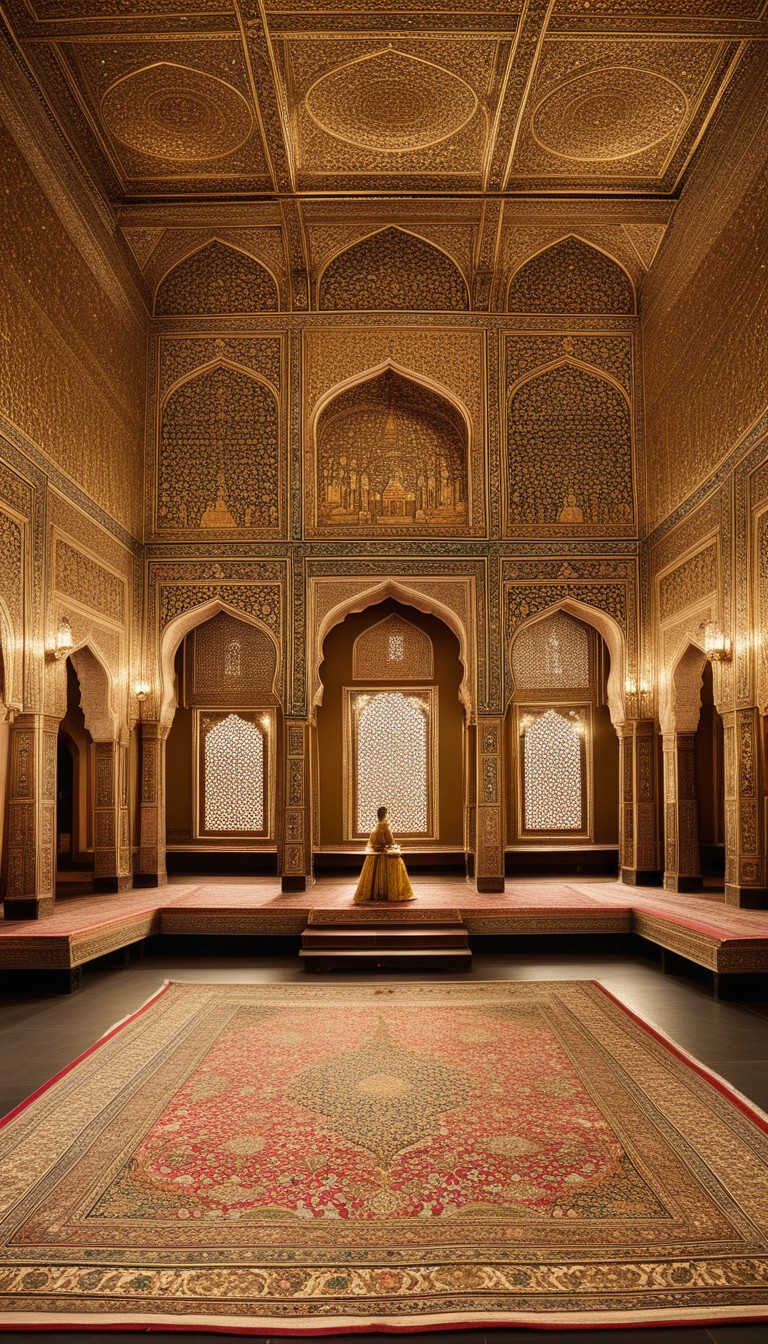
A magnificent Mughal court scene with intricate carpets, illuminated manuscripts, and courtly musicians
c. 1600 Agra, Lahore & Delhi

A Court of Splendor

By the early seventeenth century the Mughal court had become one of the wealthiest and most culturally refined in the world, drawing diplomats and merchants from Persia, Central Asia, Europe, and China who marveled at its opulence. The empire fused Persian literary and artistic traditions with Indian craftsmanship, producing a distinctive Mughal aesthetic visible in miniature paintings of breathtaking precision, carpets woven with silk and gold thread, and gardens laid out in the four-quartered charbagh pattern that mirrored paradise. Poets composed in Persian, Urdu, and Hindi; architects fused sandstone and white marble with intricate inlay work of semi-precious stones in a style that owed debts to both Timurid Samarkand and Hindu temple-building. The mansabdari system organized the nobility into ranked military grades, channeling their competition into loyal service to the throne rather than independent warlordism.
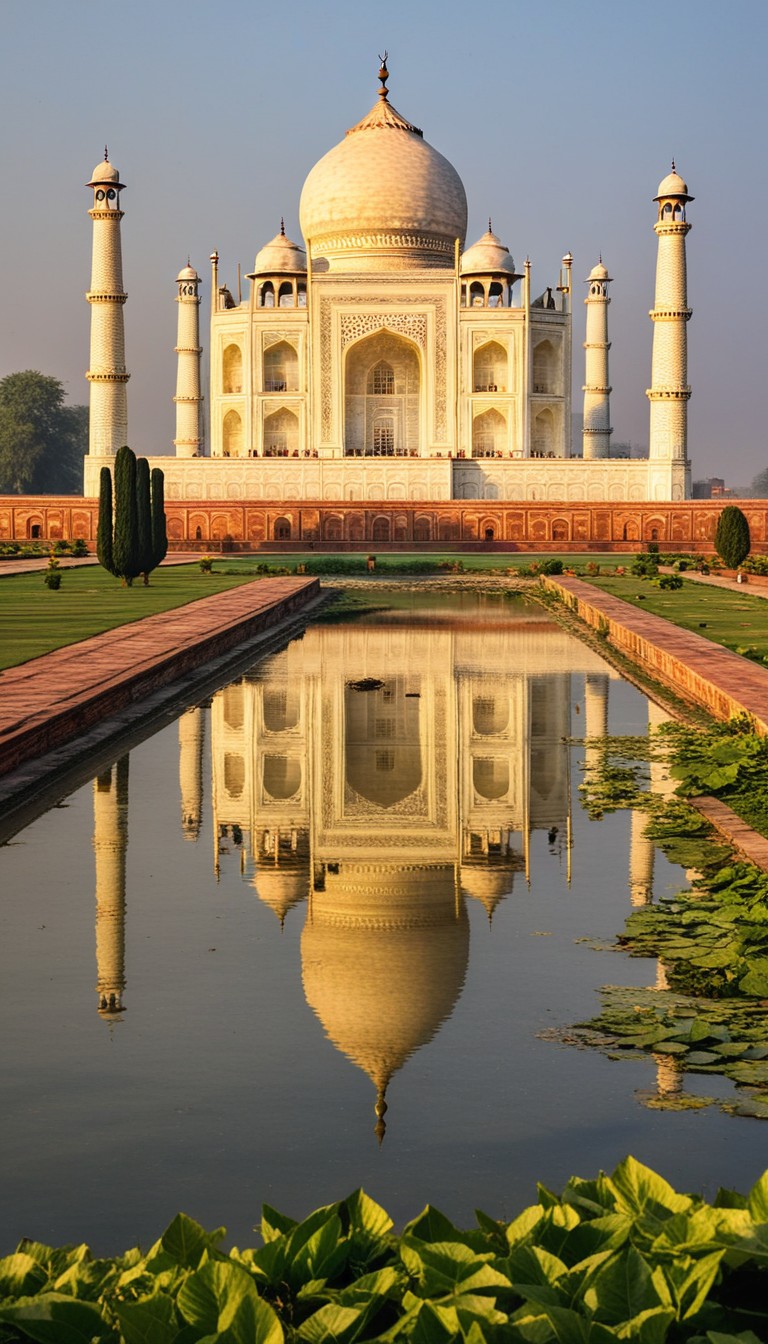
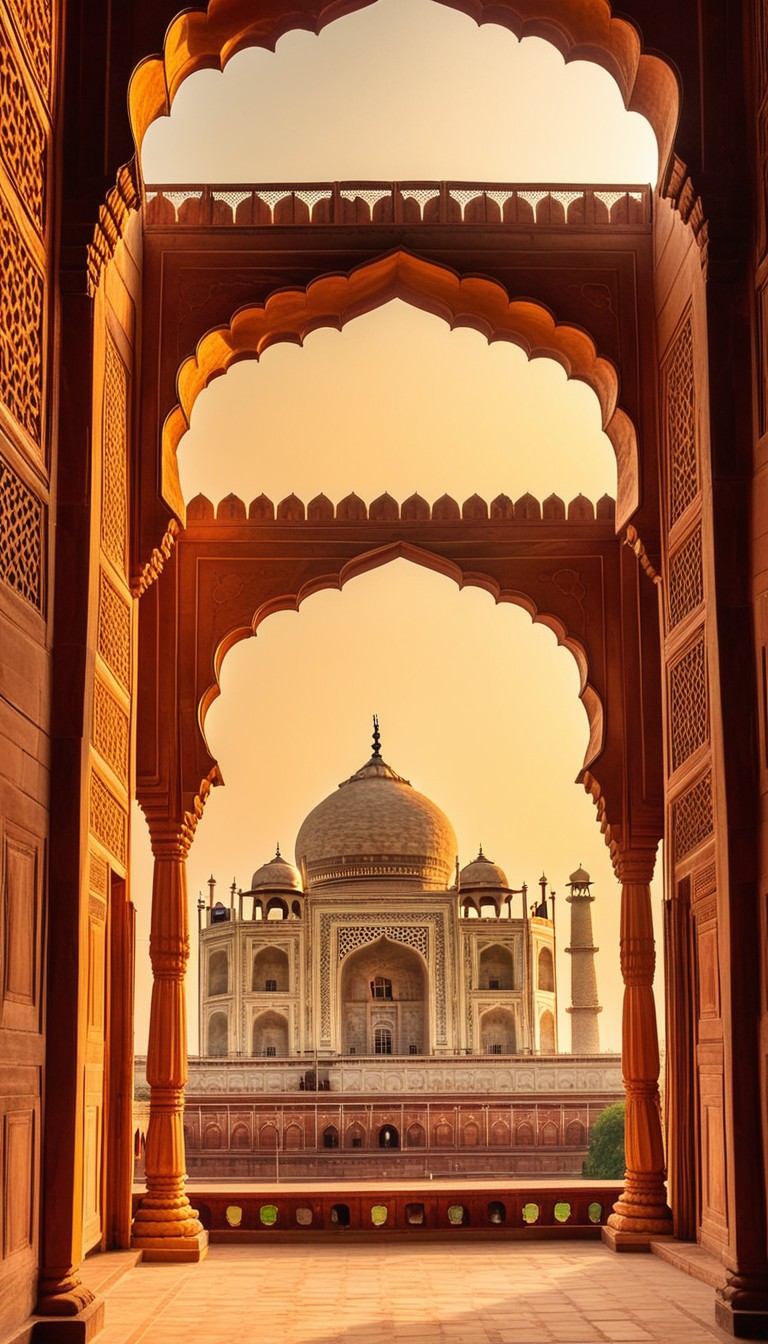
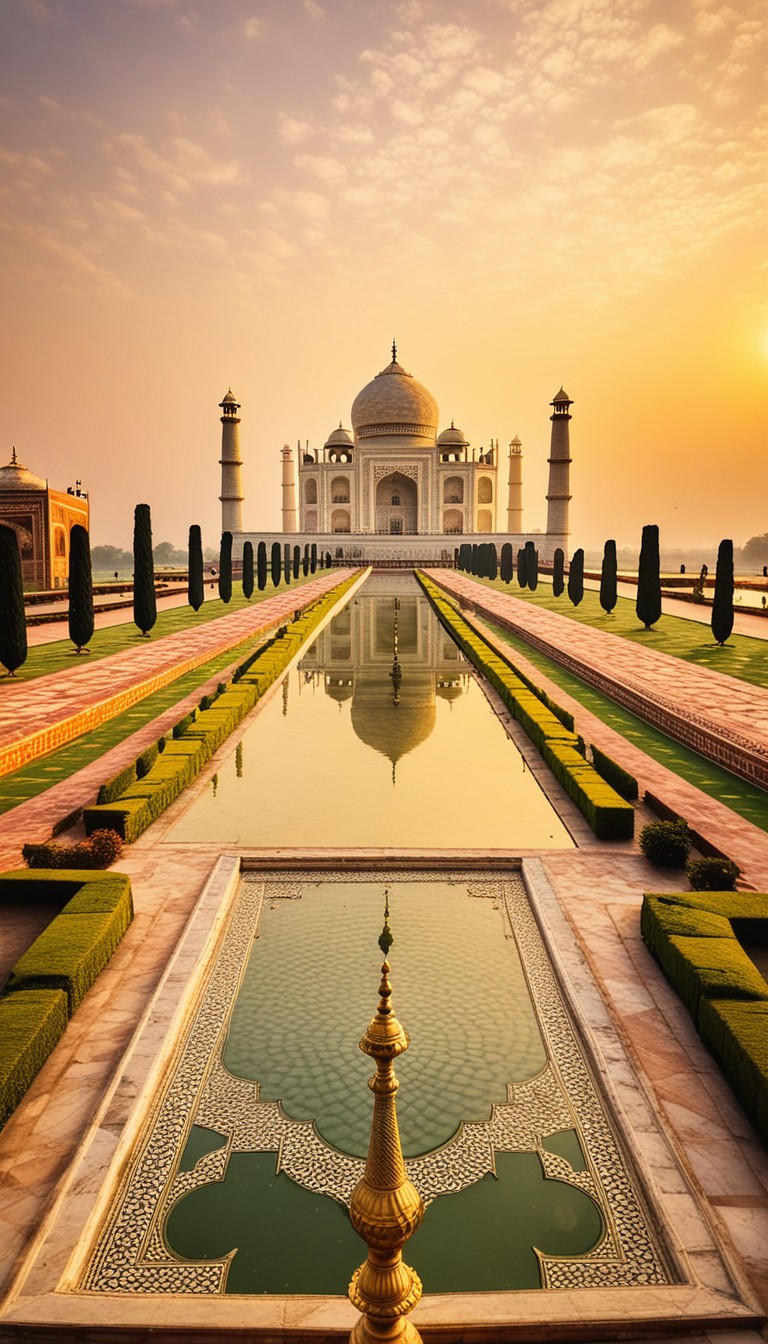
The Taj Mahal gleaming white at sunrise beside the Yamuna River
1632–1653 Agra, India

Shah Jahan and the Taj Mahal

In 1631 Shah Jahan's beloved chief wife, Arjumand Banu Begum—known to history as Mumtaz Mahal—died giving birth to their fourteenth child. Shattered by grief, the emperor resolved to build her a tomb unlike anything the world had seen. Construction of the Taj Mahal began in 1632, employing an estimated 20,000 craftsmen drawn from as far as Persia, the Ottoman Empire, and Europe; white Makrana marble was hauled from Rajasthan, jade from China, lapis lazuli from Afghanistan, and turquoise from Persia, all inlaid in floral patterns so fine they can be read as calligraphy. When the central mausoleum was completed around 1643—with surrounding gardens, gatehouses, and mosque taking another decade—Shah Jahan had created what UNESCO would later call "the jewel of Muslim art in India and one of the universally admired masterpieces of the world's heritage."
Aurangzeb inspecting a vast army on a campaign into the Deccan plateau
1658–1707 Delhi & the Deccan

Aurangzeb: Expansion and Division

Aurangzeb seized the throne in 1658 by imprisoning his father Shah Jahan and executing his brothers in a succession war, then ruled for nearly fifty years—longer than any other Mughal emperor. Under his command the empire reached its greatest territorial extent, stretching from Kabul to the tip of the Deccan, encompassing roughly 150 million people and a quarter of global economic output. Yet his reign sowed the seeds of dissolution: he reimposed the jizya on non-Muslims, destroyed Hindu temples, and alienated the Rajput clans whose military partnership had been central to Mughal strength since Akbar. His decades-long, ruinously expensive campaign to subdue the Maratha Confederacy in the Deccan ground his treasury down without achieving lasting pacification, and the fiercely mobile Maratha guerrillas under Shivaji and his successors proved impossible to crush outright.
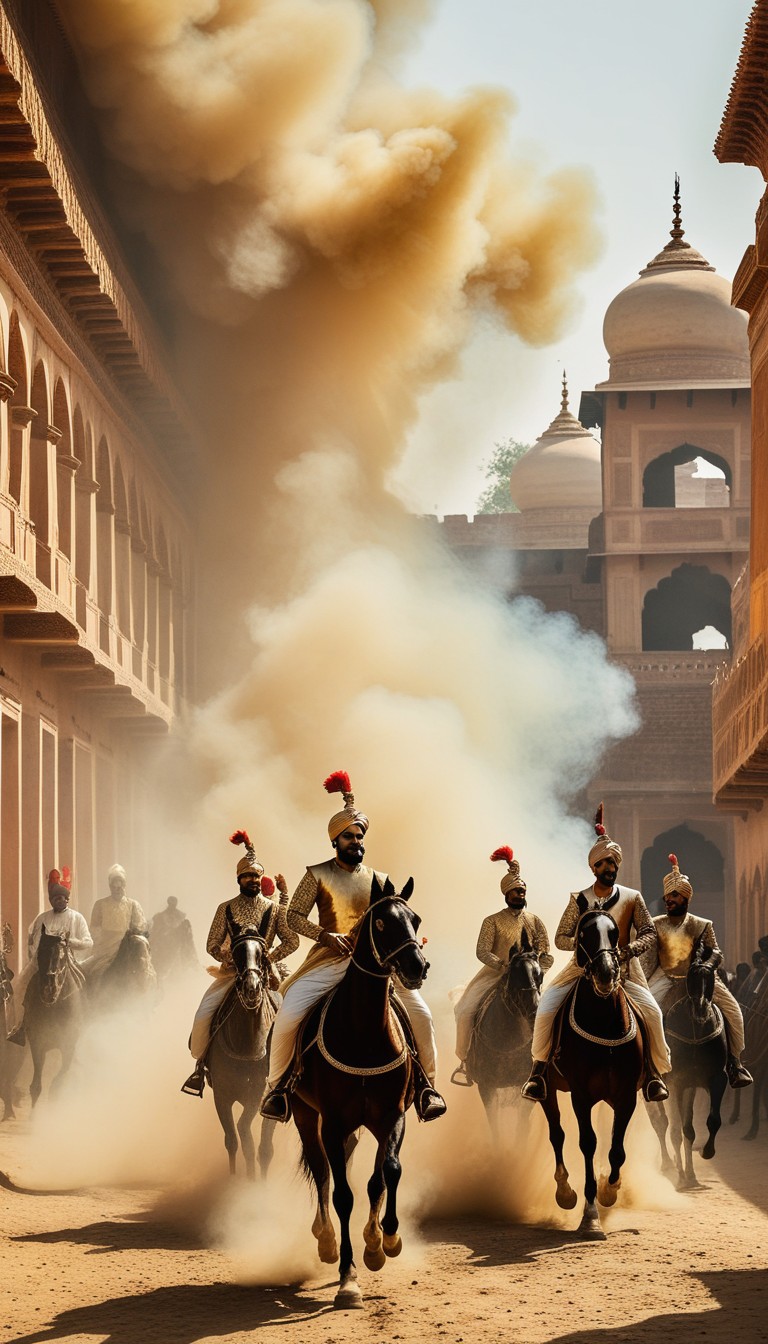
Maratha cavalry raiding a Mughal provincial town while smoke rises in the background
1707–1757 Northern India

Decline and Fragmentation

Aurangzeb's death in 1707 unleashed a crisis that the empire never survived. In the following fifty years a dozen emperors wore the Mughal crown, most placed and removed by powerful nobles or foreign invaders; the effective authority of Delhi shrank to little more than a ceremonial fiction. The Maratha Confederacy swept northward and by the 1730s was collecting tribute from Mughal provinces; Nadir Shah of Persia sacked Delhi in 1739, carrying off the Peacock Throne and massacring tens of thousands of its citizens; Afghan warlords raided from the northwest. Regional governors—the Nawabs of Bengal, Hyderabad, and Awadh—became de facto independent rulers, paying only nominal homage to a Mughal court that could no longer enforce its will.
British East India Company soldiers and artillery at the Battle of Plassey
1757–1857 Bengal & Delhi

The Company Takes Control

At the Battle of Plassey in June 1757, a British East India Company army under Robert Clive defeated the Nawab of Bengal through a combination of superior firepower and a carefully arranged betrayal by the Nawab's own generals. The victory opened Bengal—the wealthiest province of the subcontinent—to Company exploitation and effectively ended any realistic prospect of Mughal revival. Over the following century the Company expanded relentlessly, fighting the Marathas, the Sikhs, and dozens of smaller kingdoms until it directly administered or controlled most of South Asia. The last Mughal emperor, Bahadur Shah Zafar, was a poet-king confined to the Red Fort in Delhi, his authority purely symbolic. When the Indian Rebellion of 1857 briefly rallied around his name, the British exiled him to Rangoon, where he died in 1862, ending a dynasty that had once dazzled the world.
A panoramic view of Mughal architectural masterpieces—the Taj Mahal, Red Fort, and Fatehpur Sikri

A Legacy Written in Marble and Memory

The Mughal Empire lasted just over three centuries, yet its legacy reaches far deeper into South Asian life than its political history suggests. The Taj Mahal, the Red Fort of Delhi, the Lahore Fort, and Fatehpur Sikri stand among the most visited monuments on earth—testaments to an artistic vision that fused Persian, Central Asian, and Indian traditions into something wholly new. Mughal court cuisine—biryanis, kebabs, kormas, and rich rice pilafs—forms the bedrock of the Indian restaurant traditions enjoyed worldwide today. The Urdu language, born in Mughal military camps as a blend of Persian, Arabic, and Hindi dialects, became a major literary language of South Asia. And the administrative structures the Mughals built—revenue surveys, ranked bureaucracies, standardized weights—were later adapted and extended by the very British Empire that replaced them, shaping the subcontinent long after the last emperor's lamp went out.

Recommended Reading

As an Amazon Associate, we earn from qualifying purchases.
Swipe to navigate