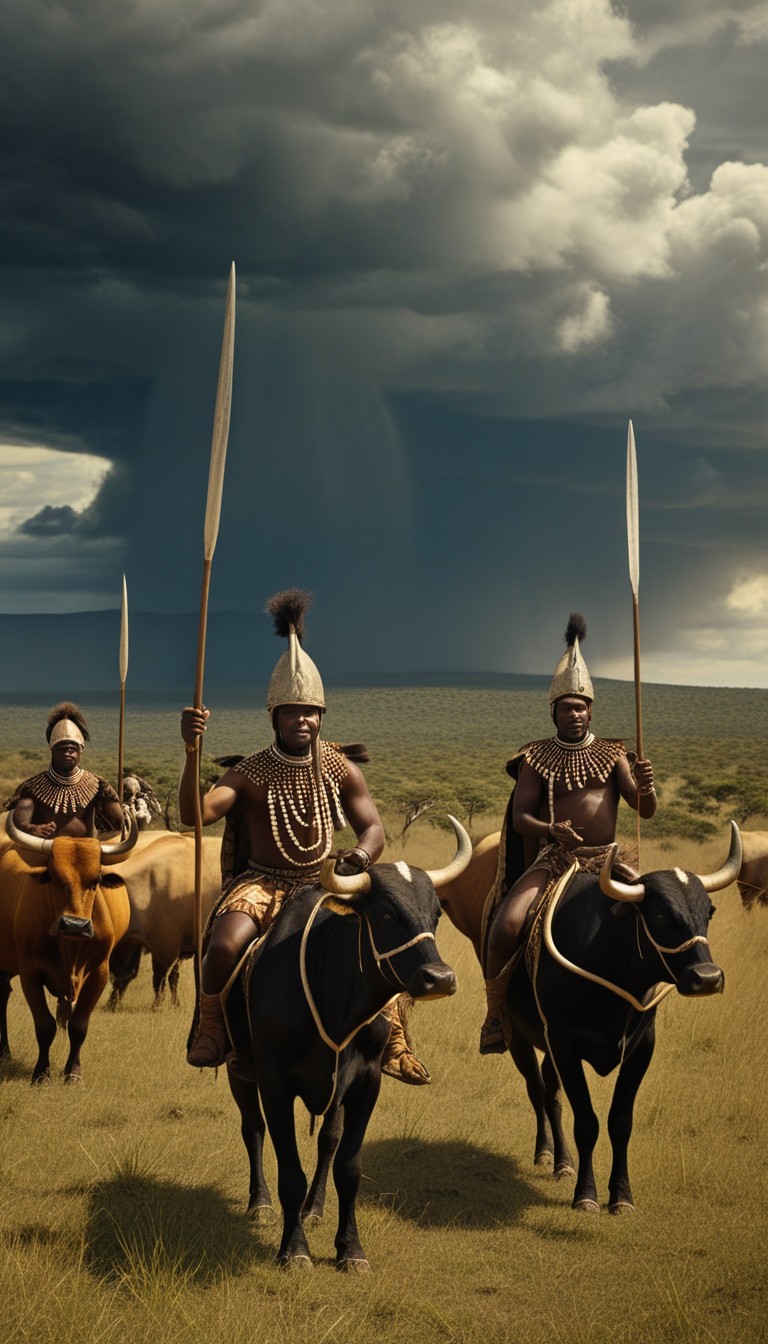
The Zulu Kingdom: Warriors of Southern Africa
Loading story...
c. 1816–1828
KwaZulu, Southern Africa
Shaka Forges a Nation
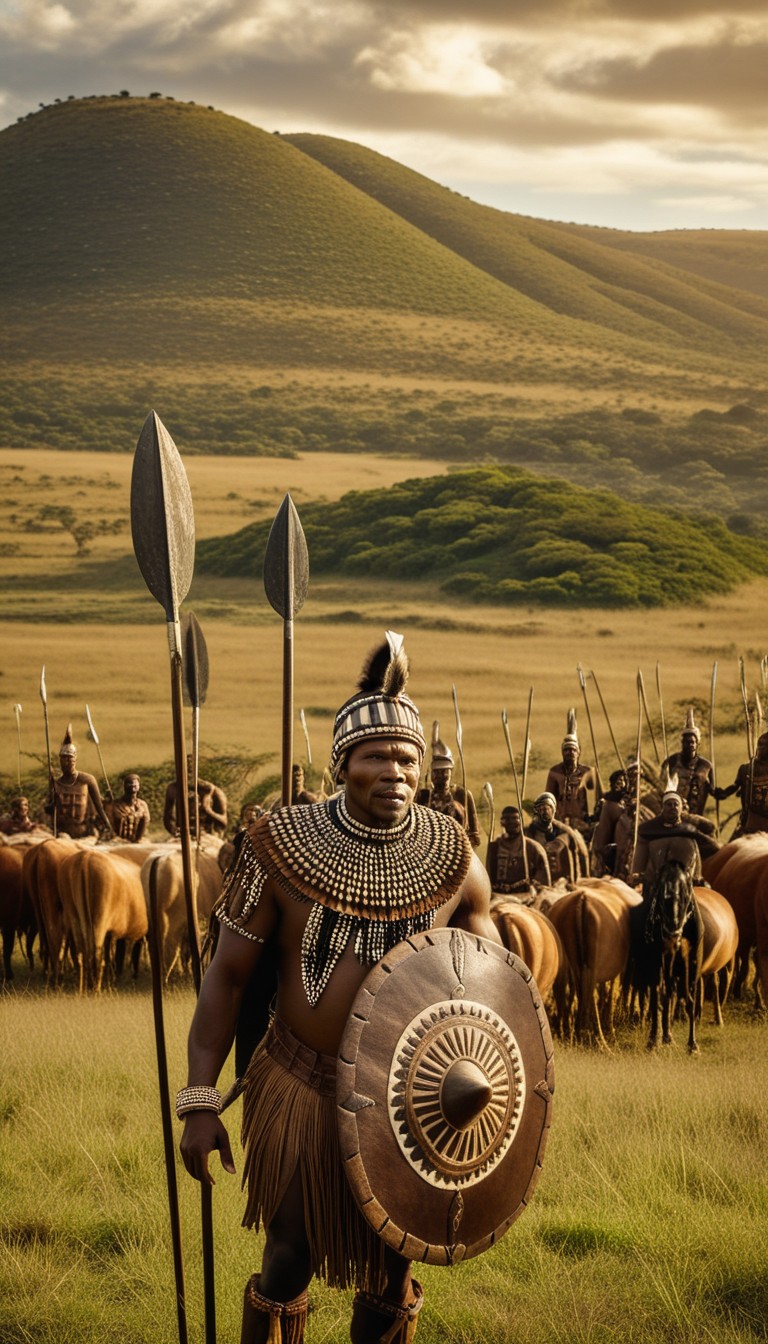
In the early nineteenth century, a young warrior named Shaka rose to lead the small Zulu clan after his father Senzangakhona's death in 1816. Through a combination of brilliant strategy, ruthless ambition, and political genius, Shaka rapidly conquered and absorbed neighbouring clans. Within a decade he had transformed the Zulu from a minor group into the dominant power of southern Africa, uniting dozens of chiefdoms under a single, disciplined nation.
c. 1816–1828
KwaZulu, Southern Africa
Military Innovation: Impis and the Bull Horn
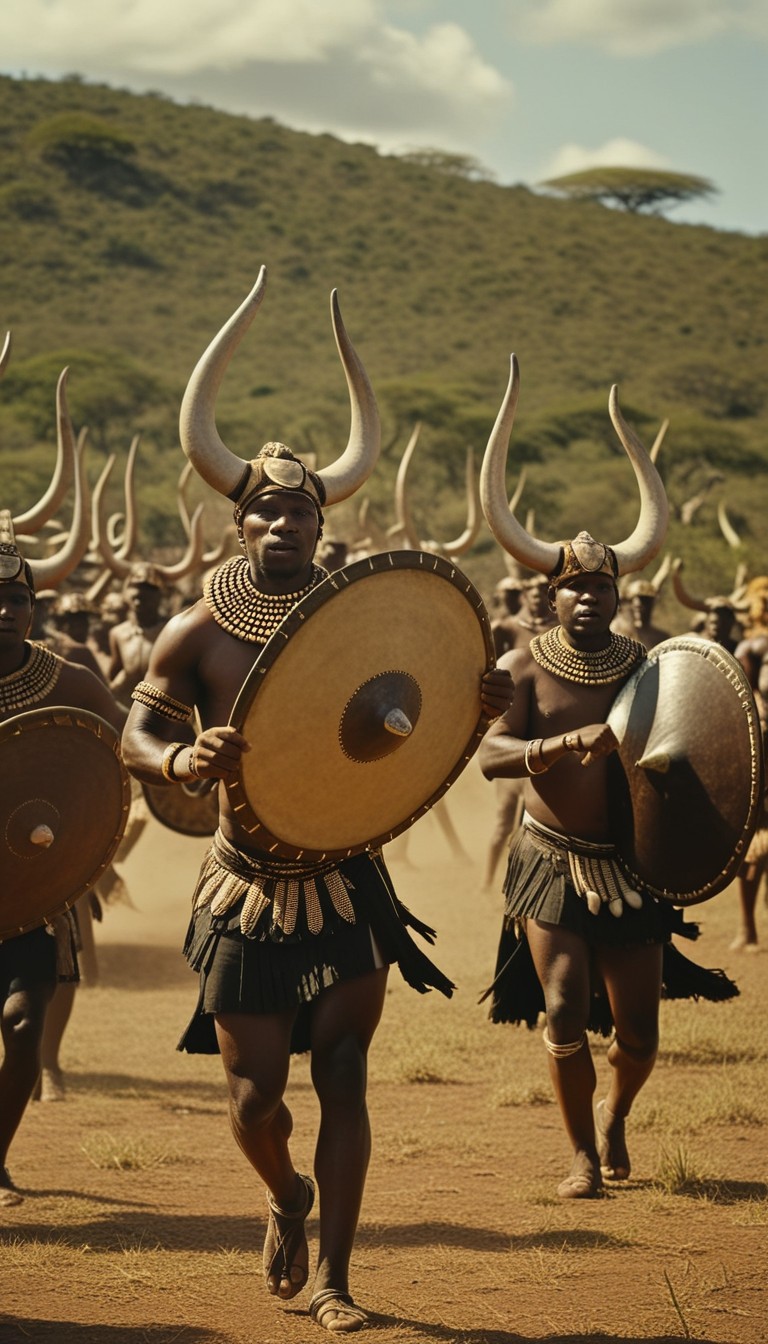
Shaka revolutionised African warfare. He replaced the traditional long throwing assegai with a short stabbing spear—the iklwa—and paired it with a large cowhide shield, forcing close-quarters combat where Zulu discipline and aggression proved overwhelming. He organised his warriors into permanent regiments called impis, each with strict training and identity. His signature battlefield tactic, the "bull horn" formation, sent flanking "horns" to encircle the enemy while a powerful "chest" pinned them in place.
1828–1840
KwaZulu, Southern Africa
Dingane and a Kingdom in Tension
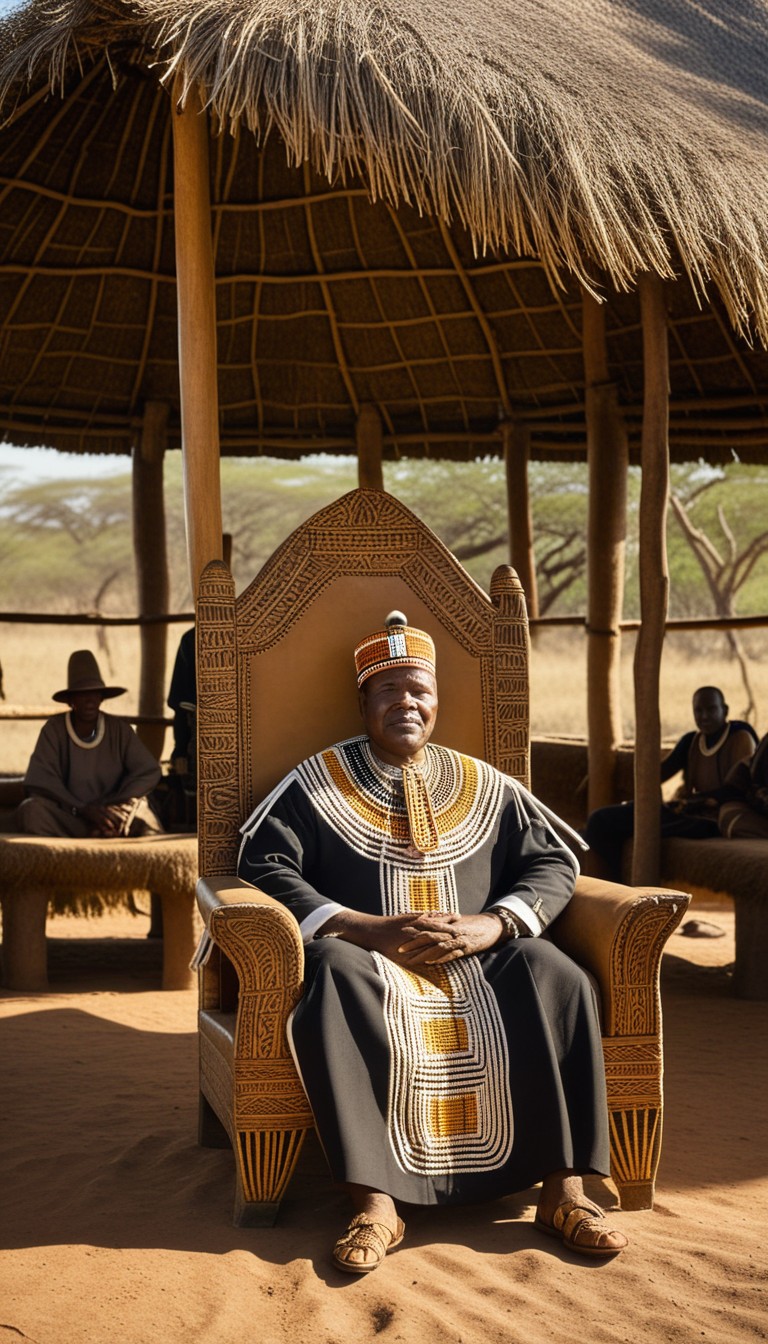
In 1828, Shaka was assassinated by his half-brothers Dingane and Mhlangana. Dingane seized the throne and set about consolidating his rule. His reign was defined by a growing conflict with Boer settlers pushing into Zulu territory from the south. In 1838, Dingane's warriors massacred the Boer leader Piet Retief and his delegation after luring them to the royal kraal unarmed—an act that triggered a devastating war with the Voortrekkers.
16 December 1838
Ncome River, KwaZulu
Battle of Blood River
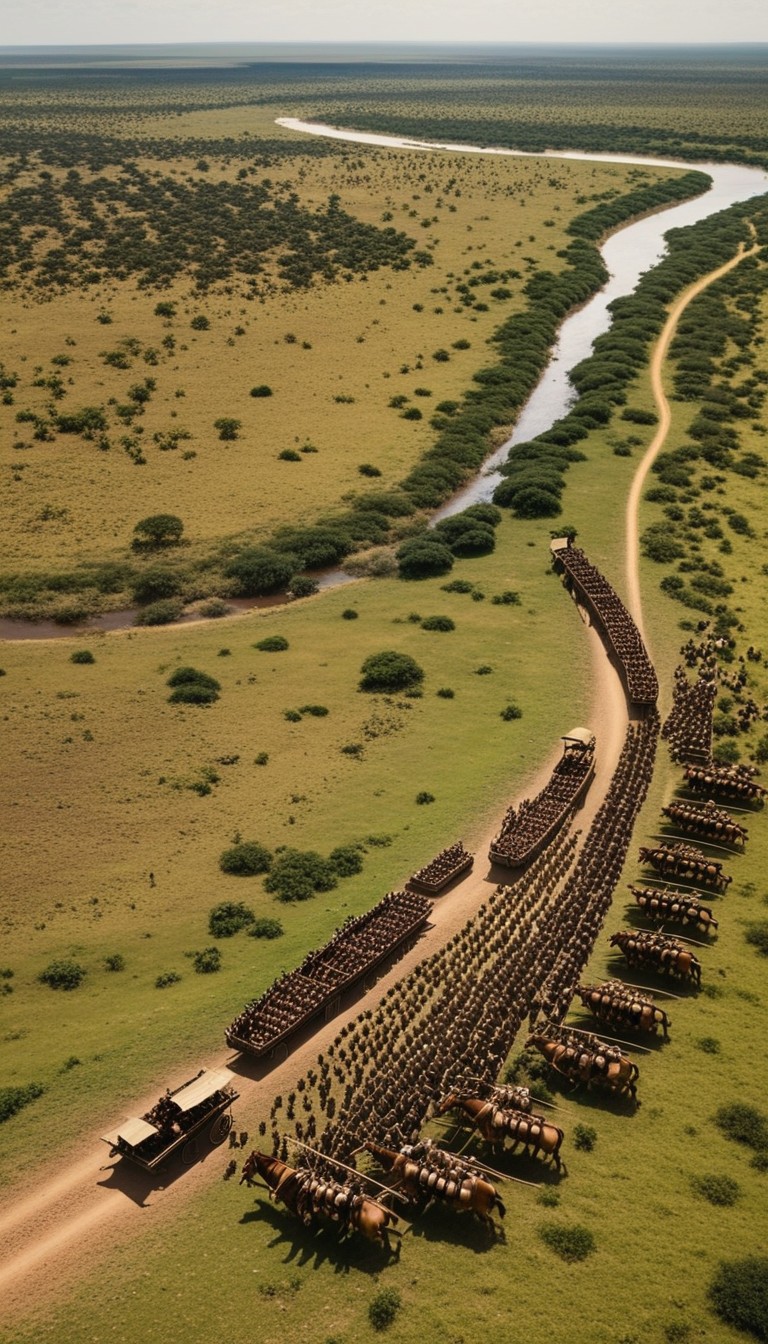
On 16 December 1838, approximately 10,000 Zulu warriors attacked a Voortrekker force of around 470 men commanded by Andries Pretorius on the banks of the Ncome River. The Boers had arranged their wagons into a defensive circle—a laager—reinforced with three cannons. The battle lasted only two hours. The Zulus suffered devastating losses, with estimates of over 3,000 dead; not a single Voortrekker was killed. The river ran red, giving the battle its name. Dingane's power was broken, and he fled into exile.
1873–1879
KwaZulu, Southern Africa
Cetshwayo and the Zulu Revival
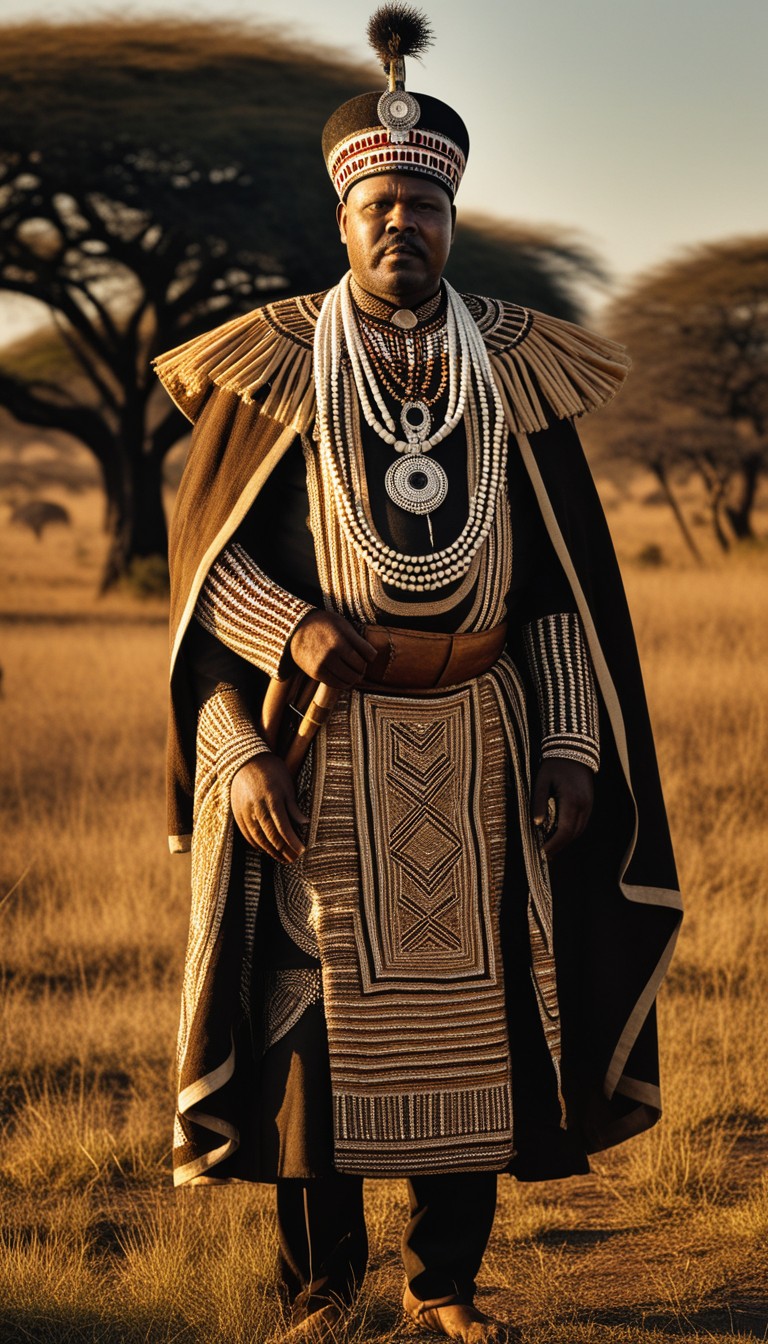
After years of internal strife and the moderate reign of Mpande, his son Cetshwayo kaMpande became king in 1873 and formally acceded with British recognition in 1873. Cetshwayo was an astute leader who worked to restore Zulu military strength and national pride. He rebuilt the regimental system, maintained diplomatic relations with the British Colony of Natal, and sought to preserve Zulu sovereignty—even as British expansionists grew increasingly determined to bring the kingdom under imperial control.
22 January 1879
Isandlwana, KwaZulu
Isandlwana: The Day the British Army Was Shattered
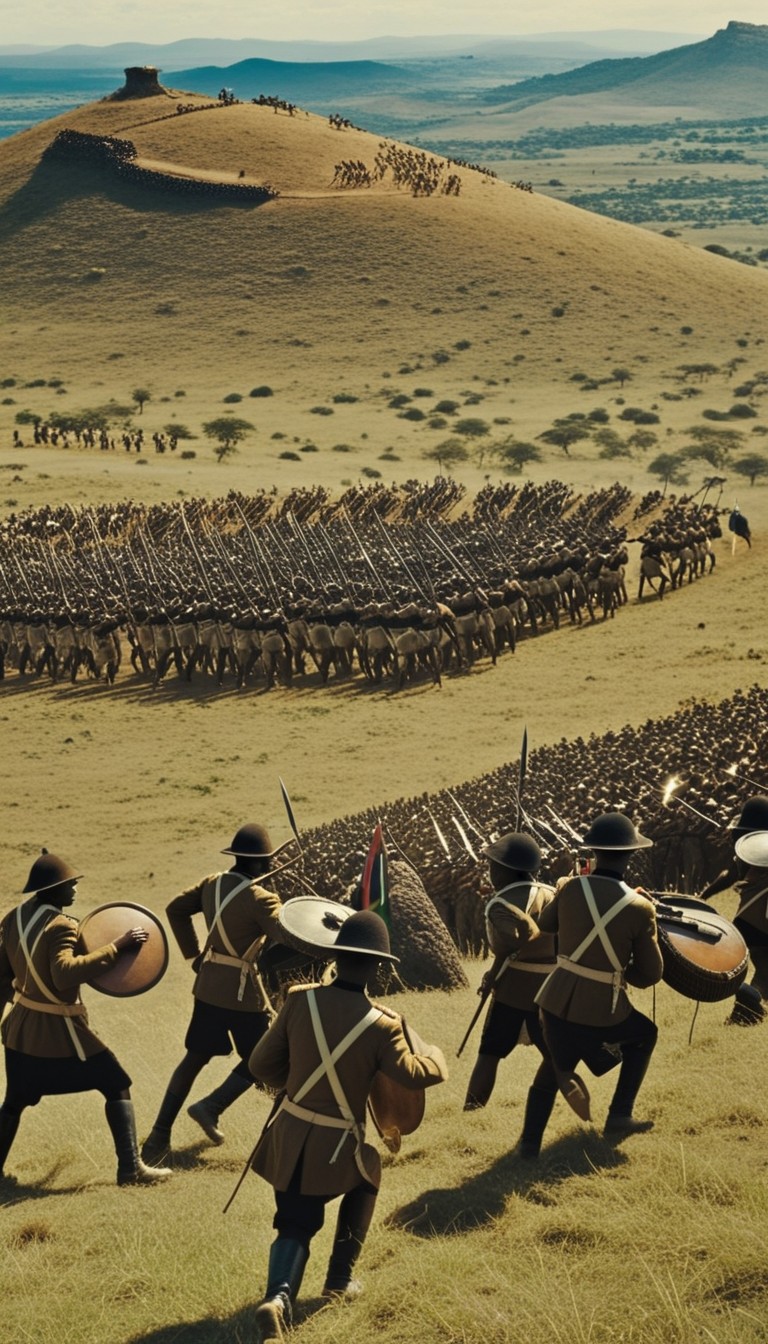
On 22 January 1879, a Zulu army of roughly 20,000 warriors descended on a British camp at Isandlwana. The British commander Lord Chelmsford had split his force and left the camp poorly defended. The Zulus executed their bull horn formation with devastating precision. In under two hours, approximately 1,300 British and colonial troops were killed—one of the worst defeats ever suffered by the Victorian British Army. The world was stunned that the most powerful military empire on earth had been crushed by warriors with spears.
22–23 January 1879
Rorke's Drift, KwaZulu
Rorke's Drift: The Night Defence
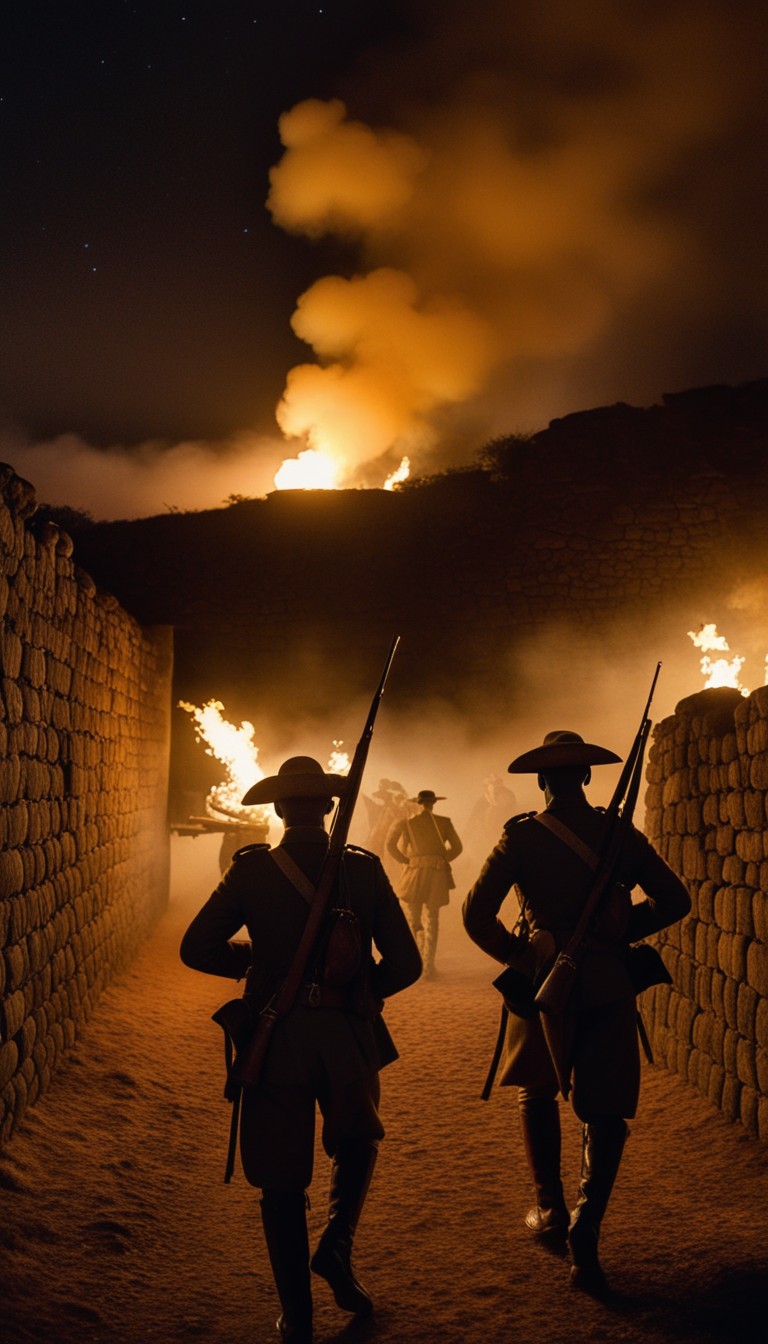
Hours after Isandlwana, roughly 4,000 Zulu warriors—buoyed by victory—attacked the small British supply post at Rorke's Drift. Just 150 soldiers, many of them sick or wounded, defended the post through the night using barricades of mealie bags and biscuit tins. They repelled attack after attack until dawn, when the Zulus withdrew. Eleven Victoria Crosses were awarded—the most ever given for a single engagement. Rorke's Drift became a celebrated symbol of British courage, though critics noted it was used partly to mask the catastrophe at Isandlwana.
July 1879
Ulundi, KwaZulu
The Fall of the Zulu Kingdom
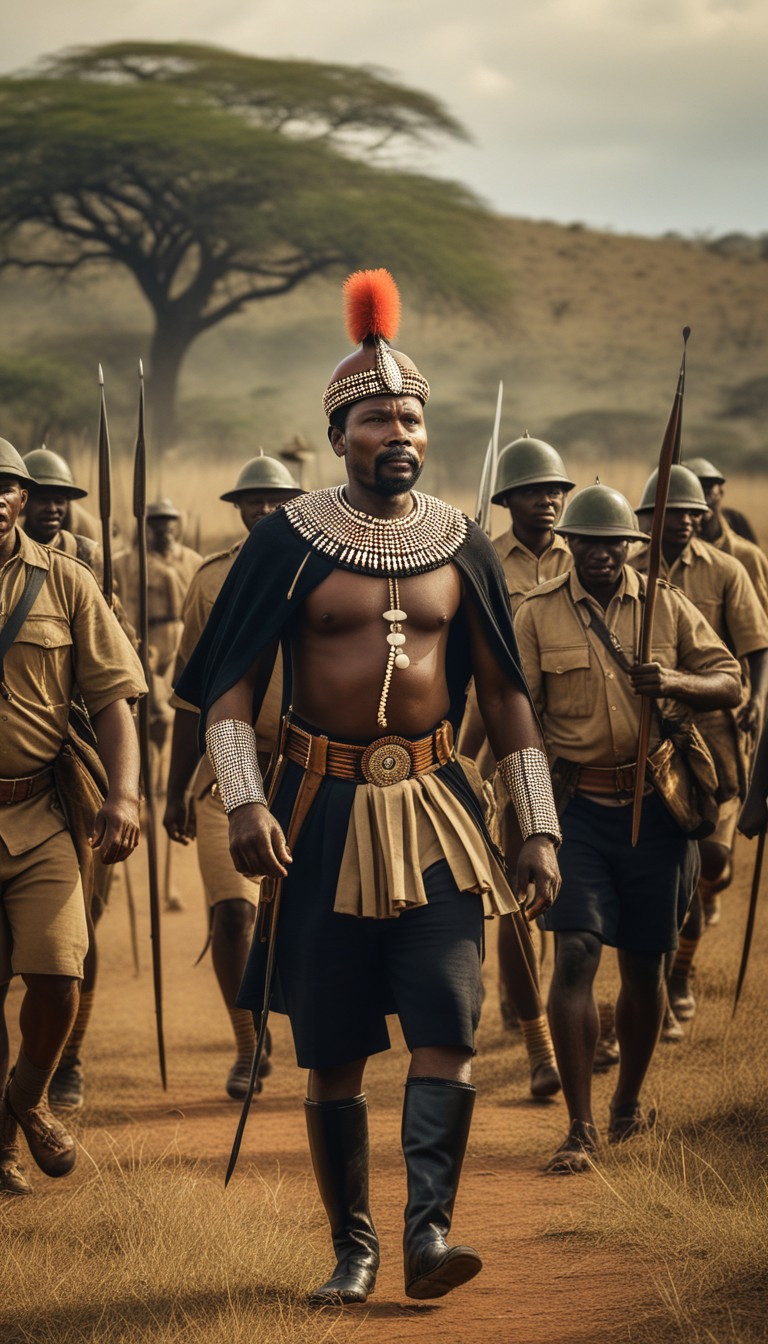
Despite their stunning victory at Isandlwana, the Zulus could not withstand Britain's reinforced campaign. On 4 July 1879, a massive British force destroyed the Zulu capital at Ulundi, defeating the last major Zulu army. Cetshwayo was captured and sent to Cape Town in exile. The British dismembered the Zulu Kingdom into thirteen chieftainships, deliberately sowing division and civil war. Though Cetshwayo was briefly restored in 1883, he died the following year and the kingdom never recovered its independence.
A Legacy That Endures
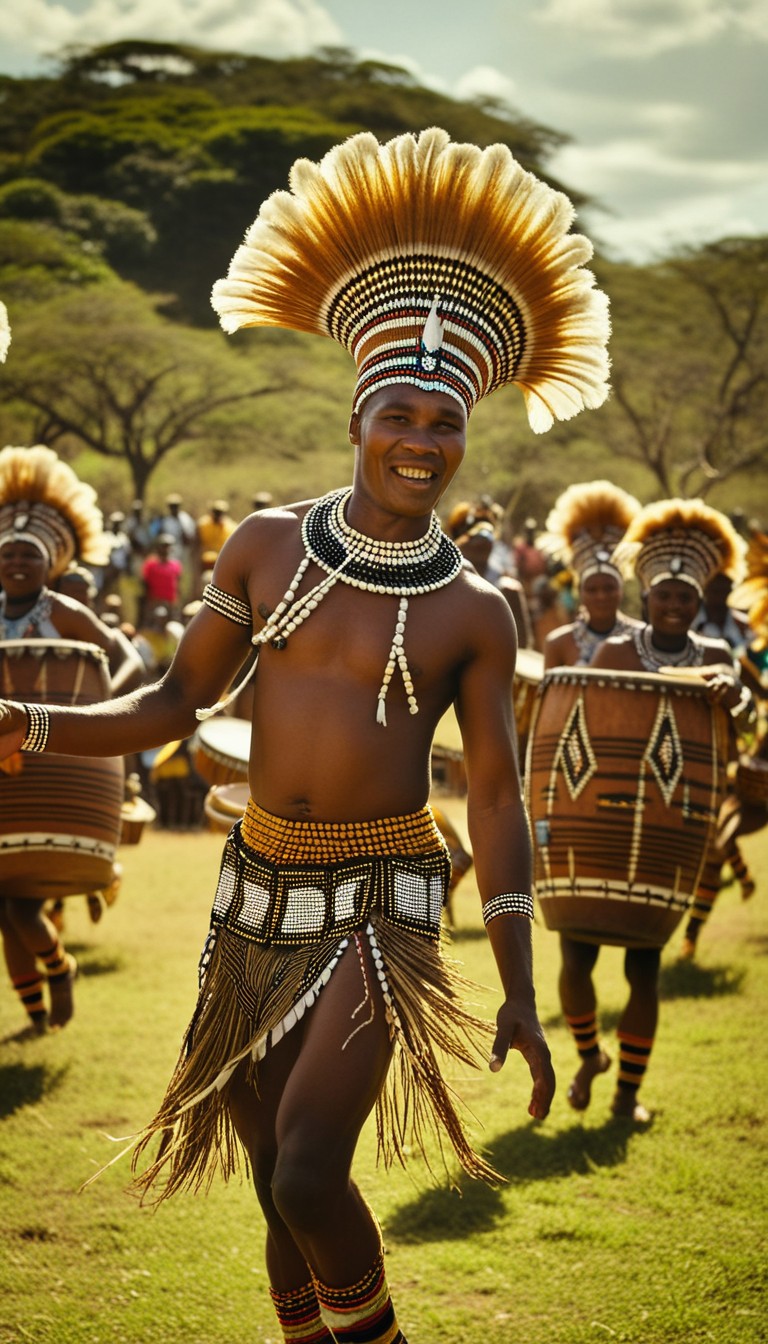
The Zulu Kingdom may have fallen to British annexation, but its legacy burns bright across southern Africa and the world. Shaka's military genius reshaped a continent. The battles of Isandlwana and Rorke's Drift entered the permanent record of world history. Today, the Zulu people—numbering over twelve million—remain the largest ethnic group in South Africa. Their language, culture, music, and traditions endure as a living testament to the warriors who once made an empire pause.
Recommended Reading
As an Amazon Associate, we earn from qualifying purchases.

Swipe to navigate