Rosalind Franklin: The Dark Lady of DNA
Loading story...
1920–1941
London & Cambridge, England
A Scientist from the Start
Rosalind Elsie Franklin was born on 25 July 1920 into a prominent Anglo-Jewish family in London. From an early age she showed exceptional aptitude for science and mathematics. She attended St Paul's Girls' School, one of the few institutions that taught physics and chemistry to young women, and won a scholarship to Newnham College, Cambridge. She graduated in 1941 with a degree in natural sciences—though Cambridge did not formally grant degrees to women until 1947.
1942–1946
Kingston upon Thames, England
Coal, Carbon, and the War Effort
During World War II, Franklin worked at the British Coal Utilisation Research Association, studying the porosity and microstructure of coal and carbon. Her research helped classify carbons by their density and was directly useful for wartime gas mask filters. This early work earned her a PhD from Cambridge in 1945 and established her reputation as a meticulous experimentalist with a rare gift for interpreting complex physical structures from X-ray data.
1947–1950
Paris, France
Mastering X-Ray Crystallography in Paris
In 1947 Franklin moved to Paris, joining the Laboratoire Central des Services Chimiques de l'État. Under Jacques Mering, she perfected the technique of X-ray crystallography—firing X-rays through crystallised substances and interpreting the diffraction patterns to determine molecular structure. She thrived in the collegial French research culture and became one of the foremost X-ray crystallographers in Europe. Her four years in Paris were, by her own account, the happiest of her professional life.
1951
London, England
King's College London
In January 1951, Franklin joined the biophysics unit at King's College London, recruited by John Randall to apply X-ray diffraction to DNA fibres. A miscommunication led Maurice Wilkins—already working on DNA—to believe Franklin was his assistant rather than an independent researcher. The resulting tension poisoned their working relationship. Franklin, serious and private, was isolated in the male-dominated, often patronising atmosphere of King's. She pressed on with her work regardless.
May 1952
London, England
Photo 51
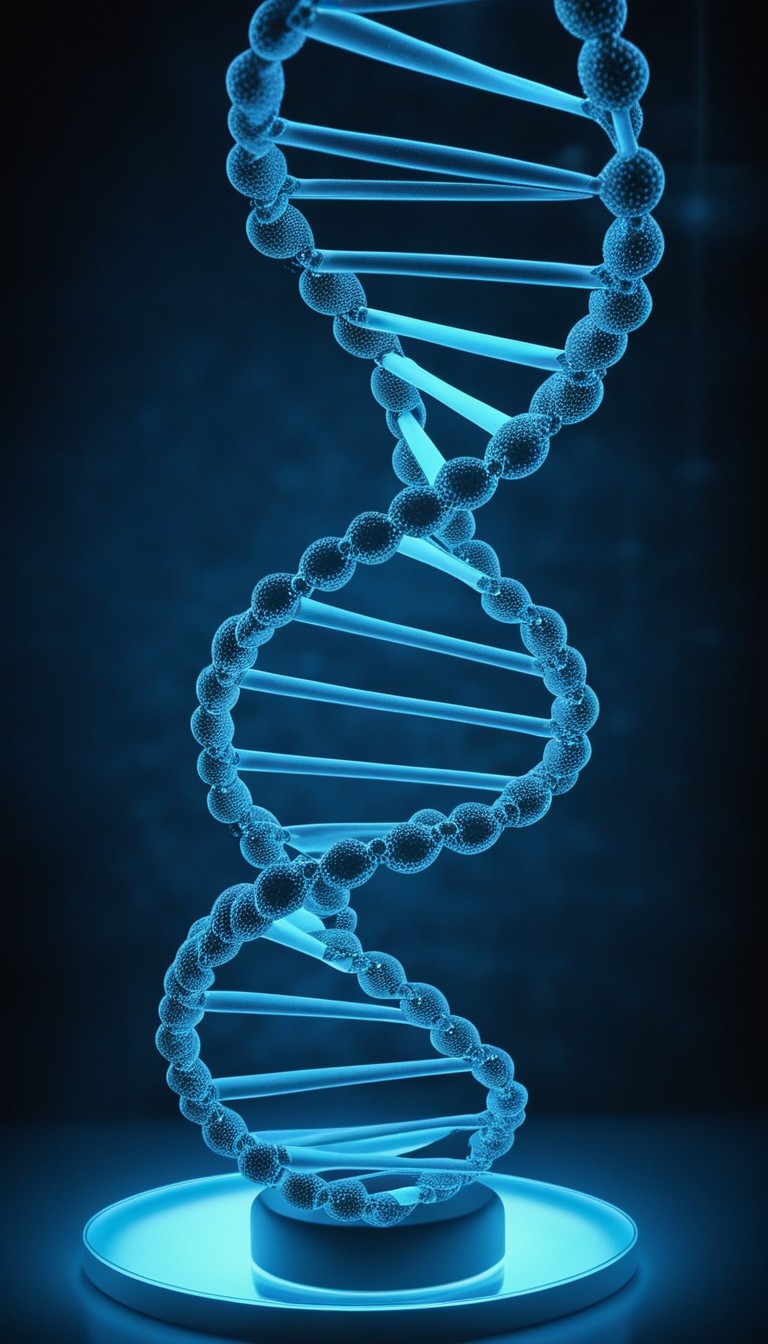
In May 1952, Franklin and her graduate student Raymond Gosling captured the single most important image in the history of molecular biology: Photo 51. This X-ray diffraction photograph of hydrated DNA showed a clear X-shaped pattern—the unmistakable signature of a helical structure. Franklin was characteristically cautious, methodically analysing her data before drawing conclusions. She had identified that DNA existed in two forms (A and B) and was close to determining its full three-dimensional structure.
January–April 1953
Cambridge & London, England
The Double Helix—Without Her
In January 1953, Maurice Wilkins showed Photo 51 to James Watson without Franklin's knowledge or consent. Watson immediately recognised the helical structure. Combined with Franklin's unpublished data from an MRC report—also shared without her permission—Watson and Crick at Cambridge built their famous double helix model in weeks. Their landmark paper in Nature, published in April 1953, made only a passing reference to Franklin's "unpublished experimental results." She had been robbed of credit for her own discovery.
1953–1958
London, England
Brilliant Work at Birkbeck
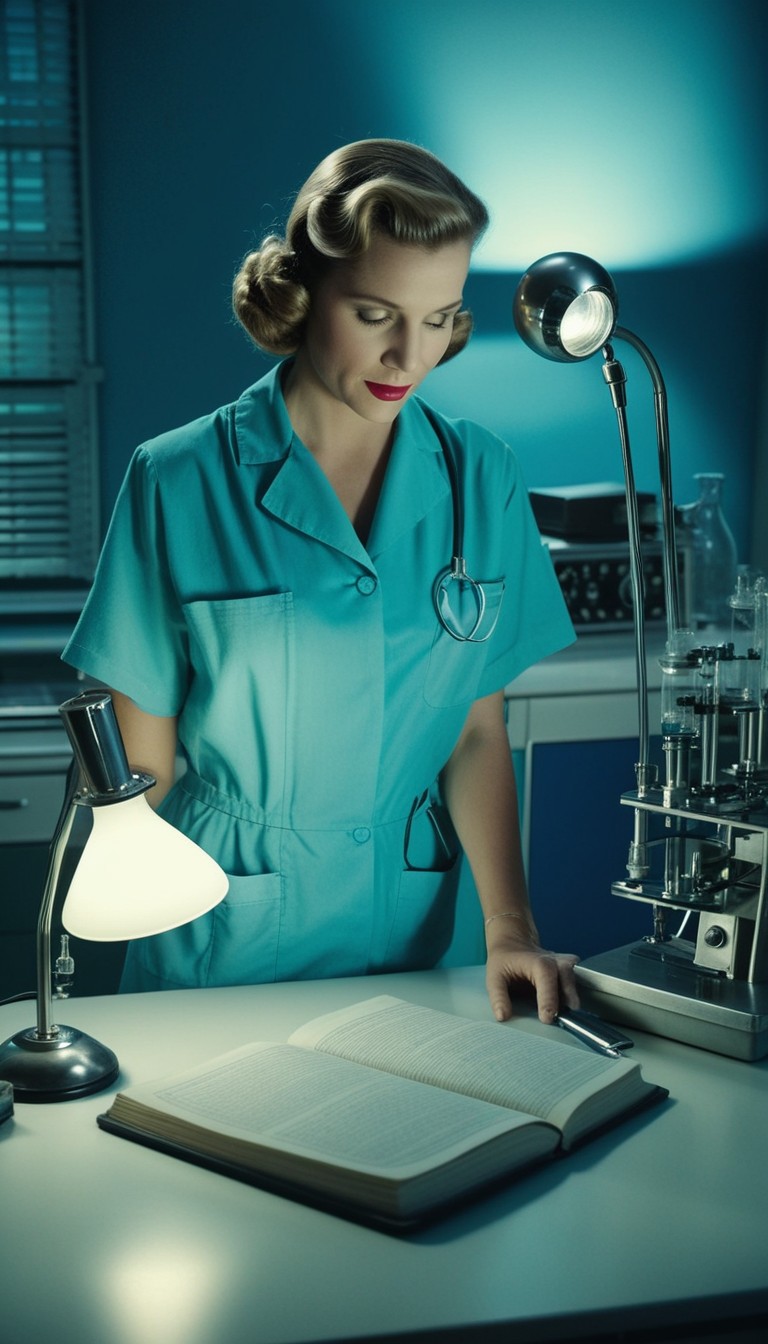
Franklin left King's College in March 1953 for Birkbeck College, where she led pioneering research on the structure of the tobacco mosaic virus (TMV) and the RNA at its core. Her work was transformative—she determined that TMV was hollow, not solid as previously assumed, and mapped its protein arrangement. She also studied the polio virus. This research was world-class and would have secured her scientific legacy even without the DNA controversy. She published seventeen papers on viruses in just five years.
16 April 1958
London, England
A Life Cut Short
In 1956, Franklin was diagnosed with ovarian cancer—almost certainly caused by her years of intense X-ray exposure without adequate protection. She continued working through two operations and experimental treatments, refusing to stop her research. She died on 16 April 1958, at the age of thirty-seven. Four years later, Watson, Crick, and Wilkins received the Nobel Prize in Physiology or Medicine for the discovery of DNA's structure. The Nobel Prize is not awarded posthumously; Franklin was never considered.
The Woman Behind the Helix
Rosalind Franklin was one of the finest experimental scientists of the twentieth century—a woman whose meticulous, brilliant work unlocked one of nature's greatest secrets. She was denied recognition in her lifetime by a combination of sexism, professional rivalry, and early death. Today, she is honoured with buildings, awards, and a Mars rover bearing her name. The double helix belongs as much to her as to anyone. Photo 51 endures as proof that great science requires not just imagination, but the painstaking, patient hand of someone willing to look closely enough.
Recommended Reading
As an Amazon Associate, we earn from qualifying purchases.

Swipe to navigate