Shaka Zulu: Forger of a Nation
Loading story...

c. 1787
Zululand, southern Africa
The Outcast Prince
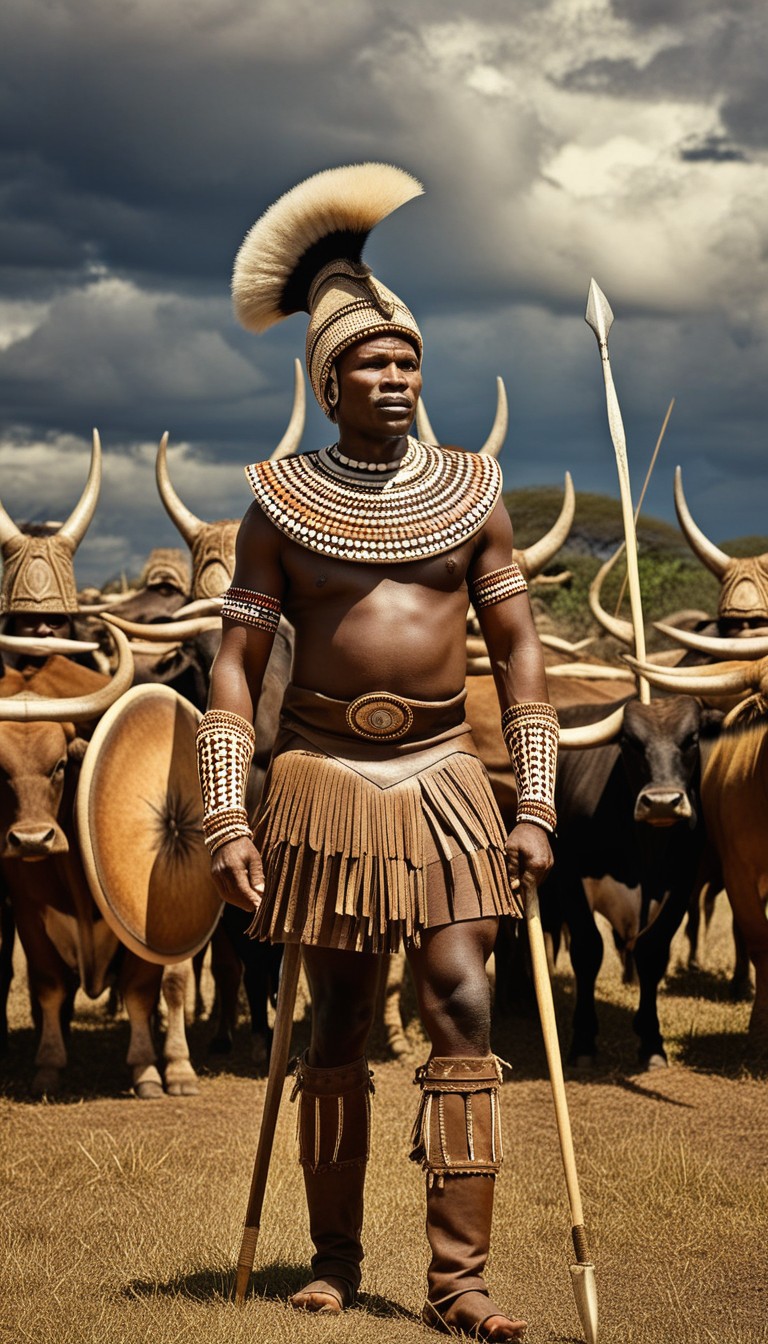
Around 1787, a boy was born into shame. His mother Nandi was an unmarried woman of the eLangeni clan, and his father Senzangakhona was a minor Zulu chief who refused to acknowledge the child. Named Shaka—a cruel joke, a word for an intestinal beetle—the boy and his mother were driven from clan to clan, mocked, beaten, and shunned. While other children trained and played, Shaka endured years of humiliation that hardened him into something extraordinary. The rejection that was meant to break him instead forged his will into iron.

c. 1803-1816
Mthethwa territory, KwaZulu-Natal
A Mentor and a War School
Around 1803, Shaka joined the iziCwe regiment of the powerful Mthethwa confederacy, coming under the patronage of its visionary king, Dingiswayo. For the first time in his life, Shaka found a place where strength and intelligence were rewarded. Dingiswayo recognized the young man's unusual ferocity and tactical mind, elevating him to command. Under Mthethwa tutelage, Shaka began developing his radical ideas about warfare—discarding the long assegai throwing spear and replacing it with a shorter, broader-bladed stabbing spear he called the iklwa. Combat, he believed, should be decided at arm's length.
1816
Zulu heartland, KwaZulu-Natal
Chief of the Zulu
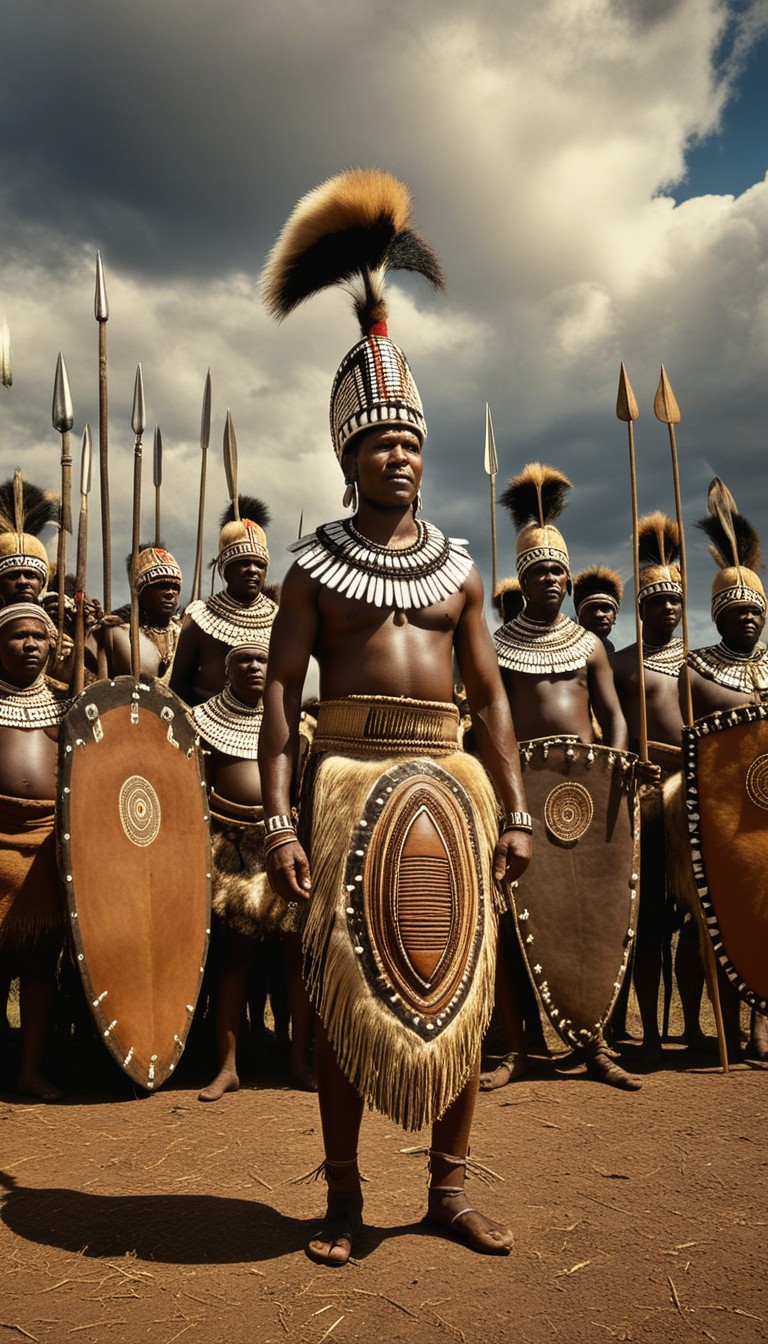
In 1816, Shaka's father Senzangakhona died. With Dingiswayo's backing, Shaka seized the Zulu chieftainship by killing his half-brother Sigujana, who had been positioned as successor. The Zulu were then a small, unremarkable clan of perhaps fifteen hundred people—one of dozens crowded into the fertile valleys of what is now KwaZulu-Natal. Shaka immediately set about transforming them. He dissolved the existing regimental structure, established new age-grade amabutho regiments forbidden to marry until he granted permission, and began drilling his warriors relentlessly in his new way of war. The transformation was total and ruthless.
c. 1816-1818
Zululand
The Revolution in War
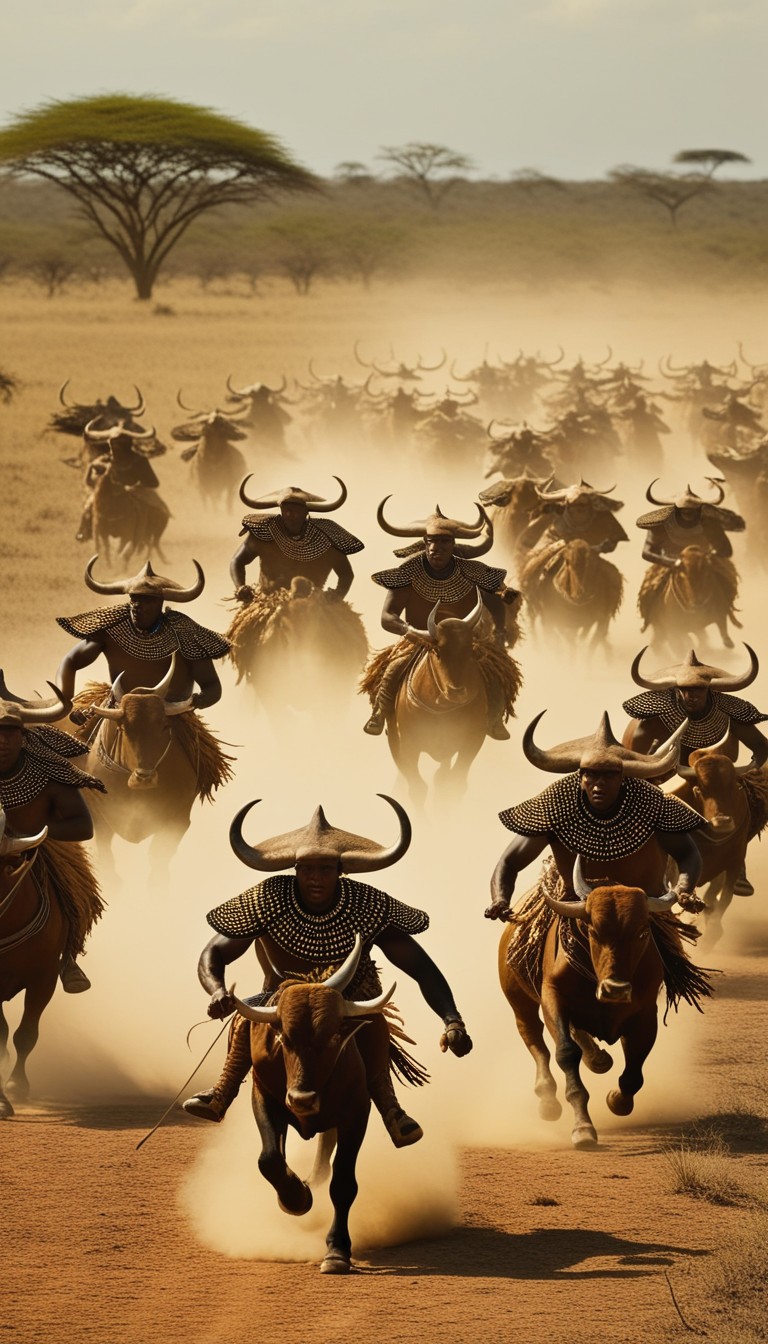
Shaka's military reforms were nothing short of revolutionary. The iklwa—a short stabbing spear paired with a large cowhide shield—forced enemies into brutal close-quarters combat where the Zulus excelled. Warriors fought barefoot to move faster, covering fifty miles a day on campaign. His masterstroke was the impondo zankomo, the "horns of the buffalo" formation: a powerful chest to engage the enemy, two encircling horn formations to surround them, and a reserve of veterans called the loins held back to plug any breach. Armies trained for long-range skirmishing were annihilated before they understood what had hit them.

1818-1824
Southern Africa
The Mfecane: Wars That Reshaped a Continent
From 1818 onward, Shaka's campaigns of conquest unleashed a chain reaction historians call the Mfecane—"the crushing." Defeated clans fled before Zulu armies, themselves attacking and displacing their neighbors, triggering a cascade of violence and migration across hundreds of thousands of square miles. Kingdoms rose and fell. New nations formed from refugee groups driven together by crisis. The Sotho kingdom under Moshoeshoe, the Swazi nation, the Matabele under Mzilikazi—all were direct products of the upheaval Shaka set in motion. By the early 1820s, the Zulu nation had grown from a tiny clan into a military power that dominated the entire eastern seaboard of southern Africa.
1820s
Bulawayo, KwaZulu-Natal
Building a Nation
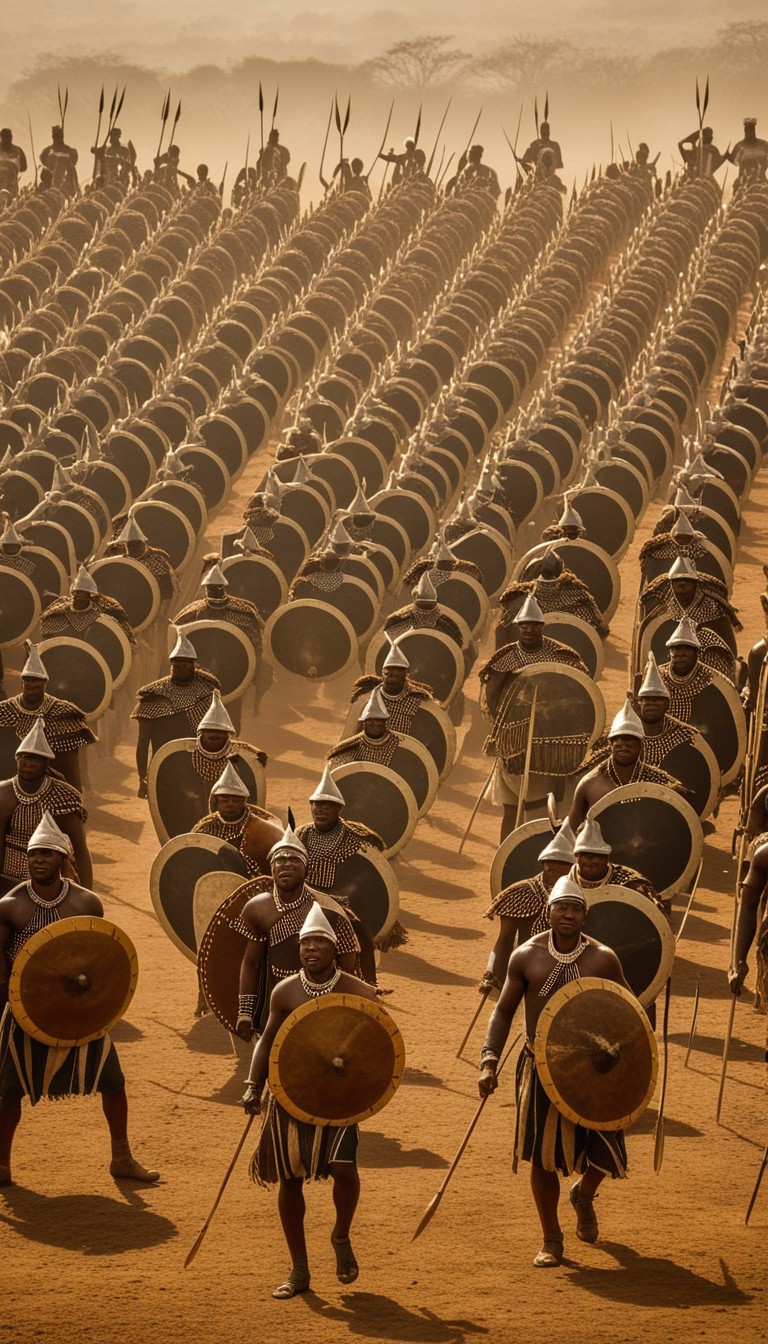
Conquest alone did not build Shaka's nation. He incorporated defeated peoples directly into the Zulu identity—absorbed clans became Zulu, their warriors folded into his regiments, their cattle swelling his royal herds. Loyalty was absolute and discipline merciless. Cowardice in battle was punishable by death. Yet Shaka rewarded valor generously with cattle, women, and status. He built a centralized state with the royal kraal at Bulawayo as its capital, administered through a hierarchy of indunas—appointed military governors loyal to him alone rather than to hereditary chiefs. The Zulu nation was not born; it was engineered.
1824
Port Natal (Durban), KwaZulu-Natal
The Europeans Arrive
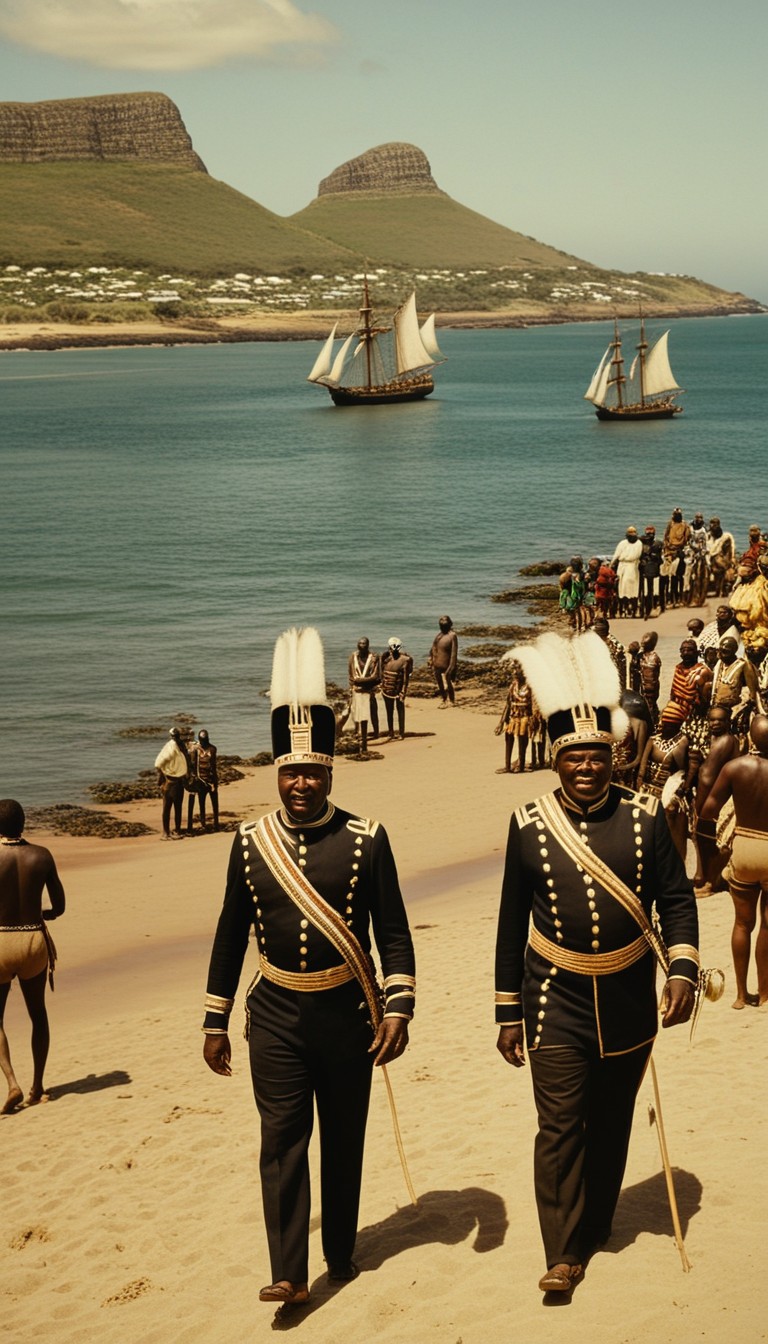
In 1824, a small party of British traders established a settlement at Port Natal—the future city of Durban. Their leader, Henry Francis Fynn, was received in audience by Shaka himself after helping treat a wound the king had received in an assassination attempt. Shaka was fascinated by these pale strangers with their firearms and ships. He granted them land and trading rights, curious about the wider world they represented. The British traders were equally astonished by what they found: a disciplined, powerful African kingdom unlike anything they had expected. These early contacts were mostly peaceful, but they were the first threads of a relationship that would eventually unravel in catastrophe for the Zulu.

September 1828
KwaDukuza, KwaZulu-Natal
Death of a King
By 1827, Shaka had changed. His mother Nandi's death that year sent him into a grief so extreme he ordered the execution of thousands, banned farming for a year, and demanded that all Zulu women abstain from having children for twelve months. His campaigns had grown more punishing and less rewarding. His half-brothers Dingane and Mhlangana, long resentful of his iron rule, organized a conspiracy. On the evening of September 24, 1828, as Shaka received a delegation at his kraal at KwaDukuza, the assassins struck. He was stabbed to death by his own blood. He was approximately forty years old. The man who had created a nation was killed by those who stood to inherit it.

The Nation He Built Still Stands
Shaka Zulu ruled for barely twelve years, yet his impact on southern Africa endures two centuries later. He transformed a handful of clans into a proud, cohesive nation whose identity survived colonial conquest, apartheid, and the passage of time. The Zulu people today number over twelve million, the largest ethnic group in South Africa, and Shaka remains their founding hero—honored in statues, museums, and the international airport that bears his name. Flawed, brutal, and visionary in equal measure, he was a man who took the mockery of a name and made it synonymous with a nation.
Recommended Reading
As an Amazon Associate, we earn from qualifying purchases.

Swipe to navigate