Zheng He: Admiral of the Treasure Fleet

Loading story...

Ming soldiers marching through the mountain passes of Yunnan province
1381 Yunnan, China

Captured in Yunnan

In 1381, the armies of the newly founded Ming dynasty swept into the remote southwestern province of Yunnan to crush the last remnants of Mongol resistance. Among the prisoners taken in the conquest was a young Muslim boy of perhaps ten years old, born Ma He into a family whose father and grandfather had both made the pilgrimage to Mecca—a heritage that would shape his worldview for life. Like many captured boys from conquered territories, he was castrated and sent to serve in the imperial household as a eunuch. Far from being broken by this fate, the boy who would one day command the greatest fleet in history had just taken his first step toward the imperial court.
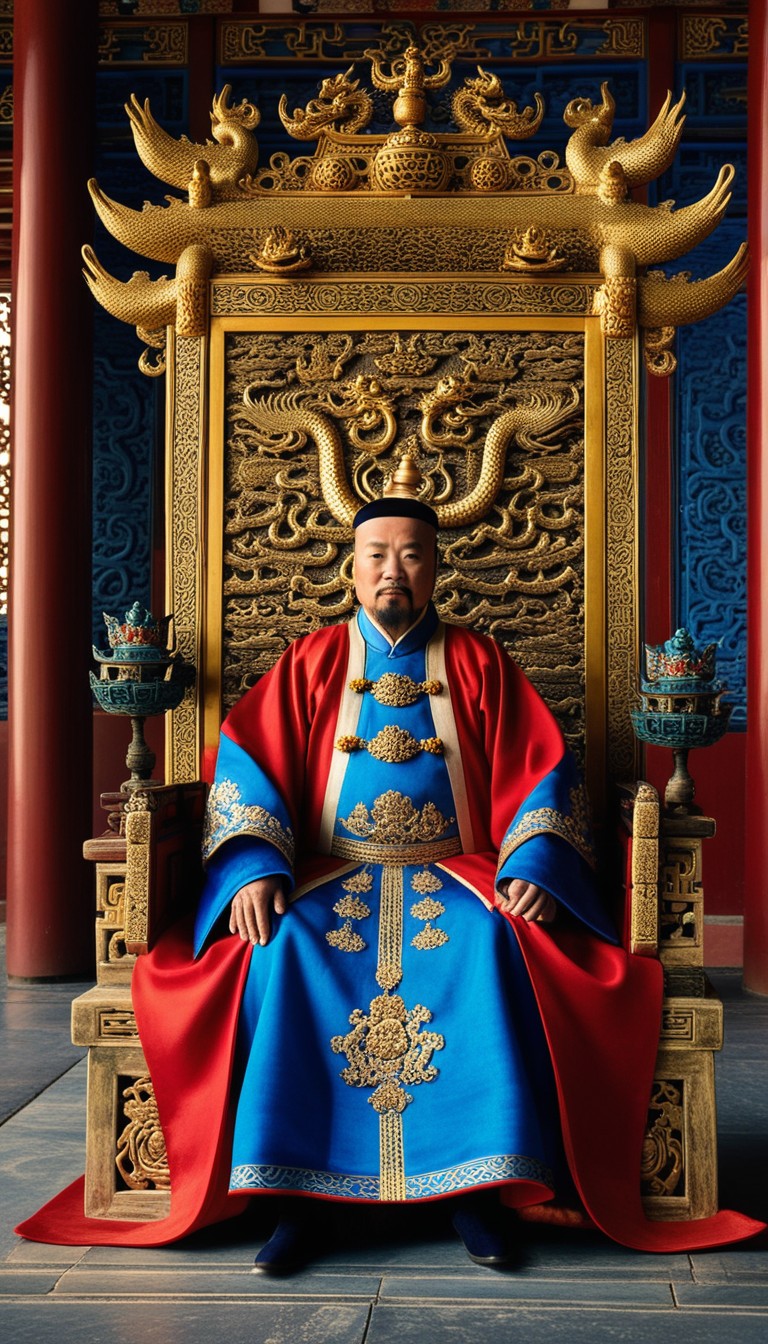
The Yongle Emperor seated on his throne in the Forbidden City
1402 Nanjing, China

Trusted by the Yongle Emperor

Assigned to the household of Zhu Di, the prince who would seize the throne and reign as the Yongle Emperor, Ma He proved himself a brilliant military commander during the bloody civil war known as the Jingnan Campaign. His bravery in battle and his sharp political instincts made him indispensable to the prince, and when Zhu Di took the throne in 1402 he rewarded his loyal eunuch with a rare honor—the surname Zheng, henceforth making him Zheng He. The Yongle Emperor was an ambitious ruler determined to project China's power outward across the seas, and he had found exactly the man to do it.
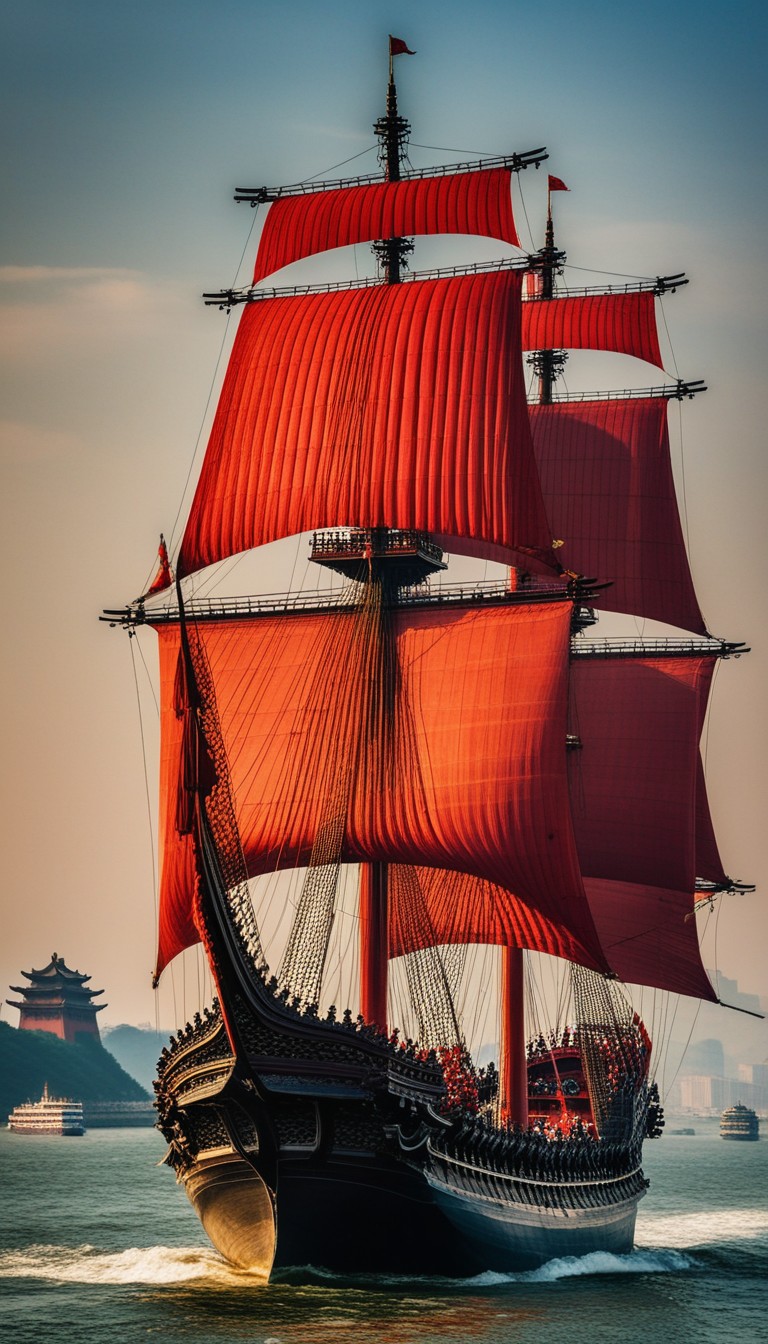
Hundreds of enormous ships departing Nanjing along the Yangtze River
1405 Nanjing, China

The First Voyage Departs

In the summer of 1405, a fleet of staggering size assembled at the mouth of the Yangtze River and set sail into the South China Sea. The armada comprised 317 ships and carried approximately 28,000 men—sailors, soldiers, diplomats, doctors, astrologers, translators, and merchants—making it by far the largest naval expedition the world had ever seen. Zheng He sailed not primarily to conquer, but to project the glory and authority of the Ming dynasty, demanding tribute and offering gifts to the rulers of the known world. The fleet's destination was the trading ports of Southeast Asia and the Malabar Coast of India, and the message it carried was unmistakable: China was the center of civilization.
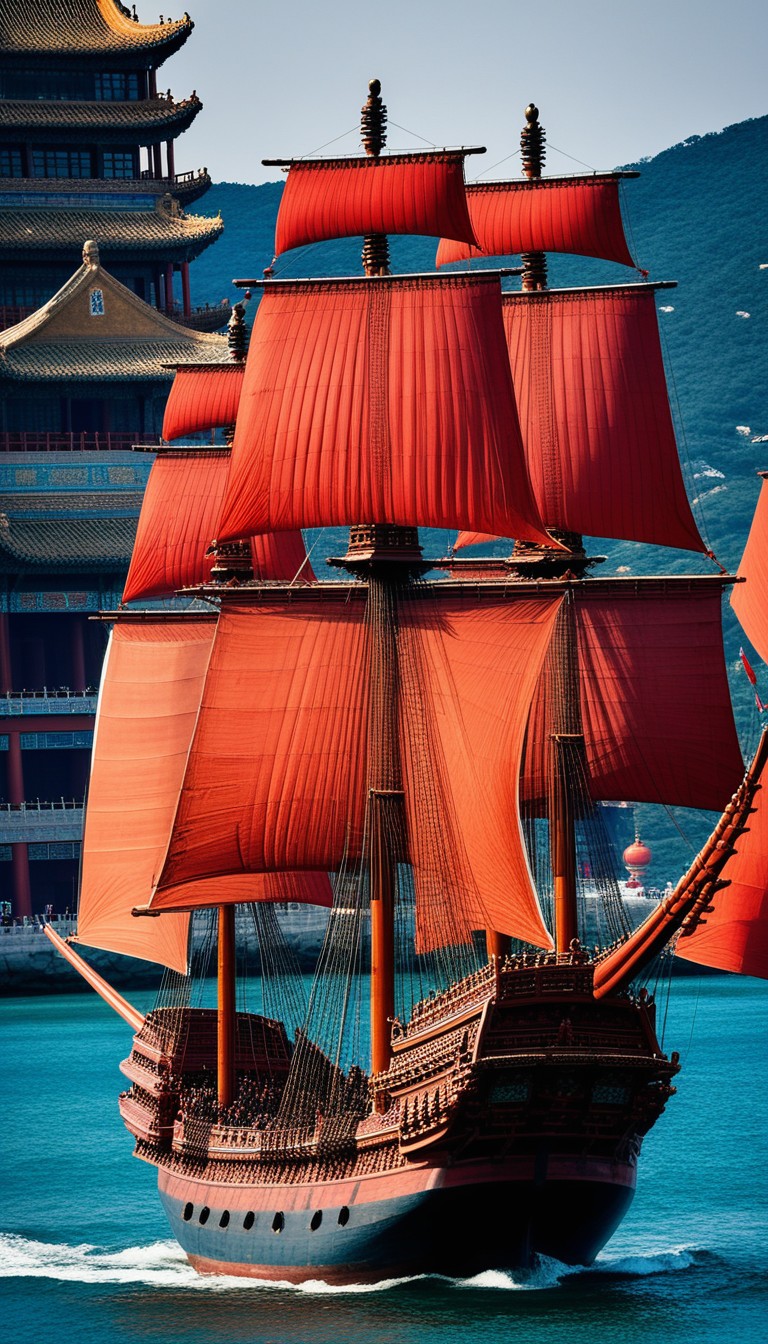
An enormous Chinese treasure ship dwarfing smaller vessels in harbor
c. 1405 South China Sea

The Treasure Ships

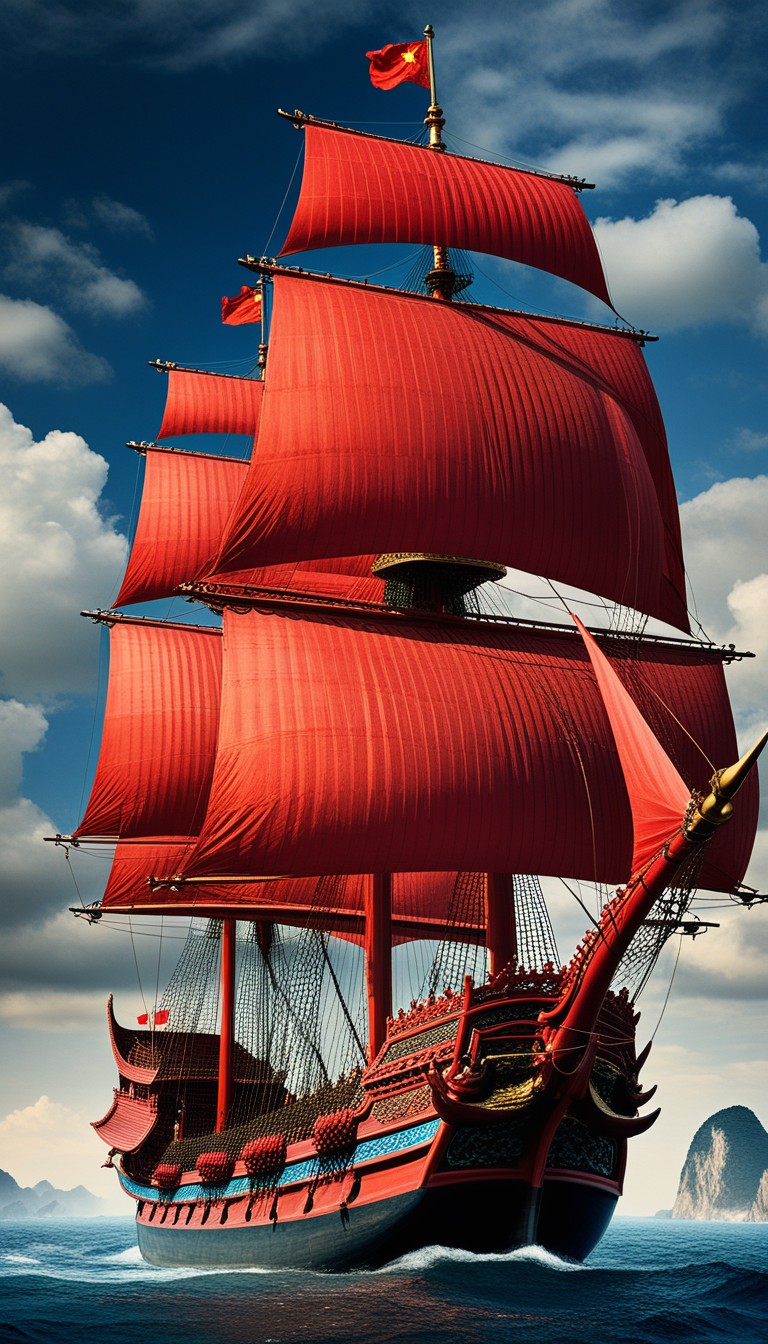
At the heart of the fleet sailed the baochuan—the treasure ships—the largest wooden vessels ever constructed in human history. The flagships are recorded as measuring up to 440 feet in length and 180 feet in beam, with nine masts carrying enormous red silk sails, dwarfing the caravels that European explorers would use to cross the Atlantic decades later. These floating palaces carried silks, porcelains, and gold to distribute as imperial gifts, and returned laden with exotic goods, animals, and foreign ambassadors sent to pay respect to the Son of Heaven. The engineering achievement they represented was unmatched anywhere on earth at the time.
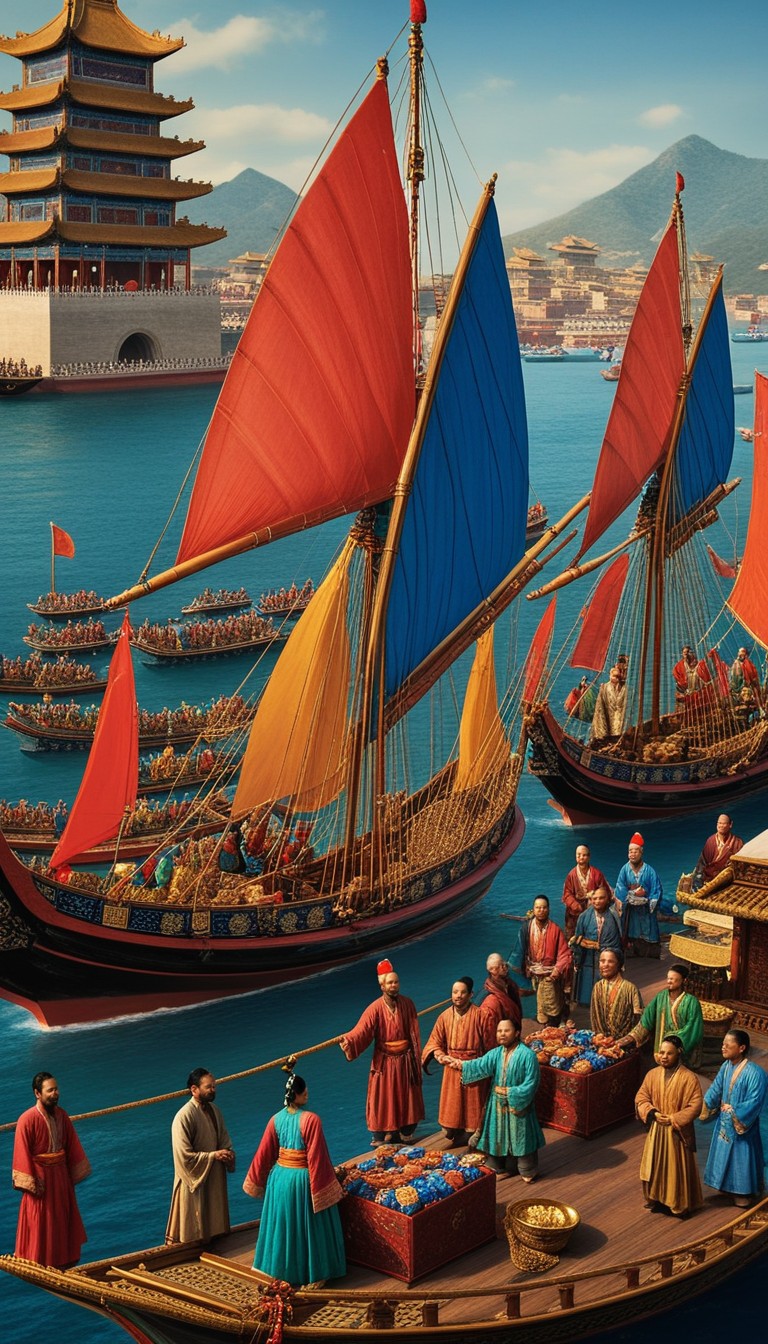
Chinese diplomats exchanging gifts with Indian merchants on a busy harbor
1405–1411 Southeast Asia and India

Southeast Asia and India

On his first three voyages between 1405 and 1411, Zheng He navigated the established maritime trading networks of Southeast Asia, calling at Champa, Java, Malacca, and Ceylon before pressing on to the great entrepôts of the Indian Malabar Coast at Calicut and Cochin. These were not voyages of discovery—Chinese and Arab merchants had sailed these routes for centuries—but the arrival of the treasure fleet transformed existing relationships into formal tributary arrangements with the Ming court. Where persuasion failed, Zheng He did not hesitate to use force: he intervened in a civil war in Ceylon and captured a hostile king, transporting him back to Nanjing as a prisoner before releasing him with appropriate ceremony.
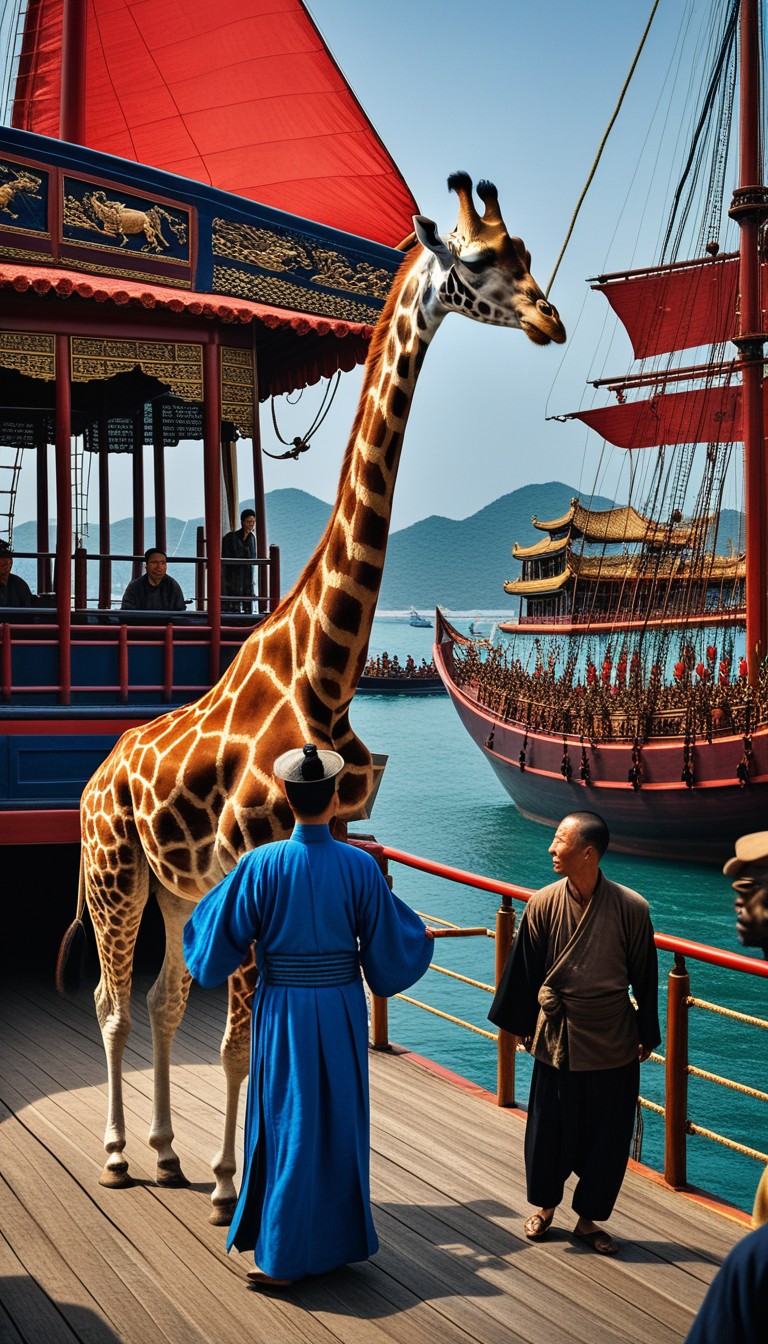
A giraffe being led off a Chinese ship at a harbor, surrounded by astonished onlookers
1413–1422 Persian Gulf and East Africa

The Persian Gulf and East Africa

On his fourth through sixth voyages between 1413 and 1422, Zheng He pushed beyond India into waters that were genuinely new to the Chinese imperial court—the Persian Gulf ports of Hormuz and Aden, and the Swahili city-states of the East African coast at Malindi, Mombasa, and Mogadishu. African rulers, eager to cultivate powerful new trading partners, sent extraordinary diplomatic gifts back to the Yongle Emperor, including the animals that caused the greatest sensation at court: giraffes, which Chinese scholars identified with the mythical qilin, a divine creature said to appear only during the reign of a virtuous emperor. The arrival of the long-necked beasts in Nanjing was treated as a cosmic endorsement of the dynasty.
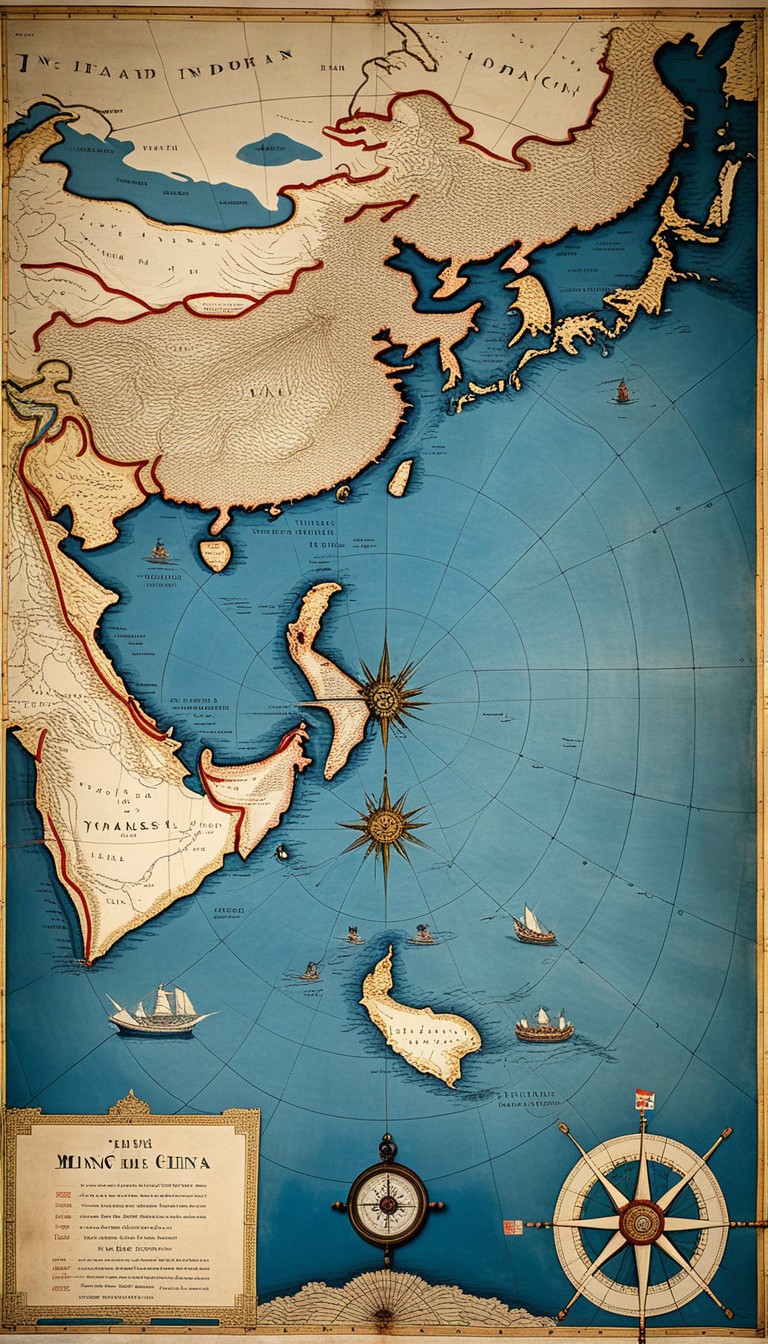
A map showing the routes of seven great voyages across the Indian Ocean
1405–1433 Indian Ocean

Seven Voyages, One Ocean

Over twenty-eight years, Zheng He commanded seven voyages that collectively established Chinese diplomatic and commercial dominance across the entire Indian Ocean world, from the South China Sea to the Arabian Peninsula and the African coast. More than fifty countries sent tribute missions to Nanjing in the wake of the fleet's visits, and a network of Chinese influence stretched across maritime Asia that had no parallel anywhere on earth. The voyages demonstrated that China possessed both the maritime technology and the organizational capacity to project power across half the globe—a capability that Europe would not begin to approach for another generation. Zheng He himself made the pilgrimage to Mecca on his final voyages, honoring the faith his father had passed down to him.
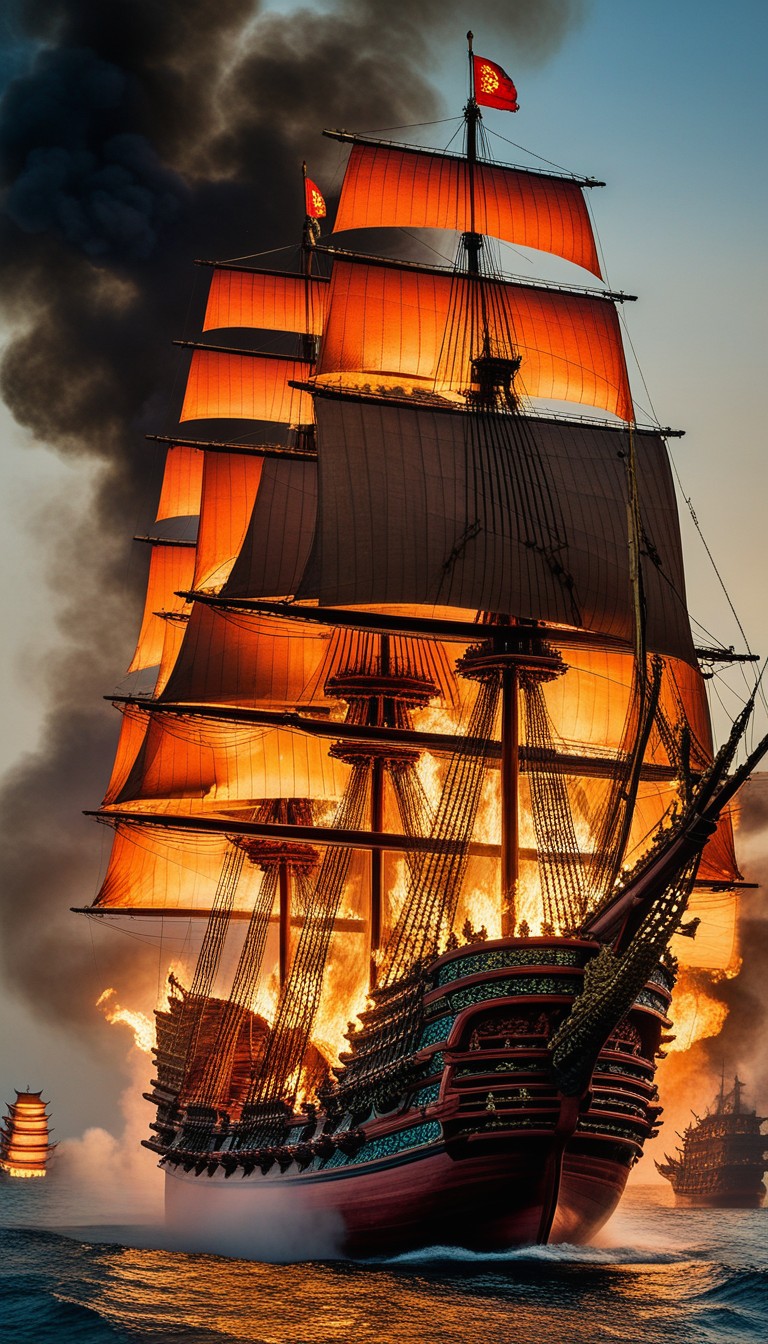
Enormous wooden treasure ships burning in a harbor as officials look on
1433 Nanjing, China

China Turns Inward

Zheng He died at sea during his seventh and final voyage in 1433, and with him died the era of Chinese maritime expansion. The Confucian bureaucrats who had always opposed the costly voyages as wasteful and un-Chinese gained the upper hand at court: overseas trade was banned, the construction of oceangoing vessels was outlawed on pain of death, and the records of the voyages were deliberately destroyed. The treasure ships that had sailed to Africa were burned in their berths, and within a generation the greatest fleet in history had been reduced to rotting timbers. When European explorers first reached China's coast in the sixteenth century, they found a civilization that had deliberately turned its back on the sea.
A lone treasure ship sailing into a golden sunset on the Indian Ocean

What If China Had Kept Sailing?

Historians have long wrestled with one of history's great counterfactuals: what if China had not turned inward? Zheng He's fleet reached East Africa thirty years before Vasco da Gama rounded the Cape of Good Hope, and the treasure ships dwarfed anything Europe could build. Had the voyages continued, Chinese explorers might have circumnavigated Africa, reached the Americas, or established permanent maritime colonies across the Indian Ocean world—rewriting the entire story of globalization. Instead, the Yongle Emperor's grand vision was buried with the ships he ordered burned, and the world was left to be shaped by the small, determined caravels of Portugal and Spain. Zheng He remains a monument to what ambition, technology, and curiosity can achieve—and a warning about what politics and fear can destroy.

Recommended Reading

As an Amazon Associate, we earn from qualifying purchases.

Swipe to navigate